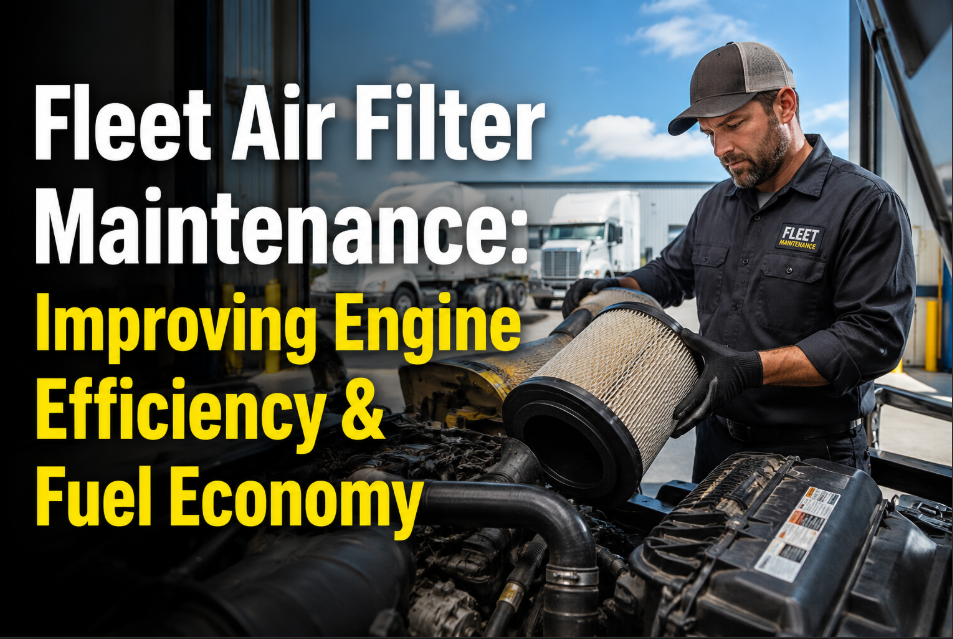
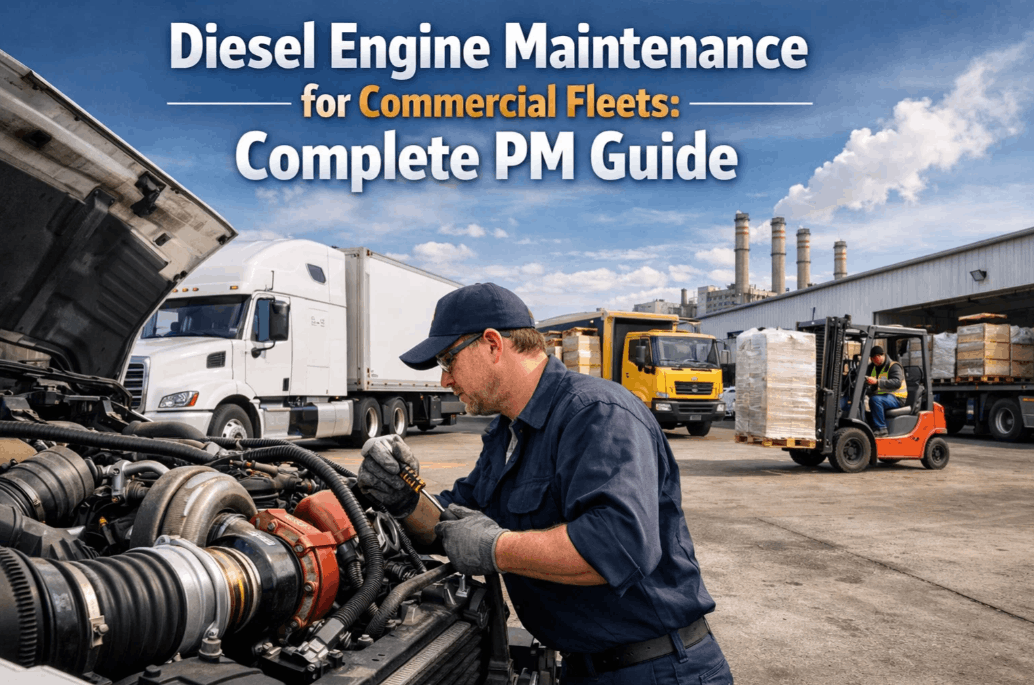
The Class 8 day-cab tractor pulling reefer freight from Bakersfield to Denver burns 14% more diesel on the return leg than it did 90 days earlier on the same route. The driver assumes the wind is different. Dispatch attributes it to load variation. The shop runs a routine PM at the 25,000-mile mark and finds a primary air filter caked with central valley agricultural dust — restriction gauge pegged in the red. Filter replaced. Fuel economy on the next outbound leg returns to baseline. The cost of that single delayed air filter service: 240 extra gallons of diesel across 90 days at $3.85 per gallon, totaling $924 in fuel waste alone. Multiply that across 80 trucks running similar routes and the annual cost of skipped or delayed air filter service crosses $73,000 — and that calculation does not include accelerated turbocharger wear, EGR system fouling, or emissions compliance risk. Air filter maintenance is the cheapest, highest-leverage fuel economy intervention in fleet operations, and it is consistently underperformed because it depends on intervals nobody tracks reliably without a CMMS. To see the workflow on fleet configuration, you can start a free trial or book a demo.
The Hidden Cost
Why a $45 Filter Causes $924 in Hidden Fuel Waste
Air filter maintenance is among the most undervalued PM tasks in fleet operations because the cost of skipping it is invisible until measured. The filter still works — the truck still runs — and there is no warning light on the dash for restriction. But the engine compensates for reduced airflow by burning richer, working harder, and losing efficiency progressively. By the time the filter is replaced at a routine PM, the truck has been operating at 4-12% degraded fuel economy for weeks. Fleets that calculate the true cost of slipped intervals find that air filter management generates more measurable fuel savings than almost any other PM category — at the lowest parts cost in the entire program.
4%
Mild Restriction
Filter at 50-60% loading. Fuel economy loss begins. Driver does not notice. Restriction gauge at low yellow.
7%
Moderate Restriction
Filter at 75-85% loading. Measurable MPG drop. Turbo working harder. Restriction gauge mid-yellow.
10%
Critical Restriction
Filter beyond service life. Engine in protection mode. EGR fouling accelerated. Restriction gauge in red.
14%+
Severe Restriction
Bypass risk. Unfiltered air reaching engine. Turbo damage and ring wear progressing rapidly. Immediate service.
Interval Framework
Setting Air Filter Replacement Intervals by Operating Environment
OEM service intervals for air filters assume clean operating environments and average duty cycles. Real fleet operations almost never match those assumptions. A long-haul tractor running interstate freight in the Midwest sees a different dust load than a refuse truck working construction sites or an agricultural hauler in California's Central Valley. Setting intervals by operating environment — not by manufacturer baseline — is the difference between paying for filter service that protects fuel economy and paying for filter service that arrives 20,000 miles too late.
Air Filter Replacement Intervals by Operating Environment
Highway Long Haul (Clean)
40,000-50,000 mi
Interstate freight, minimal urban exposure, no dust environments
Mixed Urban / Highway
28,000-35,000 mi
Regional delivery with city stops, suburban industrial routes
Urban Heavy Stop-Go
18,000-25,000 mi
Refuse, transit, last-mile delivery in dense city environments
Agricultural / Rural
12,000-18,000 mi
Central Valley, harvest hauling, gravel road regional routes
Construction / Off-Road
8,000-12,000 mi
Construction sites, mining access, heavy dust and aggregate exposure
Severe Dust / Desert
5,000-8,000 mi
Desert oilfield, severe dust environments, daily pre-cleaner service
Inspection Criteria
Six Conditions That Override Calendar-Based Intervals
Mileage-based intervals are a baseline, not a rule. Six conditions should trigger immediate air filter inspection and likely replacement regardless of remaining service life on the calendar. Each of these conditions indicates accelerated loading or compromised filter integrity that the standard interval does not account for.
01
Restriction Gauge in Red
Mechanical restriction gauge reaches the red zone or electronic restriction sensor exceeds OEM threshold. Replace immediately regardless of mileage.
02
Measurable MPG Drop
Telematics-tracked fuel economy drops more than 5% from rolling baseline without route, load, or weather explanation. Inspect filter first.
03
Visible Damage on Removal
Torn pleats, oil contamination, water saturation, dented filter housing during inspection. Replace and investigate root cause.
04
Recent Dust Storm Exposure
Vehicle operated in significant dust event regardless of mileage since last service. Heavy loading can occur in single-day exposure.
05
Black Smoke at Acceleration
Excess black smoke under acceleration indicates rich fuel-air mixture often caused by restricted intake. Inspect filter before chasing fuel system.
06
Turbo Performance Complaint
Driver reports lag, reduced boost, or power loss. Restricted air filter is the cheapest possible cause to rule out before turbo diagnostics.
Oxmaint Air Filter Program
How CMMS Automation Eliminates Missed Filter Intervals
The reason 87% of fleets miss optimal air filter intervals is not negligence — it is the impossibility of manually tracking intervals across hundreds of vehicles with varied duty cycles, operating environments, and mileage accumulation rates. A CMMS built for fleet operations does the tracking automatically and triggers the right service at the right time for each individual vehicle. To see the workflow on a fleet of your size, you can book a demo.
Vehicle-Specific Interval Configuration
Each vehicle's air filter interval set by route, operating environment, and engine specification. No fleet-wide assumption — per-truck precision.
Mileage-Triggered PM Generation
Telematics-integrated mileage triggers PM work orders automatically. Service scheduled into next yard return window without manual review.
Restriction Sensor Integration
Electronic restriction sensors feed real-time data into the platform. Threshold crossing triggers immediate inspection work order before next scheduled PM.
Fuel Economy Correlation Reporting
MPG trend analysis flags vehicles showing unexplained decline. Air filter inspection added to next service automatically.
MRO Stock Auto-Replenishment
Filter inventory tracked at vehicle and yard level. Stock dropping below threshold triggers purchase order before next service cycle exhausts supply.
Service Cost & Savings Dashboard
Filter cost, labor cost, and fuel savings tracked together. ROI of timely air filter service surfaced in monthly fleet KPI reporting.
Before vs After
Air Filter Program Performance With and Without CMMS
| Performance Metric | Without CMMS Tracking | With CMMS Automation |
|---|
| Air filter intervals hit on-time | 34% | 97% |
| Average MPG across fleet | 6.2 mpg | 6.8 mpg |
| Annual fuel cost per vehicle | $28,400 | $25,900 |
| Turbocharger replacement rate | 1 per 380K mi | 1 per 620K mi |
| EGR cleaning frequency | Every 90K mi | Every 145K mi |
| Restriction-driven engine derate events | 14 per 100 trucks | 1 per 100 trucks |
| Annual filter program cost per vehicle | $180 | $245 |
| Net annual savings per vehicle | Baseline | +$2,435 |
Capture 10% Fuel Economy Gains With Automated Filter Management
Oxmaint configures air filter intervals per vehicle, integrates restriction sensors and telematics, and correlates filter health to fuel economy in your KPI dashboard. The cheapest PM in your program becomes the highest-ROI line item — without your dispatcher tracking a single spreadsheet.
FAQ
Frequently Asked Questions
Can air filters be cleaned and reused instead of replaced?
Most OEM heavy-duty air filters are designed for replacement, not cleaning. Some specialty applications use cleanable elements with documented service procedures, but in fleet operations the labor cost of cleaning typically exceeds the parts cost of replacement. The risk of damaging pleats or compromising filtration during cleaning makes replacement the dominant best practice.
How accurate are mechanical restriction gauges compared to electronic sensors?
Mechanical gauges measure peak restriction since last reset and are reliable for go/no-go decisions, but they do not provide trend data. Electronic restriction sensors feed continuous data into telematics or directly to a CMMS, enabling condition-based service triggering and trend analysis. Most modern fleet vehicles ship with electronic sensors, and aftermarket retrofit options exist for older units.
Does air filter restriction affect emissions compliance?
Yes. Restricted air filters cause rich fuel-air mixtures that increase particulate matter and unburned hydrocarbon emissions. Sustained operation under restriction accelerates DPF loading and EGR fouling, both of which can lead to derate events and compliance failures during state emissions testing or roadside inspections in CARB-regulated jurisdictions.
How quickly does fuel economy recover after filter replacement?
Fuel economy improvement is immediate once the new filter is installed. Telematics-tracked MPG typically shows the recovery within the first 200-400 miles of operation post-service. If MPG does not return to baseline after filter replacement, the issue is downstream — turbocharger, EGR, fuel system, or sensor calibration — and a more thorough diagnostic is warranted.