A DOT or FMCSA compliance audit is not an event you prepare for in the week before it happens — it is the result of what your operation does or fails to do every day across driver qualification, vehicle maintenance, hours of service, and inspection records. Carriers who pass with minimal findings have built systems that generate compliant documentation automatically. Carriers who receive unsatisfactory ratings have usually been running compliant operations that generated no documentation to prove it. The audit is an evidence problem as much as an operations problem. OxMaint's CMMS generates the maintenance audit trail automatically — every work order, PM completion, DVIR, and technician sign-off timestamped, organised, and exportable in audit-ready format. The difference between a satisfactory rating and a conditional rating often comes down to whether that record exists.
Fleet Compliance Audit Preparation: How to Pass DOT and FMCSA Audits
How to prepare for DOT/FMCSA compliance audits — document assembly, driver qualification file review, maintenance record verification, HOS audit trail, and CMMS-generated compliance reports that satisfy auditors on day one.
Understanding DOT/FMCSA Audit Types
FMCSA conducts four types of audits, each triggered by different circumstances and carrying different scopes. A Comprehensive (formerly "Full") Safety Audit reviews all safety management practices and all six BASICs. A Focused Audit targets a carrier whose SMS data flags specific BASIC threshold violations. A Compliance Review examines safety management practices for carriers with poor safety records. A New Entrant Safety Audit is mandatory for all new motor carriers within 12 months of beginning operations. Understanding which type you are facing determines exactly which records to prioritise. OxMaint generates record exports by audit type — so compliance directors can produce exactly what the auditor needs without spending days searching through filing systems.
The Complete Audit Document Checklist
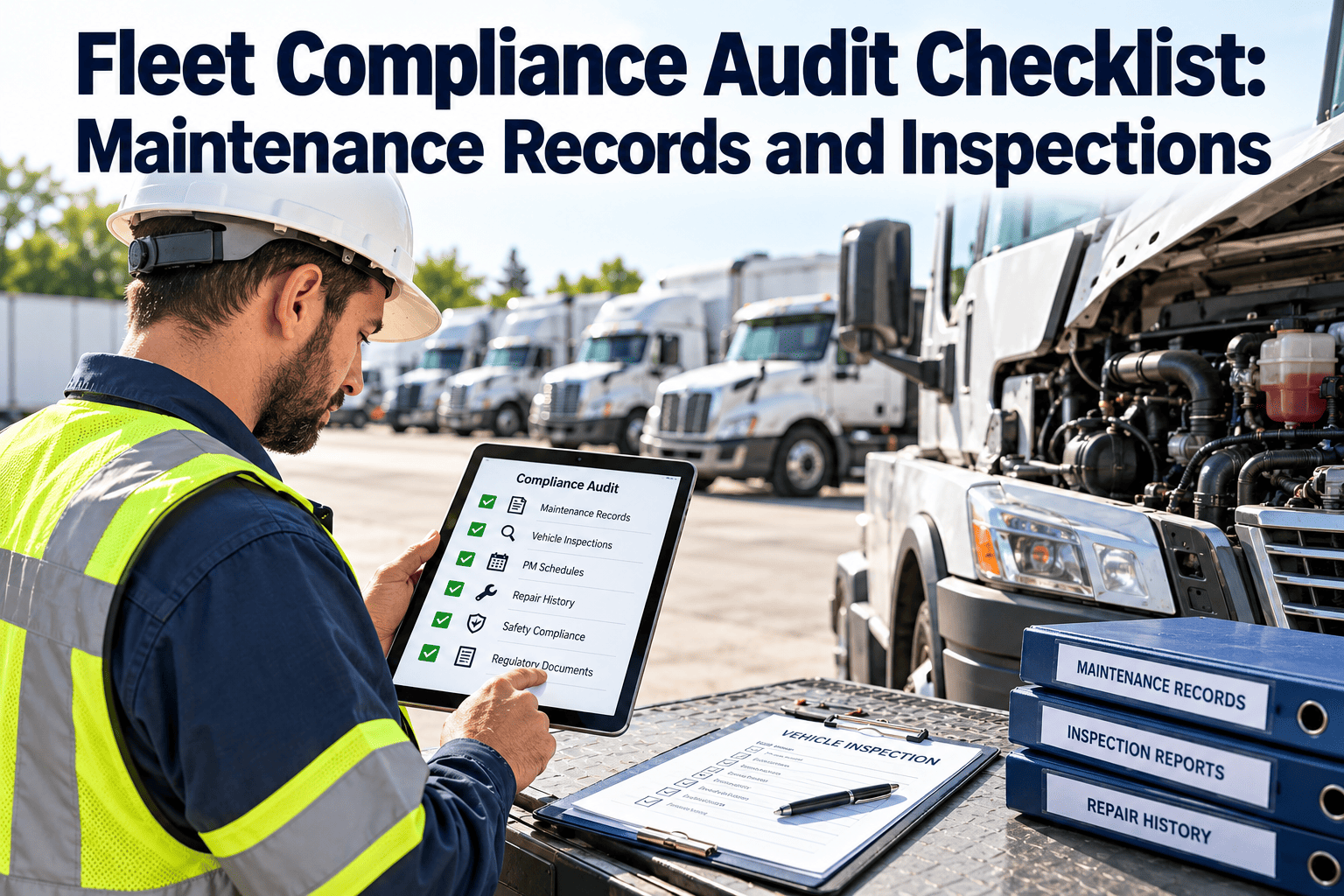
FMCSA auditors work from a defined list of required documents across six categories. 68% of audit findings are documentation failures — not operational ones. The operations were compliant; the paperwork was missing, incomplete, or not producible within the 72-hour window typically given after audit notification. OxMaint stores all maintenance-related audit documents in one searchable system with one-click export by vehicle, date range, or audit category. The six document categories below are what every compliance director must have ready before an auditor arrives.
Audit Readiness Scorecard: Self-Assessment Before the Auditor Arrives
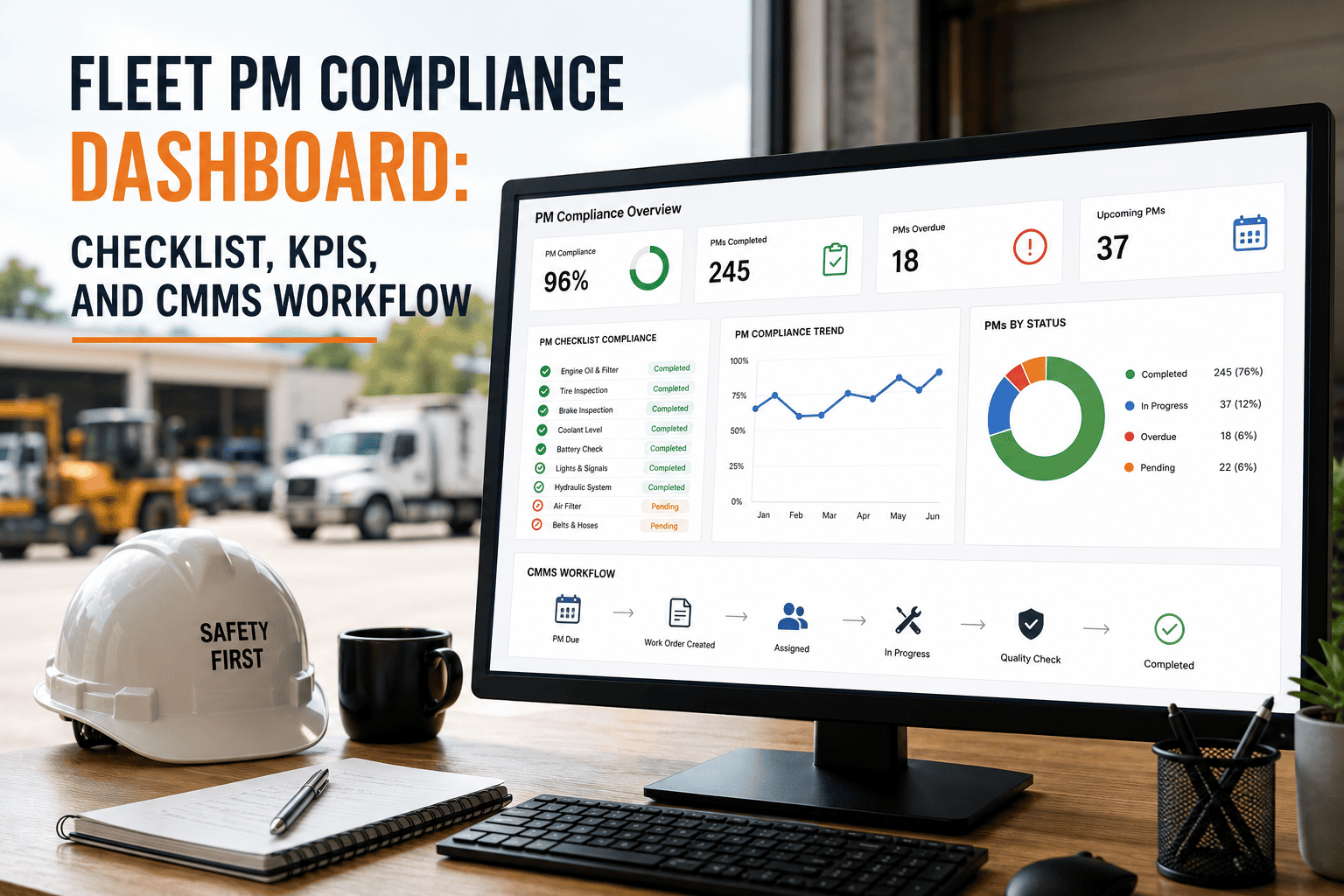
The most effective audit preparation is a self-audit performed 30–60 days before FMCSA notification. Carriers who conduct internal compliance reviews consistently score significantly better than those who begin gathering records after receiving audit notice. For each of the six audit areas, the scorecard below identifies the most common finding in that category and what a compliant record looks like. OxMaint's compliance dashboard pre-populates this scorecard from live work order data — showing compliance directors their readiness status without any manual record-pulling.
Technology That Builds Your Audit Record Automatically
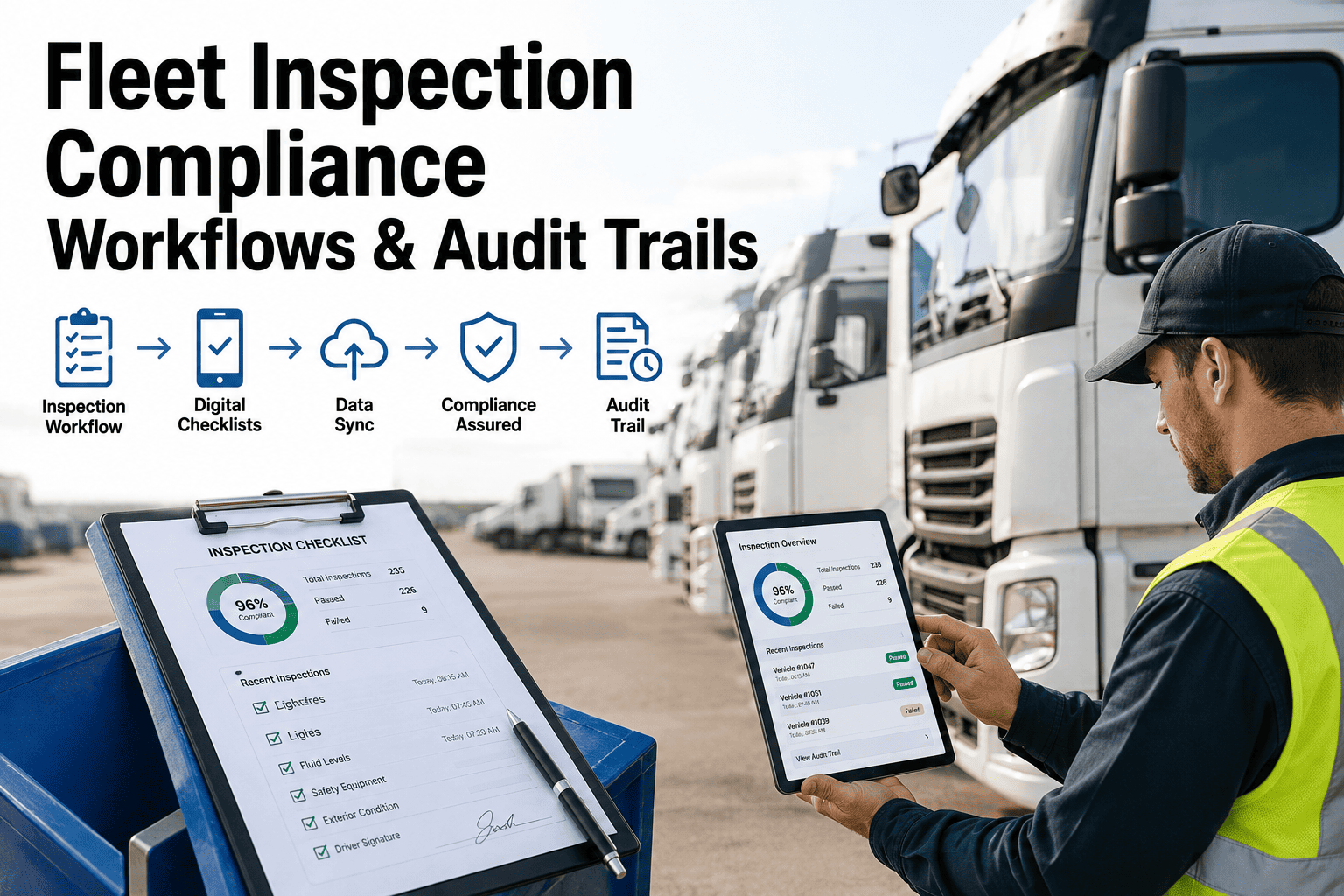
The compliance director's hardest audit problem is not understanding what records are required — it is producing 12 months of vehicle-specific maintenance records, complete with technician signatures and defect corrections, in 72 hours when they live in filing cabinets across three depots. Technology eliminates this problem at source by generating the audit record as a byproduct of normal operations. OBD-II and J1939 continuous monitoring creates a real-time condition log for every vehicle — when combined with AI digital twin modelling, it produces a proactive maintenance record showing the fleet was monitored and acted upon, not just inspected annually. AI vision camera systems create dated photographic evidence of vehicle condition at dispatch. OxMaint's CMMS stores every maintenance event with full audit metadata — inspector credentials, timestamps, defect details, corrective action — and exports it in FMCSA audit format on demand. SAP PM integration means every work order completion also updates the enterprise asset record, creating dual-system documentation that satisfies both internal audit and FMCSA scrutiny.
Generates a real-time condition log per vehicle — brake wear, fluid levels, fault codes — that shows proactive monitoring to auditors. Every anomaly triggering a work order demonstrates the fleet is managed, not just inspected annually.
Models wear trajectories per vehicle and generates predictive maintenance schedules. The digital twin record demonstrates to FMCSA auditors that the carrier has a systematic, evidence-based PM programme — not a reactive one.
Daily depot walk-around scans create dated photographic records of vehicle condition at dispatch. If a defect is later cited at roadside, the camera log shows whether the condition existed at departure — critical DataQ challenge evidence.
PM completions automatically update the SAP asset record — creating enterprise-grade audit documentation in parallel with CMMS records. Dual-system confirmation satisfies both FMCSA and internal audit requirements without manual re-entry.
Our last FMCSA compliance review took 4 hours from notification to full document production. The auditor said our maintenance records were some of the most complete she'd seen. Every work order, DVIR, and defect correction was in OxMaint — we just exported by vehicle and date range and handed her a USB drive.
Your Maintenance Audit Trail — Built Automatically, Every Day
OxMaint stores every work order, DVIR, PM completion, and inspector credential with full audit metadata — exportable by vehicle or date range in minutes. Free to start.
Common Audit Failures and How to Prevent Them
Expired Annual Inspections at Time of Audit
The most common single finding in vehicle maintenance audits. Often not discovered until the auditor asks to see the sticker. Prevention: CMMS due-date tracking with 60/30-day alerts per vehicle. OxMaint sends automated inspection due-date alerts that eliminate this finding entirely.
DVIR Defects Without Documented Correction
Drivers report defects on DVIRs that operations teams repair without documenting the corrective action in writing. The regulation requires the defect correction to be signed off by the next driver acknowledging it was repaired or certification it does not need repair (§396.11). Digital DVIR systems with mandatory sign-off fields close this gap automatically.
Incomplete or Unverifiable Driver Qualification Files
DQFs are often assembled at hire and not maintained — medical certificates expire, MVR annual reviews are skipped, clearinghouse queries are missed. Auditors check every driver in the file. A systematic DQF management process with expiry tracking is the only scalable solution for fleets above 10 drivers.
Missing Supporting Documents for ELD Records
ELD data alone is insufficient — FMCSA requires supporting documents (fuel receipts, trip records, delivery confirmation) that corroborate on-duty and driving time entries. Gaps between ELD records and supporting documents are treated as potential falsification. Carriers must retain and be able to produce both, matched by date and driver, for 6 months.
Frequently Asked Questions
How much notice does FMCSA give before a compliance audit?
Typically 24–72 hours for a focused or compliance review audit. New entrant audits are scheduled 30+ days out. Comprehensive safety audits triggered by serious incidents may have shorter notice. Carriers with CMMS-managed records can respond within hours; paper-based systems often cannot meet even 72-hour timelines across multiple depot locations.
What does an "unsatisfactory" FMCSA rating mean for a carrier?
An unsatisfactory rating requires the carrier to immediately remedy all deficiencies and demonstrate corrective action or face operating authority revocation within 45–60 days. It also appears on the carrier's public SMS profile — visible to shippers and insurers — and typically triggers immediate premium increases. OxMaint's compliance dashboard helps carriers maintain the documentation that prevents unsatisfactory findings.
How long must maintenance records be retained for FMCSA audits?
Vehicle maintenance records must be retained for 1 year after the record is created and for 6 months after the vehicle leaves the fleet (§396.21). Annual inspection certificates must remain on the vehicle for 12 months. Driver qualification files must be retained for 3 years after the driver leaves. Book a demo to see OxMaint's retention management features.
Can a CMMS replace paper maintenance records for FMCSA purposes?
Yes. FMCSA accepts electronic records provided they include all required fields (vehicle ID, date, inspector identity, certification, defects found, corrective actions, signatures), are producible on demand, and can be authenticated. OxMaint's digital records satisfy all these requirements and can be exported in multiple formats suitable for auditor presentation.
Pass Your Next DOT Audit with Complete Maintenance Records. On Demand.
OxMaint stores every work order, PM completion, DVIR, and inspection record — audit-ready, instantly exportable.