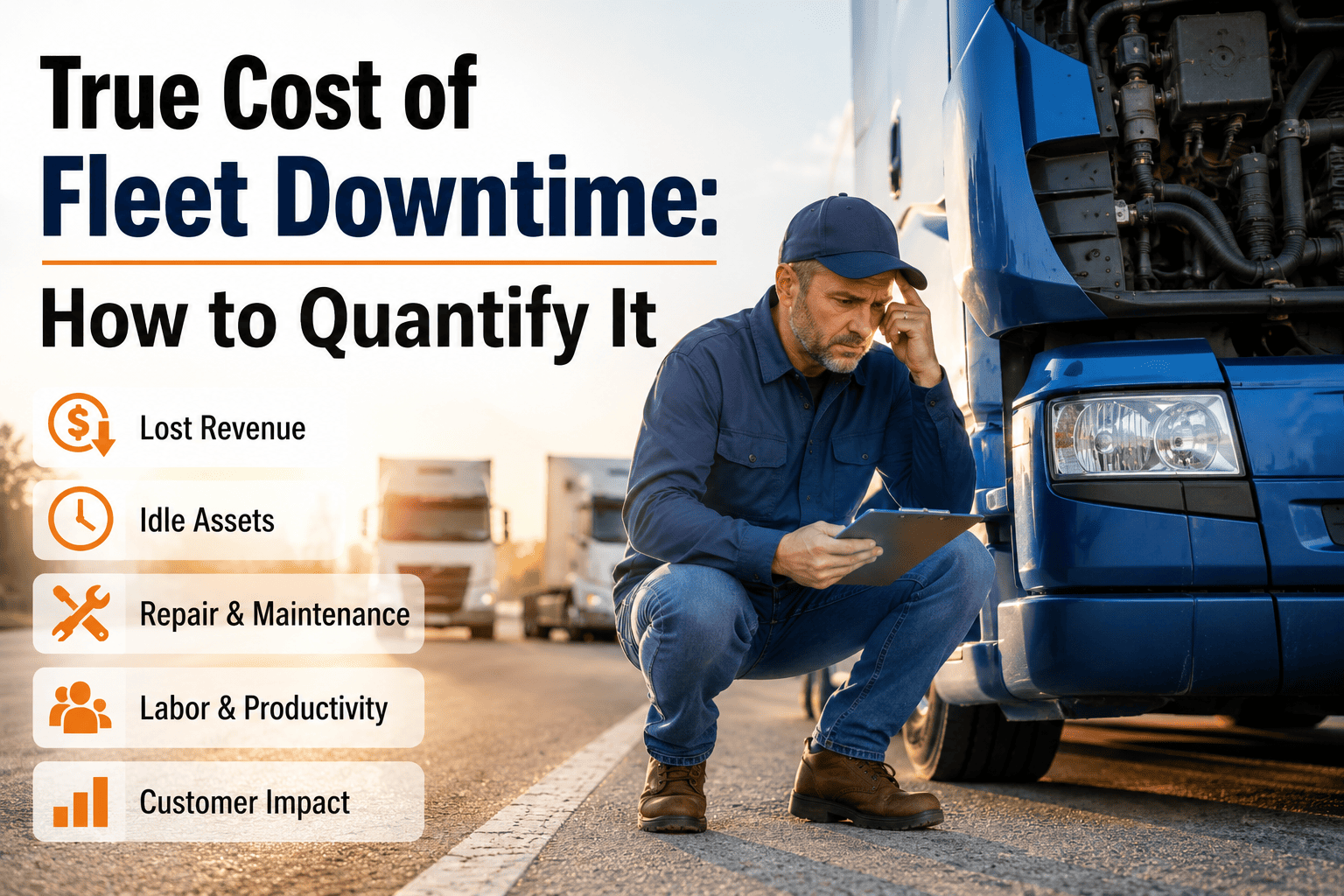
Fleet downtime is the cost that no budget line fully captures. Direct repair costs are tracked. Parts are invoiced. Labor hours are logged. But the cascade — driver sitting idle on the shoulder, dispatcher scrambling to reassign loads, delivery SLA missed, customer penalty triggered, insurance claim opened — rarely makes it into the downtime ledger. Industry benchmarks put the true cost of an unplanned commercial fleet breakdown at 3–5× the direct repair cost when all downstream effects are counted. For a 50-vehicle fleet averaging two unplanned breakdowns per vehicle per year, the fully-loaded downtime cost typically runs $280,000–$420,000 annually — against a direct repair bill of $80,000–$120,000. OxMaint's downtime analytics identifies every minute a vehicle is out of service, categorizes the cause, and builds the data foundation that lets operations directors eliminate downtime categories systematically rather than reacting to individual incidents.
Fleet Downtime Analysis: Identifying and Eliminating the Top Causes
How to categorize downtime causes, calculate true operational costs, and use CMMS data — combined with AI vision, predictive maintenance, and OBD/telematics integration — to systematically eliminate the top downtime categories in your fleet.
The 4 Downtime Categories — and Why Most Fleets Only Track One
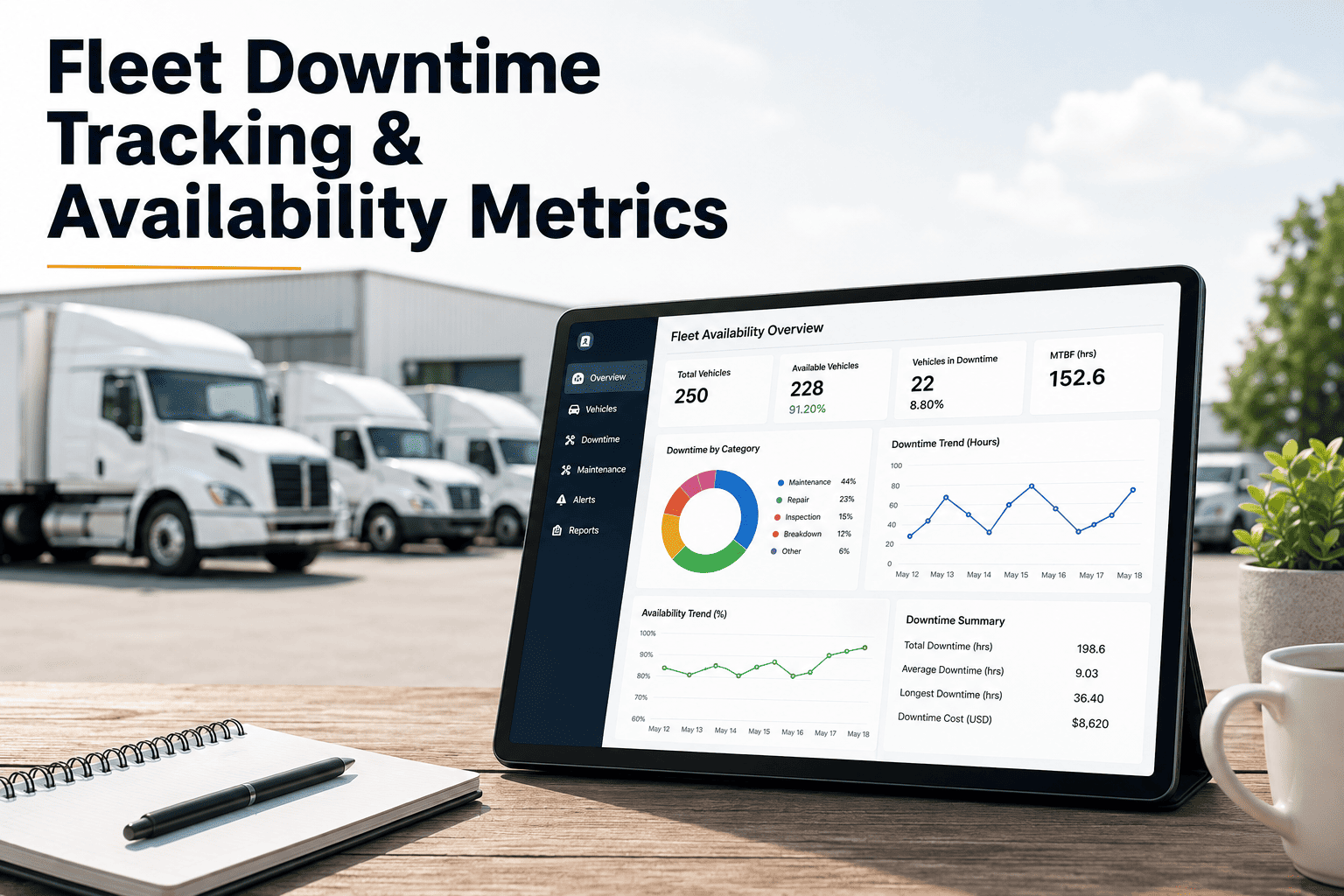
Most fleet operations track mechanical downtime — the vehicle is broken, repair time is logged, the vehicle returns to service. The three other downtime categories are almost universally untracked: parts wait time (the vehicle is repaired but the part hasn't arrived), scheduling downtime (the vehicle is available but not dispatched due to planning gaps), and compliance downtime (the vehicle is grounded for inspection, certification, or regulatory hold). In a typical commercial fleet, mechanical failure accounts for only 38–45% of total downtime hours. The remaining 55–62% is administrative, logistical, or preventable. Treating all downtime as mechanical failure misidentifies the problem and sends cost reduction efforts to the wrong interventions.
Calculating True Downtime Cost: Beyond the Repair Invoice
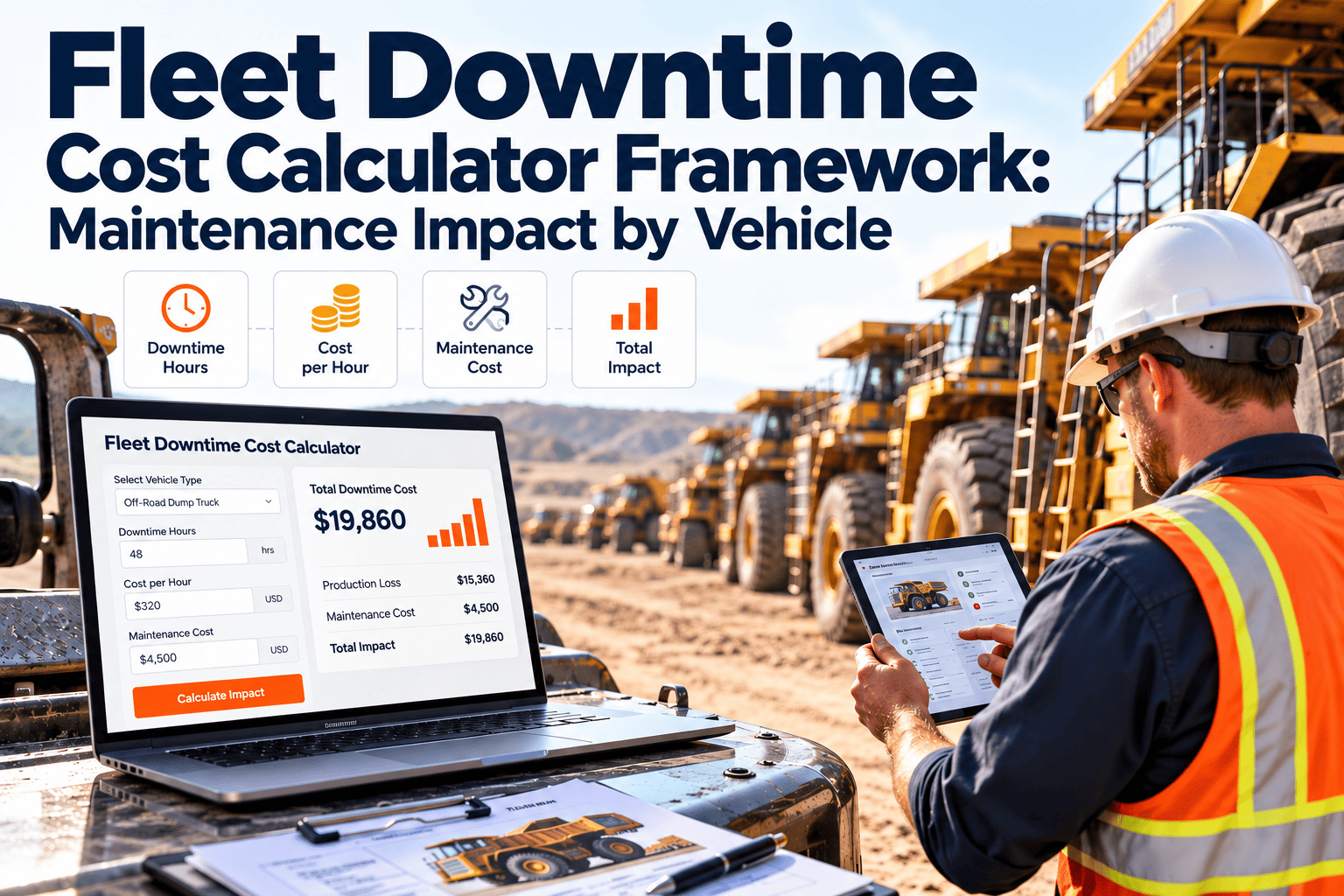
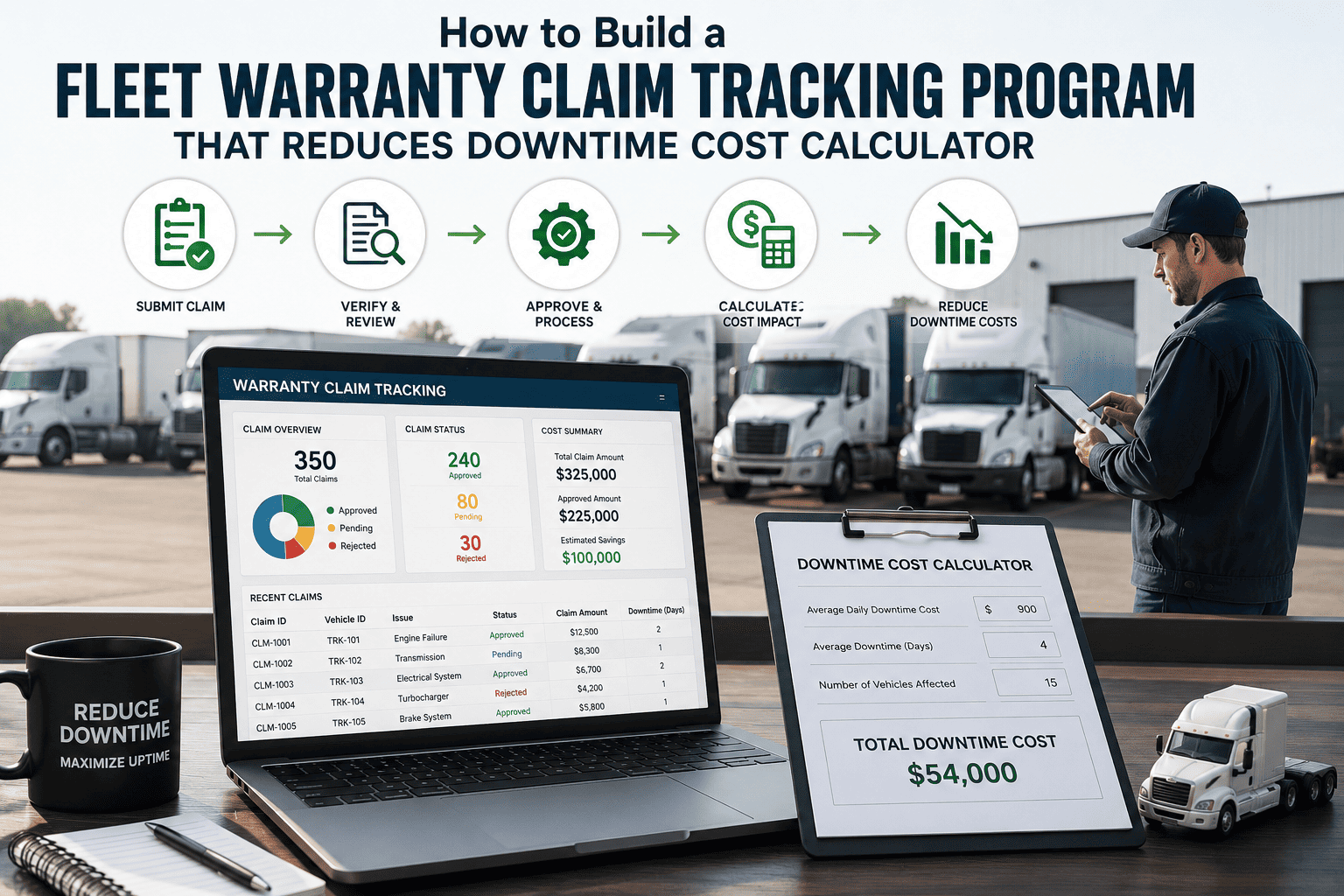
Calculating true downtime cost requires capturing all five cost dimensions of a breakdown event — not just the repair bill. The direct repair cost is only the beginning. Add the driver cost for hours the driver is paid but not productive. Add the dispatch disruption cost — the labor and planning overhead of rerouting loads, finding replacement vehicles, and communicating delays. Add the revenue impact — deliveries not made, jobs not reached, SLA penalties triggered. Add the fleet overhead that continues during downtime — depreciation, insurance, and financing do not pause when a vehicle sits in a shop bay. Most fleets that conduct this full calculation for the first time discover their downtime is costing 3–5× what they believed.
AI Camera Vision: Catching Failure Before It Happens
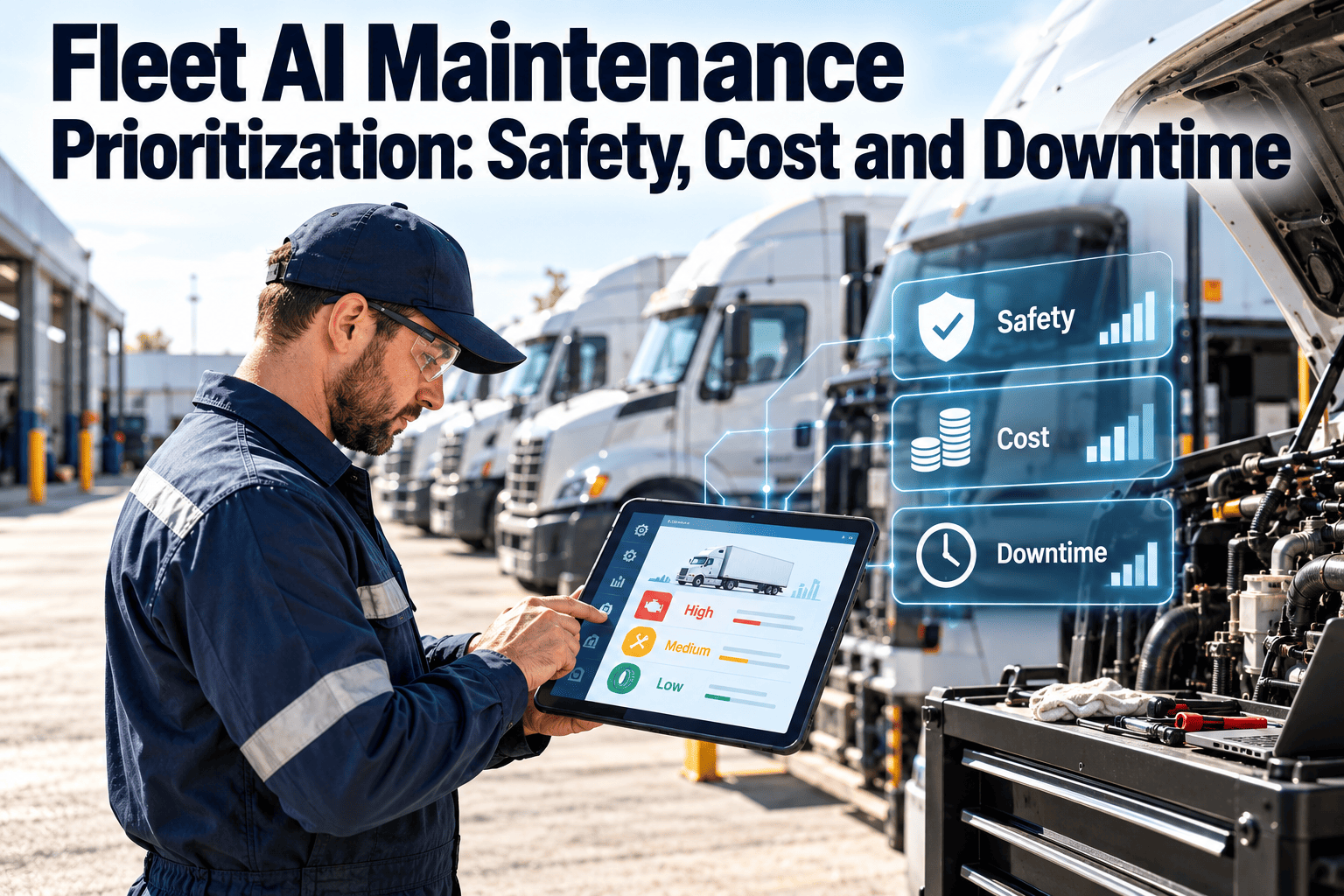
AI-powered cabin and exterior camera systems have moved beyond driver behavior monitoring to become a real-time mechanical failure early-warning layer. Computer vision systems trained on tire deformation patterns can detect a tire approaching failure from sidewall bulge before pressure sensors register a problem. Thermal camera systems mounted on wheel wells detect brake overheating patterns 30–40 minutes before the driver notices fade. Cargo area cameras detect improper load distribution that will stress suspension components over a multi-day delivery cycle. OxMaint's telematics integration layer connects AI camera alerts to maintenance workflows — a camera-flagged event generates an OxMaint work order automatically, ensuring no early-warning signal is lost between the alert and the action.
Predictive Maintenance: OBD, PLC, and SAP Integration
Predictive maintenance — using real-time sensor data to forecast component failure before it occurs — has moved from large enterprise deployments to accessible technology for mid-size commercial fleet operators in 2026. OBD-II and J1939 CAN bus feeds from commercial vehicles provide real-time engine parameters, fault codes, and component health signals. PLC integrations from fixed plant equipment provide operational cycle data. SAP Fleet Management and S/4HANA integration connects vehicle maintenance data to enterprise procurement, financial, and supply chain systems — enabling automatic parts purchase orders when a predictive alert identifies an impending component failure. Together, these integrations create a maintenance ecosystem where the data flows from vehicle sensor to CMMS work order to parts procurement to technician assignment without manual intervention at any step.
We thought our downtime problem was mechanical. OxMaint's downtime categorization showed that 58% of our lost vehicle hours were parts wait and scheduling gaps — not failures at all. We fixed the parts stock issue in 30 days and cut total downtime by 34% without touching a single vehicle.
Parts Wait Downtime: The Most Overlooked Cost Category
Parts wait downtime — a vehicle sits repaired, awaiting a component that has not arrived — is the single most actionable downtime category in most commercial fleets, and the least systematically addressed. In a fleet without a CMMS generating planned work orders 10–14 days in advance, the first notification that a part is needed is the moment the mechanic removes the failed component. At that point, emergency sourcing at 15–30% premium becomes the only option. In a fleet with CMMS-generated planned maintenance, the part is ordered when the work order is created — at contract pricing, without expediting cost, and with guaranteed availability.
See Every Minute of Downtime — Categorized and Attributed
OxMaint tracks downtime by category — mechanical, parts wait, compliance, and scheduling — so you eliminate the right causes. Free to start, no hardware required.
Building a Downtime Elimination Program: The 90-Day Framework
Downtime elimination is not a single intervention — it is a structured program that works through categories sequentially, eliminating the highest-impact sources first. The correct sequence is: establish baseline categorized downtime data (weeks 1–4), identify the top two downtime categories by hours lost (weeks 3–5), implement the targeted intervention for each category (weeks 4–12), and measure the reduction against baseline before moving to the next category. Most fleets that follow this structure achieve 35–45% total downtime reduction within 90 days — because they are targeting the causes of 62% of their downtime that were previously invisible.
Frequently Asked Questions
68% of Your Fleet Downtime Has a Root Cause You Are Not Tracking.
OxMaint's downtime analytics categorizes every lost vehicle hour — mechanical failure, parts wait, compliance hold, or scheduling gap — and gives operations directors the data to target each category with a specific, measurable intervention. Combined with OBD telematics, AI camera alerts, and predictive maintenance workflows, OxMaint converts invisible downtime cost into systematic elimination programs that deliver 35–45% reduction within 90 days.