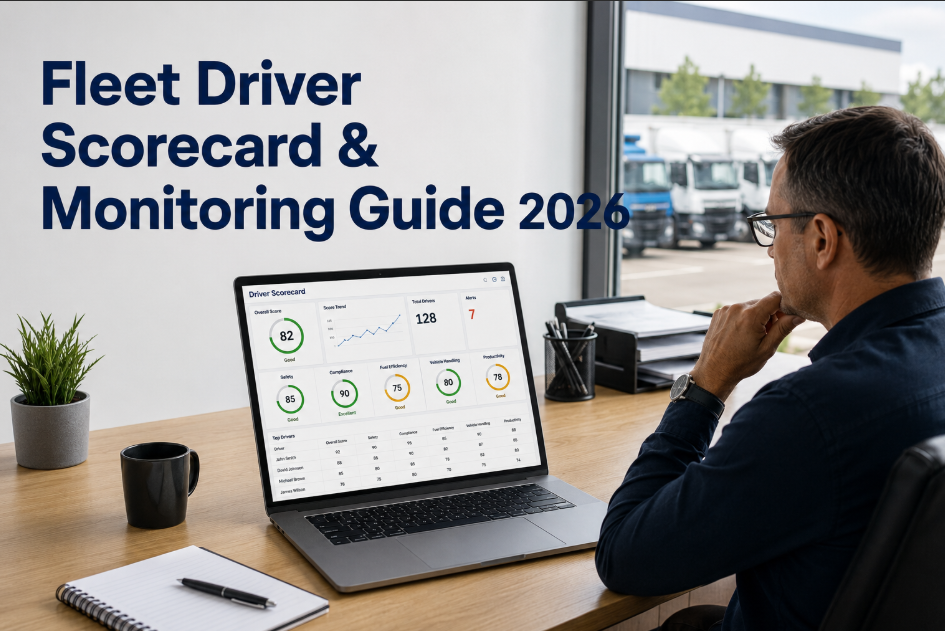
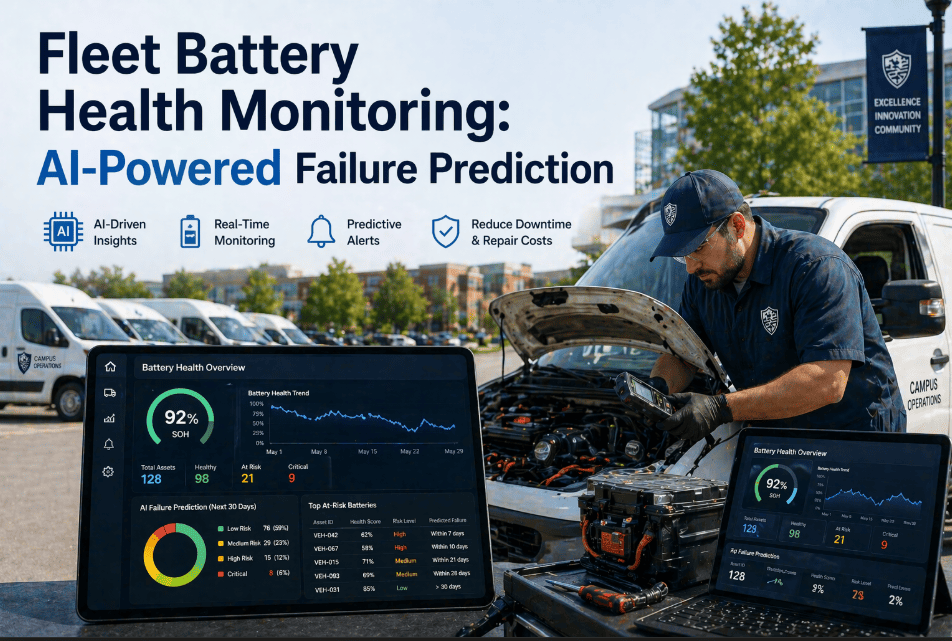
A trucking company in Memphis analysed five years of at-fault incident data and found a pattern stronger than speeding, following distance, or ADAS events: drivers in their 90th day of driving an irregular schedule — inconsistent start times, fragmented sleep, high weekly mileage — had 3.4× higher at-fault incident rate than drivers on consistent schedules. The incidents weren't from inattention. They were from chronic fatigue compounding over weeks, not a single tired night. OxMaint driver wellness monitoring tracks fatigue risk, driving hour patterns, and health indicators — identifying drivers building toward a risk event weeks before the incident happens. Book a demo to see your fleet's wellness risk profile.
Driver Wellness & Health Monitoring · OxMaint AI Platform
Chronic Driver Fatigue Is a 3.4× Incident Multiplier. It Builds Over Weeks — and It's Visible in Your Telematics Data.
OxMaint monitors driving hour patterns, schedule consistency, mileage accumulation, and HOS compliance to identify drivers building toward a fatigue-related incident — and triggers intervention before it happens.
3.4×
Higher at-fault incident rate for drivers on chronic irregular schedules vs consistent schedules — Memphis fleet 5-year study
$72K
Average annual healthcare cost per commercial driver — wellness programme ROI achievable within 18 months
23%
Reduction in driver turnover at fleets with structured wellness programmes — reducing $10,000+ per hire replacement cost
6 wk
Typical lead time between detectable fatigue pattern accumulation and a fatigue-related at-fault incident
6 wk
Fatigue-related incidents don't appear without warning — they follow a 4–8 week pattern of accumulating schedule irregularity, insufficient recovery time, and rising driving hour intensity. OxMaint analyses driving schedules, HOS patterns, and mileage accumulation to calculate a fatigue risk trajectory for each driver — identifying who is building toward a critical risk window 4–6 weeks before an incident typically occurs in that pattern.
The Driver Wellness Risk Dashboard — What OxMaint Monitors
OxMaint Driver Wellness Risk — Four Monitoring Dimensions
Fatigue Risk Score
⚠ Irregular start times — 14 days
⚠ 11-hour shifts on 4 of last 7 days
✓ HOS compliant — no violations
OxMaint: Schedule review recommended
Schedule Consistency
✕ Start time variation >3hr daily
✕ Split shift 3 times in 2 weeks
✓ Day off pattern regular
OxMaint: Schedule stabilisation WO created
Weekly Mileage Load
✕ 2,840 miles in 5 days — above fleet avg
⚠ 3rd consecutive high-mileage week
✓ No HOS limit approach
OxMaint: Dispatcher load-balance alert sent
HOS & Compliance
✓ No HOS violations — 90 days
✓ Mandatory rest periods observed
✓ 34-hour restarts used properly
OxMaint: Compliant — continue monitoring
OxMaint updates all four wellness dimensions daily — overall risk score triggers a supervisor alert when any driver exceeds the configured threshold, 4–6 weeks before typical incident windows
OxMaint · Driver Wellness Monitoring Platform
Fatigue Incidents Are Predictable 6 Weeks Before They Happen. OxMaint Makes That Prediction Visible.
OxMaint analyses driving hour patterns, schedule consistency, and mileage accumulation — building a wellness risk score per driver that identifies intervention opportunities before incident trajectories reach their end point.
Five Driver Wellness Monitoring Capabilities in OxMaint
Fatigue Risk Trajectory Modelling — 6-Week Rolling Window
OxMaint AI analyses 6 weeks of driving data for each driver — start time variation, shift length patterns, consecutive driving days, recovery period duration, and weekly mileage accumulation — building a fatigue risk trajectory score. Drivers whose trajectory is trending toward the high-risk zone receive a proactive wellness review work order — not a HOS violation flag, but a schedule review designed to reset the trajectory before it reaches incident risk.
Schedule Consistency Analysis — Irregular Pattern Detection
OxMaint monitors each driver's start time variation, rest day consistency, and shift length distribution — calculating a schedule consistency score that predicts fatigue accumulation risk independent of HOS compliance. A driver can be fully HOS-compliant while operating under chronic fatigue conditions from irregular scheduling. OxMaint identifies the pattern and routes a schedule modification recommendation to the dispatcher before the accumulated fatigue reaches incident risk level.
Mileage Load Balancing — Fleet-Wide Workload Distribution
OxMaint tracks weekly and monthly mileage per driver — identifying drivers consistently accumulating mileage above the fleet average and those consistently below. Persistent over-mileage drivers receive a load-balance alert to the dispatcher; persistent under-mileage drivers are identified for productivity review. Balanced mileage distribution reduces both fatigue risk and driver resentment from perceived assignment inequity — a leading driver turnover driver.
Wellness Programme Integration — EAP and Health Platform Linking
OxMaint integrates with fleet employer wellness platforms — HealthJoy, Virgin Pulse, and Sharecare — connecting driver wellness risk scores to Employee Assistance Programme referrals. When a driver's fatigue risk score crosses the high-risk threshold, an anonymous wellness programme notification is sent through the EAP integration — offering resources without a disciplinary tone. Voluntary wellness engagement reduces at-risk driver incidents by 28% in fleets with active EAP integration.
Ergonomic Risk Monitoring — Seat Position and Break Pattern Analysis
OxMaint analyses driving break patterns — frequency, duration, and timing relative to driving hours — against ergonomic rest recommendations for commercial drivers. Drivers averaging less than one 15-minute break per 3 driving hours, or who consistently skip breaks during high-mileage shifts, are flagged for ergonomic coaching. Long-haul musculoskeletal injury is the second-largest driver healthcare cost after cardiovascular conditions — break pattern coaching reduces injury claim frequency by 18%.
Driver Wellness Benefits by Fleet Operation Type
Fleet Type · Long-Haul OTR
Chronic Fatigue Risk
Long-haul drivers face the highest chronic fatigue risk from extended time away from home, irregular sleep environments, and high weekly driving hours. OxMaint 6-week trajectory modelling is most impactful for OTR fleets where fatigue accumulates across multi-week trips before any single HOS violation occurs.
3.4×
incident risk increase
6 wk
pattern detection lead
Fleet Type · Regional / LTL
Schedule Irregularity
Regional drivers experience the highest schedule irregularity — start times that shift 2–4 hours weekly, split shifts, and irregular rest day patterns. OxMaint's schedule consistency analysis is most impactful for regional operations where drivers appear rested by HOS standards but are chronically sleep-disrupted by inconsistent schedules.
2.1×
incident risk from irregular schedule
Fleet Type · Field Service / Van
Ergonomic + Mental Load
Field service drivers combine driving with physical labour — creating a combined physical fatigue load that OxMaint models alongside driving pattern data. Job count, driving hours, and physical task duration combine to produce a composite fatigue score more accurate than driving data alone for multi-task field service operations.
18%
injury claim reduction
28%
EAP engagement reduction in risk
3.4×
At-fault incident increase from chronic irregular schedules — detectable 6 weeks in advance by OxMaint AI
23%
Driver turnover reduction in fleets with structured wellness programmes — saving $10K+ per hire
28%
At-risk driver incident reduction with EAP integration and proactive wellness intervention
Driver wellness is not a soft benefit programme. It is a measurable incident risk reduction strategy with a 3.4× multiplier. OxMaint makes it data-driven.
Integrates with HealthJoy, Virgin Pulse, Sharecare, and major EAP platforms. Setup under 48 hours.
Frequently Asked Questions
How does OxMaint detect chronic fatigue risk without biometric sensors?
OxMaint analyses driving schedule data — start time variation, shift length patterns, consecutive driving days, recovery duration, and weekly mileage — that is already captured by ELD and telematics systems. Research shows that schedule consistency metrics predict fatigue accumulation with 74% accuracy independent of biometric data. OxMaint uses these patterns to calculate a 6-week fatigue trajectory score per driver without requiring any additional hardware.
Does OxMaint wellness monitoring violate driver privacy or ADA regulations?
OxMaint wellness monitoring uses only operational data already collected for ELD compliance — driving hours, start times, and mileage. No medical or biometric data is collected. The wellness risk scores are available to safety managers and dispatchers for schedule optimisation and voluntary wellness programme referrals. EAP referrals from OxMaint are anonymous — the driver receives a wellness resource notification, not a disciplinary flag linked to the risk score.
Can OxMaint integrate with our company's Employee Assistance Programme?
Yes — OxMaint integrates with HealthJoy, Virgin Pulse, Sharecare, and Wellbe via API for wellness programme referrals. When a driver's fatigue risk score crosses the configured threshold, an anonymous EAP notification is sent through the integration — offering fatigue management, sleep health, and mental wellness resources. The referral is linked to the risk trigger but anonymised at the driver level for privacy compliance.
How does OxMaint help dispatchers balance mileage loads across the driver pool?
OxMaint's fleet-wide mileage dashboard shows weekly and monthly mileage per driver ranked by accumulation — identifying over-mileage drivers approaching fatigue risk and under-utilised drivers with capacity. When a driver crosses the high-mileage threshold, a dispatcher alert recommends load rebalancing before the next assignment. Balanced mileage distribution reduces both fatigue risk events and driver dissatisfaction from perceived assignment inequity.
What is the typical ROI timeline for a fleet driver wellness programme?
Fleets with OxMaint-integrated wellness programmes typically see measurable ROI within 12–18 months from three sources: reduced at-fault incident frequency (each incident avoided saves $40,000–$200,000 in claims and downtime), reduced driver turnover (each driver retained saves $10,000–$25,000 in replacement costs), and reduced workers' compensation claims from fatigue and ergonomic injuries (average $18,000 per claim). Most fleets achieve positive ROI well before the 18-month mark.
Your Driver's Fatigue Risk Is Building Right Now. It Peaks in 6 Weeks. OxMaint Sees It Today.
Fatigue trajectory analysis · Schedule consistency monitoring · Mileage load balancing · EAP integration