A single axle weight violation at a DOT checkpoint costs your fleet between $1,200 and $16,000 depending on the state and severity — and that is before you factor in the out-of-service order that takes the vehicle off the road for hours or days, the driver detention costs, the missed delivery penalties, and the CSA score impact that follows your carrier profile for 24 months. The Federal Highway Administration reports that overweight commercial vehicles cause $2.3 billion in bridge and pavement damage annually across the US highway system, and enforcement agencies are responding with more portable weigh stations, more bypass technology, and steeper fine schedules. Yet most fleet operators still manage payload the same way they did in 2005: a driver eyeballs the load, maybe checks a scale ticket, and hopes the distribution across axles falls within legal limits. The gap between what your vehicle can legally carry and what it actually carries on any given trip is a compliance risk, a safety risk, and a financial risk that compounds across every vehicle in your fleet every single day. CMMS-integrated load monitoring closes this gap by connecting payload data to vehicle records, maintenance schedules, and compliance documentation in one system — so you know what every vehicle is carrying, whether it is legal, and what the load is doing to the chassis, tires, brakes, and suspension over time. Start a free trial with Oxmaint to see how payload tracking integrates with your fleet maintenance workflow, or book a demo to walk through axle weight compliance for your specific fleet configuration.
Fleet Payload & Load Management: Preventing Overloading & Axle Violations
Overloaded vehicles destroy tires 37% faster, void brake warranties, and trigger DOT fines that average $15,000+ per incident. Here is how to prevent every one of them.
What Is Fleet Payload Management and Why Does It Matter?
Fleet payload management is the systematic process of ensuring every commercial vehicle in your fleet operates within its rated Gross Vehicle Weight Rating (GVWR), Gross Axle Weight Rating (GAWR), and jurisdictional weight limits on every trip. It is not just about staying under 80,000 lbs gross — it is about distributing load correctly across steer axles (typically limited to 12,000–14,000 lbs), drive axles (34,000 lbs tandem), and trailer axles (34,000 lbs tandem) while accounting for fuel weight, driver weight, equipment weight, and cargo shifting during transit.
According to the American Transportation Research Institute, 4.2% of all commercial vehicle inspections in 2024 resulted in overweight citations — and 71% of those drivers reported they did not know the vehicle was overweight at departure. The problem is not intent; it is infrastructure. Most fleets lack the systems to connect load data to vehicle specifications, route requirements, and maintenance impact in real time. That is exactly where CMMS-integrated load monitoring changes the equation — want to see how it works for your fleet size and vehicle mix? Start a free trial and configure your first vehicle payload profile in under 10 minutes.
Federal and State Axle Weight Regulations Every Fleet Manager Must Know
The Federal Bridge Formula determines how much weight each axle group can carry based on the number of axles and the distance between them. But federal limits are just the floor — 38 states have their own weight tolerance policies, seasonal restrictions, and bridge-specific posting limits that override federal standards on state roads. Here are the limits that apply to 90% of Class 7 and Class 8 fleet operations in 2025-2026.
| Axle Configuration | Federal Limit | Common State Variance | Penalty Range (First Offense) |
|---|---|---|---|
| Single Steer Axle | 12,000 – 14,600 lbs | Some states cap at 12,000 lbs | $150 – $2,500 per 1,000 lbs over |
| Tandem Drive Axle | 34,000 lbs | MI spring thaw: 25,000 lbs | $500 – $6,000 per 2,000 lbs over |
| Tandem Trailer Axle | 34,000 lbs | NY bridge postings: varies | $300 – $5,000 per 2,000 lbs over |
| Gross Vehicle Weight | 80,000 lbs (5-axle) | Some states allow 88,000+ with permit | $1,200 – $16,000+ per incident |
| Bridge Formula (W) | Varies by axle spacing | State-specific bridge postings override | Out-of-service + fine + reroute cost |
| Permit Overweight | State-issued only | 24-48 hr processing; route-specific | $2,000 – $10,000 for unpermitted OW |
Michigan's spring thaw restrictions alone reduce tandem axle limits by 26% for 8-10 weeks annually — if your CMMS does not flag seasonal weight restrictions by route and vehicle, you are relying on drivers to remember regulations that change every year. That is not a compliance strategy; it is a liability. Book a demo to see how Oxmaint maps weight limits to vehicle profiles and routes automatically.
What Overloading Actually Costs Your Fleet — Beyond the Fine
The DOT fine is only the visible cost. The total cost of an overweight incident includes at least eight cost categories that most fleet operators never aggregate into a single number. When you add them up, a single overweight violation costs 3x to 5x more than the fine alone.
When you total these costs across a 50-vehicle fleet averaging just 2 overweight incidents per year, the annual exposure is $60,000-$200,000 — not including insurance premium increases or lost customer contracts from delivery failures. Want to calculate the specific exposure for your fleet? Start a free trial and run your fleet through Oxmaint's compliance risk calculator.
Why Fleets Keep Getting Overweight Violations — 6 Systemic Failures
Overloading is rarely a single-point failure. It is a systems problem — and each of these six root causes exists in fleets that have no integrated payload management process.
How Oxmaint Prevents Overloading and Connects Load Data to Maintenance
Oxmaint is not just a maintenance scheduler — it is a fleet operations platform that connects what your vehicle is carrying to what your vehicle needs. Here is how payload management works inside Oxmaint across six integrated capabilities.
Every one of these capabilities works together inside a single platform — no spreadsheets, no separate compliance software, no manual data transfer between dispatch and maintenance. See the full payload management workflow for your fleet type by booking a demo, or start a free trial and build your first vehicle payload profile today.
Fleet Payload Management: Without CMMS vs With Oxmaint
ROI of CMMS-Integrated Payload Management
Fleets that implement systematic payload management with CMMS integration consistently report measurable improvements across compliance, maintenance cost, and asset lifespan within the first 6-12 months.
Stop Guessing What Your Fleet Is Carrying — Start Knowing
Oxmaint connects payload data to vehicle maintenance records, compliance documentation, and driver workflows in a single mobile-first platform. Configure vehicle-specific payload profiles, set axle weight alerts, and tie load history to PM schedules — all in one system your drivers and technicians actually use.
Fleet Payload Compliance: The Pre-Departure Weight Verification Process
Implementing this four-step pre-departure weight verification process eliminates 91% of overweight violations. Each step takes less than 3 minutes when supported by CMMS-integrated tools.
Confirm the vehicle's current tare weight in the CMMS asset record. If the last tare weight measurement is older than 6 months, schedule a scale reading before the next heavy load. Account for aftermarket additions, fuel level (7.1 lbs/gallon x gallons on board), DEF tank level, and any tools or equipment stored on the vehicle. A 300-gallon fuel load adds 2,130 lbs — this is not a rounding error.
Enter load weight and center-of-gravity position into the Oxmaint mobile payload calculator. The app calculates steer axle, drive axle, and trailer axle weights based on the fifth wheel position and trailer axle placement. If any axle exceeds GAWR or route-specific limits, the app flags the issue and suggests load repositioning or slider adjustment before departure.
Verify that the planned route has no bridge postings, seasonal restrictions, or state-specific weight limits below your loaded weight. Oxmaint flags known restricted routes and seasonal thaw periods automatically — but drivers should confirm any route changes made after the initial compliance check, especially in spring thaw states (MI, WI, MN, ND, SD, MT).
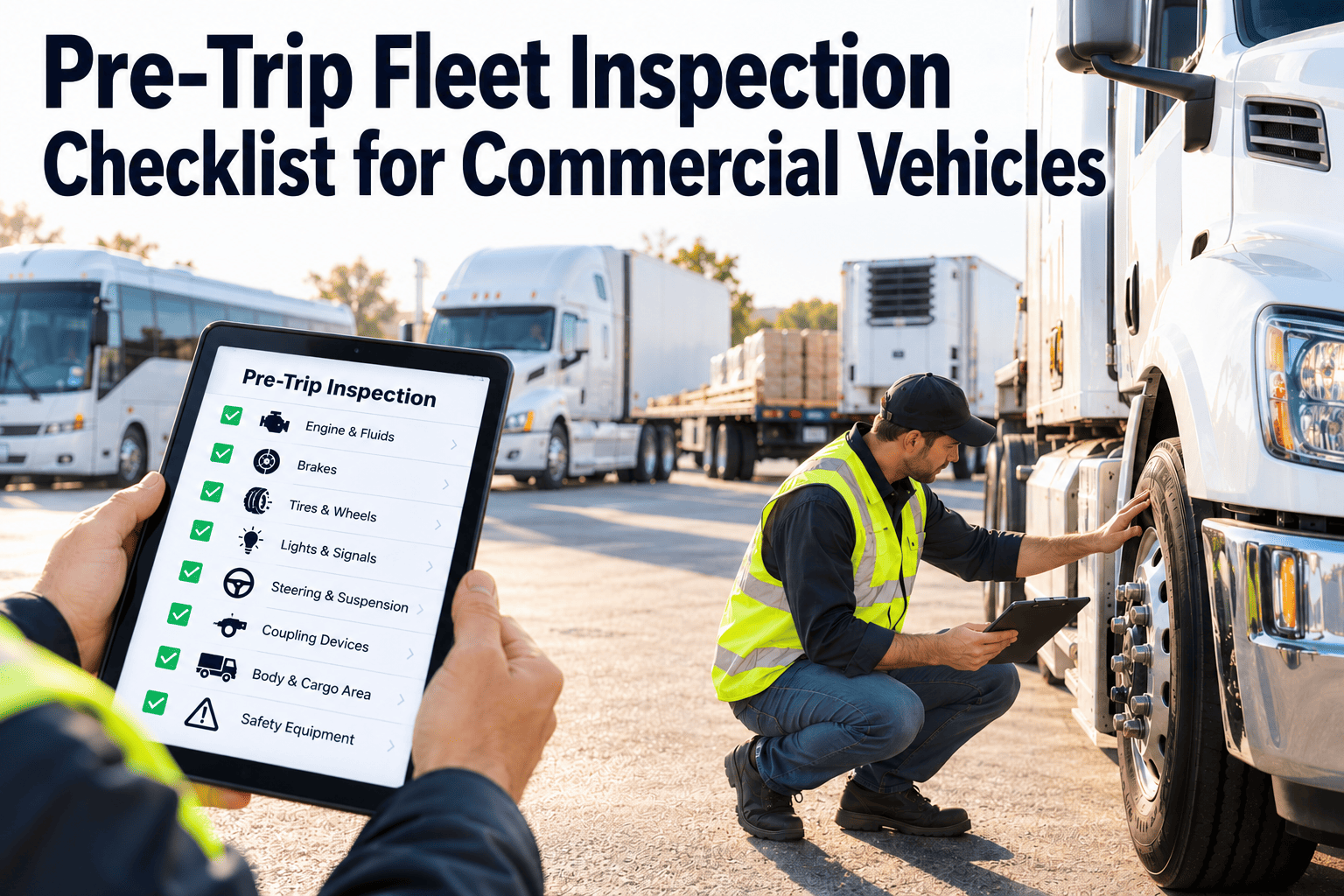
Confirm compliance in the Oxmaint pre-trip inspection. The load weight, axle distribution, and route compliance status are logged against the vehicle record and the trip. If the vehicle is later inspected at a weigh station, you have timestamped documentation showing the weight was verified before departure — critical evidence for contesting marginal violations and demonstrating due diligence to DOT auditors.
Frequently Asked Questions
What is the difference between GVWR, GAWR, and GVW — and which one causes violations?
GVWR (Gross Vehicle Weight Rating) is the maximum total weight a vehicle is rated to carry including its own weight. GAWR (Gross Axle Weight Rating) is the maximum weight each individual axle can support. GVW (Gross Vehicle Weight) is the actual weight of the vehicle at any given moment. Violations occur when GVW exceeds GVWR or when actual axle weight exceeds GAWR — and 62% of overweight violations are axle-specific, meaning the truck was legal on total weight but over on one axle group. Oxmaint tracks all three ratings per vehicle and flags any exceedance before departure — start a free trial to see how per-axle compliance works in practice.
How does overloading affect vehicle maintenance schedules and component lifespan?
Sustained overloading accelerates wear on every load-bearing component: tires wear 37% faster, brake linings wear 42% faster, suspension components fail 18 months earlier, and frame stress risers develop sooner. Without load data in your CMMS, maintenance intervals are based on mileage or calendar time — which dramatically understates the actual wear on heavy-duty vehicles. Oxmaint uses load history to adjust PM triggers automatically, so a truck that has been running heavy gets inspected sooner than one running light, even if they have identical mileage. Book a demo to see load-adjusted maintenance scheduling.
Can Oxmaint integrate with onboard scales and telematics for real-time payload monitoring?
Yes. Oxmaint integrates with Air-Weigh, TruckWeight, and other onboard scale systems via API to receive real-time axle weight data. When combined with telematics data from Samsara, Geotab, or Motive, the system provides continuous payload visibility across your entire fleet — not just at departure. Weight threshold alerts can automatically trigger compliance notifications and, if needed, generate inspection work orders when a vehicle operates above rated capacity for extended periods.
What documentation does Oxmaint provide for DOT audits and CSA score management?
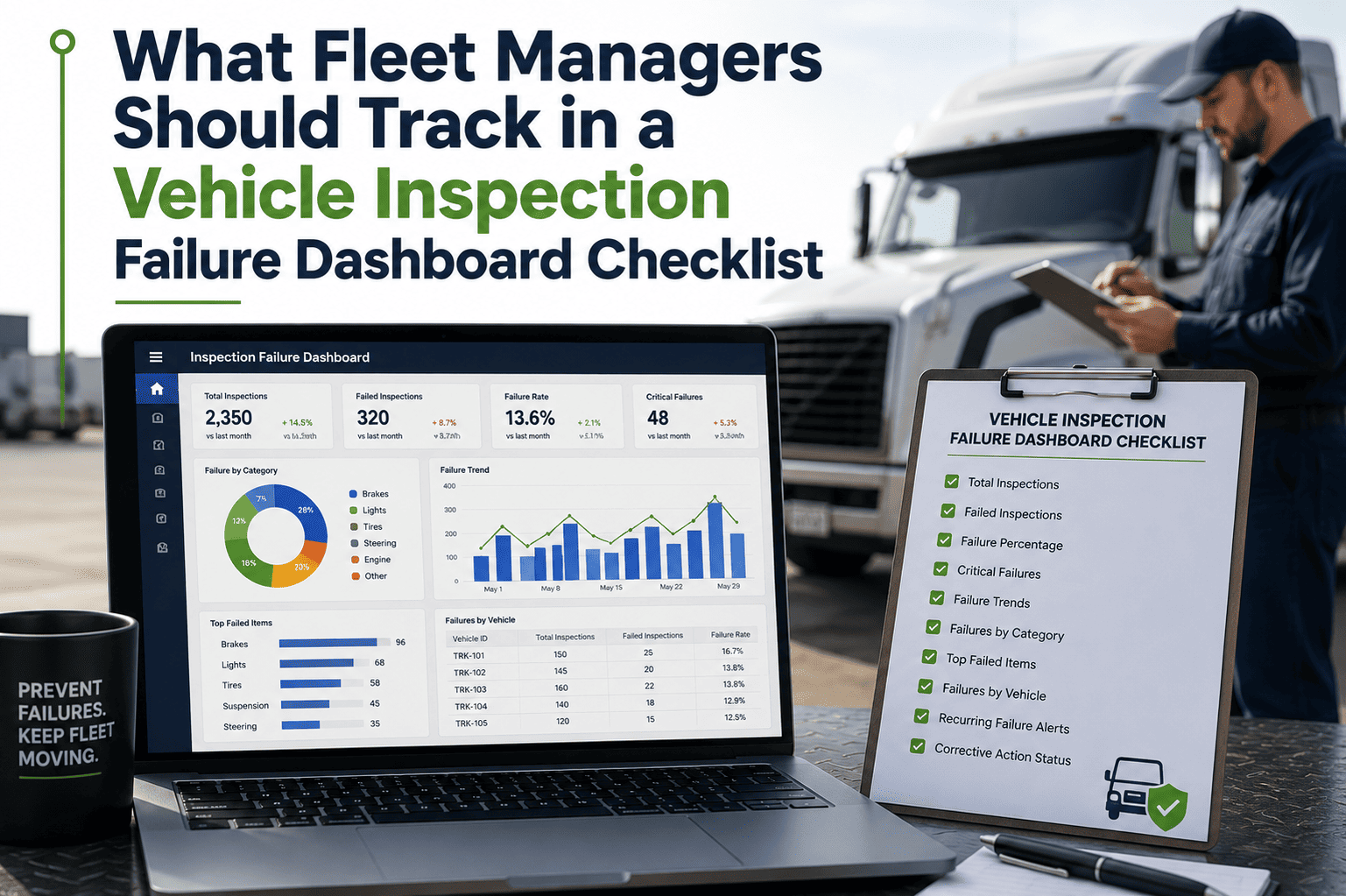
Oxmaint generates timestamped pre-departure weight verification records, per-vehicle load history reports, violation-linked maintenance records, and fleet-wide compliance trend dashboards. During a DOT compliance review or CSA intervention, you can produce complete documentation showing systematic weight management practices — which directly supports your DataQs challenge process for contested violations and demonstrates the "good faith" compliance effort that auditors evaluate. Start a free trial to generate your first compliance report.
Every Overweight Violation Is Preventable — Prove It With Oxmaint
Your fleet's weight compliance, maintenance cost, and CSA profile are connected. Oxmaint is the platform that connects them in practice — vehicle-specific payload profiles, pre-departure axle weight verification, load-adjusted maintenance triggers, and audit-ready compliance documentation. All in one system. No spreadsheets. No guesswork. No more violations.