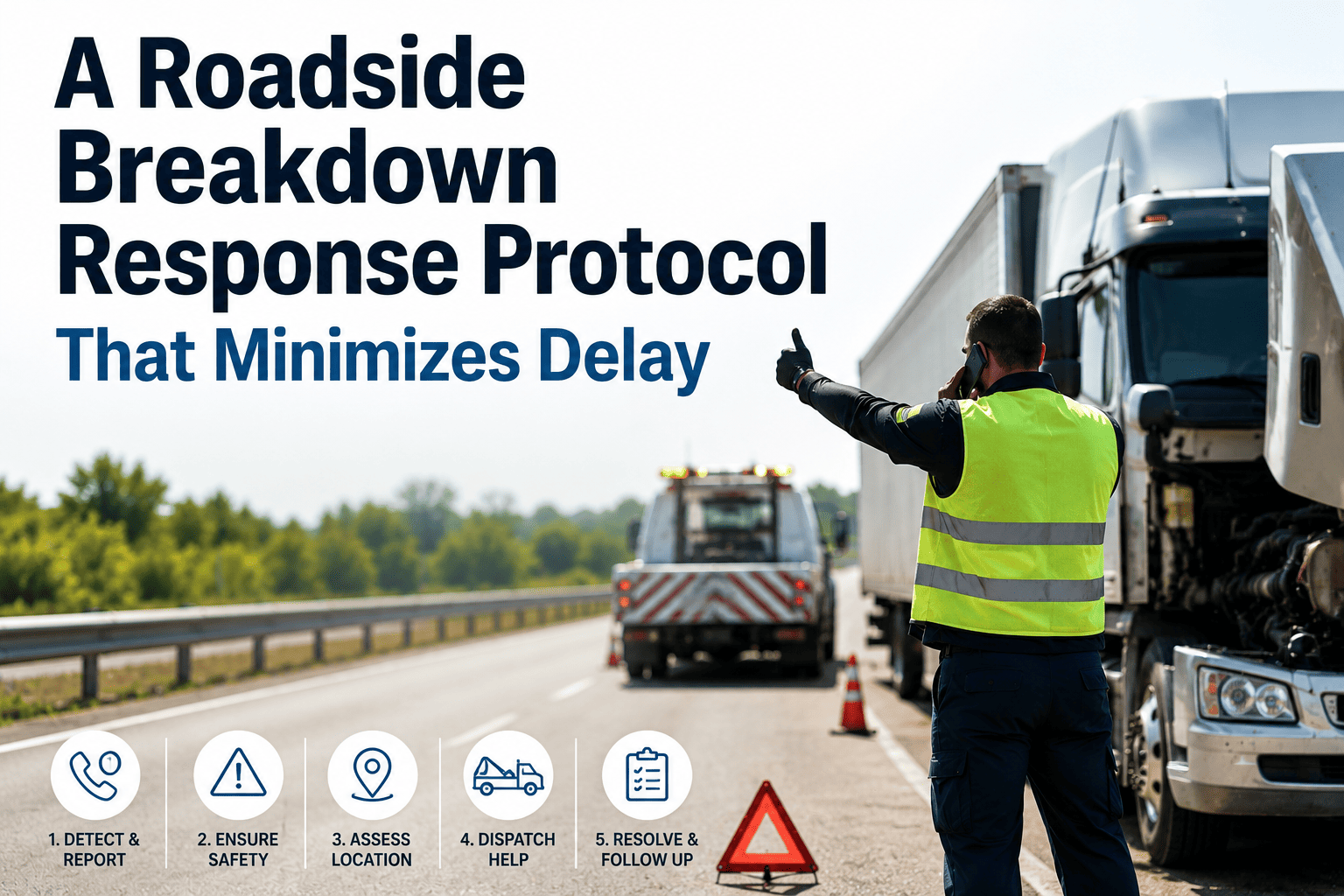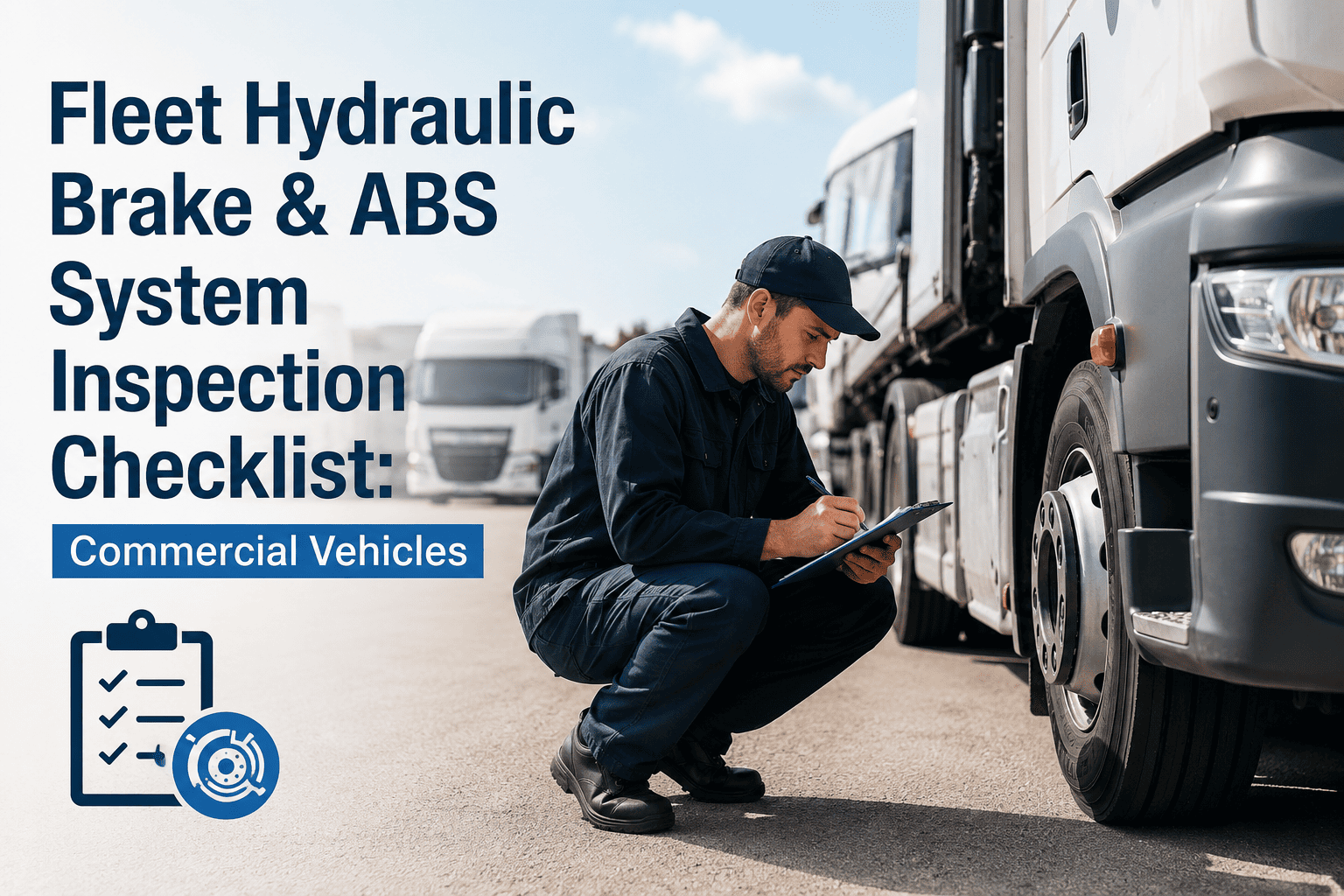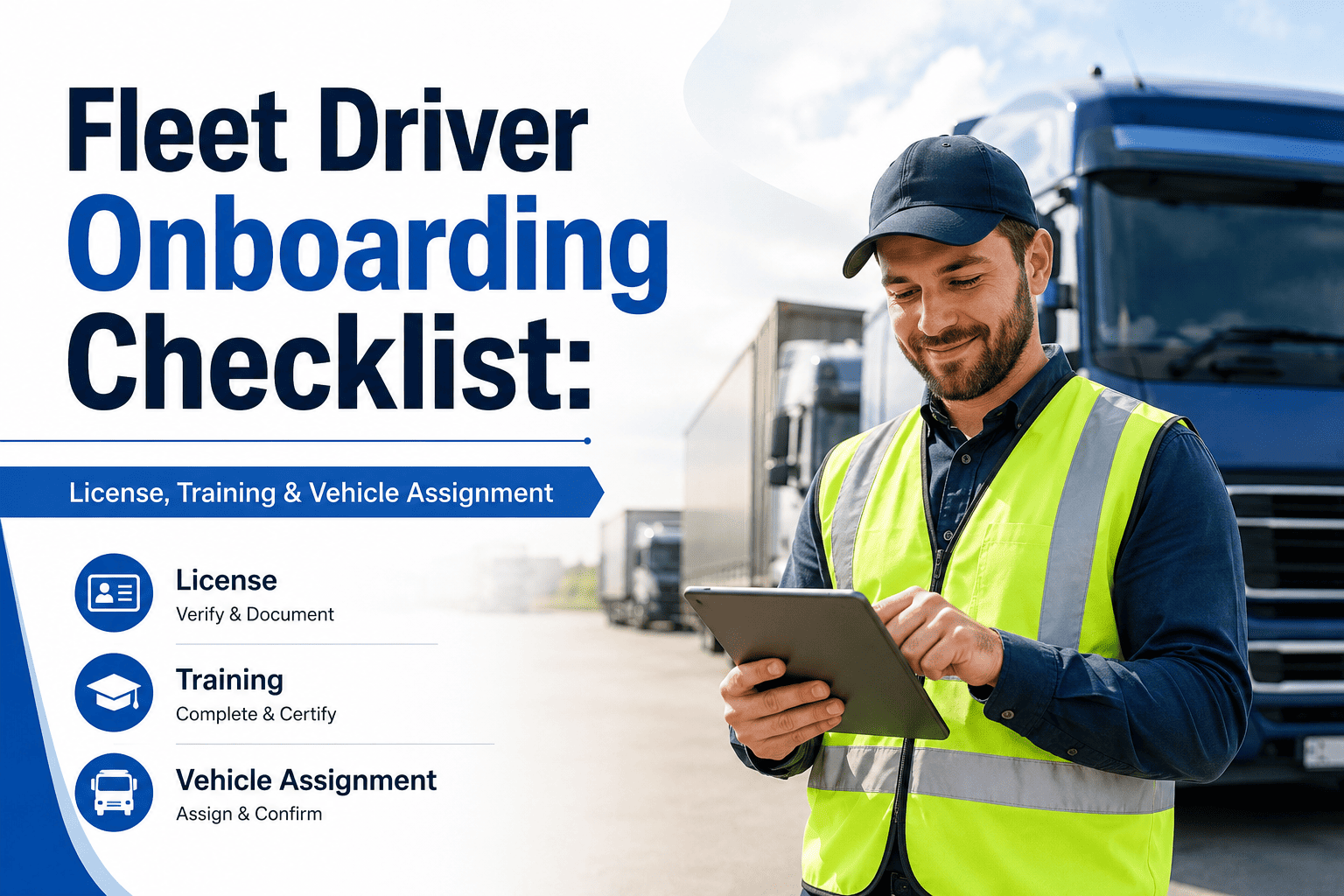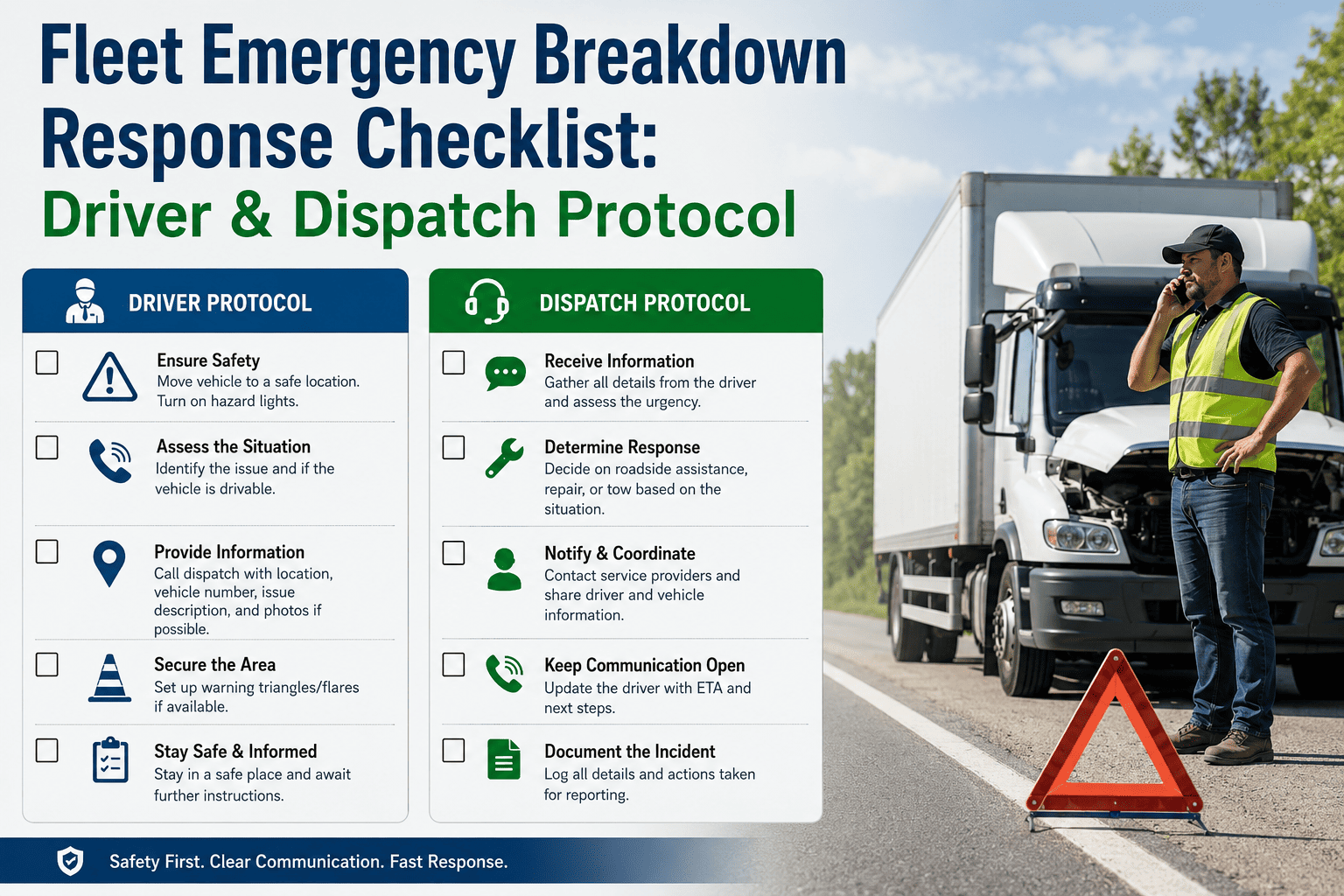
A fleet breakdown with no protocol is a liability event in motion — stranded driver, blocked lane, no towing contact, and no incident record in your CMMS. FMCSA §392.22 requires hazard warning devices be deployed within 10 minutes of a breakdown on a roadway, yet most fleets have no standardized driver or dispatch procedure governing what happens in the minutes after a vehicle stops moving. Oxmaint logs every breakdown event against the vehicle record, triggers vendor dispatch workflows, and generates incident documentation automatically — from the first driver alert to the final repair work order.
Required Safety Equipment — Compliance Requirement Matrix
Every breakdown event involves two parallel compliance obligations — what the driver must do on the roadside under FMCSA rules, and what fleet operations must document in the CMMS to maintain a defensible maintenance record. Missing either track creates enforcement and liability exposure. Sign Up Free to connect driver mobile checklists with automatic Oxmaint incident logging.
1. Driver Roadside Safety Checklist
The first 10 minutes after a CMV breakdown determine driver safety, regulatory compliance, and cargo security. FMCSA §392.22 is unambiguous — warning devices must be out within 10 minutes on any road, and within 500 feet on a divided highway. Book a Demo to see Oxmaint's driver mobile breakdown checklist.
Move vehicle to safe position — hard shoulder or off-road if possible
If the vehicle can move at all, clear the active lane before stopping. A breakdown in a live lane is a secondary collision risk — prioritize clearance over any other action. Life Safety — Priority One
Activate four-way hazard lights immediately on stop
Hazard lights must be on before the driver exits the cab — this is the first active signal to approaching traffic and is required at all times until the vehicle is recovered. OOS — hazards not activated
Deploy all three warning triangles within 10 minutes — per §392.22 placement rules
Place at 10 ft behind vehicle, 100 ft behind, and 100 ft ahead on a two-lane road. On divided highway: 10 ft, 100 ft, and 200 ft behind. Fewer than three triangles is an OOS condition. OOS — fewer than 3 deployed
Exit cab safely — high-visibility vest on before leaving vehicle
The driver must not exit the cab onto a roadway without a high-visibility vest. The vest must be accessible from the driver's seat without climbing through the vehicle. Defect — vest not accessible from cab
Apply park brake and chock wheels if on any grade
A disabled vehicle on a grade with a failed or inoperative service brake is a runaway risk — chocks must be deployed before the driver moves away from the vehicle on any slope. OOS — unsecured on grade
Note exact location — GPS coordinates, mile marker, or landmark description
Dispatch cannot coordinate towing without a precise location. Open the Oxmaint mobile app — it captures GPS coordinates automatically when the driver logs the breakdown event. Defect — location not confirmed with dispatch
Document visible fault — warning lights, noise, smell, or symptom description
The driver's first observation of the fault is the most accurate — record it in Oxmaint before memory degrades. Fault descriptions reduce diagnostic time at the shop and feed the vehicle's defect history. Defect — no fault observation recorded
Secure cargo if load is hazardous or temperature-sensitive
If the vehicle carries hazmat, temperature-controlled goods, or high-value cargo, the driver must confirm load security before leaving the vehicle unattended and immediately notify the cargo owner through dispatch. OOS — unsecured hazmat load
2. Dispatch Coordination Checklist
Dispatch receives the breakdown alert and immediately owns the coordination track — towing vendor, cargo notification, driver welfare, and route impact. Every action dispatch takes should be logged in Oxmaint so there is a timestamped record of every decision made during the event. Sign Up Free to give dispatch a live breakdown event dashboard in Oxmaint.
Confirm driver safety and vehicle position before any other action
The first dispatch call is a welfare check — confirm the driver is physically safe, vehicle is off the active lane, and triangles are deployed. Do not proceed to logistics until driver status is confirmed. Life Safety — confirm before logistics
Pull up vehicle record in Oxmaint — confirm towing weight class and load type
The towing vendor needs the vehicle's GVW, trailer configuration, and cargo type before dispatch. Sending a light-duty wrecker for a loaded tri-axle delays recovery by hours. Oxmaint's vehicle digital twin carries this data. Defect — wrong class towing dispatched
Activate approved preferred vendor from the fleet's breakdown vendor list
Use only pre-approved vendors on the fleet's contracted vendor list — unapproved vendors create billing disputes and liability gaps. The vendor list should be accessible in Oxmaint under fleet contacts, not only in a binder at the dispatch desk. Defect — non-approved vendor used
Notify cargo owner or customer — estimated delay and recovery timeline
Customer notification must happen within the first 30 minutes for any load with a delivery commitment. Delayed notification compounds the commercial impact and damages carrier relationships beyond what the breakdown alone would cause. Defect — customer not notified within 30 min
Log breakdown event in Oxmaint — vehicle ID, location, fault code, and timestamp
Every breakdown event must generate a timestamped entry in Oxmaint against the vehicle record. This is the originating record for the repair work order, insurance documentation, and CSA incident history. Defect — no CMMS event record created
Assess route impact — reassign load if recovery exceeds delivery window
If recovery and repair will breach the delivery commitment, dispatch must immediately assess whether a relay driver or replacement vehicle can be mobilized. The decision window closes within the first hour. Defect — load reassignment delayed beyond 1 hour
Check driver HOS status — confirm remaining hours before recovery driver is assigned
A recovery driver who is HOS-limited cannot legally take over the vehicle. Confirm available hours in the ELD system before assigning a relay driver to the breakdown location. OOS — HOS-limited driver dispatched
3. CMMS Incident Documentation Checklist
The breakdown event record in Oxmaint is the foundation of every downstream action — the repair work order, the vendor invoice, the insurance claim, and the vehicle's defect trend analysis. A breakdown event with no CMMS record is an unmanaged liability. Book a Demo to see Oxmaint's breakdown event-to-work-order workflow.
Create breakdown work order in Oxmaint — linked to vehicle asset record
The work order must be created at the time of the breakdown event, not after the vehicle returns to the yard. Retrospective work orders miss the driver's initial fault observation and distort the vehicle's defect frequency data. Defect — work order created post-recovery only
Capture driver fault description and dashboard warning codes
Attach the driver's fault description and any dashboard fault codes to the work order as the first diagnostic note. This data feeds Oxmaint's defect trend analysis and reduces repeat breakdowns caused by recurring unresolved faults. Defect — fault data not attached to work order
Record towing vendor, estimated arrival time, and destination workshop
The towing record is required for vendor invoice reconciliation and determines which workshop receives the vehicle. Log all three fields in Oxmaint at the time of dispatch, not from memory when the invoice arrives. Defect — towing details not recorded in CMMS
Flag vehicle as off-road in Oxmaint — prevents reassignment while unrepaired
A broken-down vehicle marked as available in the CMMS will be reassigned by dispatch. Oxmaint's off-road status flag prevents dispatch from assigning a vehicle that has not cleared a post-recovery inspection. OOS risk — vehicle reassigned before repair
Review vehicle's PM history in Oxmaint — identify any deferred maintenance linked to fault
Before the workshop diagnosis, review the vehicle's PM history for any deferred maintenance items in the same system as the reported fault. Deferred PMs that contributed to the breakdown are a compliance exposure if not documented. Defect — PM history not reviewed pre-repair
Complete post-repair inspection in Oxmaint before returning vehicle to service
The vehicle must pass a post-repair inspection recorded in Oxmaint before dispatch can mark it available. The inspection checklist must cover the repaired system plus all OOS-risk items from §396.17 annual inspection criteria. OOS risk — returned to service without inspection record
Close incident record — attach repair invoice, parts used, and technician sign-off
The Oxmaint work order must be closed with the repair invoice, parts list, and technician certification attached. An open work order on a returned vehicle is an audit finding and distorts fleet cost-per-vehicle reporting. Defect — work order not closed with documentation
Frequently Asked Questions
The most common questions from fleet managers, safety directors, and dispatch teams about breakdown response protocols, FMCSA requirements, and CMMS documentation obligations.
Warning devices must be deployed within 10 minutes of stopping on any road. On a divided highway, all three triangles go to the rear at 10 ft, 100 ft, and 200 ft. On a two-lane road, place at 10 ft behind, 100 ft behind, and 100 ft ahead of the vehicle. Fewer than three triangles is an OOS condition.
Yes. Any breakdown that takes the vehicle out of service — even temporarily — must be recorded in the CMMS against the vehicle asset. Minor repairs done roadside without documentation create gaps in the vehicle's defect and repair history that are examined at DOT audits and CSA investigations.
No. Any vehicle that was taken out of service for a breakdown must pass a post-repair inspection before returning to service — and that inspection must be documented. Under §396.11, the driver must certify all defects are repaired before signing off the next DVIR.
Vehicle ID, GPS location, breakdown timestamp, driver fault description, towing vendor and ETA, destination workshop, and cargo status. All six fields should be logged at the time of the event — not reconstructed from memory when the invoice arrives.
Oxmaint links each breakdown work order to the vehicle's defect history and PM record. Recurring faults on the same system trigger a pattern alert so maintenance managers can address root cause — not just roadside symptoms. Book a Demo to see the defect trend analysis dashboard.
The driver must immediately notify dispatch of the hazmat class and load status, secure the vehicle, and follow the Emergency Response Guide procedures for that commodity. Dispatch must notify the carrier's hazmat emergency contact. The incident must be logged in Oxmaint with the hazmat class attached to the work order.
Before Oxmaint, a breakdown meant three phone calls, a paper form, and a work order created two days later when someone remembered. Now the driver logs the event on mobile, the work order is live in 60 seconds, and dispatch has the towing ETAs and cargo status in one screen. Our average breakdown-to-repair documentation time went from 48 hours to under 2 hours.