On February 12, 2026, the Environmental Protection Agency finalized the single largest deregulatory action in U.S. history by rescinding the 2009 Greenhouse Gas Endangerment Finding and repealing every federal GHG emission standard for light-, medium-, and heavy-duty motor vehicles — model years 2012 through 2027 and beyond. The same week, California's Air Resources Board confirmed that its Clean Truck Check programme would tighten to semi-annual emissions testing with zero tolerance for missed deadlines, while the EU's Corporate Sustainability Reporting Directive continued requiring Scope 1, 2, and 3 emissions disclosures from companies with European operations. For fleet managers, the compliance landscape in 2026 is not simpler — it is fractured. Federal GHG obligations have evaporated, but state-level emissions enforcement, ESG disclosure mandates, and the looming 2027 Heavy-Duty Low-NOx rule create a regulatory environment where the wrong assumption about "deregulation" can cost a fleet its California operating authority, its corporate ESG rating, or millions in premature equipment replacement. This guide maps every active obligation, every repealed standard, and every emerging requirement so your fleet can operate with certainty across all jurisdictions. Start your free trial and build compliance tracking into your maintenance workflows today.
Regulatory Status: February 2026
The Fractured Compliance Landscape
100%
Of federal vehicle GHG emission standards repealed — light, medium, and heavy duty — effective 60 days from Feb 12, 2026
2x/yr
CARB Clean Truck Check semi-annual testing now enforced — quarterly testing for OBD vehicles begins Oct 2027
$10K
Maximum per-vehicle-per-day fine for CARB Clean Truck Check non-compliance, plus DMV registration holds
Sources: EPA Final Rule (Feb 12, 2026), CARB HD I/M Regulation, CARB Compliance Fee Update 2026
What Has Been Repealed: Federal GHG Standards
The EPA's February 12, 2026 final rule eliminates the legal foundation that has supported all federal greenhouse gas regulations for motor vehicles since 2009. Fleet managers must understand precisely what has changed at the federal level — and equally important, what has not changed — to avoid both over-compliance costs and under-compliance penalties in state jurisdictions.
Federal Regulatory Status: Repealed vs. Still Active
X
REPEALED (Feb 12, 2026)
2009 GHG Endangerment Finding under CAA Section 202(a)
All light-duty vehicle GHG standards (MY 2012-2032)
All medium-duty vehicle GHG standards
All heavy-duty vehicle GHG Phase 2 and Phase 3 standards
Federal EV sales mandates for Class 8 trucks
GHG compliance reporting, testing, and certification obligations
California SB 253: Scope 1 and 2 disclosure (2026 reporting year)
EU CSRD: Scope 1, 2, 3 emissions disclosure for EU operations
FMCSA vehicle maintenance and safety compliance (unchanged)
State-level emissions programmes in CA and Section 177 states
Active Compliance Required
The critical takeaway for fleet operators: the GHG repeal does not mean environmental compliance is over. It means federal GHG measurement, reporting, and certification requirements for motor vehicles are gone — but criteria pollutant standards (NOx, PM, CO), state emissions programmes, ESG disclosure mandates, and the 2027 Low-NOx rule remain fully enforceable. Fleets operating in California or states that adopted CARB standards face the most complex compliance environment in decades. Book a demo to see how Oxmaint tracks multi-jurisdictional compliance obligations automatically.
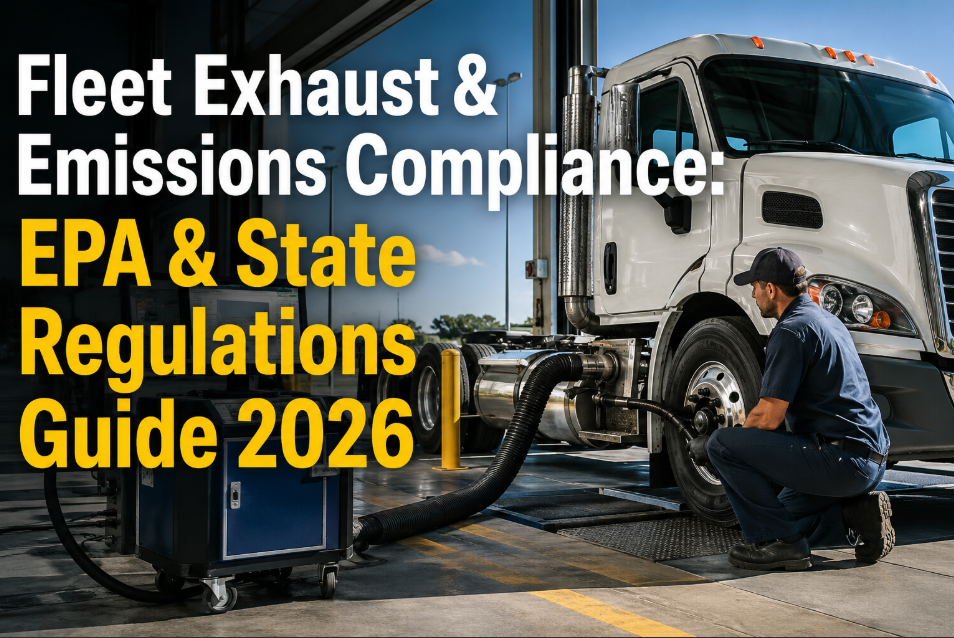
While the federal government dismantles GHG regulations, California is tightening emissions enforcement through the Clean Truck Check programme — the most aggressive heavy-duty inspection and maintenance regime in the country. Any fleet operating vehicles over 14,000 lbs GVWR in California, including out-of-state trucks, must comply. The programme has transitioned from a periodic verification model to a near-continuous compliance ecosystem.
CARB Clean Truck Check Compliance Workflow — 2026
Semi-annual testing cycle for all non-gasoline HD vehicles over 14,000 lbs GVWR
01
Register in CTC-VIS
Report all applicable vehicles in CARB's online portal. Update within 30 days of purchase or sale.
02
Pay Annual Fee
$32.13 per vehicle for 2026. Must be paid through CTC-VIS portal by compliance deadline.
03
Semi-Annual Testing
OBD scan (2013+ diesel) or smoke opacity test (2012 and older). Results due every 6 months.
04
Maintain Compliance
Keep CTC-VIS records current. Clear enforcement violations. Prepare for quarterly OBD testing in Oct 2027.
Clean Truck Check Testing Requirements by Engine Type
OBD-Equipped Diesel (2013+)
CARB-certified OBD scan. All readiness monitors must be set. Semi-annual in 2026, quarterly from Oct 2027.
Non-OBD Diesel (Pre-2013)
SAE J1667 snap acceleration smoke opacity test plus visual inspection of emissions control equipment.
Alt-Fuel OBD (2018+)
CARB-certified OBD data scan. Same semi-annual schedule and readiness monitor requirements as diesel OBD.
Alt-Fuel Non-OBD (Pre-2018)
Visual inspection of emissions control equipment only. No smoke opacity test required for alternative fuel vehicles.
Non-compliance triggers rapid and severe consequences. Missed tests or unpaid fees result in DMV registration holds, meaning the vehicle cannot be legally registered or renewed. Fines can reach $10,000 per vehicle per day. Out-of-state trucks face roadside inspections at border crossings, ports, and railyards. CARB also deploys roadside emissions monitoring devices that screen for high emitters between testing intervals — vehicles flagged must submit a passing test within 30 calendar days. For fleets managing dozens or hundreds of vehicles, manual tracking of semi-annual deadlines, VIN-based due dates, and tester credentials is operationally unsustainable. Sign up for Oxmaint to automate compliance scheduling, testing reminders, and documentation workflows.
EPA 2027 Heavy-Duty Low-NOx: What Fleets Must Plan For Now
Despite the federal GHG repeal, the EPA has confirmed it will proceed with the 2027 Heavy-Duty Low-NOx rule — maintaining the 0.035 g/hp-hr NOx standard and the 2027 model year start date. This represents an 82.5% reduction from current limits. However, EPA plans to propose adjustments in spring 2026 that are expected to reduce warranty and useful-life requirements, potentially lowering the per-truck cost increase from the originally projected $20,000-$25,000 to approximately $8,000-$12,000.
Based on EPA signaled adjustments expected spring 2026
82.5%
NOx Reduction
0.2 to 0.035 g/hp-hr
$8-12K
Per-Truck Premium
Revised (was $20-25K)
Q3-Q4
2026 Pre-Buy Window
Strategic Opportunity
24V
Electrical System Shift
OEMs Upgrading Systems
Fleet managers should be preparing now. OEMs including Volvo are already transitioning to 24-volt electrical systems to achieve the higher aftertreatment temperatures required for more efficient NOx and PM burns. New engine platforms will feature redesigned aftertreatment systems, enhanced thermal management, and new sensors — with limited real-world reliability history in their first years. Strategic pre-buying in Q3-Q4 2026 offers a window to avoid first-year technology risk and higher MY2027 pricing, though build slot availability may be constrained. The spring 2026 EPA proposal will determine final warranty and useful-life requirements, so fleet capital planning should model both scenarios until the rule is published.
Build Your 2027 Equipment Strategy on Real Data
Oxmaint tracks every vehicle's maintenance cost history, remaining useful life, and lifecycle position — giving you the data to decide which units to pre-buy in 2026 and which to run through the MY2027 transition. Automated PM scheduling ensures emissions compliance across every jurisdiction.
ESG Emissions Reporting: The Compliance That Survived Deregulation
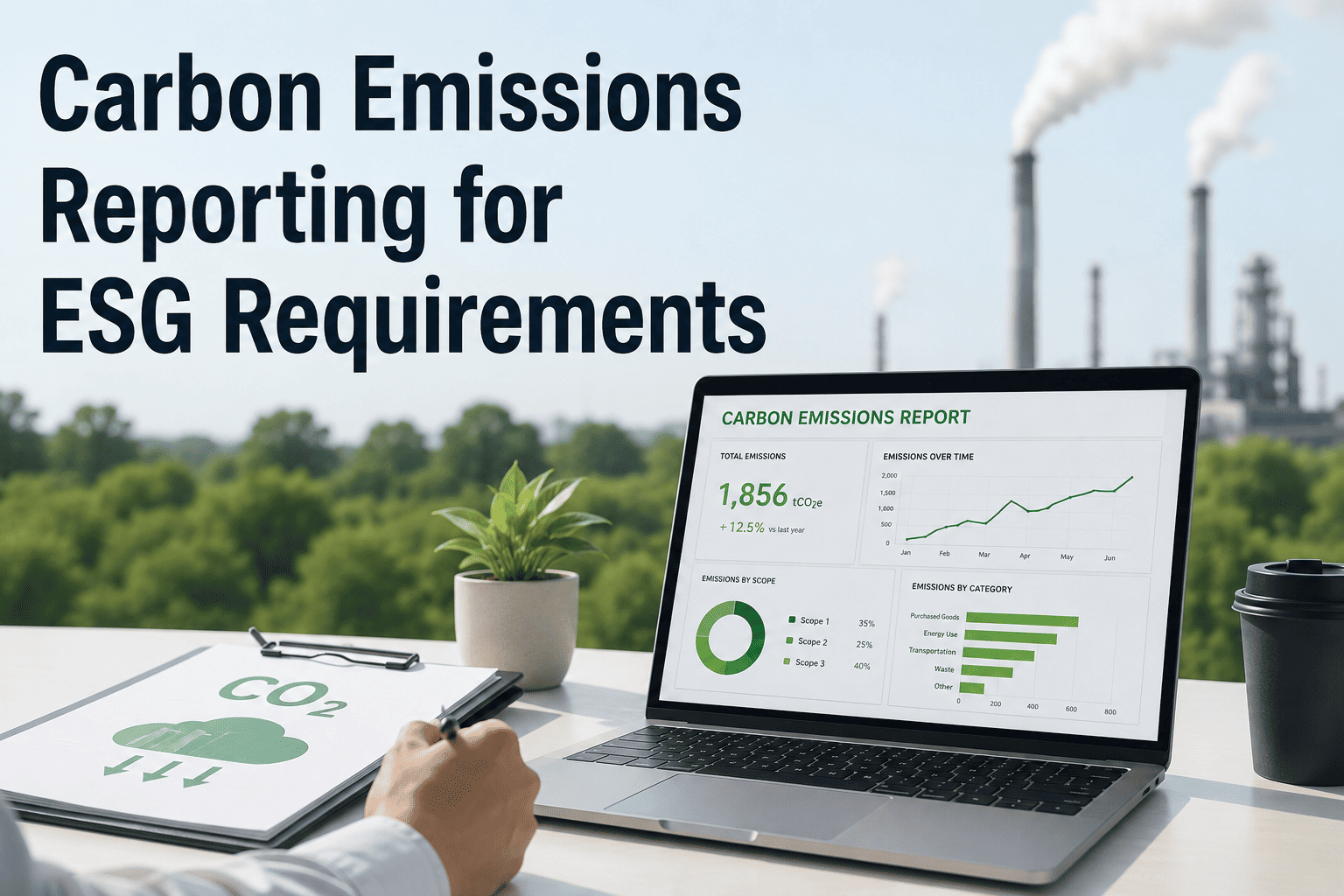
The federal GHG repeal eliminated EPA reporting obligations for vehicle manufacturers — but it did nothing to change the ESG emissions disclosure requirements that fleets face from state regulators, customers, and financial stakeholders. In fact, mandatory Scope 1 and 2 emissions reporting under California SB 253 is taking effect in 2026, with Scope 3 reporting following in 2027. For fleet operators whose vehicles represent a major share of their organisation's direct carbon footprint, this means emissions tracking is not optional — regardless of what the EPA has done.
Fleet Emissions: Scope 1, 2, and 3 Explained
Scope 1: Direct Emissions
Fuel burned by company-owned or leased vehicles. This is the largest emissions category for most fleet operations and the primary focus of ESG disclosure.
Scope 2: Indirect Energy
Purchased electricity for EV charging, facilities, and operations. Growing as fleets electrify. Reported using location-based or market-based methods.
Scope 3: Value Chain
Emissions from subcontracted transport, employee commuting, purchased goods. Up to 70% of total emissions. CA SB 253 Scope 3 reporting begins 2027.
Reporting Triggers
CA SB 253: $1B+ revenue entities. EU CSRD: Large companies and listed SMEs with EU operations. Customer-driven: Major shippers require supplier ESG data.
Even companies not directly subject to California or EU disclosure mandates are feeling the pressure. Major shippers and logistics customers increasingly require ESG data from their fleet service providers as part of procurement decisions. Your Scope 1 emissions become your customer's Scope 3 emissions — and they need that data for their own disclosures. Fleets that cannot provide accurate, verifiable emissions reporting risk losing contracts to competitors who can. Oxmaint's maintenance data — fuel consumption, vehicle miles travelled, idle time — provides the foundation for accurate Scope 1 emissions calculations aligned with the GHG Protocol.
Compliance Timeline: What Happens When
The regulatory calendar for 2026-2027 is dense. Multiple deadlines from different authorities overlap, and missing any one of them carries distinct penalties. This timeline consolidates every active compliance obligation a fleet manager must track.
2026-2027 Fleet Environmental Compliance Timeline
Q1 2026 (Now)
Immediate Action Items
EPA GHG repeal finalized (Feb 12) — federal GHG reporting stopsCARB Clean Truck Check semi-annual testing enforcedCTC compliance fee: $32.13/vehicle due by deadlineBegin Scope 1/2 data collection for CA SB 253
Q2-Q3 2026
Strategic Planning Window
EPA spring 2026 proposal: 2027 NOx warranty/useful-life adjustmentsEvaluate MY2026 pre-buy vs. MY2027 pricing scenariosTrack legal challenges to Endangerment Finding repealEU CSRD reporting period continues for qualifying companies
Q4 2026 - Q1 2027
Major Transition Period
CA SB 253: First Scope 1 and 2 disclosure reports due (2025 FY)MY2027 Low-NOx engines enter production (0.035 g/hp-hr)Final 2026 pre-buy window closesCARB OBD quarterly testing begins Oct 2027
The ROI of Proactive Compliance Management
In a fractured regulatory environment, compliance is not just a cost centre — it is a competitive advantage. Fleets that build environmental compliance into their operational workflows avoid penalties, retain California operating authority, satisfy ESG-conscious customers, and make better capital planning decisions. The cost of non-compliance dwarfs the investment in systematic tracking.
Compliance Cost Comparison: Reactive vs. Systematic
Annual cost for a fleet of 100 HD vehicles operating in California
Reactive / Ad Hoc Compliance
Missed CTC Test Penalties$50K - $500K+
DMV Registration HoldsLost Revenue Days
Failed Roadside InspectionsOOS + Fines
Lost ESG-Required Contracts$100K+ / yr
Risk Exposure: $250K - $1M+
VS
Systematic Oxmaint Compliance
CTC Fees (100 vehicles)$3,213 / yr
Testing Costs (semi-annual)$10K - $20K / yr
CMMS Compliance ModuleIncluded
ESG Data ExportAutomated
Total: $15K - $25K / yr
Expert Perspective: Navigating the Regulatory Fracture
Multi-Jurisdictional Compliance Matrix
Active environmental obligations by authority — February 2026
EPA Federal
CARB / California
Section 177 States
EU / CSRD
FMCSA Safety
Customer ESG
Insurance / Risk
Capital Markets
2027 NOx Compliance
EPA keeping 0.035 g/hp-hr standard for MY2027. Spring 2026 proposal expected to reduce warranty from 450K to current levels, dropping per-truck premium to $8-12K. Plan pre-buy strategy now.
Ongoing Legal Uncertainty
Environmental groups and state coalitions have announced lawsuits challenging the Endangerment Finding repeal. The fate of federal GHG policy may ultimately be decided by courts over the coming years.
Data as Insurance
Regardless of which regulations survive court challenges, fleets with comprehensive emissions and maintenance data are positioned for any regulatory outcome — compliance, disclosure, or customer ESG demands.
Build jurisdiction-aware compliance into every work orderGet Started
The fleets that emerge strongest from this regulatory fracture are those that treat compliance data as an operational asset — not a bureaucratic burden. Whether the courts restore federal GHG standards, CARB tightens its own programmes further, or ESG disclosure mandates expand, the fleet with accurate, timestamped maintenance and emissions data has optionality. The fleet without it is one missed deadline, one failed roadside inspection, or one lost contract away from a costly surprise. Book a demo and see how Oxmaint turns compliance complexity into automated workflows.
Stay Compliant Across Every Jurisdiction
Oxmaint tracks CARB Clean Truck Check deadlines, automates PM scheduling for emissions compliance, exports fuel and mileage data for ESG reporting, and helps you model MY2027 capital decisions — all in one platform. Federal rules may change, but your data stays permanent.
Does the EPA Endangerment Finding repeal mean my fleet no longer has emissions compliance obligations?
No. The repeal eliminates federal GHG emission standards and associated reporting, testing, and certification requirements for motor vehicles. However, several major obligations remain fully active: the EPA 2027 Heavy-Duty Low-NOx rule (criteria pollutants, not GHG), CARB's Clean Truck Check programme for any fleet operating in California, state-level emissions programmes in Section 177 states, ESG disclosure mandates under California SB 253 and EU CSRD, and all FMCSA vehicle safety and maintenance requirements. The compliance landscape has fractured, not simplified.
What is the CARB Clean Truck Check and does it apply to out-of-state trucks?
The Clean Truck Check (formerly HD I/M) is California's heavy-duty inspection and maintenance programme that requires semi-annual emissions testing for nearly all non-gasoline vehicles over 14,000 lbs GVWR operating on California roads — including out-of-state trucks. Fleets must register vehicles in CARB's CTC-VIS portal, pay a $32.13 annual compliance fee per vehicle, and submit passing emissions test results every six months. Non-compliance results in DMV registration holds and fines up to $10,000 per vehicle per day. Beginning October 2027, OBD-equipped vehicles will be required to test quarterly. Start your free trial to automate CTC deadline tracking.
Should I pre-buy trucks in 2026 to avoid 2027 Low-NOx pricing?
It depends on your fleet's lifecycle position and capital situation. The 2027 NOx rule will add an estimated $8,000-$12,000 per truck (revised downward from $20-25K after EPA signaled warranty adjustments). OEMs are offering to hold 2026 pricing for orders placed now. However, build slot availability may be constrained if many fleets pre-buy simultaneously. The strategic play is to evaluate which vehicles in your fleet are approaching replacement anyway and accelerate those purchases into Q3-Q4 2026, while running newer units through the MY2027 transition. Oxmaint's lifecycle cost data helps you make this decision on a per-vehicle basis.
What Scope 1 emissions data do I need for ESG reporting?
Scope 1 covers direct GHG emissions from company-owned or leased vehicles — the fuel burned in your fleet. To calculate Scope 1 emissions accurately, you need: total fuel consumed by fuel type (diesel, gasoline, CNG, etc.), vehicle miles travelled, idle time, and the appropriate EPA or GREET emission factors. California SB 253 requires companies with over $1 billion in revenue doing business in California to disclose Scope 1 and 2 emissions starting in 2026 (for the 2025 fiscal year), with Scope 3 starting in 2027. Even if your company is not directly subject to SB 253, major customers increasingly require this data from their fleet service providers as part of their own Scope 3 reporting.
Could the Endangerment Finding repeal be reversed by courts?
Yes — and this is a significant planning consideration. Environmental groups including Earthjustice and the American Lung Association, along with a coalition of states led by California, have announced plans to challenge the repeal in federal court. The legal battle could take years and may ultimately reach the Supreme Court. The 2009 Endangerment Finding survived multiple legal challenges in its first iteration. Fleets should not assume the current federal deregulation is permanent. Maintaining accurate emissions and maintenance data positions your fleet for compliance under any regulatory outcome — whether the courts uphold or reverse the repeal. Book a demo to build a compliance strategy that survives regulatory uncertainty.