Hydraulic system failures are among the most expensive unplanned events in heavy equipment fleet operations — averaging $2,400 per incident in direct repair costs before factoring in lost production hours, environmental cleanup, and secondary component damage from contaminated fluid. Yet 78% of hydraulic failures originate from a single preventable cause: fluid contamination. A $35 fluid sample catches contamination before it destroys a $4,200 pump. A $22 filter replaced on schedule prevents $6,400 in cylinder and valve damage. The economics are not close. Fleets running structured hydraulic maintenance programs reduce hydraulic-related downtime by 52% and extend pump life by 2.4x compared to run-to-failure operations. Ready to digitize hydraulic fluid testing, filter scheduling, and pressure monitoring across your heavy equipment fleet? Start a free trial with Oxmaint to deploy hydraulic maintenance workflows for refuse trucks, aerial platforms, dump trucks, and construction equipment, or book a demo to see how heavy equipment fleets prevent costly hydraulic failures at scale.
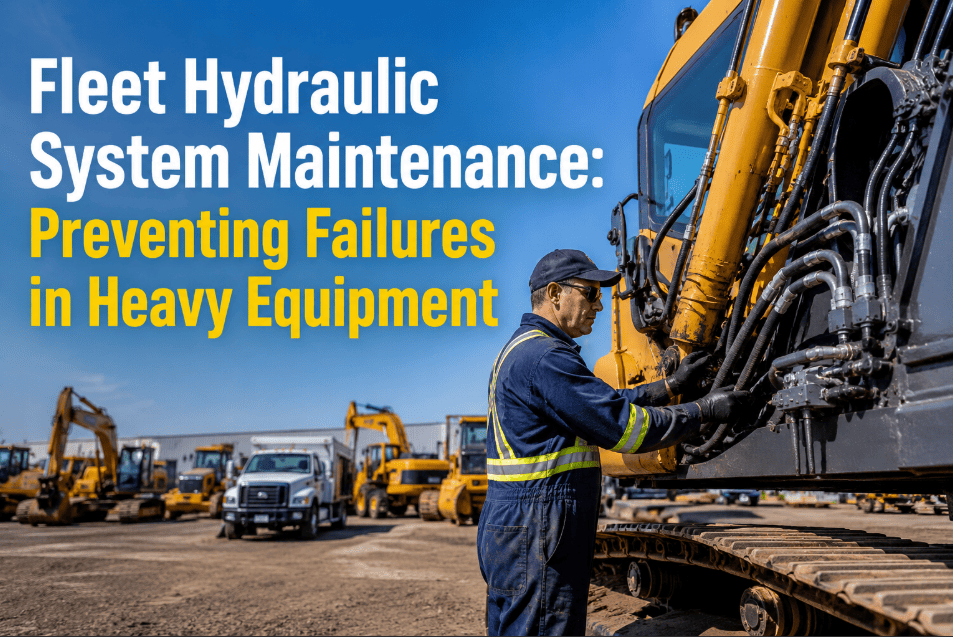
Fleet Hydraulic System Maintenance: Preventing Failures in Heavy Equipment
Service intervals, fluid analysis protocols, contamination control, and predictive monitoring strategies for refuse trucks, aerial platforms, dump trucks, and construction equipment fleets.
What Is Fleet Hydraulic System Maintenance and Why Does Contamination Kill Silently?
Fleet hydraulic maintenance covers every scheduled action required to maintain hydraulic system performance in heavy equipment: fluid analysis (particle count, water content, viscosity, additive depletion), filter management (replacement intervals, differential pressure monitoring), component inspection (pumps, cylinders, hoses, seals, reservoirs), and pressure/flow testing. Unlike most mechanical failures that announce themselves with noise, vibration, or visible damage, hydraulic contamination works invisibly — eroding internal pump surfaces by microns per cycle over thousands of operating hours until output pressure drops below functional thresholds and the pump seizes.
This invisible degradation is why fluid analysis is the single highest-ROI maintenance investment in heavy equipment fleets. A $35 oil sample analyzed for ISO 4406 cleanliness codes, water content, and metal wear particles catches contamination 200-400 operating hours before catastrophic pump failure. Without analysis, the first symptom is often the last: a seized pump, a burst hose at 3,000+ PSI, or a cylinder that drifts under load. By then, repair costs cascade through the entire system. Oxmaint tracks every sample, trends every result, and triggers automatic work orders the instant contamination levels exceed your configured thresholds — start a free trial to see how heavy equipment fleets manage hydraulic health digitally, or book a demo for a walkthrough of the fluid analysis dashboard.
Hydraulic Maintenance Intervals by Equipment Type
Hydraulic service intervals are driven by operating hours, not calendar time or mileage. Equipment working 12-hour shifts in severe conditions reaches service thresholds far faster than units running 4-hour daily cycles.
| Equipment Type | Filter Replacement | Fluid Sample | Full Fluid Change |
|---|---|---|---|
| Refuse Trucks | Every 500 hours | Every 250 hours | 2,000-3,000 hours |
| Dump Trucks | Every 1,000 hours | Every 500 hours | 3,000-5,000 hours |
| Aerial Platforms | Every 1,000 hours | Every 500 hours | 3,000-4,000 hours |
| Excavators / Loaders | Every 500-1,000 hours | Every 250 hours | 2,000-4,000 hours |
| Liftgates (Class 6-8) | Annually | Annually | 3 years / per OEM |
| Severe Service | 50% of standard | Every 100 hours | 50% of standard |
6 Hydraulic Components That Demand Structured Monitoring
Monitor pump output pressure and flow rate at every major PM. A 10% drop in either parameter signals internal wear. Pump replacement costs $2,800-$6,400 plus labor — fluid analysis catches degradation 200-400 hours before failure.
Test viscosity, water content, particle count (ISO 4406 cleanliness code), and additive depletion at every sample interval. Contaminated fluid is the root cause of 78% of hydraulic failures. Target ISO 18/16/13 cleanliness for most fleet equipment.
Replace per OEM interval or when differential pressure indicators trigger. Skipping filter changes is the single most expensive maintenance shortcut in hydraulic systems — bypass mode lets contamination destroy pumps, valves, and cylinders simultaneously.
Inspect for chafing, bulging, leaks, and deteriorated crimped fittings. Hose failure at 3,000+ PSI causes injection injuries that require emergency surgery. Replace all high-pressure hoses at 5-7 year intervals regardless of visual condition.
Check for rod scoring, seal leakage, and drift under load. Bent rods damage seals and create progressive contamination. Cylinder rebuild costs $800-$2,400 — early detection prevents expensive secondary system damage.
Maintain proper fluid level. Replace breather filter at every PM — a failed breather lets atmospheric moisture and particulates contaminate the entire system. Inspect for water accumulation at the reservoir bottom during every service.
How a $22 Filter Skip Becomes a $6,400 System Rebuild
Contamination damage is cumulative and invisible. Each microscopic particle that passes through a pump erodes metal surfaces, widens internal clearances, and degrades output pressure. By the time the operator notices slower cycle times or reduced lifting capacity, internal wear is severe and irreversible — and the contaminated fluid has already carried metal particles downstream into control valves, cylinders, and motors.
Reactive vs. Predictive Hydraulic Management
Stop Hydraulic Failures Before They Start — Automate Fluid Analysis and Filter PMs
Oxmaint tracks every fluid sample, trends ISO cleanliness codes per asset, and triggers automatic work orders the instant contamination levels exceed your thresholds. Hour-based PM triggers replace calendar guesswork with actual operating data.
How Oxmaint Manages Hydraulic System Health at Scale
Schedule, capture, and trend hydraulic fluid analysis results per asset. Lab data uploads automatically from major providers including Polaris Labs, ALS, and Cat Fluids Analysis. Out-of-spec readings trigger immediate work orders.
Engine hours and PTO hours from telematics feed directly into PM scheduling. Filter and fluid intervals trigger based on actual operating time — not arbitrary calendar dates that miss heavy-use equipment and over-service light-use units.
Record and trend ISO cleanliness codes from each fluid sample. Analytics identify equipment with progressive contamination — often signaling failed breathers, damaged seals, or external dirt ingression points that need root cause correction.
Track installation dates and replacement intervals for every high-pressure hydraulic hose. Automated alerts flag hoses approaching 5-7 year service life before catastrophic burst failure causes injection injuries or environmental damage.
Record pump output measurements at each PM. Trend analysis catches gradual performance degradation — a 10% drop in pump output predicts failure within 200-400 operating hours, giving you time to schedule replacement during planned downtime.
When samples show contamination spikes, the platform traces root cause — failed breather, damaged seal, improper top-off, or external ingression. Fix the source, not just the symptom, to prevent contamination recurrence across the fleet.
Measurable Results from Predictive Hydraulic Maintenance
Frequently Asked Questions
How often should hydraulic fluid be sampled in heavy equipment fleets?
Most heavy equipment requires sampling every 250-500 operating hours. Severe-service applications like refuse trucks and construction equipment in dusty environments benefit from 100-hour intervals. Oxmaint schedules samples automatically based on engine and PTO hours from telematics — not calendar dates. Start a free trial to configure automated sampling schedules.
Can the platform integrate with fluid analysis lab providers?
Yes. Lab results from major providers including Polaris Labs, ALS, and Cat Fluids Analysis upload directly to the corresponding asset record. Trend analysis surfaces equipment with progressive contamination before failures occur. Book a demo to see lab integration in action.
How does the system handle hydraulic hose replacement scheduling?
Each hose installation date is tracked with automated alerts at 5-year and 7-year service life thresholds. This prevents catastrophic burst failures at 3,000+ PSI and the injection injuries they cause to nearby personnel — injuries that often require emergency surgery and generate significant OSHA reporting requirements.
Can we trend hydraulic pump performance across the fleet?
Yes. Pump pressure and flow measurements captured at each PM build trend lines per asset. Vehicles showing accelerated degradation flag for engineering review — letting you schedule pump replacement during planned downtime rather than responding to field failures that cost 3-4x more.
Extend Hydraulic Component Life by 2.4x — Start Predictive Maintenance Today
Oxmaint tracks every fluid sample, trends ISO cleanliness codes, schedules filter replacements on actual operating hours, and flags hoses approaching end-of-life before they burst. Join heavy equipment fleet teams across 40+ countries preventing hydraulic failures — free trial, no credit card required.