.png)
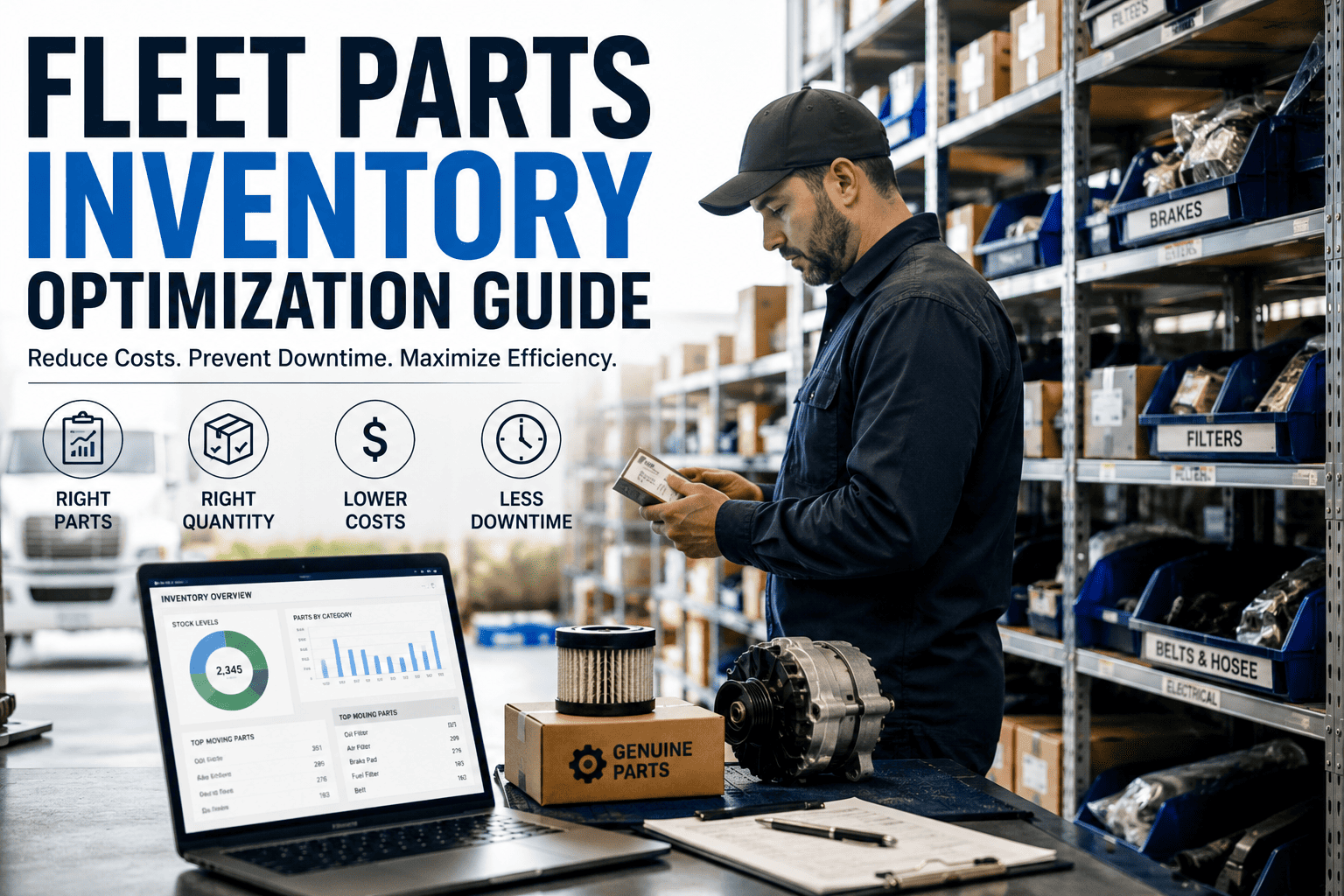
Fleet parts inventory management represents one of the most challenging balancing acts in fleet operations—maintain enough inventory to prevent costly downtime, but not so much that capital sits idle on shelves gathering dust. The stakes are significant: fleets with optimized parts inventory reduce carrying costs by 25% while simultaneously cutting vehicle downtime by 30% through faster repairs. Yet most fleet managers struggle with this balance, either stockpiling excessive inventory "just in case" or running dangerously lean and facing emergency orders that cost 3-4 times normal pricing.
The problem compounds as fleet size grows. A 10-vehicle operation might manage inventory through memory and spreadsheets, but a 100-vehicle fleet requires systematic approaches to track hundreds of parts across multiple locations, predict demand patterns, and optimize reorder points. Traditional inventory methods fail because fleet maintenance isn't predictable like retail—a single unexpected failure can create urgent demand for parts you haven't needed in months. Transform your parts management today with Oxmaint's intelligent inventory system.
Fleet Parts Inventory Management: Optimization Strategies
Master the strategies and systems that transform parts inventory from a constant headache into a competitive advantage. Learn how data-driven optimization reduces carrying costs while ensuring critical parts are always available when breakdowns occur. Schedule a consultation to discuss your inventory challenges.
The Hidden Costs of Poor Parts Inventory Management
Poor inventory management bleeds money through multiple channels that often go unnoticed until someone calculates the total impact. Excess inventory ties up capital that could fund vehicle acquisitions or technology investments—typical fleets carry 15-30% more inventory than optimal levels, representing tens of thousands of dollars sitting unused. Those parts also occupy valuable shop space, require periodic audits, and risk obsolescence when vehicle models change or parts get superseded.
The flip side proves equally expensive. Stockouts force mechanics to wait hours or days for parts, during which vehicles sit idle generating zero revenue. Emergency expedited shipping can cost 3-4 times normal pricing, and rush orders often mean accepting whatever price vendors quote rather than shopping for competitive rates. A single critical failure requiring overnight parts shipping can cost $2,000-$5,000 in combined downtime and premium pricing—money that evaporates because the $80 part wasn't in stock.
Excess Inventory Costs
Stockout/Shortage Costs
Critical Insight
Optimized parts inventory isn't about minimizing inventory levels—it's about having the right parts available at the right time. Strategic stockpiling of high-failure, critical components combined with just-in-time ordering for predictable maintenance items delivers the lowest total cost of ownership.
ABC Analysis: Prioritizing Your Parts Inventory
Not all parts deserve equal attention. ABC analysis categorizes inventory based on value and usage patterns, allowing you to apply different management strategies to different categories. This Pareto-principle approach recognizes that roughly 20% of your parts account for 80% of your inventory value and deserve intensive management, while the remaining 80% of parts can be managed with simpler, less resource-intensive methods.
A-Category Parts (15-20% of items, 70-80% of value)
High-value, critical components that significantly impact operations. These justify sophisticated forecasting, tight inventory control, and vendor negotiations.
B-Category Parts (30-35% of items, 15-20% of value)
Moderate-value parts with regular turnover. Important but don't require the intensive management of A-category items.
C-Category Parts (45-55% of items, 5-10% of value)
Low-value, high-volume consumables and accessories. Simple management approaches work best—tight control costs more than potential savings.
Implementing ABC analysis transforms inventory management from treating all parts equally to strategic resource allocation. Your most expensive technician time focuses on managing high-value A-category parts where optimization delivers meaningful savings, while simple systems handle C-category items efficiently without consuming management attention.
Automate Your Parts Inventory Management
Oxmaint's intelligent parts management system automatically categorizes inventory, sets optimal reorder points, and alerts you before stockouts occur—no manual tracking required.
Calculating Optimal Reorder Points and Safety Stock
Knowing when to reorder parts prevents both stockouts and excess inventory. Reorder points balance lead time—how long parts take to arrive—against usage rate and desired safety stock. The formula seems simple, but getting the inputs right requires understanding your operation's specific patterns and risk tolerance.
The basic reorder point formula: (Average Daily Usage × Lead Time in Days) + Safety Stock. The challenge lies in determining appropriate safety stock levels. Too little and you risk stockouts during demand spikes or supply delays; too much and you waste capital. Safety stock should reflect both demand variability and supply reliability—parts with unpredictable failure rates or unreliable vendors need higher safety stock than consistent items from dependable suppliers. Ready to optimize your reorder points? Start your free trial today.
Reorder Point Calculation Example: Brake Pads
Seasonal Adjustment Strategy
For fleets with seasonal demand patterns (snow removal, construction, agricultural), adjust reorder points quarterly based on historical usage patterns. Winter months might require 50% higher safety stock for certain components, while summer allows leaner inventory.
Fleet Age Consideration
As vehicle fleets age, failure rates increase and parts consumption rises. Increase reorder points by 10-15% for parts when average fleet age exceeds manufacturer's expected useful life. Monitor consumption patterns and adjust quarterly.
Vendor Reliability Factor
Track vendor on-time delivery rates. Reliable vendors (95%+ on-time) justify lower safety stock, while inconsistent vendors require 30-50% higher safety stock to prevent stockouts during delayed deliveries.
Strategic Parts Stocking Based on Failure Analysis
Not all parts fail with equal frequency or predictability. Strategic stocking decisions should reflect failure patterns, criticality to operations, and replacement urgency. High-frequency failure items need different inventory strategies than catastrophic-but-rare failures.
This matrix approach prevents the common mistake of stocking every part that might someday be needed. The carrying costs of rarely-used parts often exceed the occasional inconvenience of waiting for delivery, especially for non-critical components. Focus your inventory investment where it delivers maximum operational benefit.
Vendor Management and Parts Sourcing Strategies
Your vendor relationships directly impact parts availability, pricing, and inventory requirements. Strategic vendor management goes beyond choosing suppliers with the lowest prices—it encompasses reliability, breadth of coverage, emergency response capabilities, and partnership mentality that aligns vendor success with your operational needs.
Primary Vendor Strategy
RecommendedEstablish one primary parts supplier for 60-70% of your parts spend. Consolidating volume creates negotiating leverage for better pricing, priority service, and flexible payment terms. Primary vendors often provide value-added services like vendor-managed inventory for consumables or emergency after-hours delivery.
Secondary/Backup Vendors
EssentialMaintain relationships with 2-3 secondary suppliers for competitive pricing comparison, emergency backup when primary vendor experiences shortages, and specialty parts your primary vendor doesn't carry well. Secondary vendors prevent total dependence on a single supplier.
OEM vs. Aftermarket Balance
StrategicOEM (Original Equipment Manufacturer) parts guarantee fit and warranty compliance but cost 30-50% more than quality aftermarket alternatives. Strategic approach: use OEM for warranty-period vehicles and critical safety components, aftermarket for out-of-warranty vehicles and non-critical parts.
Effective vendor management includes regular performance reviews tracking on-time delivery rates, order accuracy, pricing competitiveness, and problem resolution responsiveness. Quarterly business reviews with your primary vendor should cover these metrics and identify opportunities for improved service or cost reduction. Transform your vendor relationships with Oxmaint's vendor management tools.
Centralize Your Vendor Management
Track vendor performance, compare pricing, and manage purchase orders from a single platform. Oxmaint gives you complete visibility into your parts sourcing operations.
Technology Solutions for Parts Inventory Management
Modern technology transforms parts inventory from manual tracking and educated guessing into data-driven precision. Fleet management systems with integrated parts modules provide real-time visibility, automated alerts, and analytics that manual methods simply cannot match. The question isn't whether to adopt technology, but which systems deliver the best return for your specific operation.
Automated Reorder Notifications
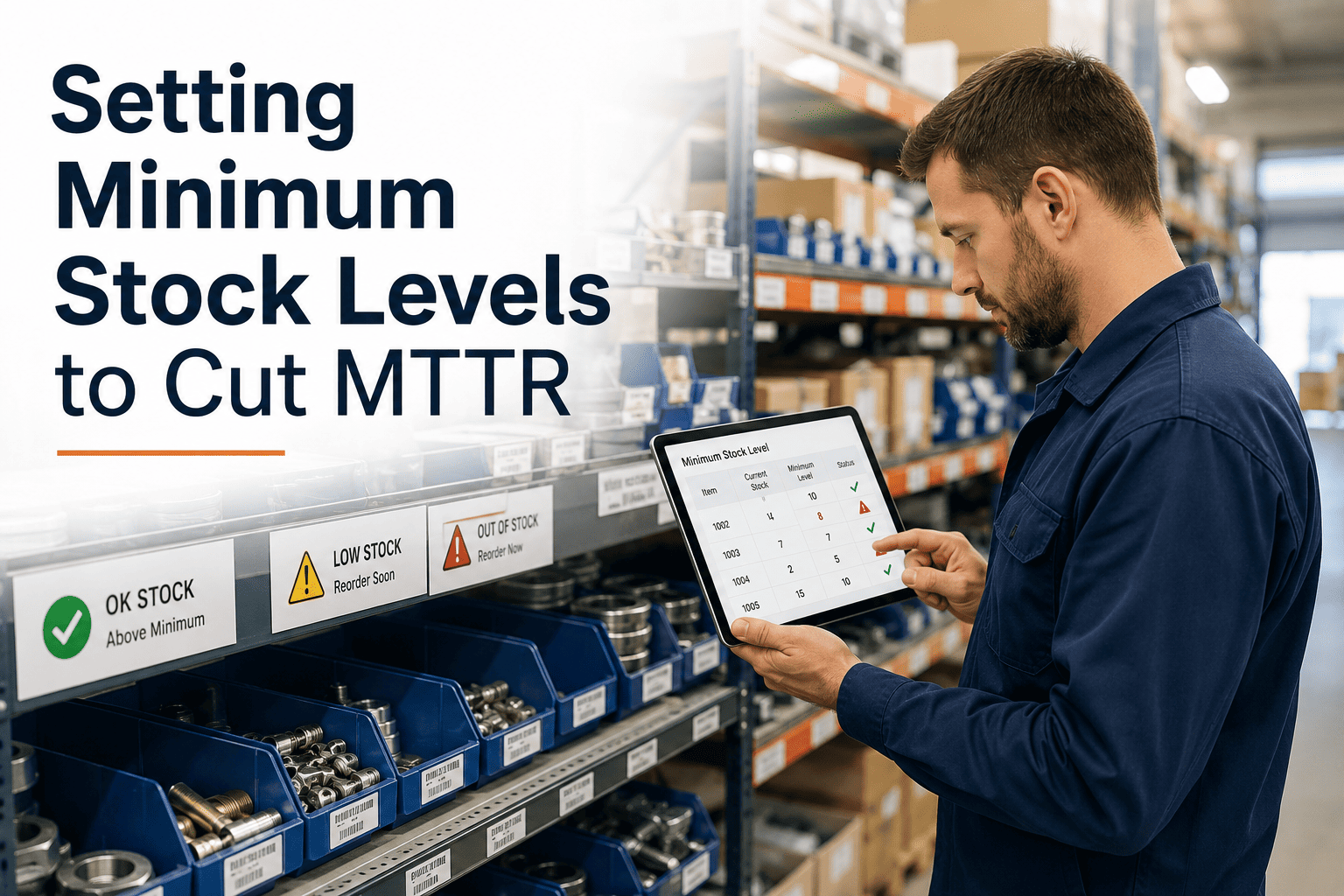
System monitors stock levels continuously and generates alerts when parts reach reorder points. No more manual checks or surprise stockouts discovered when a mechanic needs the part. Configurable alerts via email, SMS, or dashboard notifications ensure responsible parties receive timely information.
Work Order Integration
When mechanics create work orders, the system automatically checks parts availability and reserves required components. This prevents discovering missing parts mid-repair and provides accurate labor scheduling based on parts availability. Completed work orders update inventory counts automatically.
Usage Analytics and Forecasting
Historical consumption data reveals patterns that improve forecasting accuracy. System identifies seasonal trends, correlates parts usage with vehicle age or mileage, and predicts future demand more accurately than gut-feel estimates. Analytics highlight slow-moving inventory candidates for disposal or return.
Barcode/RFID Tracking
Scanning parts in and out eliminates manual counting errors and provides real-time accuracy. Mobile apps let mechanics scan parts from the shop floor, updating inventory instantly without paperwork. Annual physical counts become verification exercises rather than marathon reconciliation projects.
Multi-Location Inventory Visibility
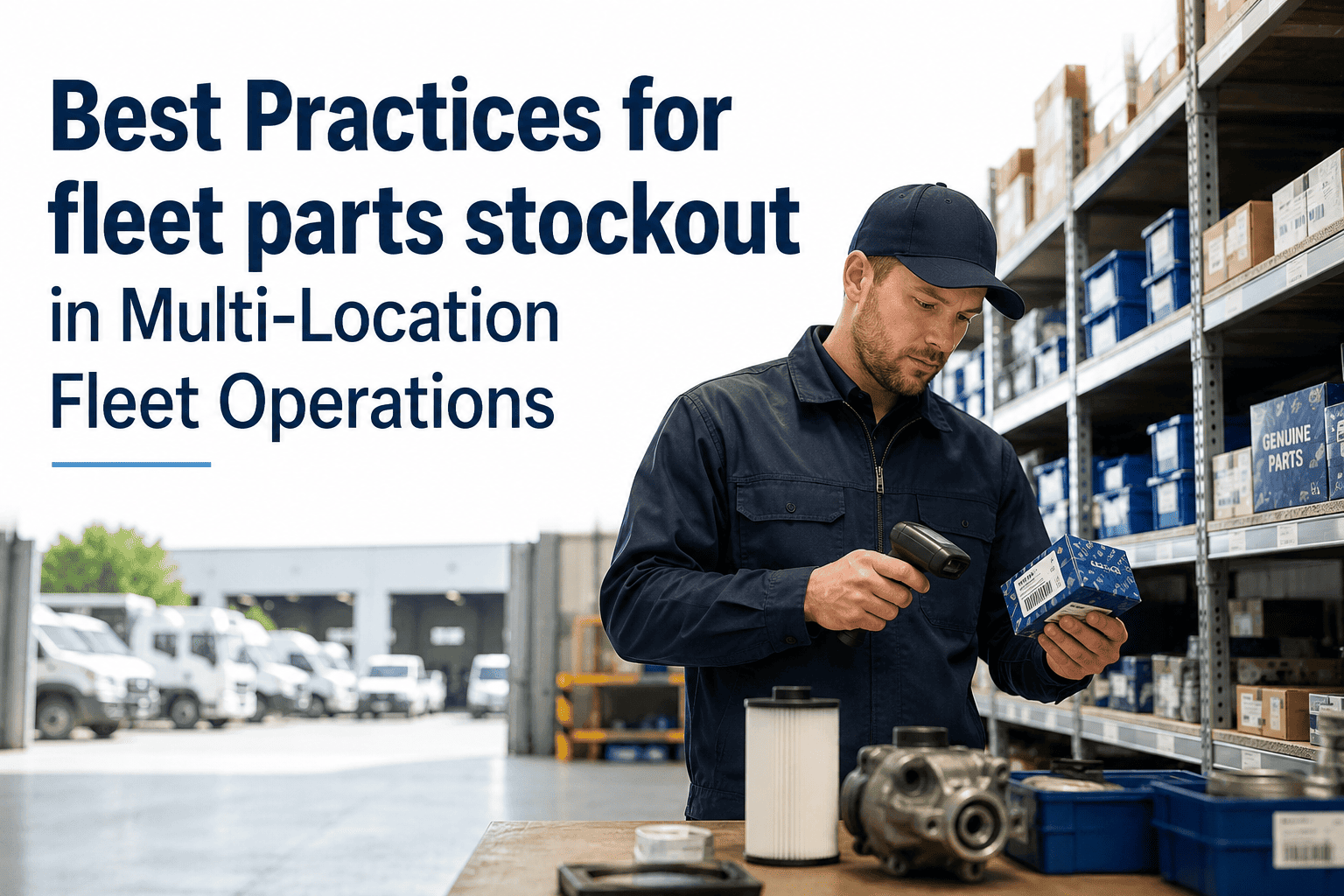
For fleets with multiple facilities, centralized systems show inventory across all locations. Transfer parts between facilities to balance stock levels, identify which location has needed parts for emergency situations, and optimize total fleet inventory without each location maintaining redundant stock.
Vendor Integration and EDI
Electronic data interchange (EDI) connections with vendors enable automated purchase order transmission, real-time pricing updates, and electronic invoicing. Advanced systems automatically generate purchase orders when parts hit reorder points, completely eliminating manual ordering for routine replenishment.
Emergency Parts Management: When You Need It Now
Even optimized inventory systems cannot stock every possible part for every potential failure. Emergency situations demand different strategies that balance speed against cost. Having a structured emergency parts protocol prevents panic decisions that waste money while still getting vehicles back on the road quickly.
Check Alternative Inventory Sources (0-30 minutes)
Evaluate Temporary Alternatives (30-60 minutes)
Expedited Delivery Decision (1-2 hours)
Track emergency parts purchases separately to identify patterns. If you're consistently emergency-ordering the same parts, they should move from "order as needed" to strategic stock items. Emergency purchases that exceed twice the normal part cost represent stocking opportunities where carrying cost is less than repeated emergency premiums.
Measuring Parts Inventory Performance
What gets measured gets managed. Tracking key performance indicators reveals whether your inventory strategies deliver results or need adjustment. The following metrics provide comprehensive visibility into inventory health and highlight improvement opportunities.
Optimize Your Parts Inventory Today
Oxmaint's parts inventory management delivers automatic tracking, intelligent reordering, and comprehensive analytics that reduce costs while improving parts availability. Stop guessing, start optimizing.
No credit card required. Full parts management access from day one.