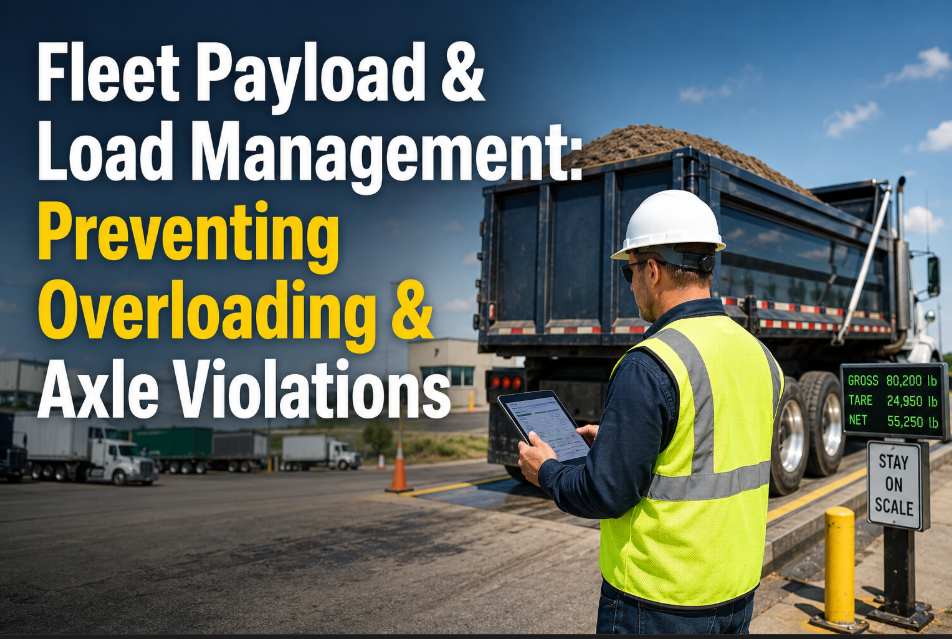
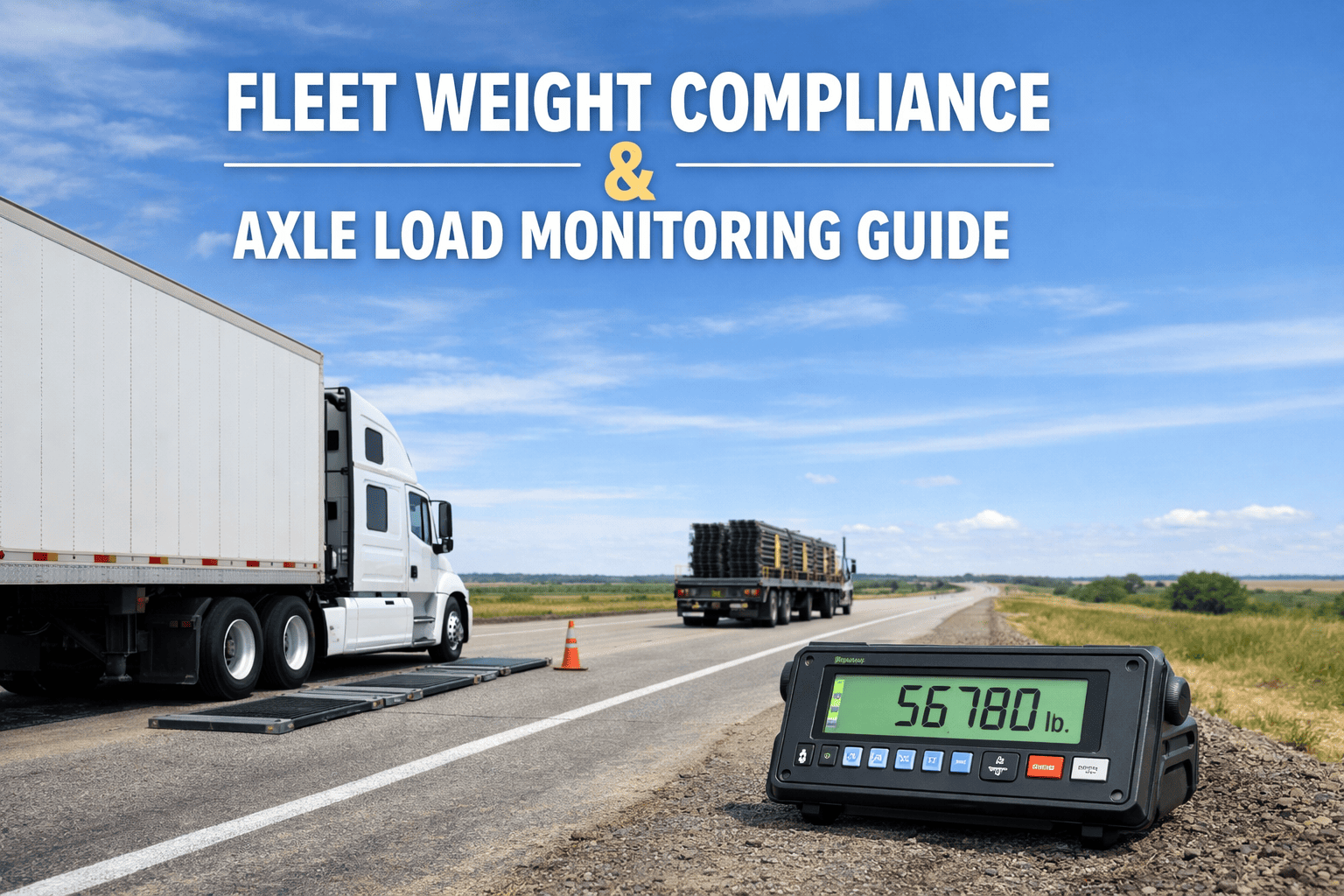
The DOT enforcement officer at the I-80 weigh station in Pennsylvania pulls a 26-foot box truck into the inspection bay at 6:47 AM. The driver hands over his logbook, his manifest, and his bill of lading. The portable scale reads 28,400 pounds on the rear axle — 2,400 pounds over the federal axle limit. The citation is written in 11 minutes: $1,850 fine, vehicle placed out-of-service, driver CSA score impacted, carrier safety rating downgraded one notch. The freight has to be redistributed roadside or the truck cannot move. The customer in Cleveland will not get their delivery on schedule. The carrier's insurance underwriter will see the violation at next renewal. Total cost of that single overload event, when calculated end-to-end, exceeds $15,000 — and the carrier did not even know the truck was overloaded until the scale flagged it. Fleet payload and load management is one of the most expensive blind spots in commercial fleet operations, and it is almost entirely preventable with the right combination of pre-trip weight verification, axle distribution awareness, and CMMS-integrated load monitoring tied to each vehicle's GVWR. To see how load monitoring connects to your asset records, you can start a free trial or book a demo.
The Real Cost
Why Overweight Violations Cost Far More Than the Fine
Fleet managers who think about overweight violations as a $1,500-$2,500 ticket are calculating only the visible cost. The hidden costs — out-of-service downtime, freight redistribution, missed delivery penalties, CSA score degradation, insurance premium impact, and accelerated wear on tires, brakes, and suspension — typically multiply the citation amount by 6 to 10 times. A single overload event that registers on the FMCSA SMS dashboard can stay on a carrier's safety record for 24 months and affect contract bidding, broker relationships, and insurance renewals throughout that period. The math makes prevention the only rational financial decision. To model the prevention cost against your current violation history, you can start a free trial.
Tier 1 — Direct Citation
$1,500-$3,200
Federal and state fines vary by overweight amount. Per-pound penalties stack quickly above 5% overweight.
Tier 2 — Operational Disruption
$2,800-$5,400
Out-of-service hold, freight redistribution, driver detention pay, replacement vehicle dispatch, late delivery fees.
Tier 3 — CSA & Insurance
$4,200-$8,700
CSA score impact, broker rate impact, insurance premium uplift over next renewal cycle, contract risk.
Tier 4 — Component Wear
$1,800-$4,100
Accelerated tire, brake, and suspension wear from overloaded operation often not realized until next PM cycle.
Regulatory Framework
Federal Weight Limits Every Fleet Manager Must Know
The federal weight limits under 23 CFR 658.17 apply to interstate highways and establish the baseline that state limits must meet or exceed. Compliance starts with knowing the three weight categories the DOT enforces: gross vehicle weight (GVW), individual axle weight, and tandem axle weight under the Federal Bridge Formula. A vehicle can be under its GVWR and still be cited if axle distribution is wrong — which is the most common overload violation pattern fleet drivers do not understand.
Single Axle Maximum
20,000 lbs
Applies to any single axle on interstate highways under federal law
Tandem Axle Maximum
34,000 lbs
Two axles spaced 40-96 inches apart, total combined weight limit
Gross Vehicle Weight
80,000 lbs
Maximum GVW for combination vehicles on interstate highways
Bridge Formula Spread
Variable
Weight limit calculation based on axle spacing per Federal Bridge Formula
Steer Axle Tire Load
600 lbs/in
Maximum load per inch of tire width, varies by state regulation
Overweight Permit Range
$15-$500
Single-trip permit costs for legal overweight loads, route-dependent
Common Violation Patterns
Six Ways Fleets Become Overweight Without Knowing It
Most overweight violations are not the result of greedy loading. They happen because of operational gaps — drivers who do not weigh, dispatchers who do not verify, loaders who do not balance, or shippers who provide inaccurate weights. Identifying which pattern is hurting your fleet is the first step in building targeted prevention.
01
Inaccurate Shipper Weights
Bills of lading list weights that differ from actual cargo by 8-15%. Driver trusts the BOL and never weighs. Shipper rarely held liable for the citation.
02
Forward Axle Loading
Total GVW is legal but cargo loaded too far forward overloads steer or front tandem axles. Most common cause of axle-only violations.
03
Fuel & Fluids Miscalculation
Drivers calculate payload against empty tare weight, not actual operating weight with full fuel, DEF, and driver. 600-900 lbs hidden weight.
04
Sliding Tandem Position
Trailer tandems left in wrong position after previous load. Weight legal at pickup but distributes incorrectly across axles in transit.
05
Cargo Moisture Gain
Lumber, paper, agricultural products, and aggregate gain weight from moisture during transit. Vehicle loaded legal becomes overweight at destination.
06
Equipment & Tool Drift
Service trucks and utility vehicles accumulate tools, parts, and equipment over time. Tare weight increases unmonitored for 18+ months between audits.
Oxmaint Load Management
How CMMS-Integrated Load Monitoring Prevents Violations
Oxmaint connects each vehicle's GVWR, axle ratings, tare weight, and load capacity to the asset record so that dispatchers, drivers, and maintenance teams all see the same compliance envelope. When telematics or onboard scale data crosses a threshold, a work order or alert fires before the truck leaves the yard. To evaluate the integration on your fleet configuration, you can book a demo.
01
Asset-Level Weight Specifications
Each vehicle stores GVWR, individual axle ratings, tare weight, and payload capacity. Drivers and dispatchers access from mobile before loading.
02
Onboard Scale Integration
Air-bag pressure sensors and onboard scale systems feed real-time weight data into the platform. Threshold violations trigger immediate alerts.
03
Pre-Trip Weight Verification
Digital pre-trip inspection includes weight check step. Driver records cat scale ticket or onboard reading before dispatch approves trip.
04
Violation History Tracking
All weight events, citations, and corrective actions logged against the vehicle and driver. CSA preparation and DOT audit response in hours not days.
05
Component Wear Correlation
Overload events automatically flag tires, brakes, and suspension for accelerated PM intervals. Wear costs captured back to the load event.
06
Route & Permit Compliance
Vehicles requiring permits flagged against route restrictions. Dispatch cannot release a permit-required load without active permit on file.
Before vs After
Fleet Operations With and Without Load Management Systems
| Operational Metric | Without Load Management | With CMMS Load Management |
| Overweight violations per 100 vehicles annually |
14-22 |
1-3 |
| Average citation cost per event |
$15,400 |
$15,400 (when occurs) |
| Pre-trip weight verification rate |
11% |
97% |
| CSA Weight & Size BASIC score |
54-72 percentile |
8-18 percentile |
| Out-of-service hours per vehicle annually |
4.8 hrs |
0.6 hrs |
| Insurance premium impact |
+8-14% renewal |
Baseline or credit |
| Tire replacement intervals |
22% earlier |
Rated lifecycle |
| Annual compliance cost per vehicle |
$2,180 |
$340 |
Stop Paying $15,000 Per Overweight Citation
Oxmaint connects vehicle weight specifications, onboard scale data, pre-trip verification, and violation history into a single compliance system. Build the load management program that keeps your CSA score low, your insurance premiums stable, and your trucks out of the DOT impound lot.
FAQ
Frequently Asked Questions
Can a vehicle be under GVWR and still be cited for overweight?
Yes, and this is the most common overweight violation pattern. A vehicle can have a legal total gross weight while exceeding individual axle limits because cargo is distributed incorrectly. Steer axle, drive tandem, and trailer tandem each have separate limits that must be checked independently. The Federal Bridge Formula adds another layer when axle spacing is involved.
Are shippers ever held responsible for inaccurate weight declarations?
Under most state laws and federal regulation, the carrier bears primary responsibility for vehicle weight regardless of shipper documentation. Some states allow carriers to pursue civil recovery from shippers for misdeclared weights, but the DOT citation is issued to the driver and carrier. Pre-loading weight verification is the only reliable defense.
How does Oxmaint integrate with onboard scale systems?
Oxmaint accepts weight data from air-bag pressure sensors, dedicated onboard scale systems, and telematics platforms via API. The weight specifications stored at the asset level allow real-time comparison with reported load weight. Threshold violations trigger work orders, driver alerts, or dispatch holds depending on configuration.
How quickly can a fleet see CSA Weight & Size score improvement?
CSA BASIC scores update monthly, and improvements from a stronger load management program typically appear within 90-120 days as new clean inspections replace older violations in the rolling 24-month window. Fleets implementing pre-trip weight verification often see their percentile drop from the 50-70 range to single digits within 6-9 months.