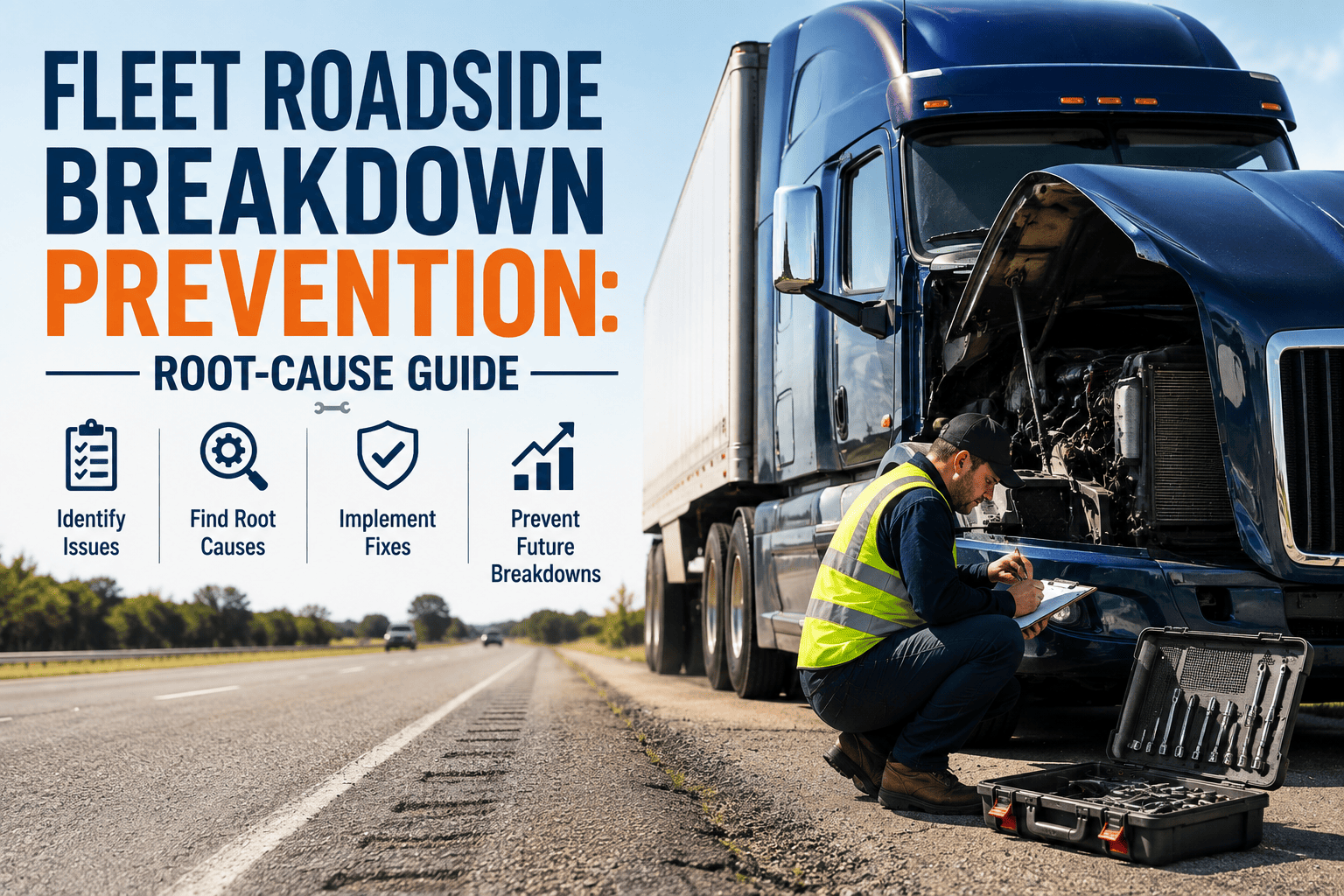
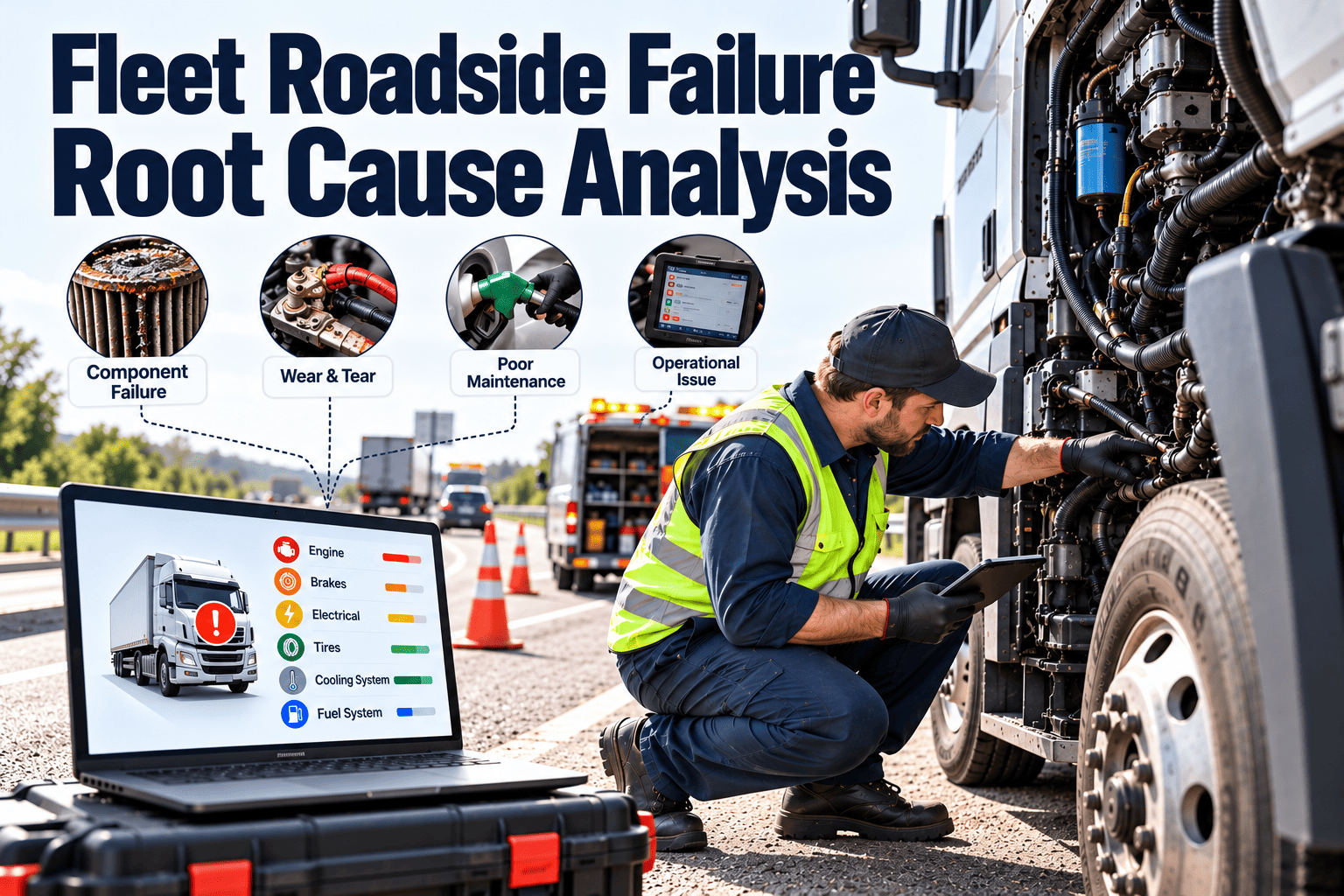
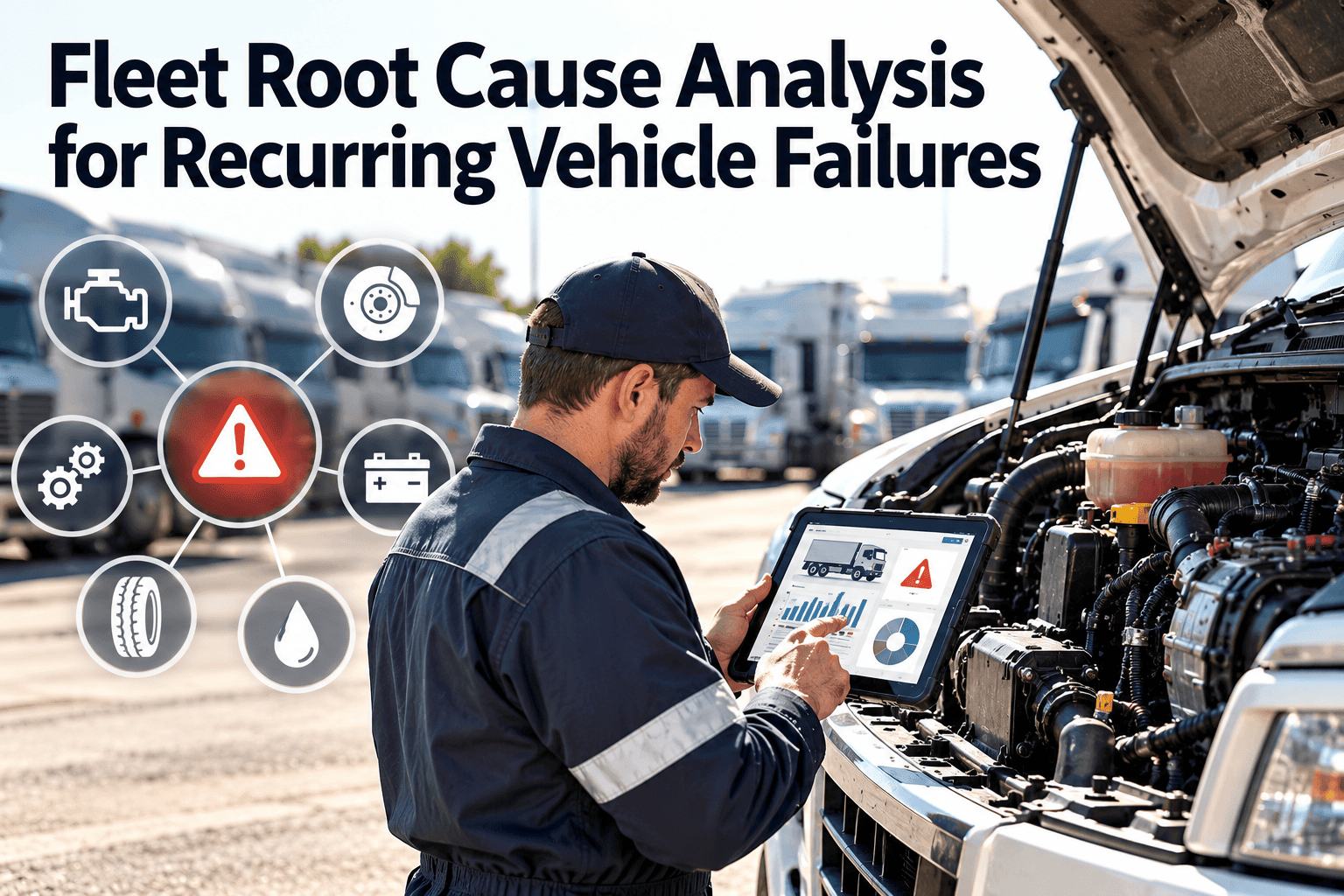
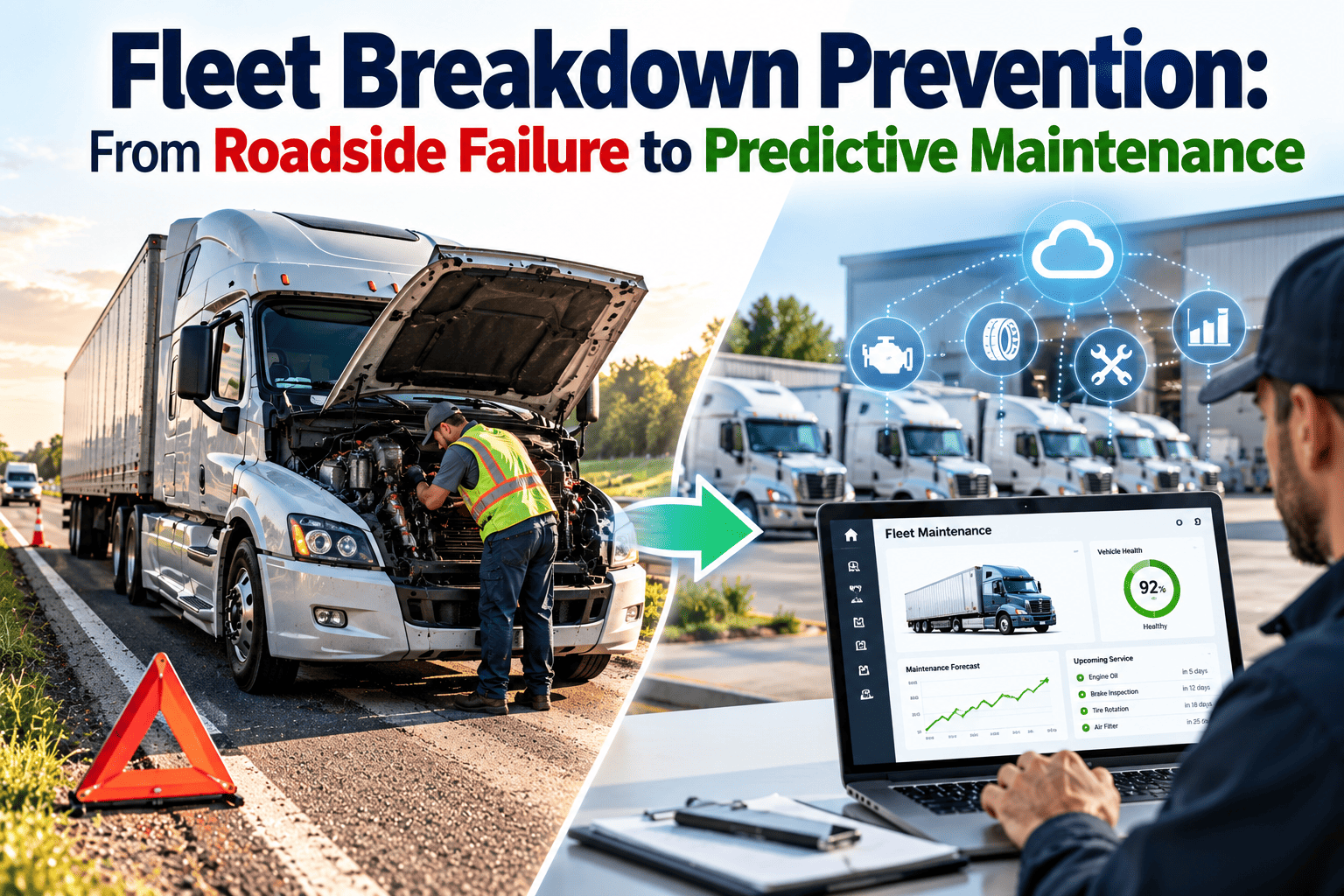
A truck stranded on the shoulder rarely fails for a reason nobody could have seen. Most roadside breakdowns trace back to a fault that was logged, flagged, or hinted at weeks earlier and never chased to its actual cause. Fleets that keep buying the same repair over and over are usually treating symptoms instead of running root-cause analysis on the failure pattern underneath. OxMaint gives fleet maintenance teams the workflow to close that gap for good.
Roadside Breakdowns · Root-Cause Analysis · Fleet Maintenance
Every Roadside Breakdown Had a Cause That Was Preventable Weeks Earlier
Repeat breakdowns are not bad luck — they are unresolved failure modes repeating on schedule. Here is how root-cause analysis traces a stranded vehicle back to its real origin and stops the same failure from happening twice.
68%
Of roadside breakdowns trace to a fault class that had occurred at least once before
$1,100+
Average cost of a single roadside service call including towing and downtime
21 days
Median gap between an early fault signal and the breakdown it eventually caused
40%
Reduction in repeat breakdowns reported after RCA-driven corrective action tracking
Origin Timeline
Where a Roadside Breakdown Actually Begins — Weeks Before the Tow Truck Arrives
The breakdown itself is the last event in a chain, not the first. Tracing the timeline backward almost always reveals a signal that was available and unactioned.
Day -21
Early Fault Signal Logged
An OBD fault code, a fluid level trend, or a driver-reported noise gets recorded in an inspection or telematics feed but is not escalated to a work order.
Day -12
Symptom Repeats, Severity Increases
The same code or complaint reappears, often on a different route or with a different driver, but is treated as a new, unrelated issue rather than a recurring pattern.
Day -4
Component Reaches Failure Threshold
Wear, pressure, or temperature crosses the point where failure becomes a matter of when, not if — usually still with no corrective work order open.
Day 0
Roadside Breakdown Occurs
The vehicle is stranded, a tow and roadside service call are dispatched, and the failure is logged as an isolated incident rather than the end of a known pattern.
RCA Workflow
The Four-Step Root-Cause Workflow That Breaks the Repeat-Failure Cycle
Root-cause analysis only works when it is a repeatable workflow, not a one-time investigation after a bad breakdown. These four steps turn every failure into data the next decision can use.
01
Classify the Failure Mode
Every breakdown is tagged against a standard failure mode taxonomy — electrical, cooling, drivetrain, tire, brake, fuel system — instead of a free-text description that cannot be aggregated later.
02
Trace Back to the Earliest Signal
The vehicle's fault history, inspection records, and prior work orders are pulled to identify the earliest point the failure mode was detectable, not just when it became disabling.
03
Assign a Corrective Action
A specific corrective action is created — a revised PM interval, an updated inspection checklist item, or a component substitution — and linked directly to the failure mode it addresses.
04
Track Recurrence Across the Fleet
The same failure mode is monitored fleet-wide after the corrective action is deployed, confirming whether the fix actually reduced recurrence or just resolved one vehicle's instance.
Fleet Maintenance · RCA · OxMaint
Stop Treating Every Breakdown as a Surprise
OxMaint links fault history, inspection records, and work orders into one root-cause workflow, so every breakdown gets classified, traced, and tracked instead of logged as an isolated event.
Reactive vs Root-Cause
Reactive Repair Versus Root-Cause-Driven Maintenance
The difference between fleets that keep stranding vehicles and fleets that stop repeat failures usually comes down to whether a failure record ends at repair or continues to prevention.
Operational Impact
What Fleets Report After Adopting RCA-Driven Maintenance
40%
Fewer Repeat Breakdowns
Fleets tracking corrective actions to completion see repeat failure modes decline within two to three maintenance cycles.
21 Days
Earlier Detection Window
Median lead time between an early fault signal and the eventual breakdown, now available as an intervention window instead of hindsight.
$1,100+
Avoided Per Prevented Call
Average roadside service and towing cost avoided for every breakdown intercepted before it strands a vehicle.
100%
Failure Modes Classified
Every breakdown tagged to a standard taxonomy instead of a free-text note nobody can aggregate later.
Fleet Manager Questions
Roadside Breakdown Prevention — Common Questions From Maintenance Managers
How is root-cause analysis different from a standard post-breakdown inspection?
+
A standard inspection identifies what broke on this vehicle right now. Root-cause analysis traces the failure back to its earliest detectable signal and checks whether the same pattern exists elsewhere in the fleet, which is what actually prevents the next breakdown.
What is the fastest way to start tracking failure modes without a large system overhaul?
+
Start by tagging every new work order with a standard failure category instead of free text, then review recurrence monthly. A
free trial setup can apply this taxonomy across existing work order history in one pass.
Should PM intervals be adjusted based on a fleet's own failure data instead of manufacturer defaults?
+
Manufacturer intervals are a reasonable starting point but rarely account for route conditions, load patterns, or climate specific to a given fleet. Adjusting intervals based on actual recorded failure data typically catches wear-driven failures earlier than the default schedule.
How many repeat occurrences should trigger a formal root-cause investigation?
+
Two occurrences of the same fault on the same vehicle, or the same fault pattern across three or more vehicles of a similar type, is a reasonable threshold to escalate from routine repair to a documented root-cause investigation.
Can driver-reported symptoms that never became a written inspection entry still be traced?
+
Only if there is a consistent place to capture them. Verbal reports that never enter a system are the most common blind spot in breakdown history — a
demo walkthrough covers how to close that specific gap.
OxMaint · Roadside Breakdown Prevention · RCA
Turn Every Breakdown Into Data the Next One Avoids
OxMaint gives fleet maintenance teams a repeatable root-cause workflow — classify the failure, trace it back, assign a corrective action, and track recurrence fleet-wide. Build the maintenance record that actually stops vehicles from stranding twice for the same reason.