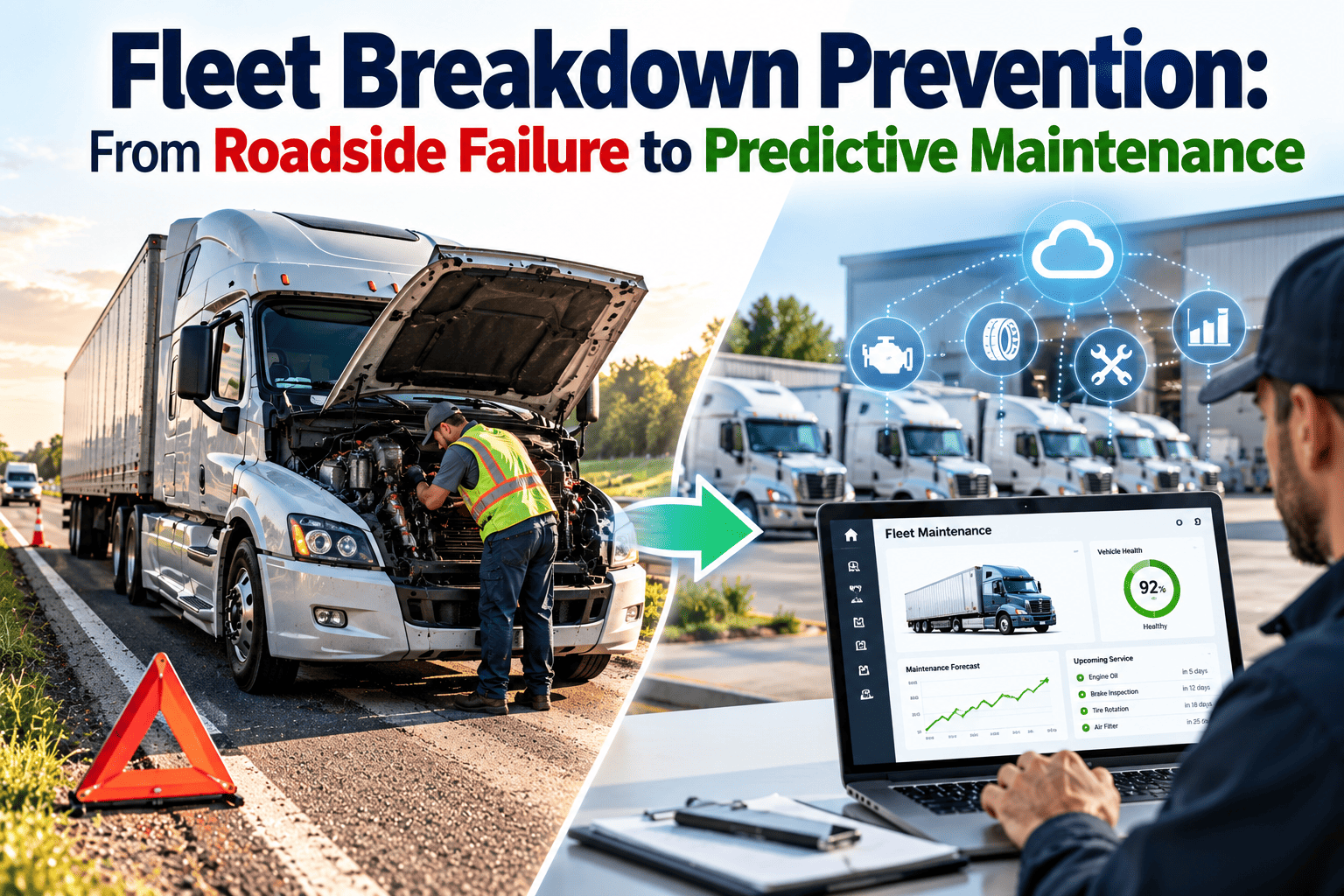
A truck that stops on the shoulder of a highway with a check-engine light rarely fails without warning. Long before the roadside call, a coolant leak develops a slow drip, a belt starts to glaze, or a brake pad wears past its safe margin — and in most fleets, none of that early evidence gets acted on until the vehicle is already off the road. The gap between a preventable defect and an unplanned breakdown is where maintenance teams either protect their uptime or lose it. Closing that gap means moving from reactive repairs to a documented, scheduled program — the kind of workflow a dedicated fleet maintenance platform is built to run.
The Roadside Breakdown Your Team Could Have Seen Coming
Unplanned breakdowns rarely start on the road. They start as a defect noted on a driver inspection, a trending oil analysis result, or a work order that got deferred one too many times. Fleets that catch these signals before dispatch spend less time firefighting and more time planning.
How a minor defect turns into a roadside call
Breakdowns feel sudden to a driver, but they almost never are. Most follow a recognizable path from a small, documented issue to a full stop — and every stage before the last one is still a scheduled repair, not an emergency, if someone is watching for it and has a system that surfaces the signal in time.
Defect appears
A driver notices a slow leak, an unusual noise, or a warning light during a pre-trip or post-trip inspection.
Finding goes undocumented
Without a digital DVIR tied to the asset, the note stays on a paper form or gets mentioned verbally and never reaches maintenance.
Component degrades under load
The vehicle keeps running its normal routes. Heat cycling, vibration, and continued load accelerate the underlying wear.
Warning signs escalate
Dashboard alerts, fluid consumption, or drivability changes become harder to ignore, but no work order has been opened yet.
Breakdown and recovery
The vehicle stops on route. Towing, an emergency repair, a missed delivery window, and a driver stranded on the shoulder follow.
It's rarely one bad part — it's usually a gap in the process
When fleets investigate a breakdown after the fact, the mechanical failure is usually the easy part to explain. The harder question is why the warning signs never turned into a scheduled repair, and the answer is almost always a gap in process rather than a one-off mechanical surprise.
Preventive maintenance intervals get pushed back to keep a truck on the road during a busy week, and the deferral is never tracked or revisited.
Driver inspection reports are still on paper, so defects noted at the end of a shift don't reach the shop until the next visit, if at all.
No centralized asset history means a technician can't see that the same component has been flagged twice before under a different work order.
Parts aren't in stock when a defect is caught, so the repair gets scheduled around parts availability instead of the other way around.
Maintenance and dispatch operate from separate systems, so a flagged vehicle keeps getting assigned to routes before it's repaired.
There's no dashboard view of which assets are approaching a due PM or carrying an open defect, so nothing surfaces until it fails.
Why the early-warning signal isn't only coming from the driver anymore
Driver inspections used to be the only source of early warning a fleet had. Telematics and onboard diagnostics now add a second, continuous feed — one that doesn't depend on a driver noticing a symptom before it becomes obvious, and it can surface a developing issue days or weeks before a visual inspection would catch it.
Signals worth routing into a work order
Active and pending engine fault codes, which often precede a drivability complaint by days.
Tire pressure and temperature trends, a leading indicator for blowouts on long-haul routes.
Battery and charging system health, especially relevant heading into seasonal temperature swings.
On their own, these feeds generate alerts. Tied to an asset's maintenance record, they generate a work order — which is the difference between a fleet that knows about a problem and one that acts on it.
The same records that prevent breakdowns are what an audit asks for
Inspection findings, completed PM tasks, and repair history aren't just operational data — they're also what a roadside inspection or a compliance review expects a fleet to produce on request, and a paper-based system makes that harder than it needs to be.
- ACompleted DVIRs and the corrective action taken on each flagged defect
- BPM completion dates against the asset's scheduled intervals
- CRepair history, parts used, and technician sign-off for every work order
Records get split across binders, glove boxes, and individual technicians' memory when they're kept on paper, and reconstructing a single asset's full history during an audit becomes a scramble instead of a search. A digital maintenance record ties every inspection, work order, and sign-off to the asset automatically, so producing that history is a matter of pulling it up rather than tracking it down.
Three maintenance strategies, three very different breakdown rates
Most fleets run a mix of all three approaches without realizing it. The goal isn't to eliminate reactive repairs entirely — some failures are genuinely unavoidable — but to steadily shrink the share of maintenance that happens purely because nobody saw the problem coming in time to schedule it.
| Approach | What Triggers The Work | Typical Downtime Impact | Data It Depends On |
|---|---|---|---|
| Reactive | The asset has already failed or stopped | Highest — unplanned, often on the road | None required, which is the problem |
| Preventive | A fixed schedule — mileage, engine hours, or calendar time | Low — planned into a shop slot | Asset history, PM schedules, DVIR data |
| Predictive / Condition-Based | A trend crossing a defined threshold — pressure, temperature, wear rate | Lowest — repair happens before failure risk rises | Sensor or telematics data, trend history over time |
Turn every driver inspection into a tracked maintenance signal.
Route DVIR findings straight into a work order, tied to the asset's full service history, before the defect becomes a roadside call.
What a pre-trip and post-trip inspection needs to actually catch
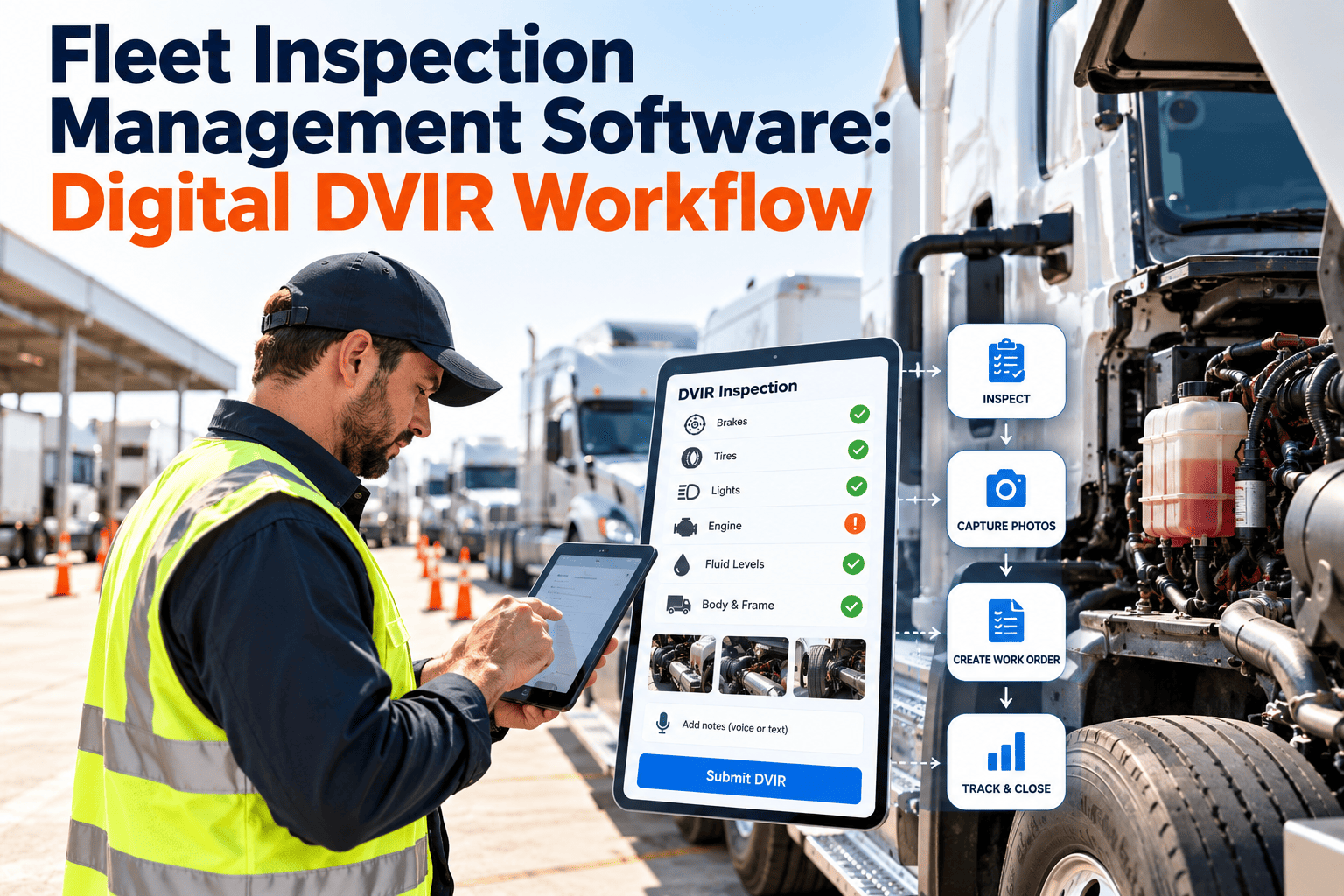
A DVIR is only useful if it's specific enough to catch the early-stage signals described above, and fast enough that drivers actually complete it honestly at the start and end of every shift, rather than treating it as a box to check before clocking out.
- 01Fluid levels and visible leaks under the engine, transmission, and differential
- 02Tire condition, tread depth, and inflation across all axles
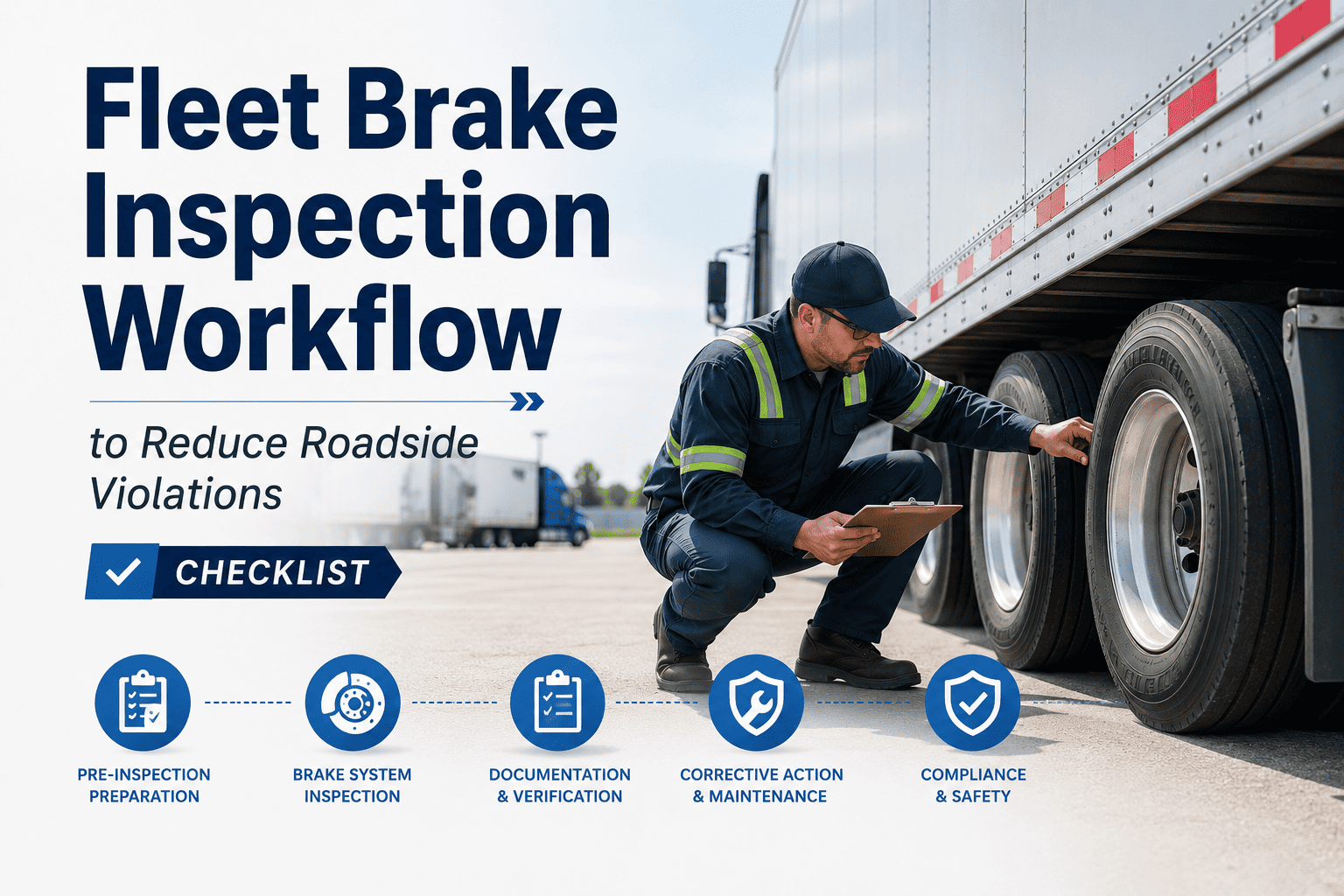
- 03Brake performance, air system pressure, and warning indicators
- 04Lights, mirrors, wipers, and horn function
- 05Belts and hoses for cracking, glazing, or fraying
- 06Coupling devices, suspension, and frame for visible wear or damage
- 07Any unusual noise, vibration, or drivability change from the previous shift
Every item on that list is only valuable if it reaches maintenance the same day it's noted. A mobile inspection workflow that feeds directly into a work order queue closes the gap that paper DVIRs consistently leave open between the driver's seat and the shop floor.
The workflow that keeps a flagged defect from getting lost
The technical fix for most breakdowns is straightforward. What actually prevents them is a workflow that guarantees a flagged defect turns into a scheduled repair, every single time, without depending on a driver's memory, a technician's notepad, or a supervisor happening to notice.
What a roadside breakdown costs beyond the repair itself
The repair on a broken belt or a failed brake caliper often costs about the same whether it happens in the shop or on the shoulder. What changes dramatically is everything around it.
| Cost Component | Planned Shop Visit | Roadside Breakdown |
|---|---|---|
| Towing / recovery | Not applicable | Often required, at a premium rate |
| Parts sourcing | Ordered ahead, standard freight | Sourced on short notice, sometimes at a nearby dealer's retail rate |
| Labor | Scheduled shift, familiar shop bay | May require a mobile technician or after-hours call-out |
| Load and delivery impact | Vehicle swapped or route adjusted in advance | Missed delivery window, possible reload onto another vehicle |
| Driver time | Unaffected, driver reassigned | Idle and waiting, sometimes for hours |
None of these secondary costs show up on the repair invoice, which is exactly why they get underestimated when a fleet decides whether tightening up the inspection-to-work-order pipeline is worth the effort.
The KPIs that tell you whether prevention is working
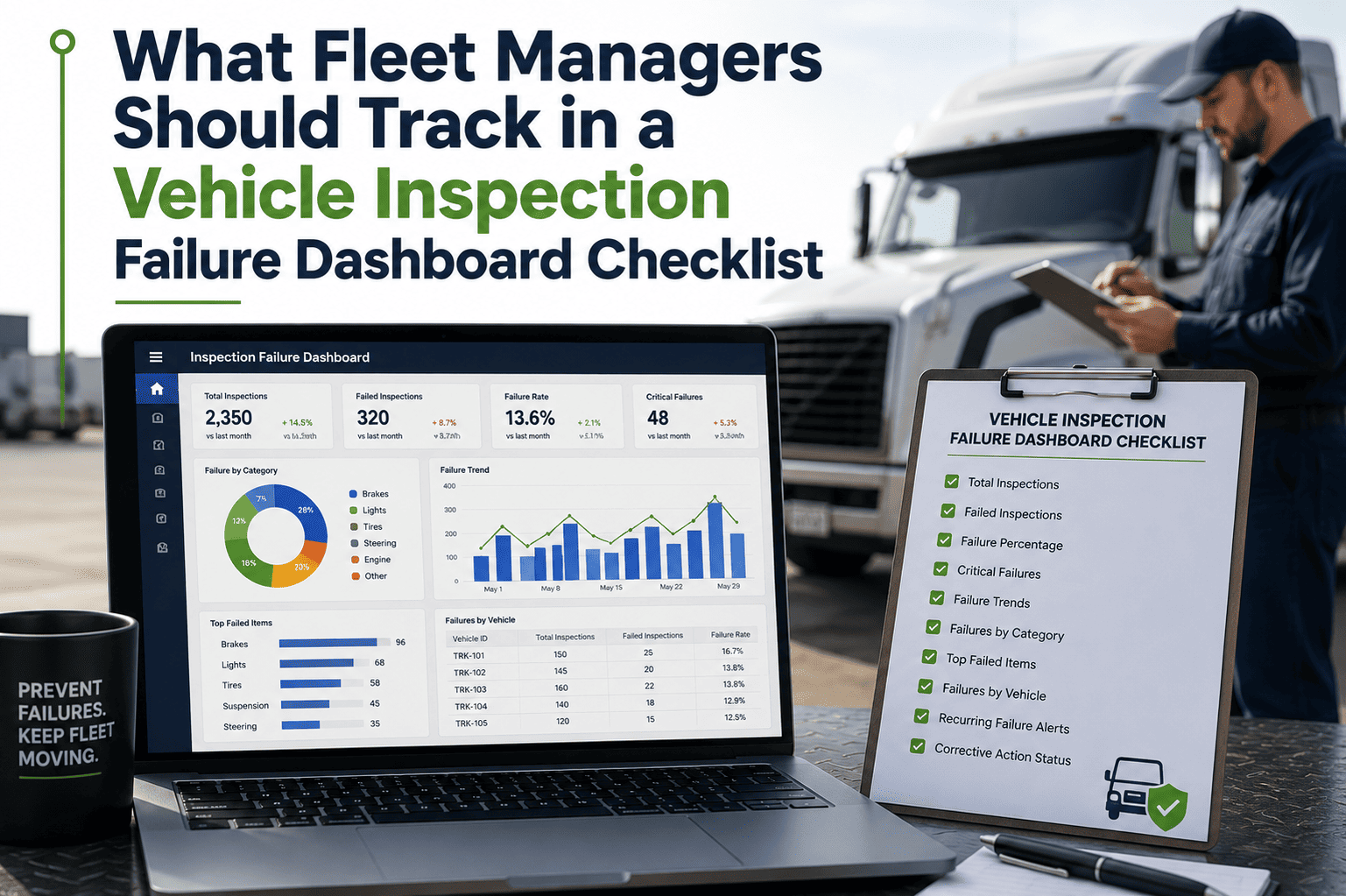
Breakdown prevention is hard to manage by feel. These are the metrics fleet maintenance teams track to see whether the inspection-to-work-order pipeline is actually closing the gap between a flagged defect and a completed repair.
Share of scheduled operating time an asset is actually available for dispatch, excluding planned maintenance windows.
Percentage of preventive maintenance tasks completed within their scheduled window, not deferred or skipped.
Average operating time between unplanned breakdowns on a given asset or asset class, trending upward as prevention improves.
Proportion of total work orders opened reactively versus generated from a PM schedule or inspection finding.
Getting buy-in for a tighter inspection-to-work-order process
The hardest part of moving off paper inspections usually isn't technical — it's convincing dispatch, drivers, and finance that the change is worth the short-term disruption of learning a new habit and adjusting an existing routine.
A practical starting point
Start with a single vehicle class or terminal rather than the whole fleet. Track reactive work orders against PM-driven ones for a full quarter before and after switching to digital inspections, and let that comparison — on your own fleet, not an industry average — make the case for a wider rollout.
Why the habit sticks
Drivers tend to adopt a digital DVIR quickly once they see a flagged defect actually turn into a repair, rather than disappearing into a form nobody reads. That feedback loop, more than any policy memo, is usually what drives the habit change.
Fleet breakdown prevention — answered
What's the difference between preventive and predictive maintenance for a fleet?
Preventive maintenance runs on a fixed schedule — mileage, engine hours, or time — regardless of the component's actual condition. Predictive maintenance instead responds to a measured trend, such as an oil analysis result or a sensor reading, crossing a defined threshold before failure risk rises.
How do digital DVIRs actually reduce breakdowns?
A digital inspection routes a flagged defect straight into a work order the same day, instead of leaving it on a paper form that may never reach the shop. Book a Demo to see this workflow end to end.
Why do fleets keep deferring preventive maintenance even when they know the risk?
Without a tracked schedule and a dashboard view of overdue tasks, deferrals happen informally to keep a truck on the road during a busy week, and there's no system prompting anyone to reschedule the deferred work before it's forgotten entirely.
What should a fleet track after a breakdown to prevent a repeat?
The asset's full history — prior inspection findings, PM compliance, and past repairs on the same component — to see whether the failure had already been flagged and missed, and whether the same defect has recurred on the same vehicle before.
Can a small fleet justify moving off paper inspection forms?
The value scales with fleet size, but even a handful of vehicles benefit from a searchable asset history and automatic work order routing — the same gap between a flagged defect and a completed repair exists whether a fleet runs five trucks or five hundred. Get Started to see it on your own fleet.
Stop finding defects after the truck is already stranded.
Connect inspections, work orders, parts, and asset history in one system, so every flagged defect turns into a scheduled repair.
Free trial · No credit card