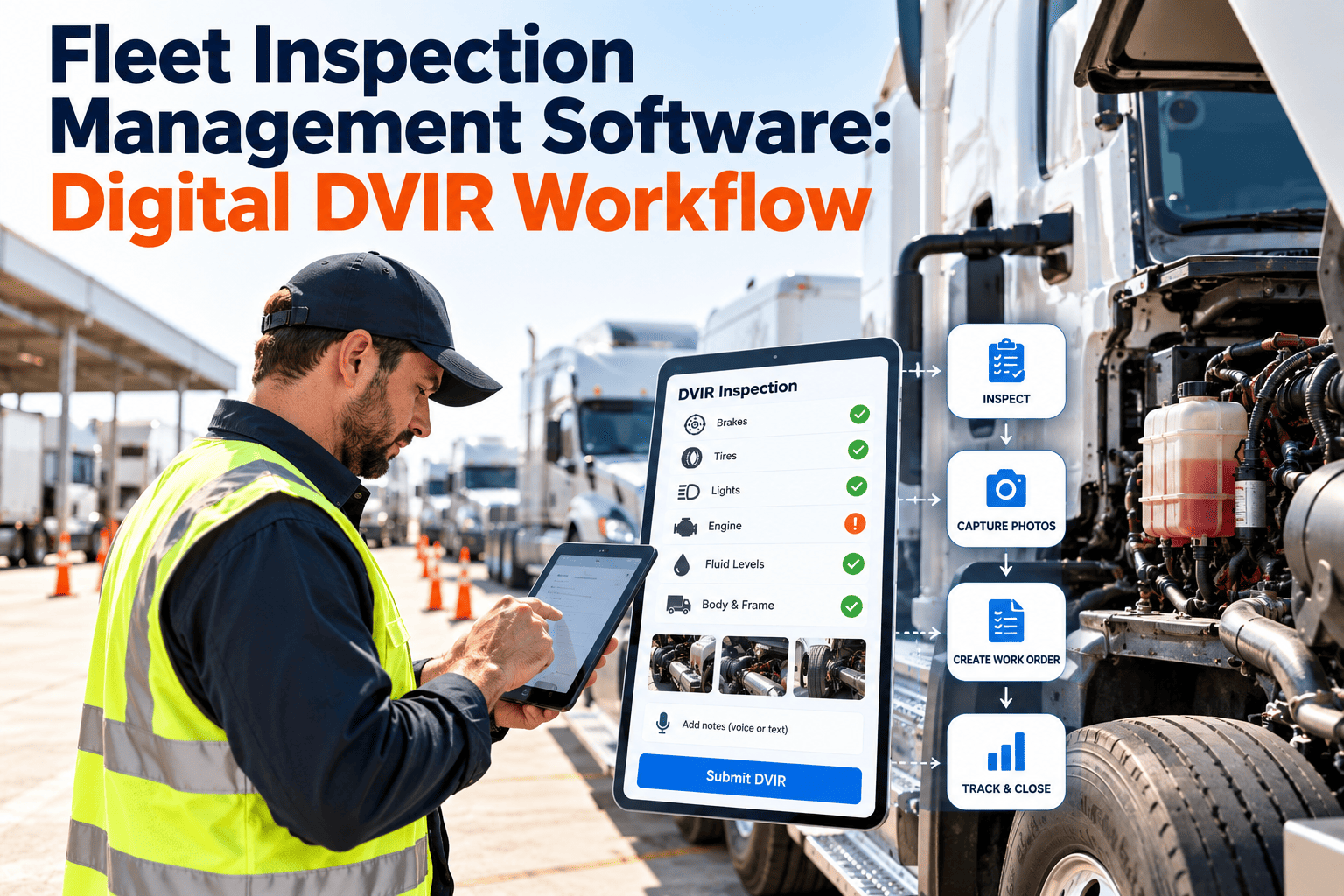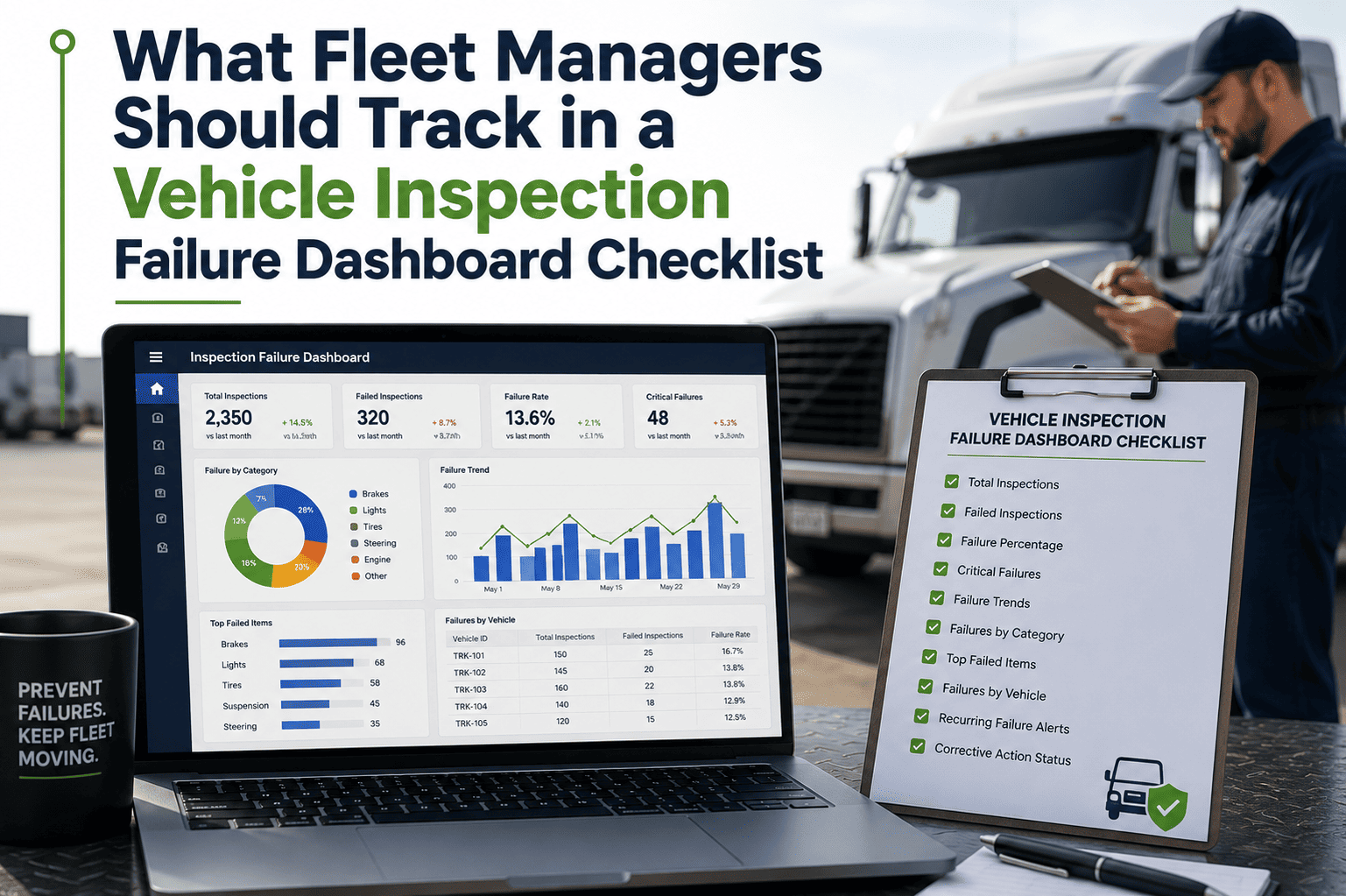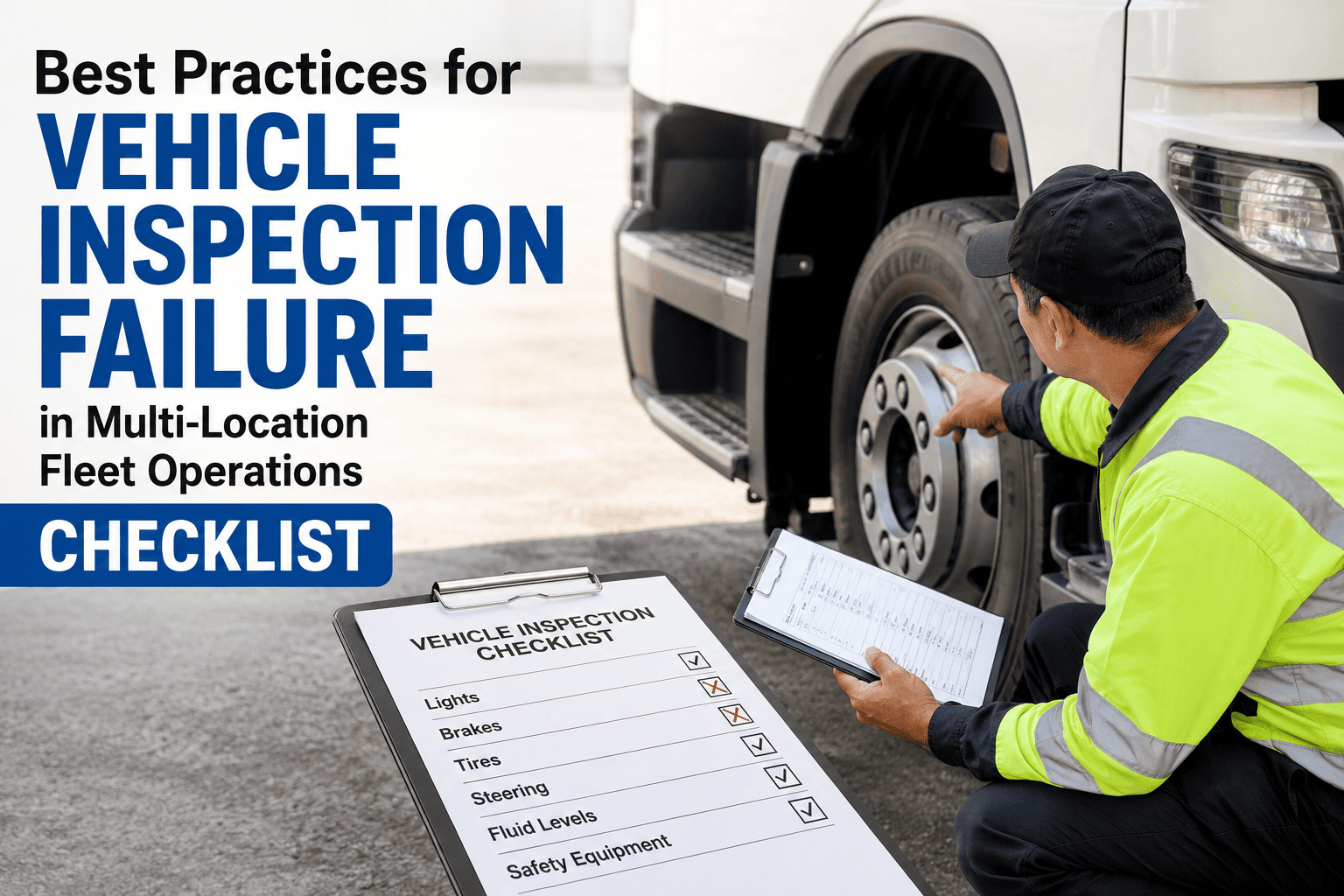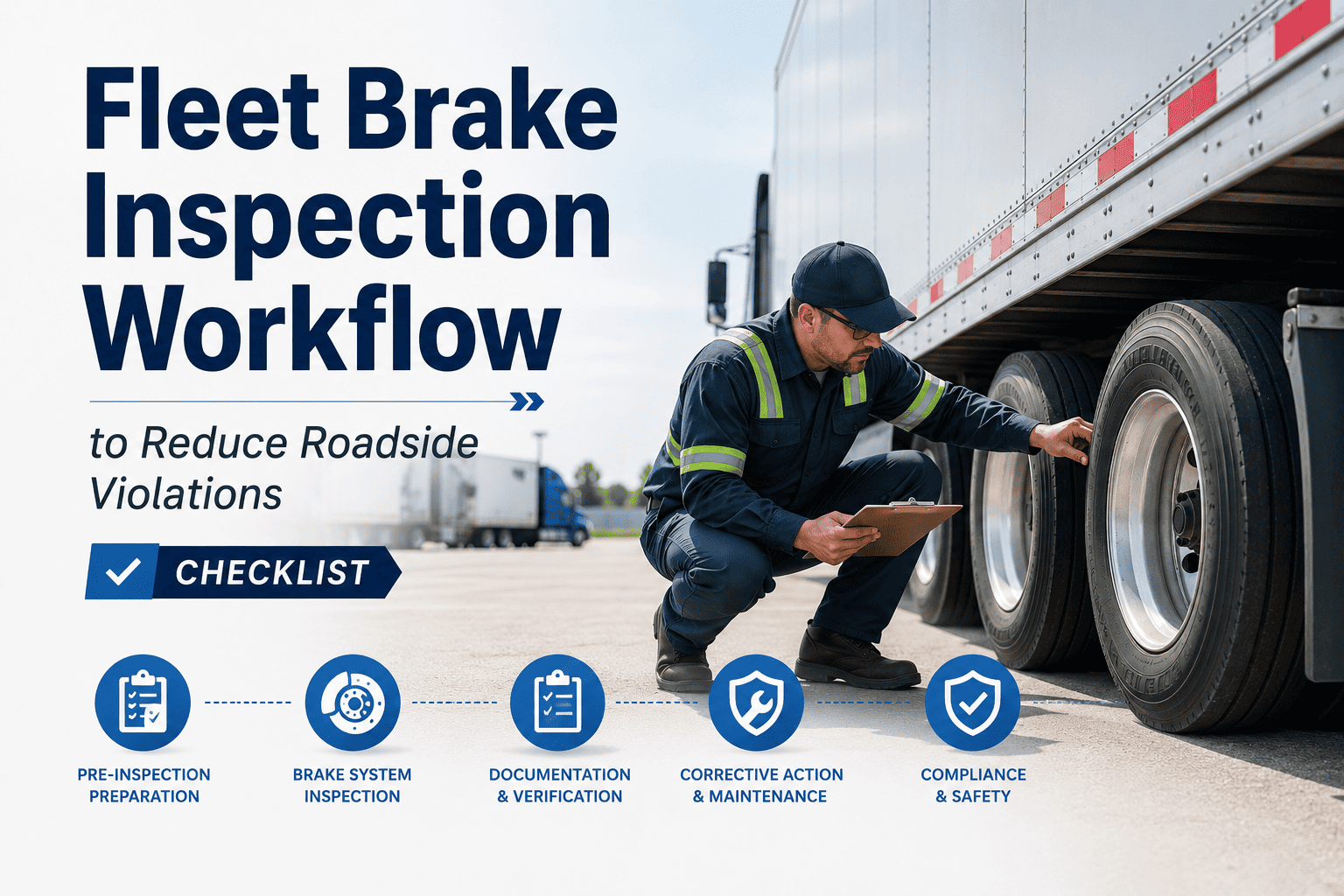
A tractor loses a wheel-end bearing on a highway shoulder, and the report says "mechanical failure." That label explains nothing. Most roadside failures trace back to a missed defect, a deferred service, a wrong part, or a repair that was never verified. Fleets that investigate the cause instead of closing the tow ticket stop paying for the same breakdown twice. This guide shows a practical process, supported by a maintenance-first CMMS workflow that keeps the evidence in one place.
Fleet Roadside Failure Root Cause Analysis: Trace Every Breakdown Back to the Record That Predicted It
Oxmaint links inspections, work orders, parts, and asset history so your team can find why a vehicle failed on the road and fix the process behind it.
A Roadside Failure Is a Records Problem Before It Is a Mechanical Problem
Components rarely fail without warning. The warning usually sits in a driver note, a skipped inspection line, or an overdue service that nobody connected to the unit's history.
- A defect was reported on a pre-trip inspection but never became a work order.
- A work order was closed without confirming the repair actually fixed the fault.
- A preventive maintenance task was pushed back and then forgotten.
- The same symptom returned on a sister unit because lessons stayed in one technician's head.
Root cause analysis for fleets means rebuilding that chain from the records. If the records are scattered across paper DVIRs, spreadsheets, and shop notes, the analysis stalls at the last visible symptom.
Common Roadside Failures and Where the Root Cause Usually Hides
Use this table as a starting hypothesis list, not a verdict. Always confirm against the unit's own history.
| Roadside Failure | Frequent Hidden Cause | Evidence to Pull First |
|---|---|---|
| Tire failure | Slow air loss, mismatched duals, missed tread or pressure checks | Inspection notes, tire rotation and pressure logs |
| Brake out-of-service | Out-of-adjustment components, worn linings, deferred brake service | Last brake inspection, PM completion date, defect reports |
| Engine overheat | Coolant loss, weak hoses, clogged cooling package, ignored temperature alerts | Fluid top-up history, hose replacement records, fault codes |
| Electrical or no-start | Corroded connections, aging batteries, repeated charging faults | Battery test results, prior electrical work orders |
| Air system loss | Leaks noted by drivers, worn dryers, unserviced lines | Driver defect comments, air dryer service dates |
| Wheel-end failure | Lubrication lapses, seal damage, improper installation torque | Wheel-end service work orders, technician sign-off |
| Aftertreatment derate | Deferred filter service, repeated regeneration warnings | Fault history, service intervals, duty cycle notes |
What a Roadside Event Really Costs, Phase by Phase
The tow bill is only one line. The cost builds across every phase between the first call and the unit returning to service.
A Five-Step Root Cause Process for Fleet Maintenance Teams
Keep the method light enough to run after every significant event, not only after the worst ones.
Six Cause Lanes to Check Before You Blame the Part
A fishbone view keeps the investigation from stopping at the first plausible answer.
- Was the defect written down?
- Was the inspection actually completed?
- Were photos or notes attached?
- Was the task on schedule?
- Was it completed or deferred?
- Did the interval fit the duty cycle?
- Was the correct part installed?
- Is there a supplier or batch pattern?
- Was a substitute used?
- Was the procedure followed?
- Was torque or fit verified?
- Did anyone check the fix?
- Were warnings reported quickly?
- Was the unit overloaded or misused?
- Was the route or terrain severe?
- Who approved the delay?
- Was the shop under capacity pressure?
- Were repeat defects escalated?
Stop Closing Breakdowns as Mechanical Failure
Give your shop one record of inspections, work orders, parts, and history so every roadside event ends with a documented cause.
A Worked Example: Asking Why Until the Answer Is Actionable
The chain below is illustrative. Your own records will decide which questions apply.
The corrective action is a workflow change
Replacing the tire fixes one unit. Routing every flagged defect into a tracked work order with an owner fixes the system. That is the difference between repair and prevention.
Reactive Investigation Versus Records-Driven Root Cause Analysis
- Cause is guessed from memory and the failed part alone.
- Inspection history sits on paper or in separate files.
- Repeat failures look like new problems every time.
- Corrective actions are verbal and quickly forgotten.
- Asset history, defects, and PM status open in one view.
- Failure categories reveal patterns across the fleet.
- Corrective work orders are assigned, dated, and tracked.
- Similar units are checked before they fail.
Metrics That Show Whether Root Cause Work Is Paying Off
Track trends over rolling periods rather than single events, and compare like units against each other.
Evidence Checklist: What to Capture in the First 24 Hours
Evidence degrades quickly. Parts get scrapped, drivers forget details, and the repair record gets summarized into a single line. Capture the essentials while the event is fresh.
- Odometer or engine hours at failure
- Active and stored fault codes
- Last PM date and type
- Recent repairs on the same system
- Photos before and after removal
- Part number, brand, and install date
- Visible wear, heat, or contamination
- Retained part tag for later review
- Driver account of warning signs
- Technician who last worked on the system
- Dispatcher notes on timing and load
- Supervisor approvals or deferrals
- Last three inspection reports
- Open or closed defects on the unit
- Parts issued to the unit
- Warranty or supplier claim status
Running a Short Weekly Failure Review That Actually Changes Behavior
Root cause work fails when it becomes a long meeting with no follow-up. Keep it brief, specific, and tied to work orders.
Who should attend
- The shop supervisor or maintenance manager who owns repair standards.
- A lead technician who can speak to the failure itself.
- A dispatcher or operations contact who understands route and load impact.
- A safety or compliance representative when the event involved an inspection or violation.
What the agenda covers
- Review each significant event from the week using the same five-step structure.
- Confirm that last week's corrective actions were completed and verified.
- Look at repeat failures and open defects older than your own threshold.
- Agree on any interval, checklist, or parts standard that needs to change.
What leaves the room
Every decision becomes a work order or a procedure update with an owner and a due date. If it is not tracked in the maintenance system, it is only a conversation.
From Root Cause to Prevention: Turning Findings Into Maintenance Changes
The value of analysis shows up in the next maintenance cycle. These examples show how common findings translate into concrete changes inside a preventive maintenance program.
| Finding | Maintenance Change | How It Is Tracked |
|---|---|---|
| Defects noted but never repaired | Require every flagged inspection item to create a work order | Defect-to-repair time and open defect age |
| Repeat repair on the same system | Add a verification step and second sign-off to the procedure | Repeat failure rate within a set window |
| Failures cluster on one duty cycle | Shorten the PM interval for severe-service units | PM schedule by unit group and failure trend |
| One supplier or batch appears often | Quarantine stock and review the part standard | Parts usage by supplier on work orders |
| Service deferred under shop pressure | Set an approval rule and a maximum deferral window | Overdue PM list reviewed weekly |
| Warning signs missed by drivers | Simplify the inspection form and add photo prompts | Inspection completion and defect submission rates |
Close the loop on similar units
After each finding, search the fleet for vehicles with the same component, age, or duty cycle. Schedule a targeted inspection as a work order so the lesson reaches units that have not failed yet. This one habit converts a single breakdown into fleet-wide prevention.
Compliance Context: Why Documentation Matters After a Roadside Event
In the United States, FMCSA rules shape what a motor carrier must be able to show. Confirm the exact requirements for your operation and jurisdiction.
- Driver vehicle inspection reports and certification of repairs under 49 CFR 396.11 and 396.13.
- Systematic inspection, repair, and maintenance, with records, under 49 CFR 396.3.
- Periodic inspections and inspector qualifications under 49 CFR 396.17 and related sections.
- Roadside inspection outcomes feed carrier safety scoring, including the Vehicle Maintenance category.
A complete, searchable history lets you answer an inspector or auditor quickly and shows that defects are controlled, not ignored.
How Oxmaint Supports the Root Cause Workflow
Only the capabilities that matter for failure analysis are listed here.
Using Telematics and Condition Data to Catch Causes Earlier
Fault codes, engine hours, and mileage readings add objective evidence to driver reports. When these signals feed the same system as work orders, they stop being separate alerts and become part of the asset story.
- Repeated fault codes on one unit can trigger a condition-based work order before a breakdown.
- Meter-based PM triggers keep services aligned with real use rather than calendar guesses.
- Failure trends by model, age, and route show where intervals need adjusting.
- Photos and readings captured during inspections give later investigators something concrete to compare.
The goal is not more alerts. It is fewer surprises, with every signal tied to an owner and an action.
Mistakes That Keep Fleets Repeating the Same Breakdown
- Stopping at the failed part instead of asking what allowed it to fail.
- Letting a corrective action live in an email with no owner or due date.
- Skipping verification after the repair returns the unit to the road.
- Treating each unit in isolation instead of comparing similar vehicles.
- Collecting failure data in free text that nobody can filter or count.
Fleet Roadside Failure Questions Answered
Which roadside failures deserve a formal root cause review?
Review safety-related failures, out-of-service events, repeats, and anything involving a recent repair. Smaller events can be batched and reviewed for patterns.
How does a CMMS help find the root cause faster?
It keeps inspections, work orders, parts, and PM history on one asset record. Book a demo to see that history in action.
Should drivers be part of the investigation?
Yes. Their notes often hold the earliest warning. Make reporting easy and judgment-free so defects reach the shop sooner.
How do we stop a failure from repeating on other units?
Search the fleet for the same component, supplier, or duty cycle, then schedule targeted inspections as tracked work orders.
Can small fleets use this approach?
Absolutely. Even a short routine of logging causes pays off. You can sign up and start with a handful of vehicles.
Turn the Next Roadside Event Into the Last One of Its Kind
Connect inspections, repairs, parts, and history in Oxmaint so root causes get found, fixed, and verified across your fleet.