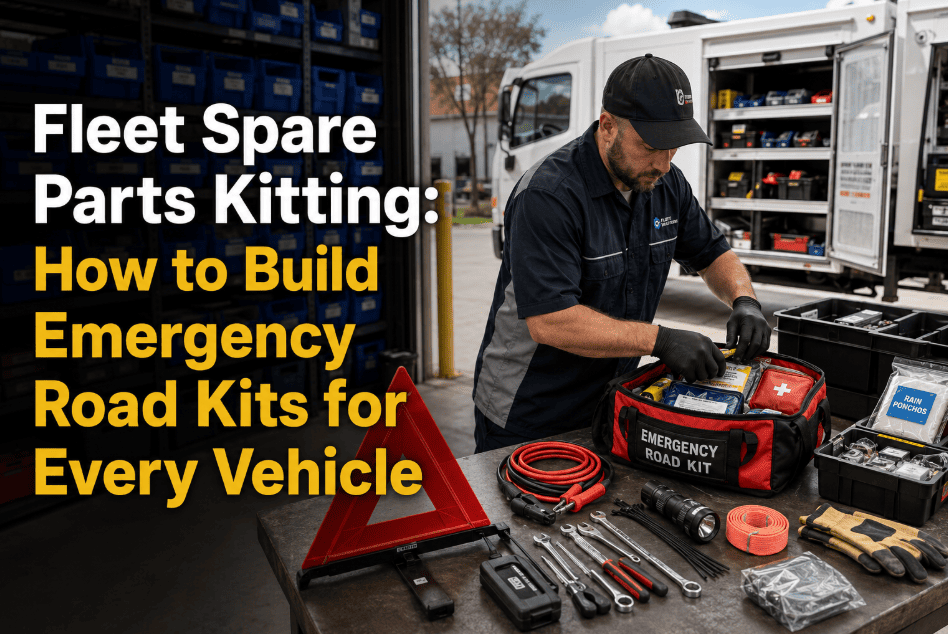
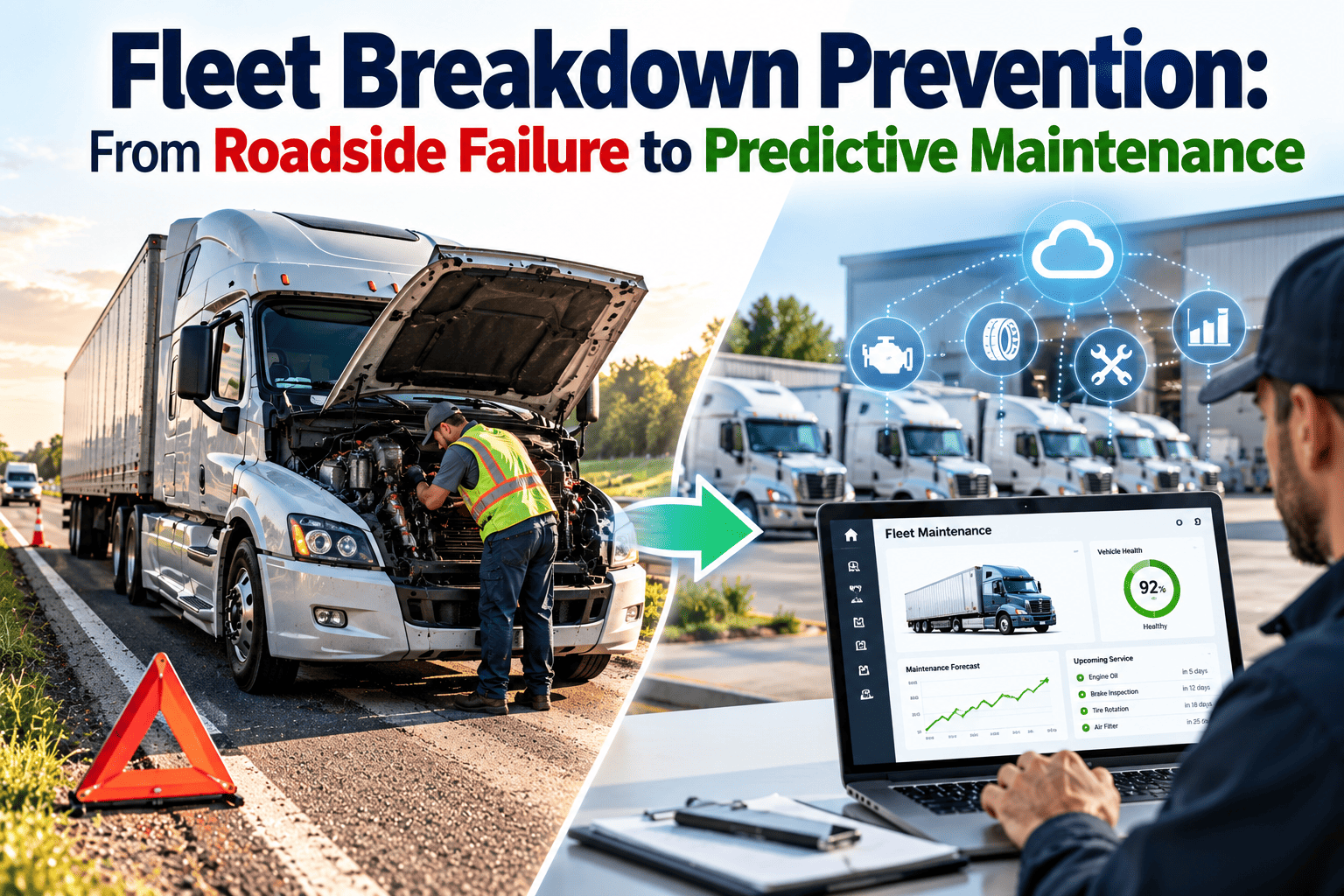
It is 11:43 PM on a Sunday in February. A long-haul tractor on I-90 outside Sioux Falls loses coolant pressure 80 miles from the nearest service center. The driver pulls onto the shoulder, opens the hood, and finds a split lower radiator hose spraying coolant onto the engine block. He has a flashlight, road flares, and three quarts of motor oil in his emergency box. He does not have a spare lower radiator hose, hose clamps, or coolant. The dispatcher calls a 24-hour mobile repair service. ETA is 4 hours. Hourly rate is $185 plus parts plus a $400 emergency dispatch fee. Total roadside repair cost: $1,940. Total downtime: 7 hours including driver detention. Now compare that to the same breakdown with a properly built emergency road kit: driver replaces the hose in 35 minutes, refills coolant, continues to the next safe stop, and a planned PM addresses the underlying cooling system issue. Cost: $42 for the hose, $28 for coolant, zero dispatch fee. Fleet spare parts kitting is one of the highest-ROI investments in fleet operations, and it is consistently underbuilt because the procurement conversation happens at the wrong level. To see how CMMS-tracked kits stay replenished automatically, you can start a free trial or book a demo.
Why Kitting Matters
The Math That Makes Spare Parts Kitting Indefensible to Skip
Fleet finance teams often categorize emergency parts kits as discretionary expense — the kind of cost that gets cut first when budgets tighten. The actual ROI math says the opposite. A complete emergency road kit for a typical Class 7 or 8 commercial vehicle costs $160 to $240 in parts and a one-time $85 case investment. The single roadside event it prevents — measured at industry average of $1,940 plus 7 hours of driver and revenue downtime — pays for the kit eleven times over. And the average tractor experiences 2.4 self-recoverable roadside events per 100,000 miles. The cost question is not whether to invest in kits. It is which parts go in them and how to keep them stocked.
Without Kit — Single Event
Mobile repair dispatch fee$400
Labor (4 hr at $185/hr)$740
Parts at emergency markup$185
Driver detention pay$215
Late delivery penalty$400
Total per event$1,940
With Kit — Same Event
Replacement part from kit$42
Fluid replenishment$28
Driver labor (0.5 hr)$30
Detention pay$0
Late delivery$0
Total per event$100
Kit Composition
What Goes Inside an Emergency Road Kit for Each Vehicle Class
Not every fleet vehicle needs the same kit. A delivery van running 50-mile suburban routes has different failure patterns than a long-haul sleeper running 600-mile interstate legs. The kit must match the vehicle class, the duty cycle, the driver skill level, and the available repair window on the road. Below are baseline kits for the four most common fleet vehicle classes.
Class 3-5
Light & Medium Delivery
Kit cost: $145-$185
Quart of engine oil
Coolant (1 gallon premixed)
Fuses assortment (8-pack)
Spare serpentine belt
Tire plug kit & pressure gauge
Jumper cables / portable jump starter
Reflective triangles (3-pack)
LED headlamp & gloves
Class 6-7
Medium Duty Trucks
Kit cost: $185-$240
All Class 3-5 contents
Lower radiator hose (vehicle-specific)
Heater hose & clamps assortment
DEF (2.5 gallon for diesel)
Air filter primary (vehicle-specific)
Glad hand seals (4-pack)
Air line repair kit
Spare DOT-approved fuses
Class 8
Heavy Tractor / Long Haul
Kit cost: $240-$340
All Class 6-7 contents
Spare alternator belt
Tire chains (winter regions)
5-gallon emergency fuel can
Spare air dryer cartridge
Brake chamber repair kit
Wheel chocks (pair)
Sleeper cab supplies (food, water 72hr)
Specialty
Refrigerated / Tanker / Service
Kit cost: $280-$420
All Class 8 contents
Reefer unit belt (refrigerated)
Refrigerant gauge set (reefer)
Spill response kit (tanker)
PTO hydraulic seals (service)
Reefer thermostat / sensor (reefer)
Spare PTO control cable (service)
Vehicle-specific spec parts
Priority Framework
The Four Categories Every Kit Must Cover
A well-built emergency parts kit covers four functional categories. Skip any one of them and the kit fails when needed most. The categories are organized by failure frequency and driver self-recovery capability — meaning each item must be both likely to fail and reasonable for an untrained driver to address roadside.
A
Fluids & Lubricants
Engine oil, coolant, DEF, brake fluid, windshield washer fluid. Account for 31% of self-recoverable roadside events. Driver requires zero training to use.
B
Quick-Replace Parts
Belts, hoses, clamps, fuses, bulbs, air filter, glad hand seals. Account for 28% of events. Most drivers can install with basic instructions and tools.
C
Tools & Diagnostics
Wrench set, pliers, screwdrivers, multimeter, tire pressure gauge, code reader, flashlight. Enable use of every other category. One-time investment.
D
Safety & Communication
Reflective triangles, road flares, first aid, hi-vis vest, fire extinguisher. Required by FMCSA Part 393. Driver and public safety, not vehicle recovery.
Oxmaint Kit Tracking
How CMMS Keeps Kits Stocked Without Manual Audits
The single biggest reason fleet parts kits fail is not poor design — it is the failure to replenish after use. A driver uses the spare belt on Tuesday, returns the truck on Friday, and the kit sits empty for the next 90 days until the next breakdown reveals the gap. Oxmaint solves this by treating each kit as an asset with its own bill of materials, consumption tracking, and automated replenishment work orders. To see the replenishment workflow on a fleet configuration, you can book a demo.
Step 01
Kit Defined as Asset Bill of Materials
Each vehicle's kit configuration stored as BOM linked to the vehicle asset record. Parts list, quantity, location, expiration where applicable.
Step 02
Roadside Use Logged Against Vehicle
Driver reports use through mobile work order. Part deducted from kit inventory. Root-cause work order generated for underlying failure.
Step 03
Automatic Replenishment Trigger
Inventory drop triggers MRO procurement work order automatically. Replacement part flagged for installation at next vehicle yard return.
Step 04
Scheduled Kit Audit PMs
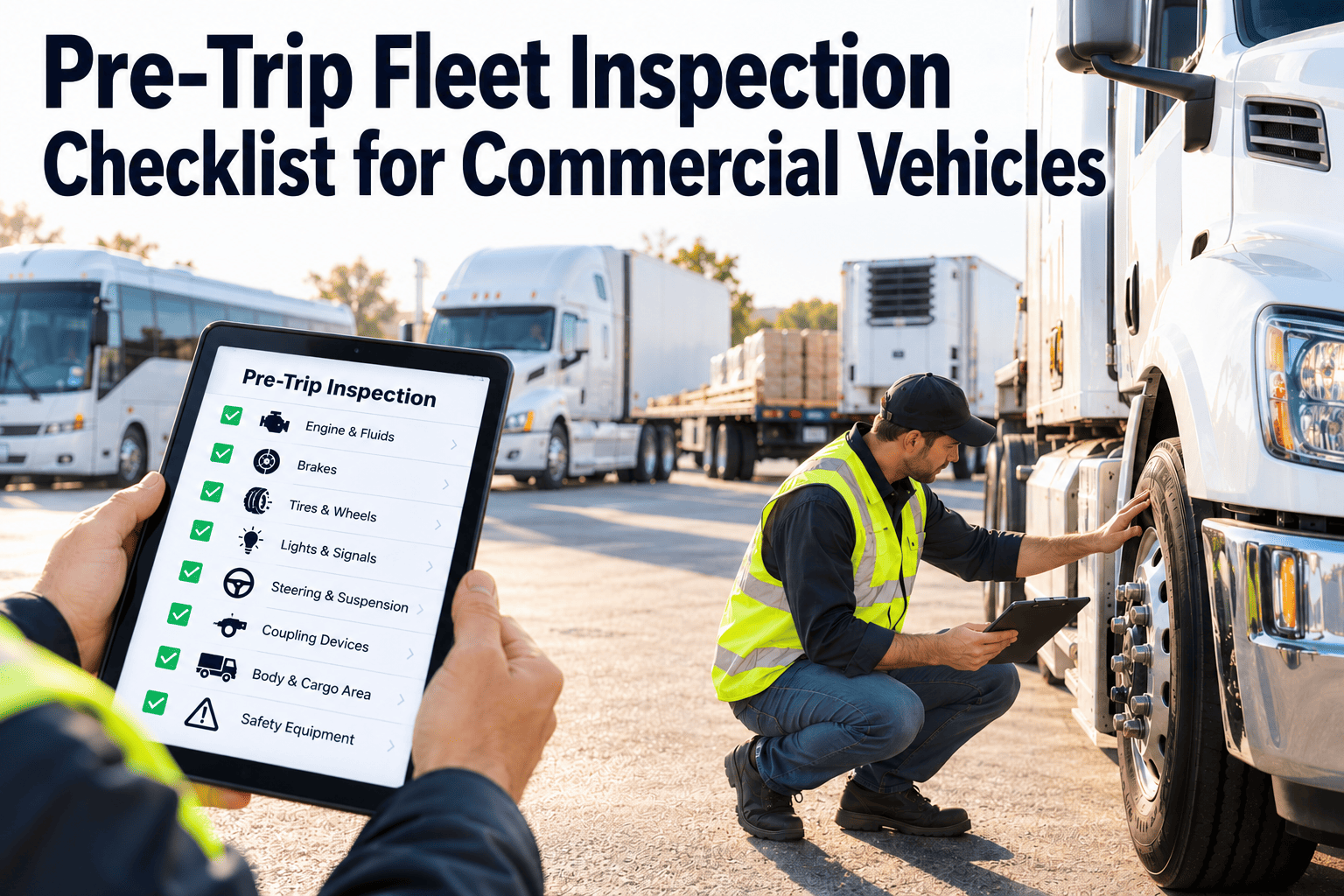
Quarterly kit audit work order auto-generated for each vehicle. Mobile inspection checklist verifies completeness, expiration dates, condition.
Step 05
Usage Pattern Analysis
Reporting identifies parts used most often by vehicle class, route, season. Kit composition adjusted based on real consumption data, not assumption.
Step 06
Cost & ROI Reporting
Kit investment, replenishment cost, and avoided mobile repair calls tracked side-by-side. ROI surfaced in monthly fleet KPI dashboard.
Before vs After
Fleet Roadside Performance With and Without Managed Kits
| Performance Metric | Without Kit Program | With CMMS-Tracked Kits |
|---|
| Self-recovery rate on roadside events | 14% | 68% |
| Average breakdown-to-recovery time | 4.2 hours | 0.8 hours |
| Mobile repair calls per 100 vehicles annually | 62 | 22 |
| Annual roadside repair spend per vehicle | $1,180 | $340 |
| Kit replenishment compliance rate | 34% | 96% |
| Driver satisfaction with company support | 3.2 / 5 | 4.6 / 5 |
| On-time delivery rate | 91.4% | 96.8% |
| Annual kit program cost per vehicle | N/A | $280 |
Build a Fleet Parts Kit Program That Stays Stocked Year-Round
Oxmaint treats every vehicle kit as a managed asset with its own BOM, consumption tracking, and automated replenishment. Roadside events that today cost $1,940 become $100 driver self-recoveries. The kit pays for itself eleven times over in the first eighteen months — every time.
FAQ
Frequently Asked Questions
How often should emergency parts kits be audited?
Quarterly kit audits are the standard recommendation for most fleet operations. High-use service vehicles and long-haul tractors benefit from monthly verification. Oxmaint auto-generates audit work orders on the schedule defined for each vehicle class, with mobile inspection checklists that take 6-8 minutes to complete.
Should drivers be trained to perform roadside repairs from the kit?
Basic kit usage training — fluid replenishment, belt replacement, tire plug, fuse replacement — pays for itself within the first roadside event each driver handles. More complex items like brake chamber repair or air dryer cartridge replacement should be limited to drivers with mechanical aptitude or restricted to mobile technician use. Kit design should match driver capability.
What happens when a part with expiration date sits unused in a kit?
Oxmaint tracks expiration dates on perishable items like DEF, premixed coolant, fire extinguishers, and first-aid components. Quarterly audit work orders surface expiring items before they fail compliance. Expired items are replaced and old units rotated through yard inventory where possible to avoid waste.
How quickly can a fleet implement a kit program across all vehicles?
Most fleets complete a full kit rollout in 60-90 days. The first 30 days are typically spent on kit design by vehicle class, parts sourcing, and case procurement. Days 30-60 cover assembly and physical installation. Days 60-90 cover driver training and the first audit cycle. CMMS asset configuration runs in parallel and is complete before the first kit ships.