Fleet towing capacity violations sit at the intersection of operational risk, regulatory exposure, and catastrophic accident liability — and most fleet operations have no systematic way to verify that every load assignment stays within the legal and mechanical limits of the assigned vehicle. A single over-limit towing event can void the vehicle's warranty, trigger a $10,000+ DOT civil penalty per violation, and in the event of a trailer separation or rollover accident, expose the fleet operator to negligence liability that far exceeds any single load's commercial value. The challenge is not that fleet managers are unaware of GVWR and GCWR limits — it is that the current payload, hitch rating, and trailer weight combination for any given dispatch is rarely verified against a single authoritative source before the driver pulls out of the yard. Oxmaint solves this by embedding towing capacity compliance into the vehicle's digital asset record, making the limit visible at the point of dispatch and traceable in the maintenance history. If your fleet is dispatching towing assignments without verified capacity documentation per vehicle, start a free trial or book a demo to see how towing compliance data is managed at the vehicle level in Oxmaint.
FLEET TOWING COMPLIANCE · GVWR · GCWR · PAYLOAD · DOT REGULATIONS
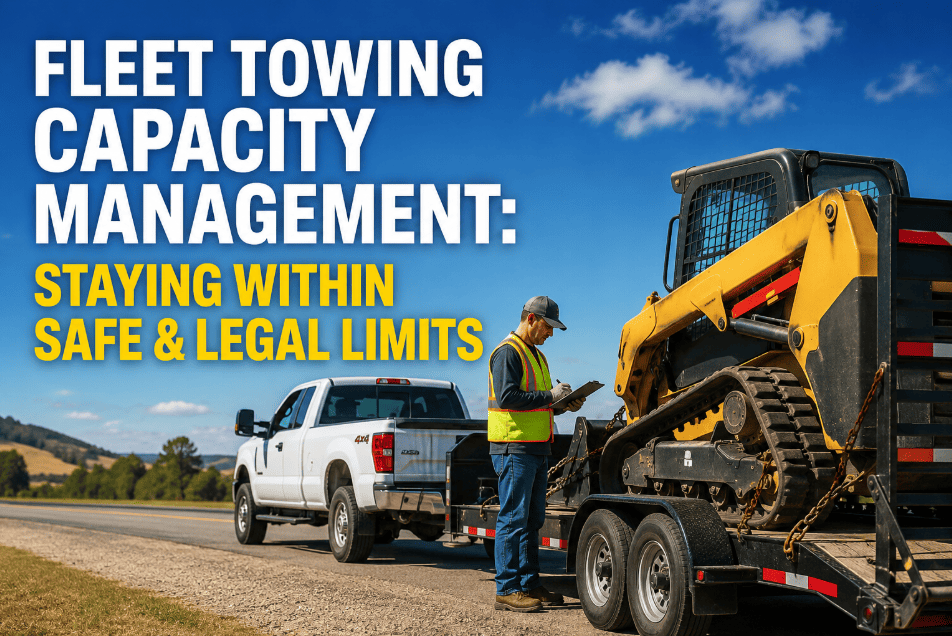
Fleet Towing Capacity Management: Staying Within Safe & Legal Limits
Exceeding fleet towing limits results in $10,000+ DOT fines, voided warranties, and catastrophic accident liability. Learn GVWR, GCWR, and payload management — and how CMMS tracks per-vehicle towing compliance across your entire fleet.
$10K+
DOT civil penalty per towing capacity violation
Per-axle weight violations compound — multiple violations per stop
23%
Of commercial vehicle accidents involve improper load or towing configuration
FMCSA analysis of commercial vehicle crash contributing factors
Void
Warranty status when towing limits are exceeded — OEM documented
Powertrain, transmission, and brake warranty affected
4.8x
Higher drivetrain repair cost when towing exceeds rated capacity
Transmission and hitch component failure accelerated significantly
Towing Capacity Is Not a Driver Issue — It Is a Fleet System Issue
Drivers cannot reliably self-verify that their assigned vehicle's current payload, hitch rating, and trailer tongue weight remain within legal limits for a specific load. This verification must happen at the dispatch and assignment level — supported by accurate per-vehicle capacity data maintained in the fleet management system. Oxmaint stores GVWR, GCWR, hitch rating, and payload capacity per vehicle, makes this data accessible at dispatch, and maintains the towing compliance record as part of the vehicle's maintenance and operational history. Start a free trial or book a demo to see per-vehicle towing capacity management configured for your fleet.
Core Framework
The Six Towing Capacity Ratings Every Fleet Manager Must Understand
These six ratings are not interchangeable — each governs a different aspect of the towing configuration. A vehicle can exceed one limit while remaining within another, and every violation is assessed independently by DOT enforcement. Fleet managers must verify all six against the actual load configuration for each towing assignment.
GVWR
Gross Vehicle Weight Rating
The maximum total weight of the vehicle itself — including passengers, cargo, fuel, and all equipment — as rated by the OEM. This rating is specific to each vehicle and is stamped on the door jamb placard. Exceeding GVWR stresses brakes, axles, tires, and frame at levels the OEM does not engineer for.
Found on: Door jamb certification label
GCWR
Gross Combined Weight Rating
The maximum total weight of the fully loaded tow vehicle plus the fully loaded trailer. GCWR is the primary DOT enforcement number for commercial towing operations. A vehicle rated at 26,000 lb GCWR with a 16,000 lb loaded vehicle can only legally tow a trailer that loads to 10,000 lb or less.
Found on: OEM tow guide, vehicle specification sheet
GAWR
Gross Axle Weight Rating
The maximum load each individual axle and its associated tires can carry. Even if total vehicle weight is within GVWR, an improper load distribution can exceed GAWR on a single axle — creating a separate violation and accelerating tire and suspension wear on that axle specifically.
Found on: Door jamb certification label (front and rear separately)
MTC
Maximum Towing Capacity
The maximum trailer weight — including cargo and the trailer's own weight — that the vehicle is rated to tow. This figure assumes the vehicle is loaded within its own GVWR. Adding cargo to the tow vehicle reduces its effective towing capacity by the same amount — a relationship many dispatch operations do not account for systematically.
Found on: OEM towing guide for specific year/model/engine/axle ratio
TWR
Tongue Weight Rating
The maximum downward force the trailer hitch can receive from the trailer tongue. Correct tongue weight is 10–15% of the total trailer weight. Too low causes trailer sway. Too high overloads the hitch receiver, the rear axle, and unloads the front steering axle — creating dangerous understeer in emergency maneuvers.
Found on: Hitch manufacturer specification, OEM hitch mounting plate
PVWR
Payload & Vehicle Weight Relationship
Payload capacity = GVWR minus curb weight. As vehicle payload increases (cargo, passengers, equipment), the remaining towing capacity decreases proportionally. A service truck carrying a full equipment load and two technicians may have reduced its effective towing capacity by 1,200–2,000 lb compared to an unladen specification — a reduction that must be verified against the trailer weight before departure.
Calculate: Current vehicle weight vs GVWR before assigning trailer
Compliance Risk
Six Towing Compliance Failures That DOT Enforcement Finds Most Frequently
01
Cargo Added After Towing Assignment Confirmed
Service vehicles frequently pick up additional tools, materials, or passengers after the initial dispatch — without rechecking how the added weight affects remaining towing capacity. The resulting over-limit condition is invisible until a weigh station stop or roadside inspection.
02
Wrong Vehicle Assigned to Towing Job
Fleet dispatch without per-vehicle towing data in the management system leads to assignments based on vehicle class rather than specific capacity. Two vehicles of the same model year can have different GCWR ratings based on engine option, axle ratio, and brake specification — creating invisible compliance gaps.
03
Trailer Weight Estimated, Not Verified
Trailer weights are frequently estimated based on nominal capacity rather than actual loaded weight at time of departure. A trailer rated at 10,000 lb loaded to 11,200 lb with incidental cargo creates a violation that driver estimation does not catch and that is fully visible at a weigh station.
04
Hitch Rating Not Verified Against Trailer Load
Aftermarket hitches, receiver inserts, and ball mounts carry their own weight ratings independent of the vehicle's towing capacity. A vehicle rated for 10,000 lb towing with a Class III ball mount rated at 6,000 lb creates a component limit that the vehicle specification does not communicate — and that over-limit towing will exceed without visible warning until hitch failure.
05
Tongue Weight Outside the 10–15% Range
Trailer loading that places excessive cargo forward creates tongue weight above 15% of trailer weight — overloading the hitch and rear axle while reducing front axle steering authority. Trailer loading that places cargo too far rearward creates tongue weight below 10%, creating trailer sway at highway speed that drivers often cannot correct before losing control.
06
No Documented Pre-Departure Towing Check
The absence of a documented pre-departure towing configuration verification — vehicle weight, trailer weight, tongue weight, hitch condition — creates liability exposure when an incident occurs. Without documentation, fleet operators cannot demonstrate that due diligence was performed before the departure that preceded the accident.
Towing Limits by Vehicle Class
Commercial Fleet Towing Capacity Reference — By Vehicle Class
These are general capacity ranges — always verify against the specific year, model, engine, and axle configuration for each vehicle in your fleet. Store the verified specification in Oxmaint's vehicle asset record so dispatchers have accurate data at every assignment.
| Vehicle Class |
Typical GVWR Range |
Typical Max Towing |
Common Fleet Use |
Key Compliance Risk |
| Class 1–2 (Pickup-based) |
6,000–10,000 lb |
7,500–13,000 lb |
Service trucks, inspectors, supervisors |
Equipment load reduces towing margin — rarely recalculated |
| Class 3 (Heavy-duty pickup) |
10,001–14,000 lb |
17,000–35,000 lb |
Contractor fleets, utility vehicles |
Engine/axle variants have large capacity spread — wrong vehicle common |
| Class 4–5 (Medium-duty) |
14,001–19,500 lb |
12,000–20,000 lb |
Box trucks, flatbeds, service bodies |
Driver CDL threshold proximity — DOT scrutiny increases at this class |
| Class 6–7 (Heavy medium-duty) |
19,501–33,000 lb |
20,000–40,000 lb |
Tow trucks, equipment transporters |
GCWR calculations complex — trailer brake requirements critical |
| Class 8 (Heavy-duty) |
33,001 lb+ |
40,000–80,000 lb |
Semi-tractors, heavy equipment haulers |
Full FMCSA commercial regulations apply — per-axle weigh station compliance |
How Oxmaint Manages Fleet Towing Capacity Compliance
Oxmaint embeds towing capacity compliance into the vehicle's digital asset record — making verified limits accessible to dispatchers, maintainable by fleet managers, and traceable in the vehicle's operational history. Fleet managers who want towing capacity data embedded into their dispatch and maintenance workflow can start a free trial or book a demo to see how per-vehicle towing data is configured and maintained.
Asset Data
Per-Vehicle Towing Specification in the Asset Record
Store GVWR, GCWR, MTC, hitch rating, and tongue weight limit for each vehicle individually. When the same model appears in multiple configurations (different engine, axle ratio), each vehicle carries its own verified spec — eliminating the class-level approximation that causes compliance mismatches.
Dispatch Support
Towing Capacity Visible at Vehicle Assignment
Dispatchers pulling vehicle records in Oxmaint see towing capacity data before assignment — enabling verification that the assigned vehicle's remaining capacity (after current payload) covers the trailer weight for the job. No separate lookup, no paper specification binder, no driver self-certification.
Inspection Checklists
Pre-Departure Towing Configuration Verification
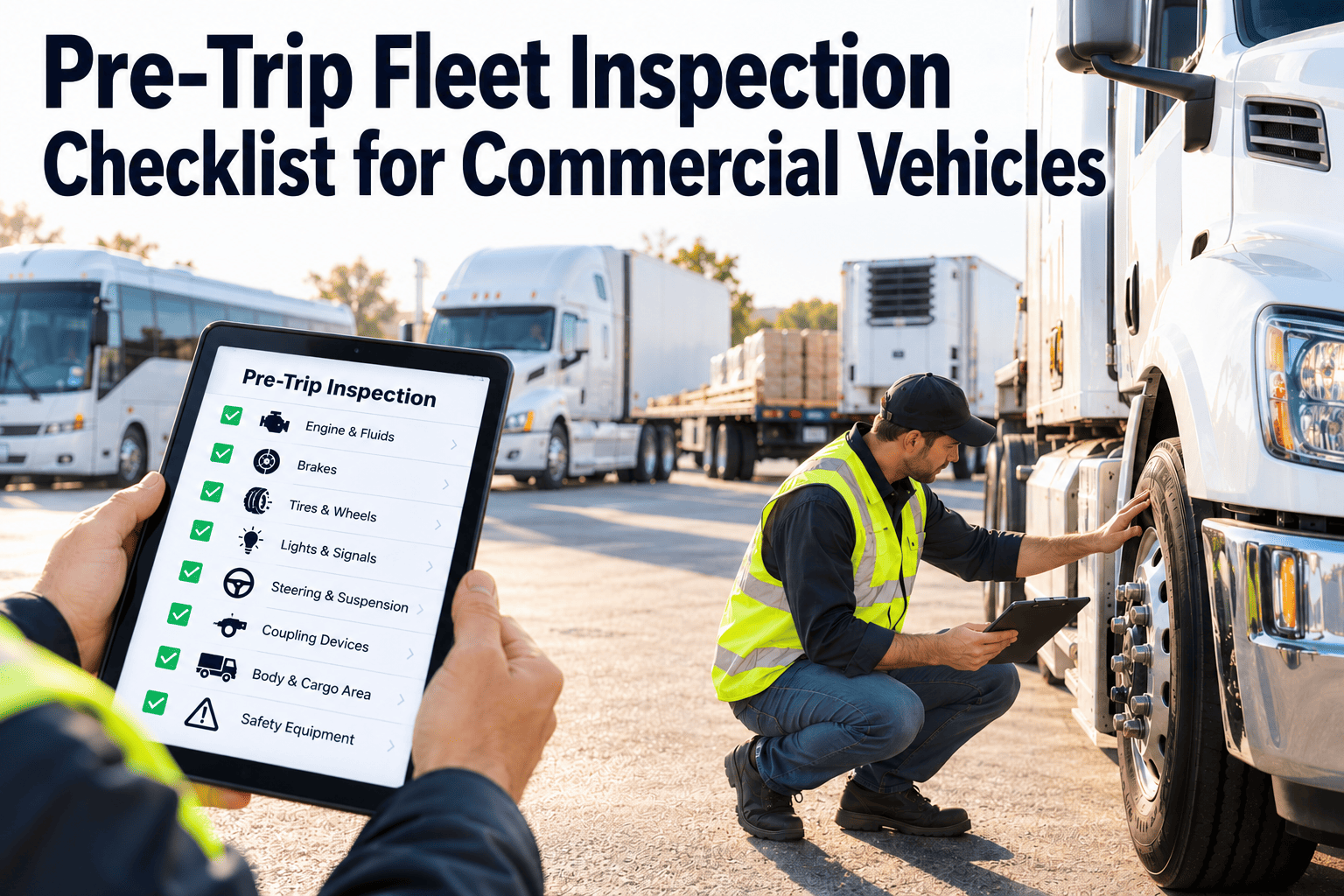
Digital pre-departure inspection checklist for towing assignments: hitch condition, ball size and rating, trailer tongue weight verification, trailer brake function, safety chain, and load distribution confirmation. Each completed check is timestamped and linked to the vehicle record — creating the documentation trail that protects the fleet operator after an incident.
Hitch PM Tracking
Receiver, Ball, and Safety Hardware Maintenance Records
Hitch receivers, ball mounts, and trailer brakes are tracked as separate component assets in Oxmaint with their own rated capacity, installation date, and inspection schedule. Hitch wear, corrosion, and hardware degradation that reduces the component's rated capacity below the vehicle's towing specification is identified at inspection — not discovered during an incident review.
Compliance Records
Towing Event Documentation for DOT and Insurance
Every towing assignment with a pre-departure check generates a permanent record: vehicle ID, trailer configuration, verified weights, driver, and departure timestamp. In a DOT roadside inspection or post-accident investigation, the complete towing compliance history is retrievable per vehicle — demonstrating that systematic pre-departure verification was performed.
Cost Tracking
Towing-Related Drivetrain Wear Linked to Events
Transmission, brake, and hitch repair work orders are linked to the vehicle's towing assignment history in Oxmaint — enabling fleet managers to see whether high-maintenance vehicles have a pattern of heavy towing assignments. This data supports decisions about vehicle replacement timing, towing assignment policy, and PM interval adjustments for high-towing units.
Before vs After
Ad Hoc Towing Management vs CMMS-Tracked Towing Compliance
Ad Hoc Towing Program
Vehicle assigned based on availability — capacity not verified per unit
GVWR and GCWR in paper specification binders — rarely consulted at dispatch
Trailer weight estimated at loading — not verified against vehicle's remaining capacity
Hitch condition checked visually by driver — no rated capacity verification
No pre-departure documentation — liability exposure after incident
Towing-related drivetrain damage discovered at next service — no causal linkage
Oxmaint Towing Compliance Program
Per-vehicle GCWR and MTC stored in asset record — visible at dispatch
Dispatcher verifies remaining towing capacity before assignment confirmation
Pre-departure digital checklist captures trailer weight and tongue weight verification
Hitch components tracked as rated assets with inspection schedule and capacity record
Every towing event produces a timestamped compliance record — retrievable immediately
Towing repair costs linked to assignment history — pattern analysis possible per vehicle
Towing Compliance Program Outcomes
$0
DOT Penalty Exposure
Documented pre-departure towing verification eliminates the compliance gaps that result in $10,000+ per-violation civil penalties at weigh station stops
60 sec
Incident Documentation Retrieval
Complete towing event record — vehicle spec, trailer configuration, driver, timestamp — retrieved per vehicle in under 60 seconds for DOT or insurance review
35%
Reduction in Towing-Related Drivetrain Repairs
Fleets with systematic towing capacity verification report significantly fewer transmission, brake, and hitch component repairs attributable to over-limit towing events
100%
Per-Vehicle Specification Accuracy
Each vehicle carries its own verified GVWR, GCWR, and MTC in Oxmaint — eliminating the class-level approximation that causes compliance mismatches in mixed fleets
Questions
Frequently Asked Questions
How do I find the accurate GCWR for each vehicle in my fleet if specifications vary by configuration?+
The most reliable source for GCWR is the OEM towing guide for the specific vehicle year, make, model, engine, transmission, and axle ratio combination. Many OEMs publish these as downloadable PDFs by model year. For fleet vehicles already in service, the door jamb certification label provides GVWR, and the OEM dealer or a commercial vehicle data service (using the VIN) can provide the GCWR for the specific build configuration. Oxmaint allows you to attach the OEM specification document directly to the vehicle's asset record — so the verified capacity source is always accessible alongside the data it supports. For large fleets where this research represents significant effort, conducting a one-time specification audit as a CMMS work order project — technician pulls each vehicle's VIN, queries OEM data, and records the verified spec in Oxmaint — is the most efficient approach and creates a permanent, auditable record of where each specification came from.
Does exceeding towing capacity void the vehicle warranty, and how does this affect fleet maintenance costs?+
Yes — most OEM warranties explicitly exclude powertrain, transmission, and brake failures that occur when the vehicle is operated outside its rated towing capacity. In practice, this means that a transmission failure on a vehicle with documented history of over-limit towing events is likely to be declined as a warranty claim by the OEM dealer. The financial impact is significant: a commercial transmission replacement runs $4,000–$12,000 depending on vehicle class, and a braking system overhaul can reach $3,000–$8,000. When these failures occur on vehicles with over-capacity towing history and no warranty coverage, the fleet absorbs the full cost. Maintaining towing compliance documentation in Oxmaint also means that warranty claims can be defended — demonstrating that towing assignments were within rated capacity — rather than creating the evidentiary record that supports a claim denial.
What is the correct tongue weight range for commercial trailer towing and how is it verified?+
Tongue weight — the downward force the trailer applies at the hitch ball — should fall between 10% and 15% of the total loaded trailer weight for most commercial towing configurations. For a 10,000 lb loaded trailer, this means tongue weight should be between 1,000 and 1,500 lb. Below 10%, the trailer is rear-heavy, creating sway that can be uncontrollable at highway speed. Above 15%, the rear axle is overloaded and the front steering axle is unloaded, reducing braking effectiveness and steering authority. Tongue weight is verified with a tongue weight scale — a dedicated device that the driver positions under the trailer tongue before coupling. For fleet operations with regular towing assignments, keeping a tongue weight scale in the yard and making its use part of the pre-departure checklist in Oxmaint is the systematic approach. The checklist result is recorded in the towing event record per departure.
How should fleet managers handle towing assignments for vehicles with variable payload loads?+
The key principle is that towing capacity is not fixed — it decreases as vehicle payload increases. A service truck rated to tow 12,000 lb when unladen may only be able to legally tow 9,800 lb when carrying its standard tools, equipment, and two technicians totaling 2,200 lb of payload. Fleet managers handling variable-payload towing assignments should establish standard payload estimates by vehicle type and assignment category — capturing what a typical fully-equipped service truck, fully-staffed crew vehicle, or standard supply run vehicle weighs before the trailer is attached. These standard payload estimates become the baseline for maximum trailer assignment per vehicle type. Oxmaint supports this by storing both the vehicle's rated towing capacity and a configurable "standard dispatch payload" field — allowing dispatchers to see the effective remaining towing capacity rather than the unladen maximum, which is rarely the accurate figure for an active fleet vehicle on a working assignment.
Towing Capacity Compliance Belongs in Your Fleet Management System — Not in a Paper Binder
Every towing assignment your fleet completes without a documented pre-departure capacity verification is a compliance gap that a weigh station stop, a DOT roadside inspection, or an accident investigation can make very expensive. Oxmaint stores verified towing specifications per vehicle, supports pre-departure digital verification checklists, and maintains the complete towing event record that protects your organization. No implementation project — configure your first vehicle's towing specification and pre-departure checklist in the same session as your trial setup.