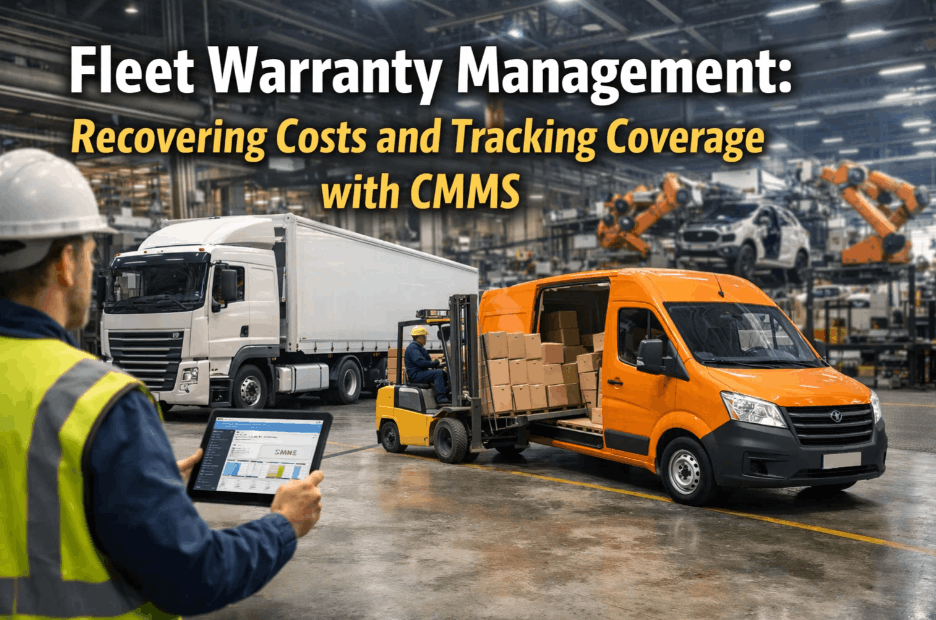
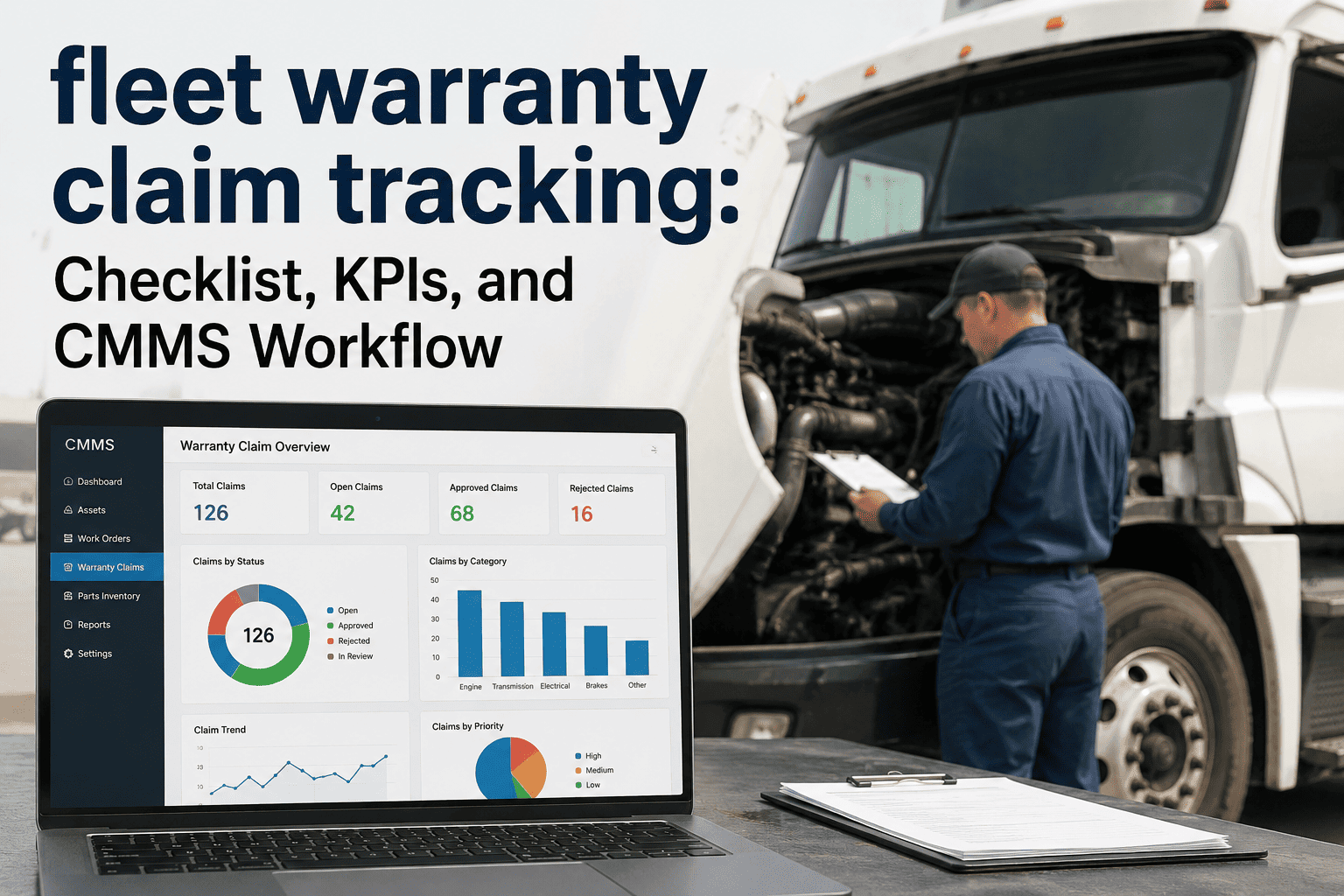
Fleet Warranty Management: Recovering Costs and Tracking Coverage with CMMS
By Alex Jordan on March 28, 2026
The average commercial fleet leaves 12–18% of its warranty entitlement unclaimed every year — not because the repairs don't qualify, but because the documentation required to file a claim was never generated, the warranty expiry date was not tracked, or the work was completed by an in-house technician who didn't know the component was still under OEM coverage. At $400–$2,800 per qualifying repair event, a 50-vehicle fleet operating without systematic warranty tracking is routinely writing off $15,000–$40,000 annually in recoverable costs. OxMaint's CMMS tracks warranty coverage per vehicle and per component — alerting the maintenance team before warranty expires, generating the work order documentation required for OEM claim submission, and flagging recall notices the moment they are issued for any asset in the fleet register.
Fleet Finance · Article · 2026
Fleet Warranty Management: Recovering Costs and Tracking Coverage with CMMS
Warranty expiration alerts, claim documentation, recall tracking, OEM coordination, and the financial impact of missed warranty claims — how CMMS transforms warranty management from an afterthought into a structured cost recovery programme.
$28KAverage annual unclaimed warranty value in a 50-vehicle commercial fleet
18%Of qualifying warranty repairs go unclaimed due to missing documentation or missed expiry
94%Warranty claim success rate when CMMS work order documentation submitted with claim
4.8×ROI on CMMS warranty tracking — recovered claims vs. platform cost in year one
The 6 Warranty Management Functions — What Each Recovers
Warranty management in a commercial fleet is not a single task — it is six distinct functions that together determine how much of your warranty entitlement you actually recover. Most fleet operators manage one or two of these functions informally. Fewer than 15% manage all six systematically. The gap between ad-hoc and systematic warranty management is measured in tens of thousands of dollars per year — money that has already been built into the vehicle purchase price and is simply waiting to be claimed. OxMaint automates all six warranty management functions — from expiry alerts to claim document generation — within the same platform that generates the work orders that create the documentation.
Warranty Expiry Tracking
Prevention
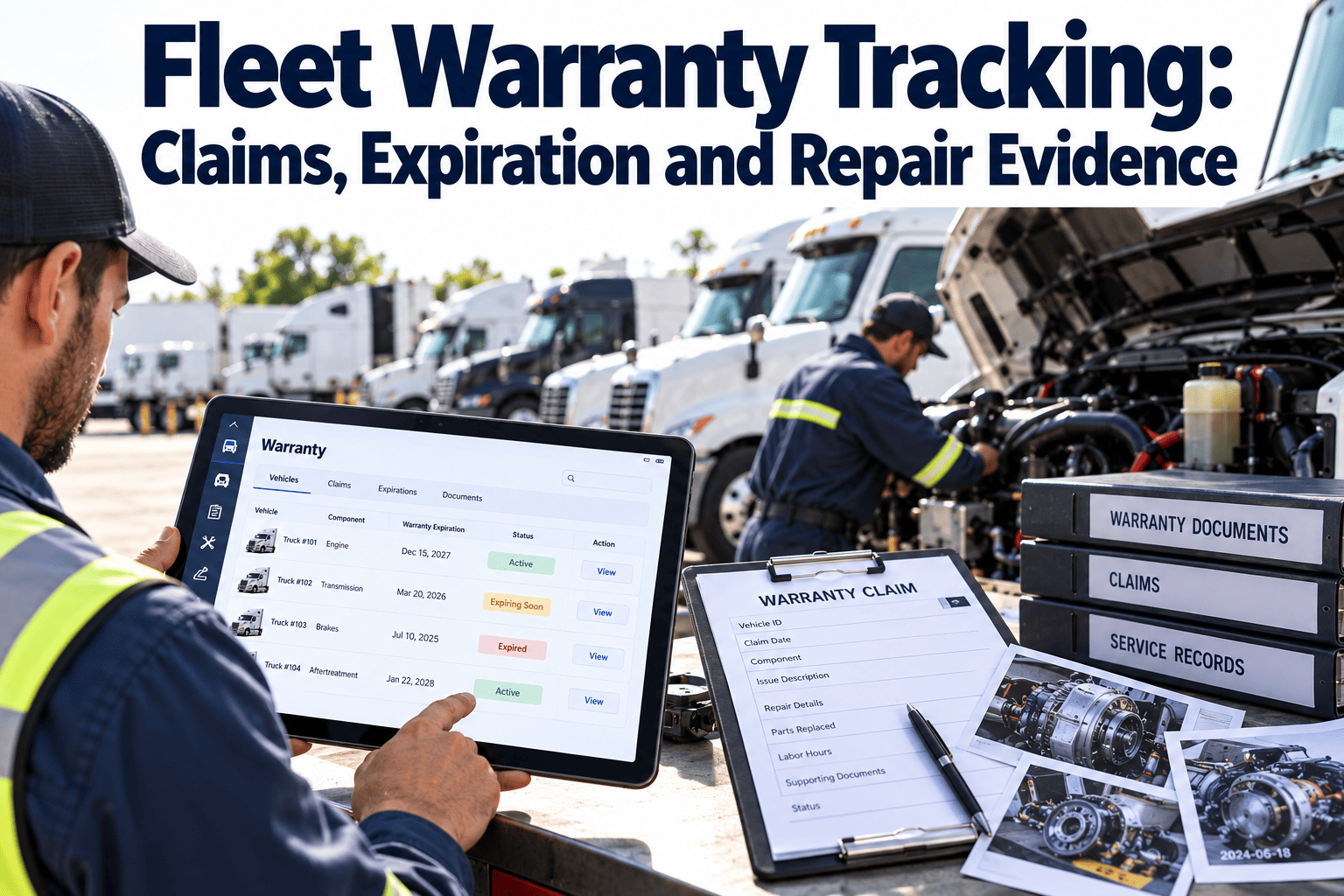
Per-vehicle, per-component expiry dates tracked automatically. Alerts fire 90, 60, and 30 days before expiry — scheduling a final inspection within warranty before coverage lapses permanently.
Claim Documentation
Cost Recovery
CMMS work orders automatically generate the timestamped, technician-attributed, part-number-referenced documentation OEMs require. No manual assembly — claim pack generated in one export.
Recall Monitoring
Safety & Liability
VIN-matched recall notices from NHTSA, DVSA, and manufacturer TSBs flagged immediately against fleet register. Recall work orders created automatically — no manual NHTSA check required.
Extended Warranty Tracking
Asset Protection
Third-party and extended warranty coverage tracked alongside OEM warranty — same expiry alert system, same claim documentation process. Fleet never accidentally repairs a covered component on its own budget.
OEM Cost Recovery
Direct Saving
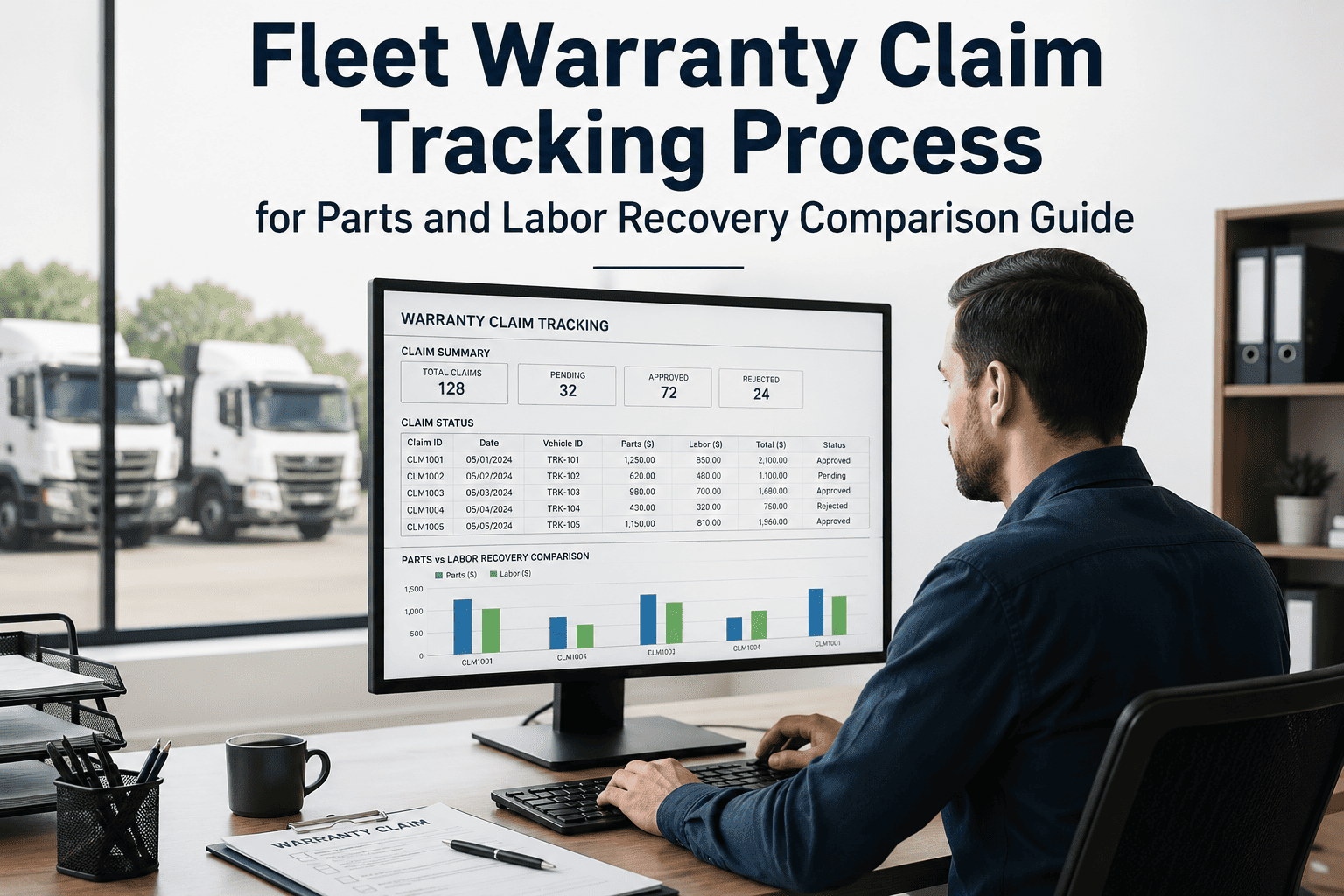
Parts and labour costs for warranty-qualifying repairs tracked per work order. Monthly recovery report generated automatically — finance team sees actual warranty recovery vs. total repair spend per vehicle.
Dealer & OEM Coordination
Relationship Management
Work order history and component data shared directly with authorised dealers for warranty inspections. Reduces dealer visit preparation time from hours to minutes — CMMS is the single source of truth for both parties.
Warranty Action Calendar — What to Do Every Quarter
Warranty management is time-sensitive by nature — coverage lapses on fixed dates regardless of whether you have acted on it. The most effective fleets treat warranty management as a quarterly operational calendar, not a reactive task triggered by a breakdown. Each quarter has specific warranty actions that, if completed on schedule, maximise claim recovery and prevent coverage from expiring without a final inspection. OxMaint's warranty calendar auto-generates these tasks per vehicle and per quarter — no fleet manager needs to remember which vehicles are expiring when.
Q1 — Jan to Mar
Annual Warranty Audit
✓ Pull full fleet warranty expiry register
✓ Identify vehicles expiring within 12 months
✓ Submit Q4 outstanding claims from prior year
✓ Verify extended warranty registrations current
✓ Review open recall notices — close out any pending
Q2 — Apr to Jun
Pre-Expiry Inspection Sprint
✓ Schedule final warranty inspections — 60-day expiry
✓ Submit powertrain warranty claims from Q1 repairs
✓ Confirm new vehicle warranty registration with OEM
✓ Document all TSB repairs with CMMS work orders
Q3 — Jul to Sep
Mid-Year Claim Recovery
✓ Compile H1 warranty recovery report for finance
✓ Submit extended warranty claims from Q2 repairs
✓ Final inspection — vehicles expiring in Q4
✓ Review OEM dealer warranty repair reimbursement
✓ Update CMMS register — newly acquired vehicles
Q4 — Oct to Dec
Year-End Recovery & Close
✓ Submit all outstanding claims before year-end close
✓ Final warranty inspection — vehicles expiring Dec 31
✓ Annual warranty recovery vs. missed claim analysis
✓ Negotiate extended warranty renewal for ageing fleet
✓ Prepare warranty budget forecast for next fiscal year
The Cost of Delay — How Missed Warranty Windows Escalate
Every warranty claim that isn't filed within the coverage window becomes a full-cost maintenance event. The financial escalation follows a predictable pattern: a repair that qualifies for warranty coverage costs the fleet nothing except the work order paperwork. The same repair after warranty expires costs between $400 and $4,200 depending on the component. The stepped chart below shows how the financial exposure escalates at each stage — from the zero-cost warranty window through to full out-of-pocket replacement. Most fleet operators experience this escalation on 15–20% of their repair events annually because no systematic tracking exists to catch repairs before the warranty window closes.
Warranty Miss Cost Escalation — Per Repair Event (Commercial Fleet)
Covered — Zero CostPartial — Minor CostUncovered — ModerateFull Cost — Severe
$0 threshold — warranty coverage window closes here
$0
Within Warranty Filed on time
$180
Claim Rejected Poor documentation
$680
30–60 Days Goodwill possible
$1,240
60–180 Days No OEM recovery
$2,800
>180 Days Full fleet cost
$4,200
Full Replacement Warranty expired
Average powertrain component · commercial fleet · ATA TMC benchmark 2026
Warranty Compliance Risk Scoring — How Well Is Your Fleet Protected?
Warranty management maturity exists on a spectrum — from fleets that have no tracking whatsoever and routinely pay for covered repairs, to fleets where every component warranty is registered, tracked, and systematically exploited before coverage lapses. The scoring framework below lets fleet directors and finance teams assess their current warranty protection level and identify the specific gaps that are costing money right now.
Every warranty registered per VIN per component. Expiry alerts active. Claim documents auto-generated. Recall notices VIN-matched in real time. Monthly recovery reports to finance.
Profile: Maximum recovery. Near-zero missed claims. OEM relationship managed by data. Finance sees warranty ROI monthly.
4
Partially Tracked · Main Warranties Registered
OEM powertrain warranty tracked. Extended warranty registered but not systematically monitored. Some claims filed — others missed when expiry date not noticed.
Gap: Extended warranty and component-level coverage frequently missed. Add CMMS per-component expiry tracking to close the gap.
3
Spreadsheet Tracking · Manual Claims
Warranty dates logged in spreadsheet. Claims filed manually when someone remembers to check. Recall notices acted on only when dealer contacts fleet directly.
Risk: 20–30% of recoverable claims missed annually. Recall compliance lags by months. Documentation quality limits OEM claim acceptance rate.
2
Paper Records · Reactive Claim Filing
Warranty cards filed at purchase — rarely referenced again. Claims only filed when driver reports a defect and someone thinks to check warranty status. No proactive expiry monitoring.
Risk: 40–50% claim miss rate. Frequent full-cost repairs on covered components. Recall compliance near zero without dealer notification.
1
No System · Warranty Ignored
Repairs conducted without checking warranty status. No claim documentation process. Recall notices not acted on. Fleet pays full cost for all repairs regardless of coverage.
Risk: Entire recoverable warranty value lost annually. Recall non-compliance creates direct legal liability. Immediate CMMS warranty setup required.
Technology Integration: OBD, Digital Twin, AI Camera, and SAP
The technology stack that powers predictive fleet maintenance also powers warranty claim recovery — often in ways that fleet operators haven't considered. OBD-II and J1939 telematics generate fault codes that, when a component is under warranty, create the perfect claim trigger — a timestamped, VIN-linked fault record that the OEM cannot dispute. AI Digital Twin models track component health trajectories per vehicle, identifying components that are degrading within their warranty period and scheduling inspection before coverage lapses. AI Camera Vision creates pre-repair photographic documentation that OEMs increasingly require for warranty claim validation. SAP and ERP integrations close the financial loop: warranty recovery credits post directly to the maintenance cost centre, making warranty ROI visible to finance directors without manual reconciliation.
OBD-II / J1939
94%
OEM-accepted fault documentation rate
Timestamped DTC records create irrefutable claim evidence. OEMs cannot dispute VIN-linked fault codes logged in real time.
AI Digital Twin
87%
In-warranty component degradation detection
Tracks component health per vehicle. Flags degrading components before warranty expiry — triggers inspection while coverage still active.
AI Camera Vision
91%
Pre-repair photo documentation rate
Generates timestamped photographic evidence before repair begins — the pre-repair condition record OEMs require for claim validation.
SAP / ERP Integration
96%
Warranty credit auto-posting accuracy
Warranty recovery credits post to maintenance cost centre automatically. Finance sees real-time warranty ROI — no manual reconciliation.
"
We ran a warranty audit after deploying OxMaint and discovered we'd missed $34,000 in recoverable claims over the previous 18 months — all legitimate repairs on components that were still under OEM warranty. We filed eight backlogged claims using our CMMS work order records and recovered $22,000. That single exercise paid for three years of OxMaint.
Fleet Director — Regional freight operator, 38 vehicles, Victoria, Australia
Frequently Asked Questions
How does OxMaint track warranty expiry per component — not just per vehicle?
Each component is registered as a CMMS asset record with its own warranty expiry date — engine, transmission, axles, and electrical systems can all carry different coverage periods. Alerts fire independently per component 90, 60, and 30 days before each expiry. Start free and register your first vehicle warranty in under 10 minutes.
What documentation does OxMaint generate for OEM warranty claims?
Each work order produces a complete claim pack: timestamped repair record, technician ID, parts used with part numbers, labour hours, vehicle VIN, and component description. Exported as PDF or CSV — matching the documentation format required by all major OEMs and extended warranty providers.
Does OxMaint monitor NHTSA and DVSA recall notices automatically?
Yes — OxMaint monitors recall databases and cross-references new notices against your fleet VIN register. Matching recalls generate work orders automatically with the recall reference number, required remedy, and OEM contact details pre-populated.
Can warranty recovery data sync to SAP for finance reporting?
Yes — warranty claim credits and recovery amounts post to SAP automatically when claims are settled. Finance sees warranty recovery as a direct offset against maintenance cost — visible in the same cost centre report as the original repair spend.
Stop Leaving Warranty Money on the Table.
OxMaint tracks every warranty expiry, generates every claim document, and flags every recall — automatically. Free to start.