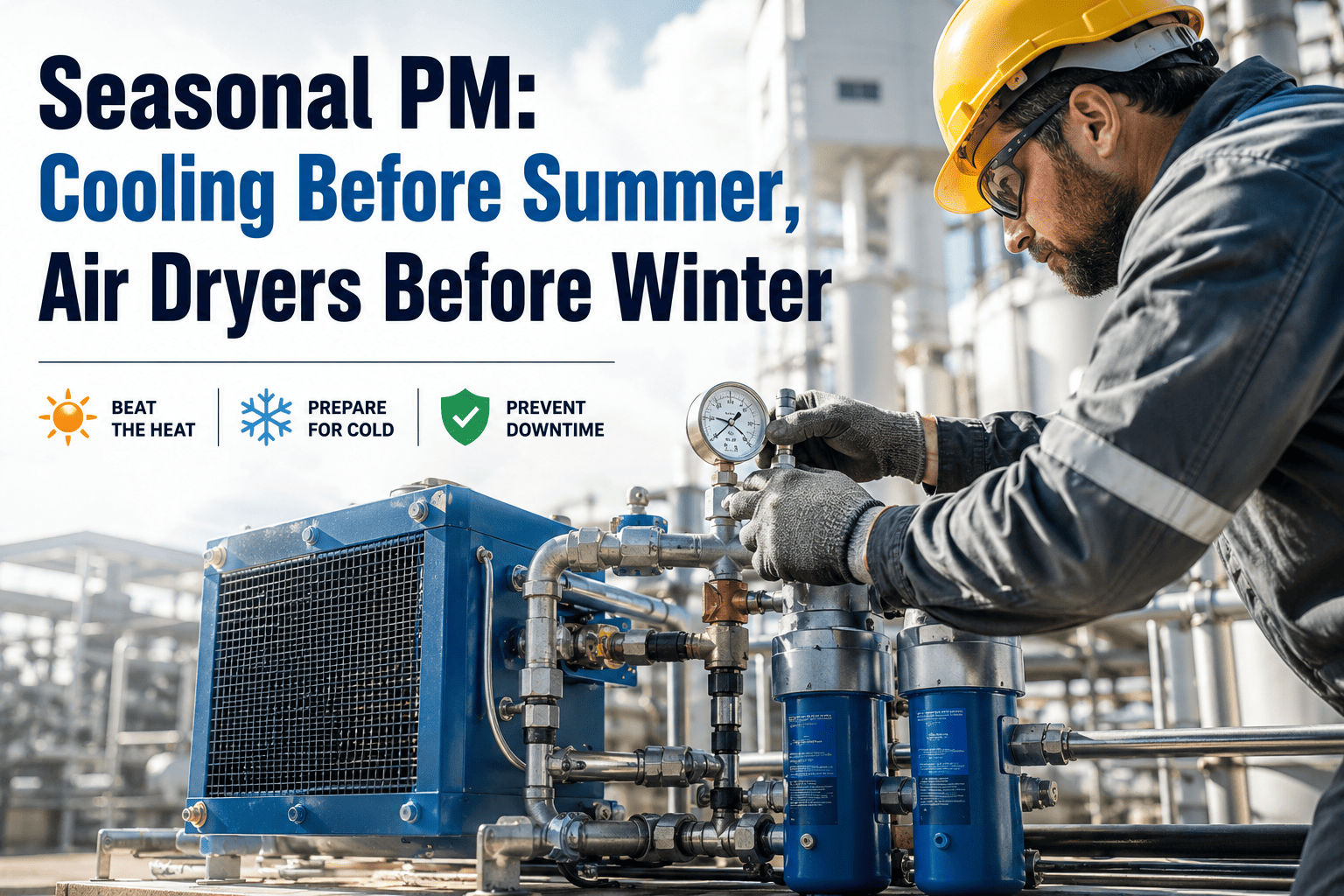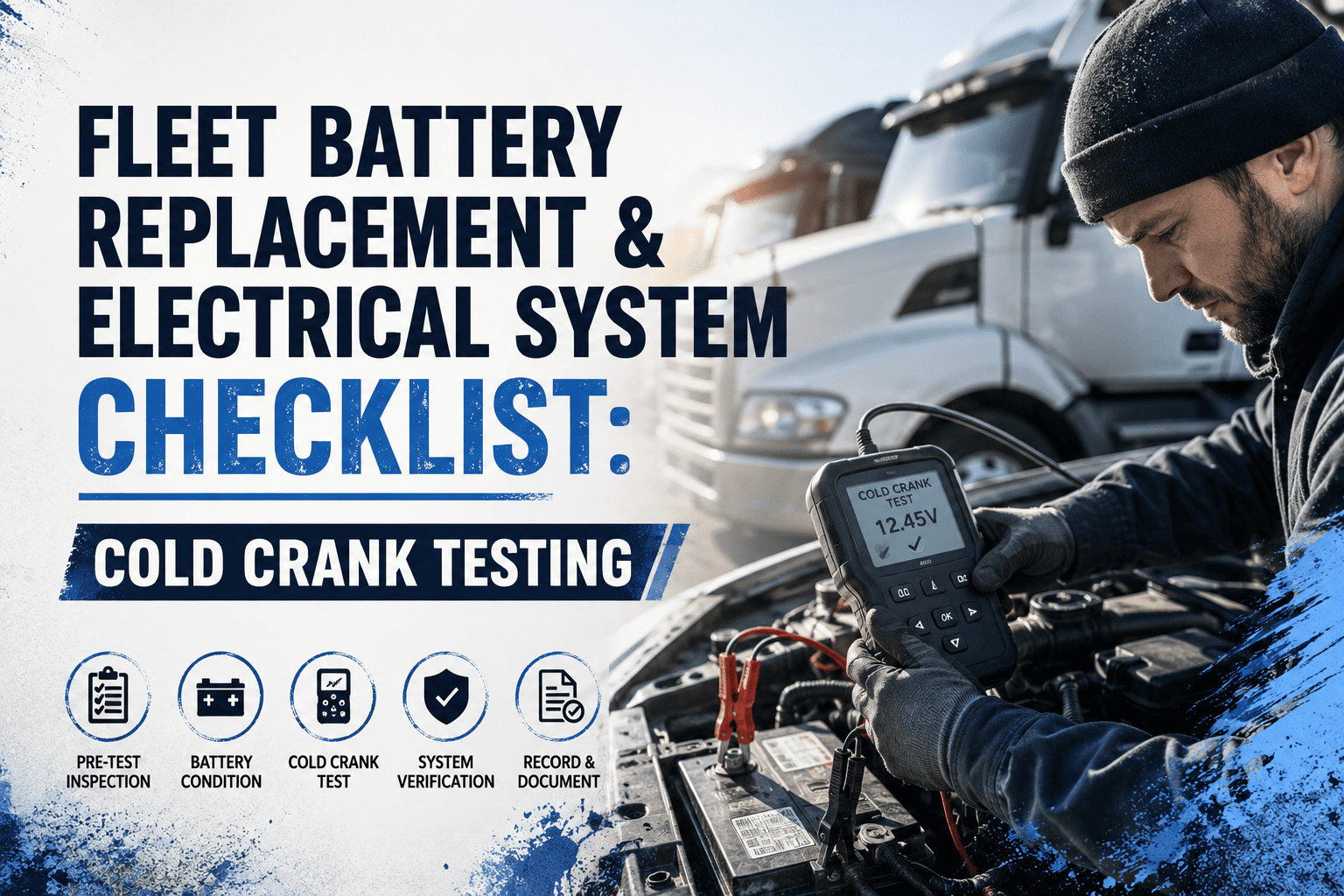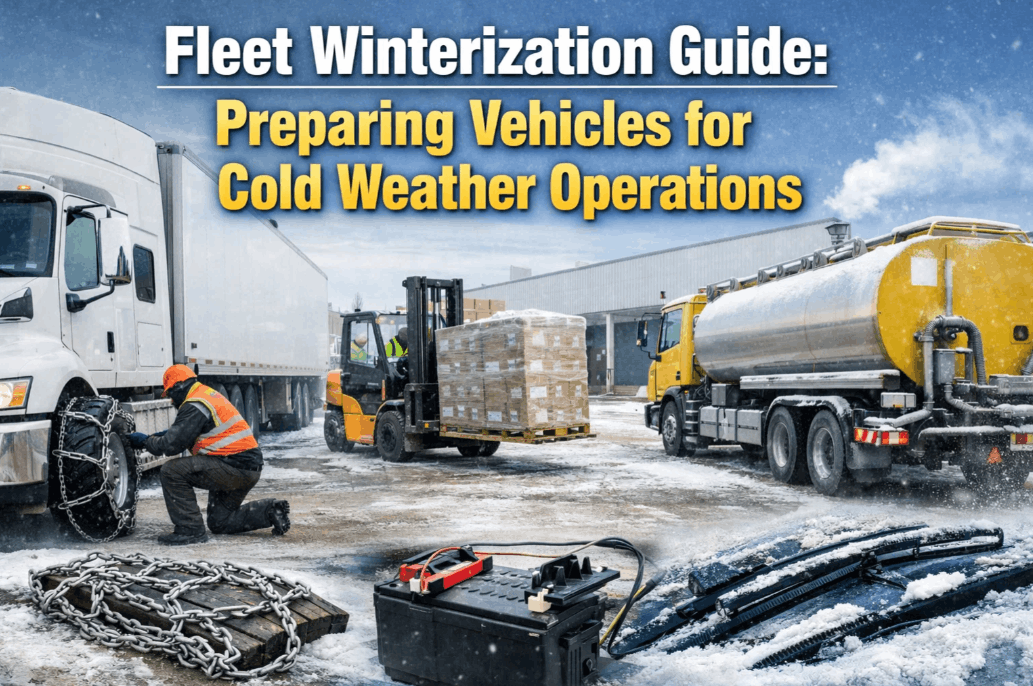
Cold weather kills unprepared fleet vehicles faster than any other operating condition. At -20°F, diesel fuel gels and filters plug within hours. At -10°F, a marginal battery that starts fine in September fails silently in a January depot. Air moisture in brake lines freezes and reduces stopping distance. Antifreeze that hasn't been tested since spring may have lost its freeze protection entirely. None of these failures announce themselves in advance — they compound quietly through autumn and then present at the worst possible moment: a loaded vehicle, a winter storm, a delivery window that cannot slip. OxMaint's CMMS manages fleet winterization as a structured seasonal PM programme — triggering pre-winter inspections per vehicle automatically and tracking every system from battery load test to air dryer cartridge replacement.
Fleet Winterization Guide: Preparing Vehicles for Cold Weather Operations
Complete guide covering cooling system preparation, battery testing, diesel fuel management, air dryer maintenance, tyre chains, wiper systems, and CMMS-managed seasonal transition programmes for fleet readiness in cold climates.
Temperature Thresholds: When Each System Fails
Each vehicle system has a specific temperature threshold beyond which it degrades or fails — and most fleet operators don't know those thresholds until a vehicle stops moving. The table below shows the critical failure temperature for the eight most cold-weather-sensitive systems, what the failure looks like, and what the PM action is. OxMaint's winterization PM template covers all eight systems with per-vehicle due dates triggered six weeks before your region's historical first-frost date.
The 8-System Winter PM Programme
A fleet winterization programme is not a single inspection event — it is eight parallel PM streams that must be completed in the right sequence, six weeks before the first expected frost date for your operating region. Attempting to winterize in October when temperatures are already dropping means some vehicles will not be ready before the first hard freeze. OxMaint's CMMS triggers the complete winterization PM sequence automatically based on your region's historical frost date — generating per-vehicle work orders for all eight systems simultaneously so nothing is overlooked.
Technology That Supports Winter Fleet Readiness
OBD-II and J1939 data streams make winter fleet readiness visible in real time. Battery voltage under cranking load is logged at every start — a declining trend across 30 days predicts failure before the first cold snap. DEF heater circuit fault codes surface in OBD data before the heater fails in operation. Coolant temperature sensor anomalies flag cooling system issues before freeze protection is compromised. AI digital twin modelling projects each vehicle's component condition against temperature operating profiles — flagging which units are most at risk as temperatures fall. AI vision cameras detect coolant weeps, cracked hose connections, and tyre sidewall damage at the daily depot walk-around. OxMaint integrates OBD winter risk signals into the winterization PM work order queue — so vehicles with deteriorating battery voltage or DEF heater faults are prioritised for shop inspection before seasonal conditions make them failures. SAP PM integration posts every winterization completion to the enterprise asset record, giving operations directors a real-time readiness dashboard across every depot.
Battery voltage trend · DEF heater fault codes · coolant temp anomalies monitored daily. Declining winter-risk signals generate PM work orders before failures occur in operation.
Projects component condition against seasonal temperature profiles. Units with marginal batteries or degraded coolant protection are flagged weeks before temperatures drop — enabling planned replacement over emergency repair.
Daily walk-around scans detect coolant weeps, hose cracks, tyre sidewall damage, and DEF line deterioration — defects invisible to a quick pre-trip but certain to fail in a winter storm at operating temperature.
Winterization completions post to SAP PM automatically — battery test results, coolant freeze points, oil grade changes per vehicle — giving operations directors a real-time winter readiness dashboard across the enterprise.
We used to lose two or three vehicles every January to preventable winter failures. After implementing OxMaint's seasonal PM programme, OBD flagged a failing battery heater and a degraded DEF tank heater in November — both fixed before temperatures dropped. We had zero cold-weather breakdowns that winter across 41 vehicles.
Winterize Every Vehicle Before the First Frost — Not After
OxMaint triggers your complete 8-system winterization PM six weeks before your region's first frost date — per vehicle, automatically. Free to start.
Common Winterization Failures and How to Avoid Them
Skipping Battery Load Tests
A battery that starts a vehicle reliably in 60°F weather can fail completely at 10°F because cold reduces CCA (Cold Cranking Amps) by 30–50%. Many fleets check voltage only — voltage tests are insufficient. A full load test under discharge conditions is the only reliable predictor of cold-weather performance. Replace any battery below 600 CCA before November. OxMaint's winterization template includes load test results as a required field — incomplete entries cannot close the work order.
Assuming Coolant Is Fine From Last Season
Antifreeze degrades — its freeze protection drops over time even if the coolant looks clean. Many fleets assume coolant is fine because it was changed two years ago, then find engines with cracked blocks in February. A refractometer test takes 60 seconds and costs nothing. If freeze protection is above –35°F, change or top up with concentrate. Never assume — test.
Not Treating Fuel Until After First Gel Event
Diesel #2 begins to wax at around –15°F, but cloud point (when wax crystals first form and begin plugging filters) can occur at 14°F — well above the expected temperature danger zone. Most fleets switch to winter fuel or treat with anti-gel after the first vehicle fails. The cost of treating fuel is pennies per gallon; a roadside recovery from gelled fuel costs $800–$1,500 per event plus cargo delay penalties.
Ignoring Air Dryer Heater Element Testing
Air dryers remove moisture from brake system air — their heater elements prevent the purge valve from freezing. These elements fail silently and cannot be checked visually. If the heater fails and temperatures drop below freezing, moisture accumulates in the air lines and tanks and freezes during operation — causing brake response lag. Test the heater element at the pre-winter service, not after the first cold night.
Frequently Asked Questions
When should fleet winterization start?
Six weeks before your region's historical first frost date. In the US Upper Midwest and Canada, that means starting by mid-September. In the UK and Northern Europe, early October. This lead time allows you to order parts, schedule shop time, and address any defects found without rushing vehicles into service before they're ready. OxMaint auto-schedules winterization based on your depot's regional frost calendar.
What is the most critical winter fleet PM item?
Battery load testing. A marginal battery that passes a simple voltage check will fail at sub-zero temperatures, leaving a driver stranded. Load test every battery and replace any that fall below 600 CCA — this is the single intervention that prevents the most winter breakdowns per vehicle tested.
How do you prevent diesel fuel gelling in winter?
Three options: switch to #1 diesel (lower gel point, lower energy content), use a #1/#2 blended winter fuel from your supplier, or treat #2 diesel with an anti-gel fuel additive at the dispenser. The anti-gel treatment is the most cost-effective — add it before temperatures drop, not after gelling begins. Replace fuel filters at the start of the cold season regardless. Book a demo to see OxMaint's fuel system winterization template.
Can a CMMS manage fleet winterization across multiple depots?
Yes. OxMaint manages winterization as a regional seasonal PM programme — different trigger dates per depot based on local frost calendars, per-vehicle work orders for all eight systems, completion tracking, and a readiness dashboard showing which vehicles at which depots are ready and which are still pending. Start free — configure your first winterization programme today.
Winter-Ready Fleet. Zero Cold-Weather Surprises.
OxMaint automates your seasonal PM — free to start.