How Machine Learning Predicts Fleet Component Failures
By Alex Jordan on March 31, 2026
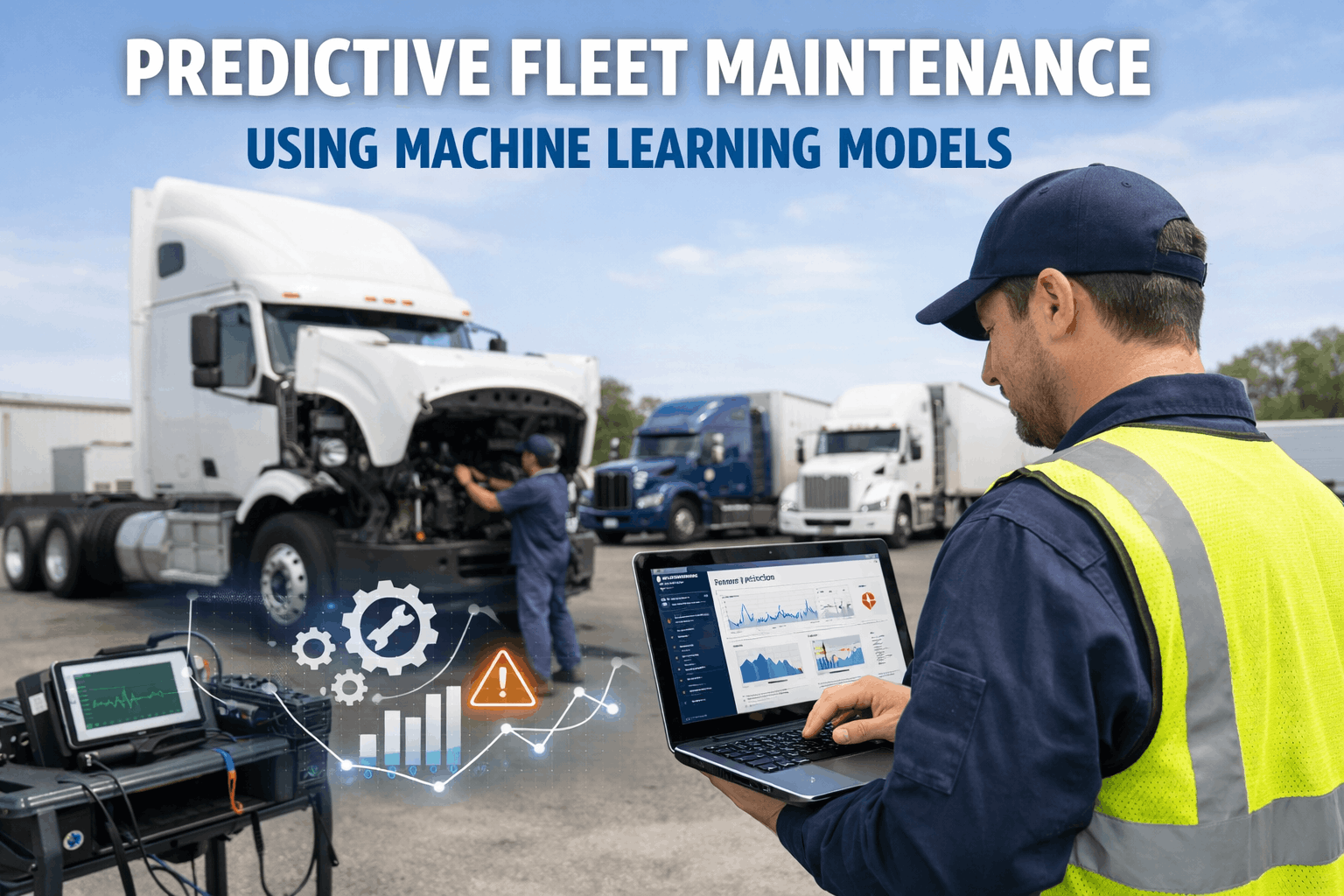
Machine learning is ending reactive fleet maintenance for operations directors and fleet managers across the USA, Canada, UK, Germany, Australia, and UAE — replacing scheduled guesswork with real-time failure prediction that is accurate, documented, and actionable. By continuously analysing OBD-II diagnostic signals, vibration sensor streams, thermal imaging data, and years of historical work order patterns, ML algorithms detect the invisible micro-deterioration that precedes component failure up to 30 days before it occurs. Oxmaint's AI-powered CMMS applies ensemble ML models — trained on millions of real fleet failure events — across your entire operation in real time, delivering 89% prediction accuracy for engine, brake, transmission, hydraulic, and tyre failures, so your team fixes the right component at the right time, not after a costly roadside breakdown.
AI-POWERED PREDICTIVE MAINTENANCE
Predict Fleet Failures 30 Days Before They Happen
Oxmaint ML models analyse OBD-II, vibration sensors, and maintenance history to flag at-risk components before breakdown — across engines, brakes, transmissions, and hydraulics. 89% accuracy. Zero surprise failures.
Every component failure leaves a digital fingerprint weeks before it occurs — a rising vibration frequency, an abnormal thermal signature, or an ECU fault code pattern that deviates from the vehicle's own baseline. ML models learn these fingerprints from millions of historical failures and apply that knowledge to every vehicle in your fleet continuously. Oxmaint's edge AI engine processes these signals in real time, triggering alerts and auto-generating work orders before the driver notices anything wrong.
The ML Failure Prediction Pipeline
From raw sensor signal to scheduled maintenance work order — automated end to end
STEP 01
Sensor Data
OBD-II, vibration, thermal, GPS
STEP 02
Edge Computing
On-device filtering & pre-processing
STEP 03
ML Analysis
Pattern detection, anomaly scoring
STEP 04
Failure Prediction
Probability score, days-to-failure
STEP 05
Auto Work Order
Scheduled repair, parts pre-ordered
Prediction Accuracy by Component
ML models are trained separately per failure mode — because engine bearing wear and brake fade have completely different signal fingerprints. Oxmaint's component-specific models are continuously retrained on new fleet data from across the Oxmaint customer network, improving accuracy over time for every user.
ML Model Accuracy by Fleet Component
Verified accuracy — ensemble models trained on 2M+ real fleet failure events
Engine
Bearings & seals
Brakes
Pads & rotors
Transmission
Clutch & gearbox
Tyres
Wear & pressure
Hydraulics
Seals & pump
Verified across North American, European, and Australian fleet operations
The AI Technology Stack Behind Prediction
ML prediction accuracy depends entirely on the quality and variety of input data. Fleets that layer multiple sensing and integration technologies give the AI a richer, more complete picture of every vehicle's health. Talk to an Oxmaint specialist about which technology stack fits your fleet size, vehicle type, and existing systems.
Six Technologies Powering Fleet ML Prediction
Stack these capabilities for maximum prediction accuracy and coverage
AI Camera Vision
VISUAL AI
Detects tyre cracks, brake erosion, and fluid leaks visually — no extra sensor required. Works with existing yard or pit cameras.
AI Digital Twin
SIMULATION
A virtual replica of each vehicle runs failure simulations in parallel — stress-testing virtual components before real ones reach risk threshold.
OBD-II / CANbus
DIAGNOSTIC
Pulls 200+ live ECU parameters — fuel trim, misfire counts, coolant temp, torque — creating a rich ML input set from day one.
PLC Integration
AUTOMATION
Connects Oxmaint predictions to Siemens/Rockwell PLCs — triggering automatic vehicle hold or re-routing without human intervention.
SAP PM / ERP
ERP SYNC
Predictions auto-create SAP PM work orders, trigger parts procurement, and update asset records — zero manual entry required.
Edge AI Computing
REAL-TIME
On-vehicle ML inference runs offline — predictions are made without connectivity and sync to cloud on reconnection.
The 30-Day Early Warning Timeline
The value of ML prediction is the time window it creates. A 30-day early warning transforms an emergency breakdown into a scheduled maintenance event — allowing parts pre-ordering, technician scheduling, and zero operational disruption. See this timeline live in your fleet with Oxmaint from the first day of sensor connection.
From Anomaly to Zero Downtime — 30 Days
What Oxmaint ML does automatically in the 30 days before a component would fail
D−30
Anomaly Detected
Vibration frequency drift detected in rear axle bearing — 3 standard deviations above vehicle baseline. Failure probability: 22%. System begins tracking.
D−21
Alert Triggered
Probability crosses 45% threshold. Oxmaint automatically alerts fleet manager and supervisor. Component flagged as at-risk in dashboard.
D−14
Work Order Created
Scheduled maintenance work order auto-generated. SAP PM notified. Parts automatically sourced from nearest supplier warehouse.
D−7
Parts Arrive. Tech Assigned.
Bearing kit delivered to depot. Technician scheduled in low-utilisation window. Vehicle continues operating — no route disruption.
D−0
Repair Done. Zero Downtime.
Component replaced during planned workshop slot. Vehicle returns to service. Failure event: prevented. Cost saving vs. roadside recovery: $8,000+.
What ML Prediction Delivers — The Numbers
Before vs. After Oxmaint Predictive ML
Average outcomes across Oxmaint customers — year one results
Metric
Without ML
With Oxmaint ML
Change
Unplanned Downtime
4–8 days/yr per truck
Under 1 day/yr
↓ 87%
Emergency Repair Cost
$8K–$25K per event
$400–$1.2K planned
↓ 92%
Component Lifespan
OEM spec baseline
+20–35% extended
↑ 27% avg
Maintenance Cost / Mile
$0.18–0.24
$0.09–0.13
↓ 44%
Customer Success Story
"Oxmaint flagged a transmission anomaly on one of our long-haul trucks 24 days before failure. We repaired it during a planned depot visit — saving $19,000 in recovery costs and avoiding a full day of freight delays."
— Fleet Operations Director, Logistics Company, Texas USA
67% reduction in unplanned downtime achieved within 8 months of Oxmaint deployment
Frequently Asked Questions
How accurate is ML-based fleet failure prediction?
Oxmaint achieves 89% accuracy using ensemble ML models trained on 2M+ real fleet failure events. Accuracy improves continuously as the model learns each fleet's specific patterns over 60–90 days.
What sensors and data sources does the system need?
OBD-II (standard on all modern commercial vehicles), vibration sensors, and telematics GPS are primary inputs. AI camera and PLC integration are optional add-ons for higher coverage.
How quickly does the system start making reliable predictions?
Initial predictions begin within 2 weeks of connection. Full accuracy benchmarks are typically reached after 60–90 days of per-vehicle baseline data collection.
Does it integrate with SAP, Oracle, and existing fleet platforms?
Yes — Oxmaint connects natively to SAP PM, Oracle Fleet, Samsara, Geotab, Siemens PLC, and Rockwell systems via REST API and MQTT. Most integrations go live within one week.
Which components can ML accurately predict failures in?
Engine bearings, brake assemblies, transmission clutches, tyre wear, hydraulic seals, battery health, and HVAC compressors — each with a separate trained model per failure mode.
How is this different from traditional preventive maintenance?
Traditional PM runs on fixed schedules regardless of actual component condition. ML predicts the remaining useful life of each specific component, eliminating both premature replacements and unexpected failures.
START PREDICTING FAILURES TODAY
See Oxmaint ML Live on Your Fleet
Free trial. No credit card. Live predictions within 14 days.