Every fleet manager knows the gut-punch moment: a driver radios in with spongy brakes 200 miles from the nearest shop, and nobody in the office can confirm when that truck's pads were last measured. Brake failures remain one of the leading causes of roadside breakdowns and out-of-service violations in commercial fleets, yet most maintenance teams still rely on scattered texts, phone calls, and paper DVIRs to manage brake-related requests. The result is missed repairs, duplicated work orders, and vehicles sitting idle while dispatchers scramble for answers. A structured request maintenance workflow designed specifically for brake systems changes all of that. It gives drivers a clear path to report issues, mechanics a prioritized queue of brake jobs, and fleet managers real-time visibility into every caliper, rotor, and pad across the operation. If your team is still chasing brake problems instead of preventing them, it is time to sign up for OxMaint and bring order to the process.
Why Brake Maintenance Deserves Its Own Workflow
Brakes are not just another line item on a preventive maintenance checklist. They are the single most safety-critical system on any commercial vehicle. When a tire blows, a driver can usually pull over safely. When brakes fail, the consequences are immediate and severe. Federal Motor Carrier Safety Administration data consistently shows that brake-related violations top the list during roadside inspections, and a single out-of-service order can cost a fleet anywhere from $500 to $16,000 when you factor in towing, emergency repairs, missed loads, and potential fines.
Despite this, most fleets lump brake requests into the same generic maintenance workflow used for everything from windshield wipers to cabin air filters. The problem with this approach is that it treats all requests with equal urgency, which means brake issues often wait behind less critical tasks in the shop queue. A dedicated brake maintenance workflow ensures that every brake-related request is automatically flagged as high-priority, routed to qualified technicians, and tracked against compliance thresholds from the moment a driver first notices something wrong.
The Cost of Ignoring Brake Issues
How a Brake Maintenance Request Workflow Actually Works
A well-designed brake workflow is not just a digital version of a paper form. It is an end-to-end process that connects every person involved in keeping brake systems safe, from the driver who first feels a vibration in the pedal to the fleet manager reviewing monthly compliance reports. Here is how the workflow moves through each stage when built on a modern CMMS platform.
Driver Submits Request
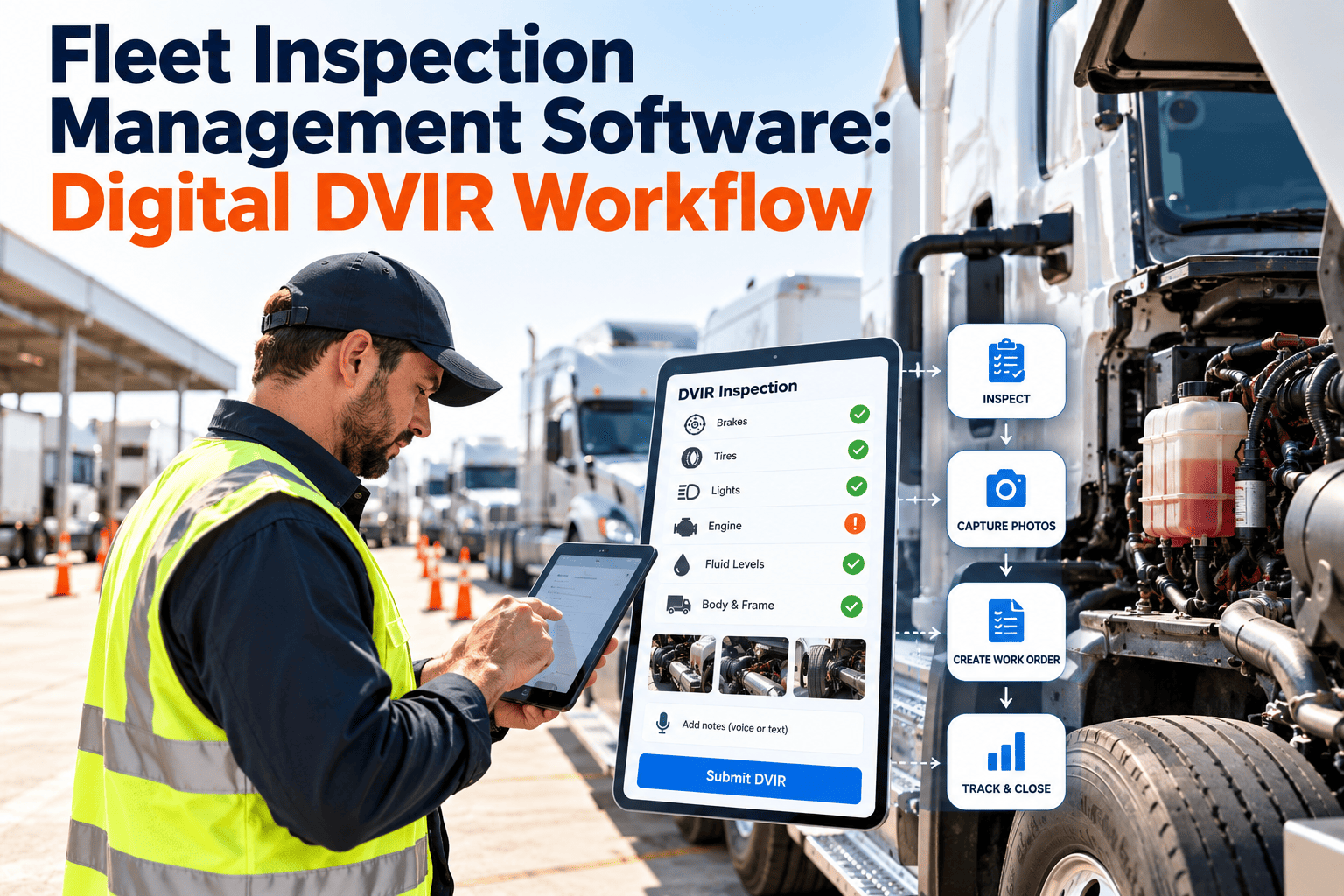
The driver opens the mobile app, scans the vehicle QR code, selects "Brake System" from a standardized issue list, uploads a photo of the defect, and adds a voice note describing what they felt or heard. This takes under 60 seconds and can happen from the cab, the yard, or the roadside.
Automatic Triage and Priority Assignment
The system automatically flags brake requests as high-priority and routes them to the maintenance supervisor. It cross-references the vehicle's history to check pad thickness records, last inspection date, and any open brake-related work orders to avoid duplicates.
Supervisor Review and Parts Check
The supervisor receives an instant notification, reviews the request details and photos, checks parts availability for the specific vehicle make and model, and either approves the work order or requests additional diagnostics.
Work Order Creation and Assignment
With one tap, the approved request becomes a full work order with pre-populated brake inspection checklists, required parts, estimated labor hours, and assignment to a certified brake technician based on availability and skill set.
Repair Execution and Documentation
The technician follows the digital checklist, records measurements (pad thickness, rotor runout, fluid condition), logs parts used, captures before-and-after photos, and marks the work order complete, all from a mobile device.
Vehicle Release and Reporting
The vehicle is cleared for dispatch, the driver is notified, and all data flows into fleet-wide brake health dashboards for trend analysis, compliance reporting, and future PM scheduling.
If this level of visibility and control sounds like what your brake maintenance process needs, book a demo with OxMaint to see the workflow in action with your own fleet data.
Stop Chasing Brake Problems. Start Preventing Them.
OxMaint gives your drivers, mechanics, and fleet managers a single connected workflow for every brake request, from first report to final sign-off.
What to Include in a Brake-Specific Inspection Checklist
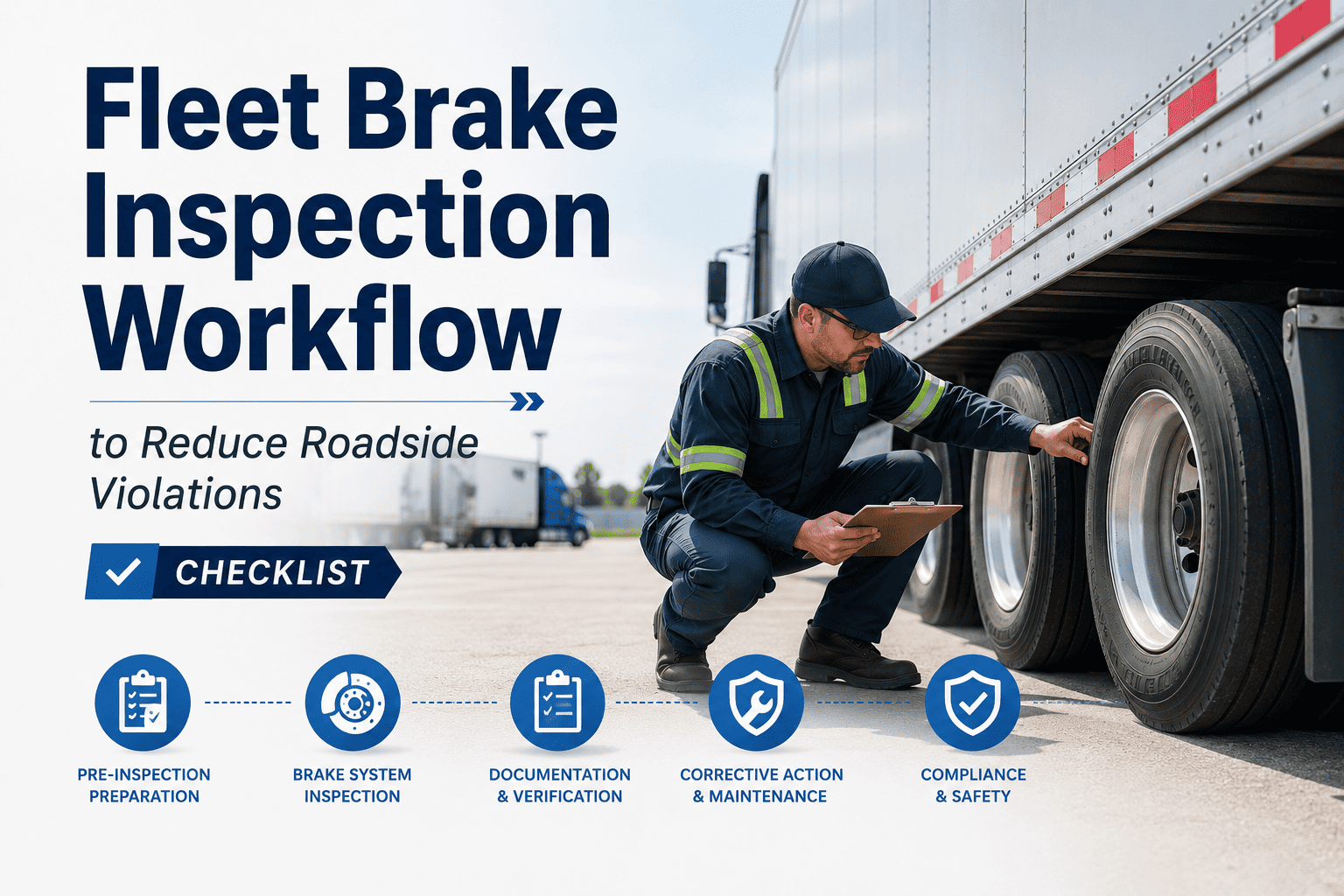
A generic "inspect brakes" line item tells your technicians nothing. The difference between a compliant fleet and a citation-magnet often comes down to how specific your brake inspection checklist is. When brake requests come in through a digital workflow, the work order should automatically attach a detailed checklist tailored to the vehicle type. Here is what a thorough brake inspection covers.
Brake Pads and Shoes
Measure thickness with calipers (minimum 3mm for disc pads, 1.6mm for shoes). Check for uneven wear patterns that indicate caliper issues. Document measurements for trend tracking.
Rotors and Drums
Inspect for scoring, cracks, heat discoloration, and runout. Measure thickness against manufacturer minimum specs. Flag any rotor below discard thickness for immediate replacement.
Brake Fluid System
Check master cylinder fluid level between MIN and MAX lines. Test fluid moisture content (replace if above 3%). Inspect all lines, hoses, and fittings for leaks, corrosion, or bulging.
Calipers and Hardware
Verify caliper slide pins move freely. Check for piston seal leaks and boot damage. Inspect mounting hardware, anti-rattle clips, and brake pad shims for wear or missing pieces.
Air Brake Components
For heavy-duty vehicles: test air pressure build-up rate, check slack adjuster travel, inspect brake chambers and diaphragms, and verify automatic slack adjuster function.
ABS and Electronic Systems
Scan for ABS fault codes. Inspect wheel speed sensor wiring and connections. Verify ABS warning lamp operation during key-on self-test. Document any codes for diagnostic follow-up.
Building these checklists into your CMMS means technicians never have to guess what "inspect brakes" means, and fleet managers get consistent, measurable data across every vehicle. Ready to standardize your brake inspections? Sign up for OxMaint and access pre-built brake inspection templates for every vehicle class.
Common Brake Workflow Mistakes That Cost Fleets Thousands
Even fleets that have moved beyond paper forms often make workflow mistakes that undermine their brake maintenance programs. Recognizing these pitfalls is the first step toward fixing them.
Treating All Brake Requests Equally
A squeaking brake pad and a brake fluid leak are very different levels of urgency. Without severity classification built into the request form, supervisors waste time manually triaging every ticket. Your workflow should force drivers to categorize brake issues by symptom type so the system can auto-assign priority levels.
No Connection Between Inspections and Work Orders
Many fleets run inspections on one system and work orders on another. When a pre-trip inspection flags thin brake pads, the finding should automatically generate a maintenance request, not sit in a separate database waiting for someone to notice it.
Missing Measurement Data in Work Orders
If your technicians are marking "brakes OK" without recording actual pad thickness or rotor measurements, you have no baseline for predicting when the next service will be needed. Every brake work order should require numerical measurements, not just pass-fail checkboxes.
Ignoring Brake Trends Across the Fleet
When three trucks on the same route all need brake pads replaced within two weeks, that is not coincidence. It is a data point that should trigger a route analysis or load audit. Without centralized reporting, these patterns go unnoticed until they become expensive problems.
Avoiding these mistakes starts with the right CMMS platform. Book a demo with OxMaint to see how intelligent brake workflows eliminate these gaps automatically.
Connecting Brake Workflows to Preventive Maintenance Schedules
Reactive brake maintenance is expensive. By the time a driver reports grinding noises, you are already looking at rotor replacement instead of a simple pad swap. The real power of a dedicated brake workflow is in how it feeds your preventive maintenance program. Every brake request, inspection result, and repair record should flow into a central database that the CMMS uses to optimize future service intervals.
For example, if your data shows that a particular vehicle model consistently needs brake pads at 35,000 miles instead of the manufacturer-recommended 50,000 miles, you can adjust the PM trigger for that entire vehicle class. If air brake slack adjuster issues spike during winter months, you can add seasonal brake inspections to the PM calendar. This kind of data-driven scheduling is only possible when every brake interaction is captured digitally through a consistent workflow.
Modern fleet maintenance platforms also integrate with telematics systems, allowing fault codes related to ABS or brake pressure to automatically generate maintenance requests before the driver even notices a warning light. This turns your brake workflow from a reactive reporting tool into a predictive maintenance engine that catches problems at the earliest possible stage. If you want to move from reactive to predictive brake maintenance, sign up for OxMaint and connect your telematics data to automated brake workflows.
Paper-Based vs. Digital Brake Workflows
| Aspect | Paper-Based | Digital CMMS Workflow |
|---|---|---|
| Request Submission | Phone call or handwritten DVIR | Mobile app with photos and voice notes |
| Priority Assignment | Manual, often delayed | Automatic based on symptom classification |
| Parts Availability | Technician checks shelf manually | Real-time inventory linked to work order |
| Repair Documentation | Handwritten notes, often incomplete | Digital checklist with measurements and photos |
| Compliance Reporting | Hours of spreadsheet compilation | Automated dashboards and audit trails |
| Trend Analysis | Nearly impossible | Fleet-wide brake health analytics |
Your Brakes Deserve a Smarter Workflow
Join fleet teams that have cut brake-related downtime by 50% and eliminated missed inspections with OxMaint's digital maintenance workflows.
Frequently Asked Questions
What is a brake maintenance request workflow in fleet management
A brake maintenance request workflow is a structured digital process that guides a brake-related issue from initial driver report through triage, work order creation, repair execution, and vehicle release. Unlike generic maintenance requests, a brake-specific workflow automatically flags issues as high-priority, attaches brake inspection checklists to work orders, and tracks compliance against safety thresholds. It connects drivers, supervisors, and technicians in a single system so nothing falls through the cracks.
How does a CMMS improve brake maintenance for fleet vehicles
A CMMS centralizes every brake-related data point, including inspection results, pad thickness measurements, parts usage, repair history, and compliance records, into one platform. It automates work order creation from driver requests or telematics fault codes, ensures technicians follow standardized inspection checklists, and provides fleet managers with dashboards showing brake health trends across the entire fleet. This eliminates the communication gaps and data silos that cause missed brake repairs.
How often should fleet vehicles have brake inspections
Brake inspection frequency depends on vehicle type, operating conditions, and regulatory requirements. As a baseline, light-duty fleet vehicles should have brake inspections every 12,000 to 15,000 miles, while heavy-duty commercial trucks require inspections at every PM interval, typically every 10,000 to 25,000 miles. Vehicles operating in mountainous terrain, stop-and-go urban routes, or carrying heavy loads may need more frequent checks. A CMMS can customize these intervals based on actual wear data from your fleet.
What are the most common brake issues found during fleet inspections
The most frequently identified brake issues in fleet vehicles include worn brake pads and shoes below minimum thickness, glazed or scored rotors, air brake slack adjuster out of adjustment, brake fluid contamination or low levels, damaged or leaking brake lines and hoses, ABS sensor faults, and seized caliper slide pins. Many of these issues are progressive, meaning they start as minor findings and worsen over time, which is why consistent digital documentation through a CMMS workflow is essential for catching them early.
Can drivers submit brake maintenance requests from the road
Yes. Modern CMMS platforms like OxMaint provide mobile apps with full offline functionality. Drivers can scan the vehicle QR code, select the brake issue type from a standardized list, upload photos, add voice notes describing the problem, and submit the request from anywhere. The app caches the data locally and syncs automatically when the device reconnects to a network. This means brake issues are reported in real-time, not hours later when the driver returns to the yard.
How does a brake workflow help with DOT compliance
A digital brake workflow creates an automatic audit trail for every brake inspection, repair, and part replacement. It ensures pre-trip and post-trip inspections are completed and documented, brake measurements are recorded against regulatory thresholds, out-of-service conditions trigger mandatory repair-before-operation holds, and all records are stored digitally for instant retrieval during DOT audits. This level of documentation is nearly impossible to maintain consistently with paper-based systems.
What ROI can fleets expect from implementing a digital brake workflow
Fleets that implement digital brake maintenance workflows typically see a 30 to 50 percent reduction in brake-related downtime, 20 to 35 percent lower brake repair costs through earlier issue detection, and significant reductions in out-of-service violations during roadside inspections. The return on investment comes from fewer emergency repairs, optimized parts purchasing, reduced compliance penalties, and extended component life through data-driven preventive maintenance scheduling.