Fleet maintenance has always been a race against time. Every minute a vehicle sits idle in the shop is revenue lost, schedules disrupted, and customers waiting. But in 2026, a powerful shift is underway. Robotics and automation are no longer futuristic concepts reserved for assembly lines and warehouses. They are actively reshaping how fleets approach preventive maintenance, turning reactive scrambles into orchestrated, data-driven workflows. From robotic inspection systems that scan vehicles in seconds to AI-powered CMMS platforms that auto-generate work orders the moment an anomaly is detected, the maintenance landscape is evolving faster than most fleet managers realize. If your operation still relies on clipboards and gut instinct, the gap between you and the competition is widening every quarter.
The Old Way Is Breaking Down
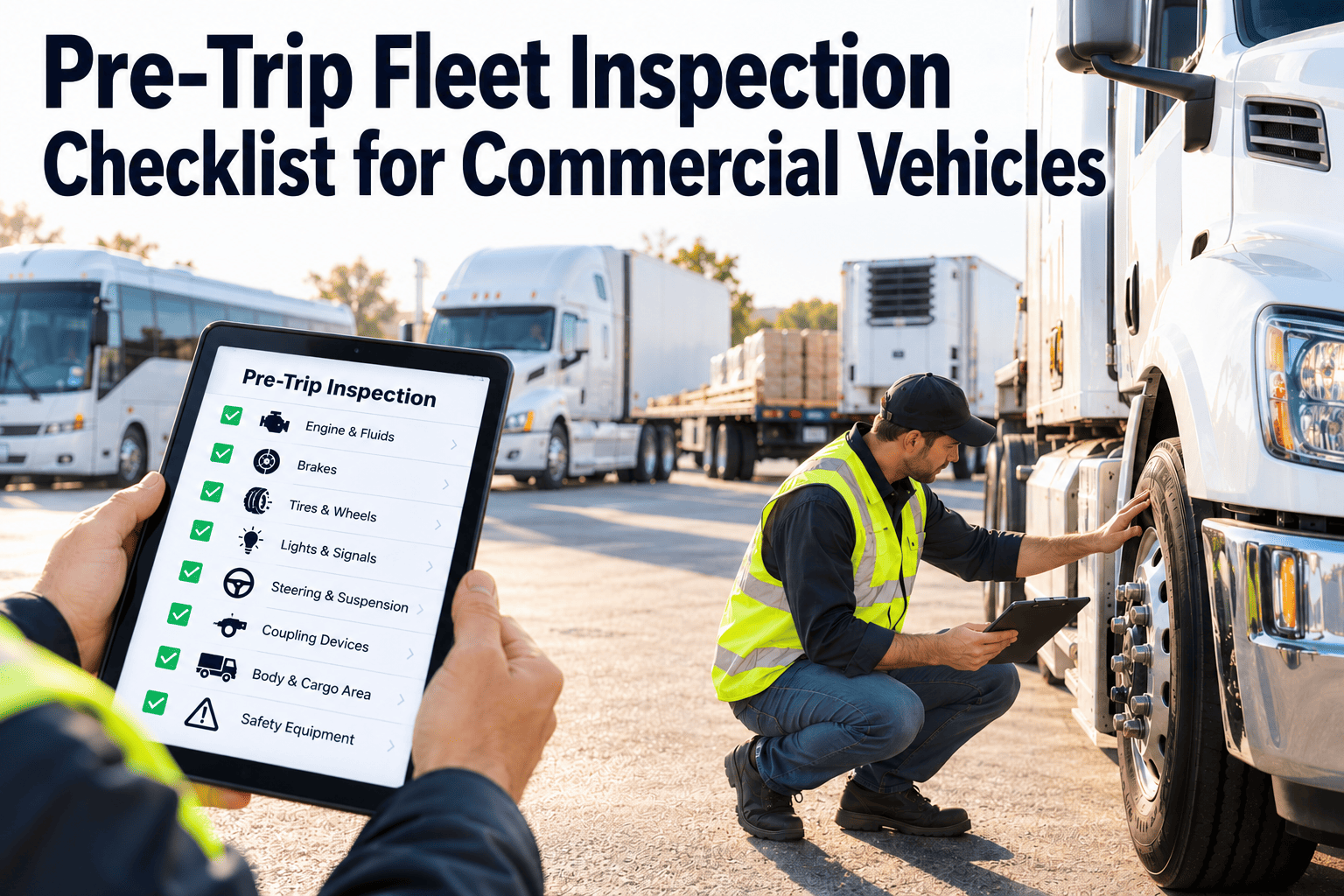
Traditional fleet preventive maintenance relies on fixed schedules, manual checklists, and the experience of individual technicians. A truck comes in every 10,000 miles or 90 days regardless of actual condition. A driver walks around the vehicle with a paper form, checking boxes in a process that varies wildly depending on time pressure, fatigue, and training. The result is a system full of blind spots. Industry data suggests that human inspectors miss 20 to 30 percent of defects during manual walkarounds. That is not a minor gap. It is the difference between catching a brake issue before it becomes a catastrophic failure on the highway and learning about it from an accident report.
The technician shortage compounds the problem. Experienced mechanics are retiring faster than new ones enter the field. The remaining teams are stretched thin, spending more time on paperwork and parts searches than actual wrench-turning. In 2025, many fleets finally made the shift from paper to digital inspection forms and mobile CMMS apps. That was an important foundation. But in 2026, the next layer is being built on top of it, and that layer is robotics. Fleets ready to take this leap can sign up with OxMaint and start building their digital maintenance foundation today.
How Robotic Inspection Systems Work in Fleet Environments
Robotic inspection for fleet vehicles is not about humanoid robots walking around a truck with a flashlight. It is far more practical and far more powerful than that. The technology takes several forms, each addressing a different piece of the preventive maintenance puzzle.
Camera Array Systems
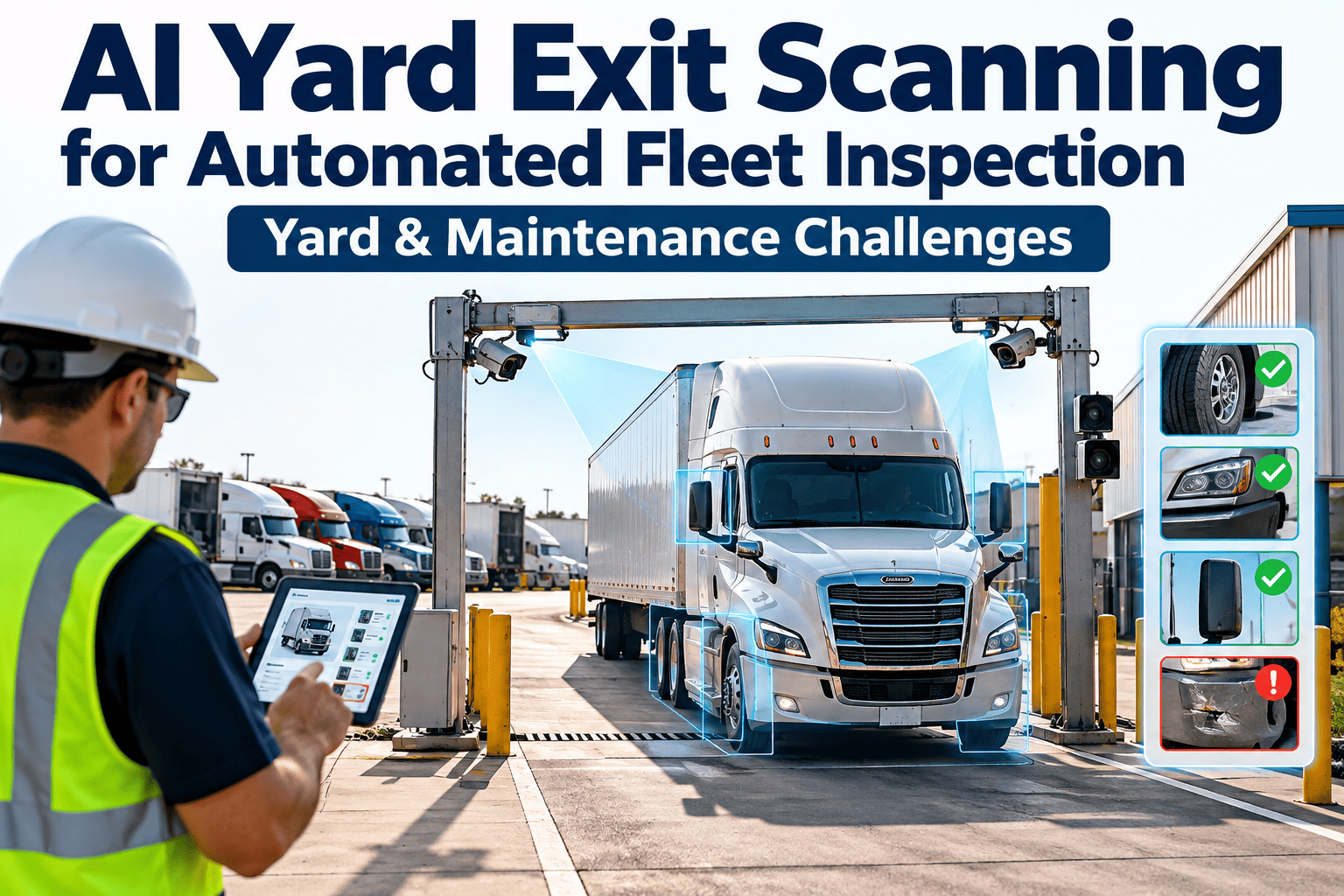
High-resolution camera arrays combined with LED lighting capture thousands of images of a vehicle's underbody, tires, brakes, and exterior within seconds as it drives through a fixed scanning lane. AI algorithms trained on millions of real-world images analyze these captures instantly, detecting scratches, dents, cracks, wear patterns, fluid leaks, and more with 95 to 99 percent accuracy. Companies like UVeye have expanded this technology specifically for Class 6 through 8 trucks and buses, with full commercial availability rolling out in 2026.
Under-Vehicle Robots
Small autonomous robots equipped with thermal cameras, ultrasonic sensors, and visual inspection modules can crawl beneath parked vehicles to inspect chassis components, exhaust systems, and undercarriage integrity. These units operate on scheduled rounds or on-demand, feeding data directly to the fleet's maintenance management system without requiring a technician to physically get under the vehicle.
Drone-Based Inspections
For larger fleet yards and tall vehicles like double-decker buses or heavy equipment, drones equipped with high-resolution and thermal cameras perform rooftop and upper-body inspections. They detect roof damage, HVAC issues, and structural concerns that are difficult and dangerous for humans to access regularly. These drones can be programmed for daily automated flights across an entire yard.
IoT Sensor Networks
Onboard IoT sensors embedded across critical vehicle components continuously stream real-time data on engine performance, brake pad thickness, fluid levels, tire pressure, and battery health. This telemetry feeds directly into fleet CMMS platforms, enabling condition-based maintenance triggers that detect degradation patterns long before visual symptoms appear — bridging the gap between scheduled checks and continuous monitoring.
Robotic Arm Stations
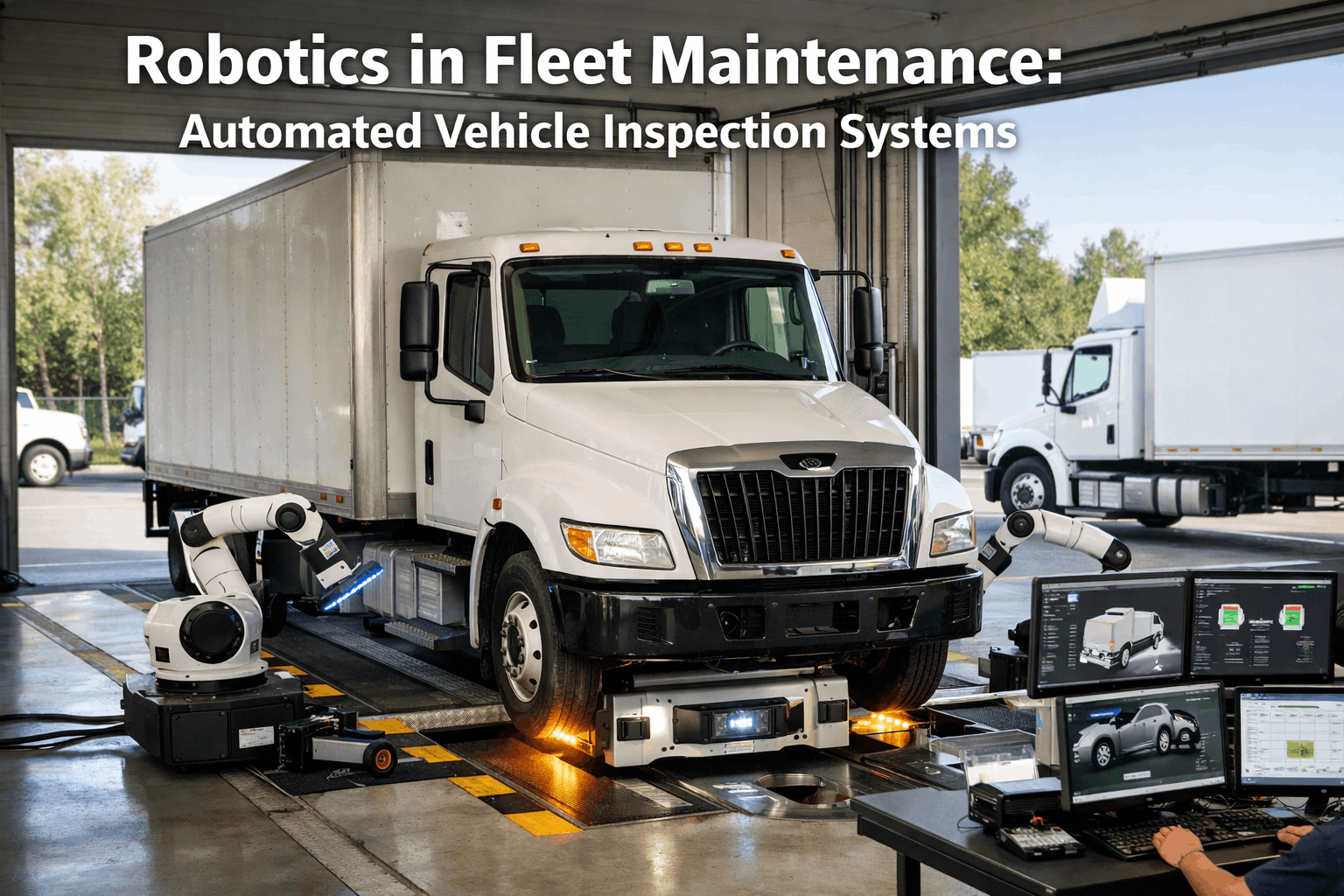
Fixed robotic arm stations positioned along service lanes perform repetitive physical maintenance tasks such as automated tire pressure adjustment, fluid top-offs, windshield washer refills, and exterior wash cycles. These systems integrate with CMMS work orders to execute minor service actions autonomously, freeing technicians to focus on complex diagnostics and high-skill repairs that require human expertise and judgment.
The critical advantage across all these approaches is consistency. A robotic system does not get fatigued at the end of a shift. It does not rush through an inspection because there is pressure to get the vehicle back on the road. Every defect receives the same classification every time, regardless of when or where the inspection happens. If you want to see how automated inspections feed directly into maintenance workflows, book a demo with OxMaint and experience the integration firsthand.
The CMMS Connection: Where Robotics Meets Workflow Automation
Collecting inspection data through robotics is only half the equation. The real transformation happens when that data flows seamlessly into a CMMS platform and triggers automated actions. This is where the concept of hyper-automation enters fleet maintenance. In 2026, leading CMMS platforms combine AI and Robotic Process Automation to streamline entire end-to-end maintenance workflows, not just individual tasks.
Robotic Detection
Camera arrays or autonomous inspection units identify a brake pad worn to 3mm thickness on Vehicle 847.
Automated Work Order
CMMS instantly creates a prioritized work order tagged with severity level, defect photos, and recommended action.
Parts & Scheduling
System checks inventory, orders parts if needed, and assigns the job to the best-available technician based on skills and workload.
Completion & Learning
Repair is logged, asset history updates automatically, and the AI model refines future predictions based on the outcome.
This closed-loop process eliminates the manual handoffs that cause delays, miscommunication, and missed repairs. No more maintenance planners manually typing up work orders from a driver's notes. No more waiting until the Monday meeting to discover Friday's inspection revealed a critical issue. The entire chain from detection to resolution happens automatically, and OxMaint's platform is built to support exactly this kind of intelligent workflow. Sign up for free and start connecting your inspection data to automated work orders.
Ready to Bring Robotics-Level Intelligence to Your Fleet Maintenance?
OxMaint's CMMS platform connects inspection data, predictive analytics, and automated work orders into one streamlined workflow. Start modernizing your preventive maintenance today.
Predictive Maintenance 2.0: From Data Collection to Automatic Decisions
If 2025 was the year fleets proved that predictive maintenance technology works, 2026 is the year they are operationalizing it. The shift is significant. Early predictive maintenance told you something was failing and left you to figure out the rest. The next generation uses failure predictions to forecast parts needs weeks in advance, enabling standard shipping instead of expensive overnight orders, bulk purchasing discounts, and zero emergency procurement. Fleets adopting these systems report a 40 to 60 percent reduction in emergency parts costs.
Robotics feeds this predictive engine with higher quality, more frequent data than human inspectors could ever provide. When a scanning system captures the exact tread depth on every tire across your entire fleet twice a day, the AI model has everything it needs to predict exactly when each tire will reach replacement threshold. It can batch those replacements into optimized service windows that minimize downtime and maximize technician productivity.
The ROI timeline is compelling. Most fleets see returns within 3 to 12 months of implementation. In one documented case, a mid-sized fleet implemented AI-driven predictive maintenance and within six months achieved a 73 percent reduction in hydraulic failures and an 18 percent extension in equipment life, with annual maintenance costs dropping by over $200,000. Want to see these kinds of results for your fleet? Book a demo and let our team walk you through how OxMaint connects the dots.
AI Copilots: Bridging the Technician Gap
One of the most practical applications of robotics-adjacent technology in 2026 is the AI maintenance copilot. These systems work within the CMMS to guide diagnostics, suggest troubleshooting steps, estimate repair times, and surface knowledge captured from thousands of previous repairs. For a fleet struggling with the technician shortage, this is transformative. A junior technician equipped with an AI copilot can perform at a level that used to require years of hands-on experience.
The copilot does not replace the mechanic. It amplifies their capability. When a robotic inspection flags a fault code or an unusual vibration pattern, the AI copilot pulls up the most relevant repair history, links to the correct service procedure, identifies the parts needed, and provides an estimated repair time. Mean time to repair goes down. First-time fix rates go up. And that institutional knowledge that used to walk out the door when a senior technician retired stays captured in the system forever.
OxMaint integrates these intelligent workflow capabilities directly into its platform. Sign up today to give your maintenance team the tools they need to work smarter, not harder.
What This Means for Compliance and Safety
Regulatory compliance is one of the strongest business cases for robotics-driven preventive maintenance. DOT inspections, DVIR documentation, and CSA scores all depend on thorough, consistent, and well-documented vehicle inspections. Robotic inspection systems do not just improve the quality of inspections. They create an automatic digital paper trail with timestamps, high-resolution images, defect classifications, and repair records that would satisfy even the most demanding audit.
The Commercial Vehicle Safety Alliance has already developed enhanced inspection standards specifically for autonomous truck operations, recognizing that technology-driven inspection processes can meet or exceed the standards of traditional human-led programs. For fleet operators concerned about compliance risk, the message is clear: automated systems produce better documentation, more consistent results, and stronger legal protection in an era of increasing regulatory scrutiny and nuclear verdicts.
Getting Started: A Practical Roadmap
You do not need to overhaul your entire operation overnight to benefit from robotics in fleet maintenance. The most successful implementations follow a phased approach that builds on existing digital foundations.
Digitize Your Foundation
Move from paper to digital inspections and a cloud-based CMMS. Standardize your parts naming, asset data, and maintenance workflows across all locations. This is the foundation everything else depends on. OxMaint makes this step simple with guided onboarding and mobile-ready tools.
Integrate Telematics and Sensors
Connect your vehicles' onboard diagnostics, telematics systems, and any IoT sensors to your CMMS. Establish automated alerts for fault codes, mileage-based triggers, and condition thresholds. Let the vehicles start telling you what they need.
Pilot Automated Inspections
Deploy AI-powered inspection tools on 10 to 20 percent of your fleet. Compare detection rates against manual inspections. Connect the inspection system to your CMMS so defects automatically generate work orders. Measure the difference.
Scale and Optimize
Expand to the full fleet. Train all drivers and technicians. Establish dashboards that track maintenance costs, uptime, compliance scores, and ROI against your baseline. Continuously refine your predictive models as more data flows through the system.
The key insight from fleets that have navigated this journey successfully is that clean data is the prerequisite. You can have the best robotic inspection system in the world, but if the underlying maintenance records are messy and inconsistent, the AI predictions built on top of them will be unreliable. Start with the basics, get them right, and the advanced capabilities will deliver real value. Book a demo with OxMaint to see how our platform supports each phase of this journey.
The Gap Between Planning and Action Is Where Competitive Advantage Lives
65% of maintenance teams plan to adopt AI by end of 2026, but only 27% have started. Don't wait. Join the fleets that are already running smarter, leaner, and more profitable maintenance operations with OxMaint.
Frequently Asked Questions
What is robotics-driven preventive maintenance for fleets
Robotics-driven preventive maintenance uses automated inspection systems such as camera arrays, autonomous crawling robots, and drones to continuously monitor vehicle condition. These systems feed data into a CMMS platform like OxMaint, which automatically generates work orders, schedules repairs, and predicts future maintenance needs based on real-time condition data rather than fixed calendar intervals.
How accurate are robotic inspection systems compared to manual inspections
AI-powered robotic inspection systems consistently achieve 95 to 99 percent accuracy in defect detection, compared to 70 to 80 percent for manual human inspections. The improvement comes from consistency. Robotic systems do not experience fatigue, time pressure, or subjective judgment variations. The same defect receives the same classification every time.
Do I need to replace my current CMMS to benefit from robotics integration
Not necessarily. Modern CMMS platforms like OxMaint are built with open APIs and integration capabilities that allow them to receive data from robotic inspection systems, IoT sensors, and telematics platforms. The key is choosing a CMMS that supports automated work order generation and condition-based maintenance triggers from external data sources.
What is the typical ROI timeline for implementing robotic maintenance workflows
Most fleets see measurable returns within 3 to 12 months. The first prevented breakdown often pays for the entire system investment. Fleets commonly report 35 percent reductions in repair costs through early detection, 40 to 60 percent reductions in emergency parts procurement, and significant improvements in vehicle uptime and technician productivity.
How does predictive maintenance 2.0 differ from traditional predictive maintenance
Traditional predictive maintenance identified that something was likely to fail and alerted a human to take action. Predictive Maintenance 2.0 closes the loop automatically. It creates work orders, checks parts inventory, places procurement orders if needed, assigns technicians based on availability and skill, and updates asset records upon completion, all without manual intervention.
Is robotics fleet maintenance only for large fleets
While early adopters tend to be larger operations, the technology is becoming increasingly accessible. Cloud-based CMMS platforms like OxMaint eliminate the need for expensive on-premise infrastructure. AI-powered inspection can start with smartphone-based systems using existing devices before scaling to dedicated hardware. The phased approach described in this article allows fleets of any size to begin benefiting incrementally.
How does robotic inspection support DOT compliance
Robotic inspection systems automatically create timestamped, image-documented records of every inspection performed. This creates a digital audit trail that exceeds DOT documentation requirements. Defects are classified by severity and linked directly to work orders and repair records, demonstrating a complete chain of custody from detection to resolution that protects fleets during audits and legal proceedings.