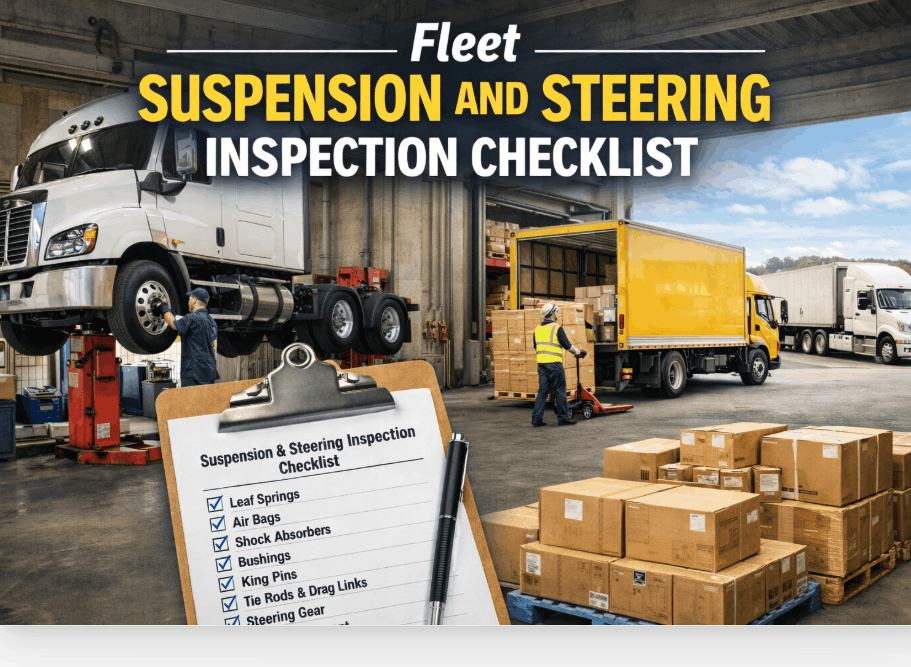
Every fleet manager understands that suspension systems are the unsung heroes of vehicle safety and performance. These complex assemblies of springs, shock absorbers, and linkages work tirelessly to keep your drivers comfortable, your cargo secure, and your vehicles stable on every road condition imaginable. Yet despite their critical importance, suspension inspections often get overlooked until something goes wrong—and by then, the consequences can be severe.The numbers tell a sobering story. Research indicates that over 50% of truck rollovers are directly linked to loss of vehicle control, with suspension failures being a major contributing factor. The Federal Motor Carrier Safety Administration has found that motor carriers with maintenance violations are 65% more likely to be involved in crashes than their well-maintained counterparts. When you consider that the average commercial vehicle accident costs upwards of $148,000—and that's before accounting for potential litigation—the case for rigorous suspension inspection becomes impossible to ignore.
Understanding Your Suspension System
Before diving into inspection procedures, it helps to understand what you're looking at. A commercial vehicle's suspension system comprises several key components working in harmony. Springs—whether leaf, coil, or air—bear the weight of your vehicle and cargo while absorbing road shocks. Shock absorbers (dampers) control spring movement and prevent excessive bouncing. Bushings cushion the joints between components, reducing vibration and noise. And the various linkages, brackets, and mounting hardware hold everything together under tremendous stress.
Different suspension types serve different purposes. Air suspension systems, increasingly common in heavy-duty applications, offer excellent ride quality and automatic load leveling. Traditional leaf spring setups remain popular for their durability and simplicity. Understanding which system your fleet uses—and its specific maintenance requirements—is the foundation of effective inspection.
Key Insight
Drivers who perform thorough pre-trip inspections catch 60% of minor suspension issues before they escalate into major repairs. Early detection is your most powerful cost-saving tool.
Critical Components to Inspect
A comprehensive suspension inspection covers multiple areas, each requiring specific attention. Start with the springs—look for cracks, breaks, or signs of sagging that indicate metal fatigue. Leaf spring assemblies should have all clips and U-bolts secure, with no shifted or displaced leaves. For air suspension systems, examine the air bags for cracks, abrasions, or bulging, and trace all air lines checking for damage or leaks.
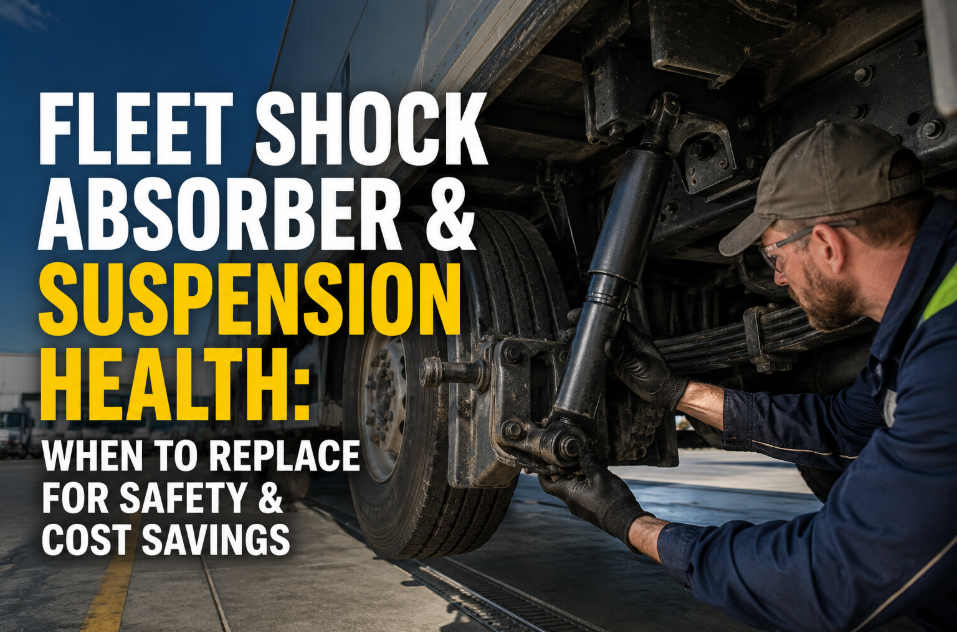
Shock absorbers deserve careful scrutiny. Fluid leaking from the seals is an obvious red flag, but also check for dented or damaged housings and worn mounting bushings. A simple bounce test—pushing down firmly on each corner of the vehicle—can reveal failing shocks. The vehicle should settle within one or two bounces; continued bouncing indicates diminished damping capacity.
Springs & Air Bags
Check for cracks, sagging, proper alignment, and secure mounting hardware
Shock Absorbers
Inspect for fluid leaks, damaged housings, and worn mounting bushings
Bushings & Mounts
Examine for deterioration, excessive wear, and proper torque specifications
Axle Components
Verify alignment, check tracking arms, and inspect for cracks or damage
Don't overlook the bushings and mounting hardware. These components endure constant stress and are often the first to show wear. Cracked or deteriorated bushings allow excessive movement, creating noise, vibration, and accelerated wear on other components. All mounting bolts should be checked for proper torque—loose fasteners can lead to catastrophic failures.
Recognizing Warning Signs
Suspension problems rarely appear without warning. Training your drivers to recognize early symptoms can prevent minor issues from becoming major headaches. Excessive bouncing after hitting bumps, particularly if the vehicle continues to oscillate, points to failing shock absorbers. Uneven tire wear—especially cupping or scalloping patterns—often indicates suspension misalignment or worn components.
Pay attention to how the vehicle handles. Heavy body lean during turns suggests worn stabilizer components or weakened springs. Nose diving under braking or squatting during acceleration indicates shock absorber problems. Any unusual clunking, squeaking, or rattling from underneath the vehicle warrants immediate investigation. These sounds typically indicate loose components, worn bushings, or metal-on-metal contact where it shouldn't occur.
Streamline Your Suspension Inspections
Oxmaint's digital inspection platform helps fleet managers maintain compliance, reduce paperwork, and catch issues before they become costly repairs.
Inspection Frequency Best Practices
Establishing the right inspection schedule balances thoroughness with operational efficiency. Daily pre-trip inspections should include a quick visual check of the suspension—looking for obvious damage, leaks, or unusual vehicle stance. This takes just minutes but catches many problems before they strand a driver on the roadside.
Monthly inspections should go deeper, including bounce tests at each corner, careful examination of tire wear patterns, and visual inspection of all accessible suspension components. Quarterly comprehensive inspections are the time to get under the vehicle with proper lighting and check every component systematically. And don't forget the annual DOT inspection required under 49 CFR 396.17—this must be performed by qualified inspectors and thoroughly documented.
Visual walk-around checking for obvious damage and leaks
Bounce tests, tire wear review, component inspection
Under-vehicle comprehensive examination
Full DOT-compliant inspection with documentation
Documentation and Compliance
Proper documentation transforms inspections from a routine task into a valuable business asset. Detailed inspection reports create a maintenance history that helps predict future issues, supports warranty claims, and demonstrates regulatory compliance during audits. Under DOT regulations, you must maintain inspection records and have them available for review—incomplete or missing documentation can result in violations and out-of-service orders.
A well-designed suspension inspection report captures vehicle identification, inspector information, the condition of each component checked, any defects found, corrective actions taken, and sign-off verification. Digital inspection tools have revolutionized this process, enabling photo documentation, automatic work order generation, and searchable maintenance histories that paper forms simply cannot match.
The Business Case for Proactive Maintenance
Investing in regular suspension inspection pays dividends across multiple dimensions. Properly maintained suspension systems improve fuel efficiency by keeping wheels aligned and reducing rolling resistance. They extend tire life by ensuring even wear patterns. They enhance driver comfort and reduce fatigue on long hauls—a factor that directly impacts safety and productivity.
The cost comparison is stark. Reactive maintenance—waiting for something to break—means emergency repairs at inconvenient times, towing expenses, missed deliveries, and potential accident liability. Proactive maintenance catches issues early when repairs are simpler and less expensive. Fleet studies have shown maintenance cost reductions exceeding 50% when moving from reactive to preventive maintenance models. When you factor in reduced accident risk and improved compliance, the return on investment becomes compelling.
Ready to Transform Your Fleet Maintenance
Join thousands of fleet managers who trust Oxmaint for digital inspections, automated compliance tracking, and actionable maintenance insights.
Frequently Asked Questions
What components are covered in a suspension inspection
A thorough suspension inspection examines springs (leaf, coil, or air), shock absorbers, bushings, mounting hardware, axle components, and all related linkages. Inspectors check for wear, damage, leaks, proper torque, and alignment to ensure all components meet safety standards.
How often should commercial vehicles have suspension inspections
Best practice includes daily visual checks during pre-trip inspections, monthly detailed reviews with bounce tests, quarterly comprehensive under-vehicle examinations, and annual DOT-compliant inspections as required by 49 CFR 396.17. Heavy-use vehicles may need more frequent attention.
What are the most common signs of suspension problems
Watch for excessive bouncing after hitting bumps, uneven tire wear patterns, the vehicle pulling to one side, unusual noises like clunking or squeaking, heavy body lean during turns, nose diving when braking, and any visible fluid leaks on shock absorbers.
Why is suspension maintenance critical for DOT compliance
DOT regulations require annual inspections covering suspension systems for all commercial motor vehicles. Documented inspections demonstrate compliance during audits and roadside checks. Violations can result in out-of-service orders, fines, and negative impacts on your safety rating.
How do digital inspection tools improve suspension maintenance
Digital tools enable standardized inspection workflows, photo documentation of findings, automatic work order generation when issues are found, searchable maintenance histories, and compliance-ready reporting. They reduce errors, save time, and provide better visibility into fleet health.
What is the cost impact of neglecting suspension maintenance
Neglected suspension leads to accelerated tire wear, increased fuel consumption, driver fatigue, and significantly higher accident risk. With average fleet accidents costing over $148,000 and suspension failures contributing to many rollovers, proactive maintenance delivers substantial ROI.