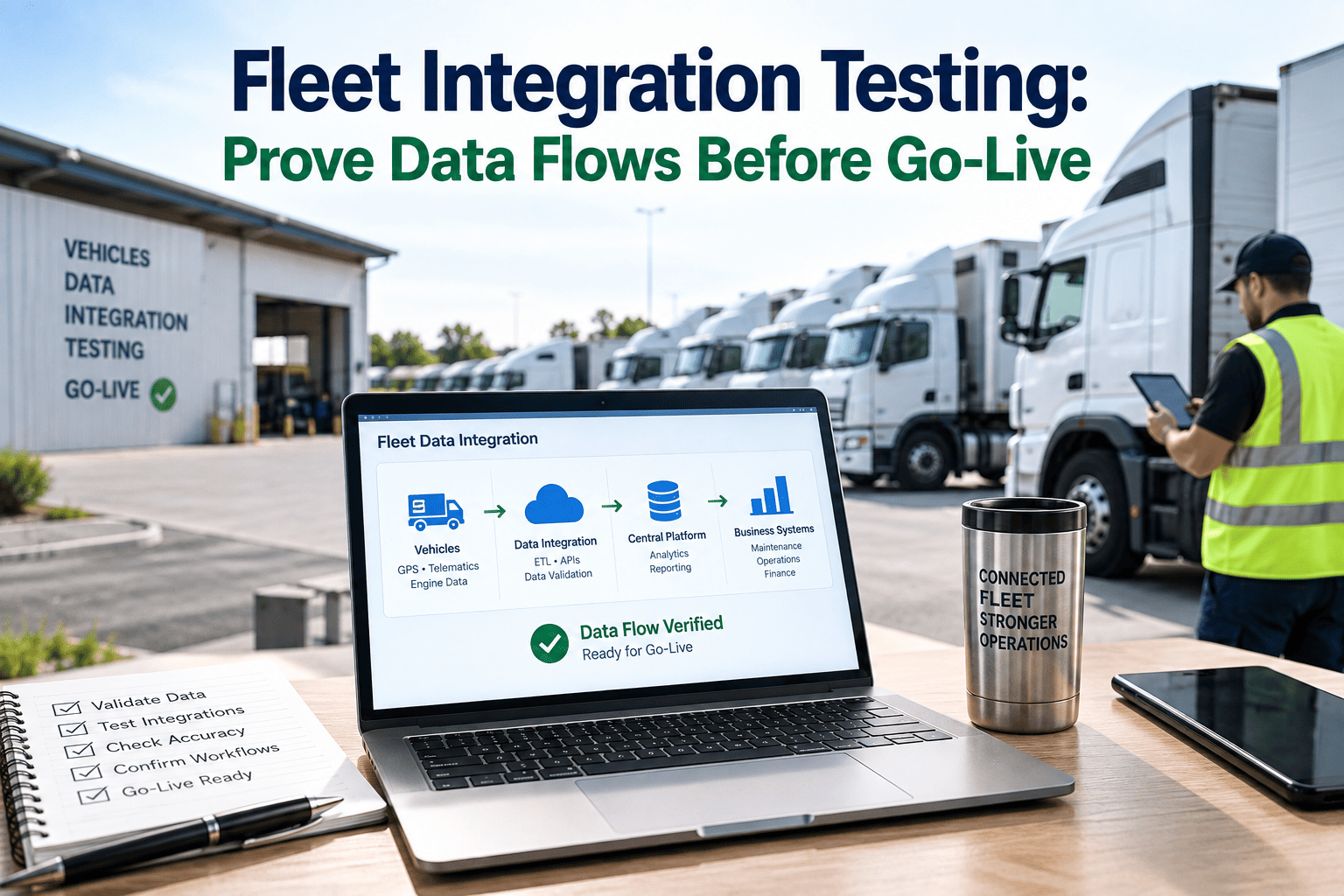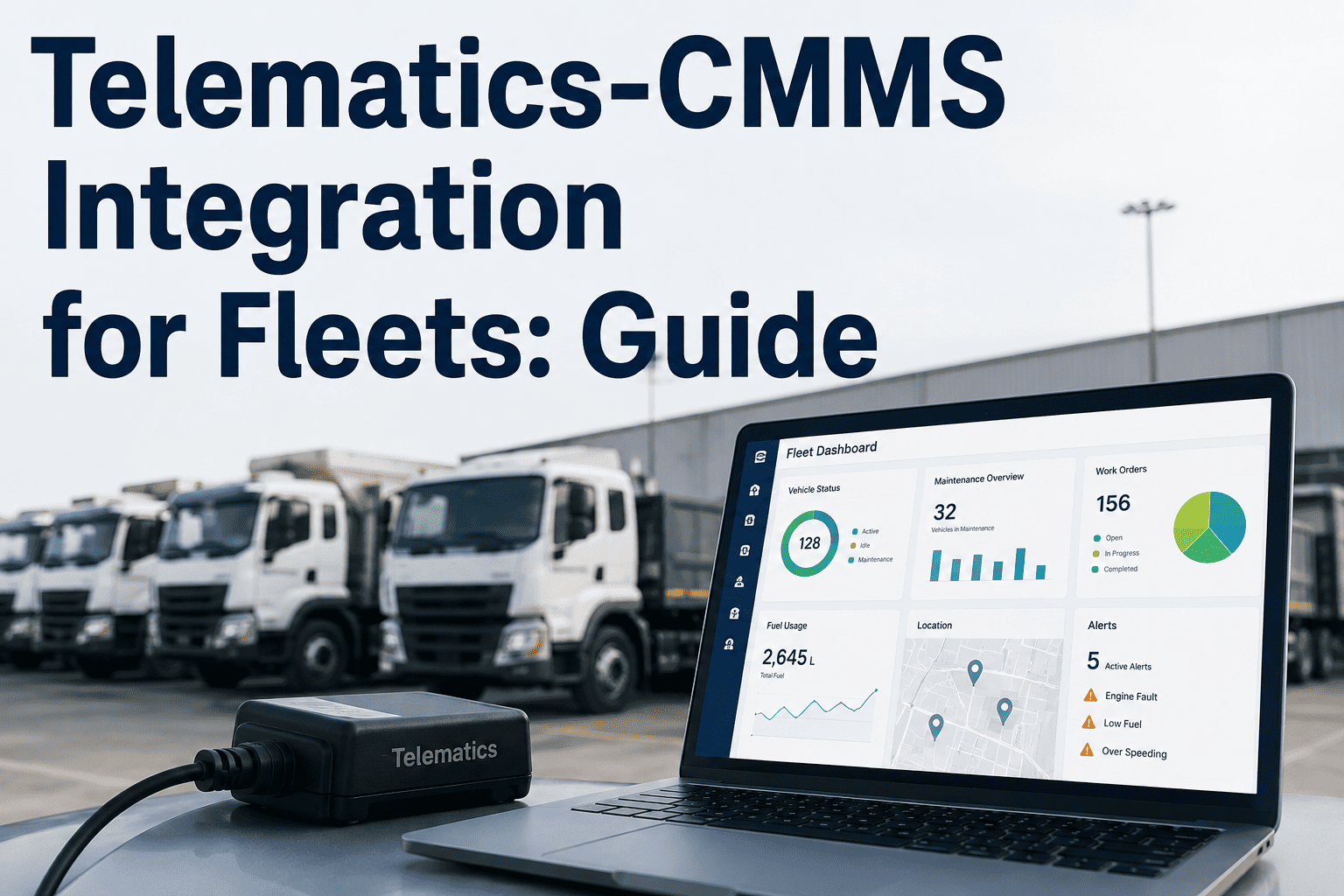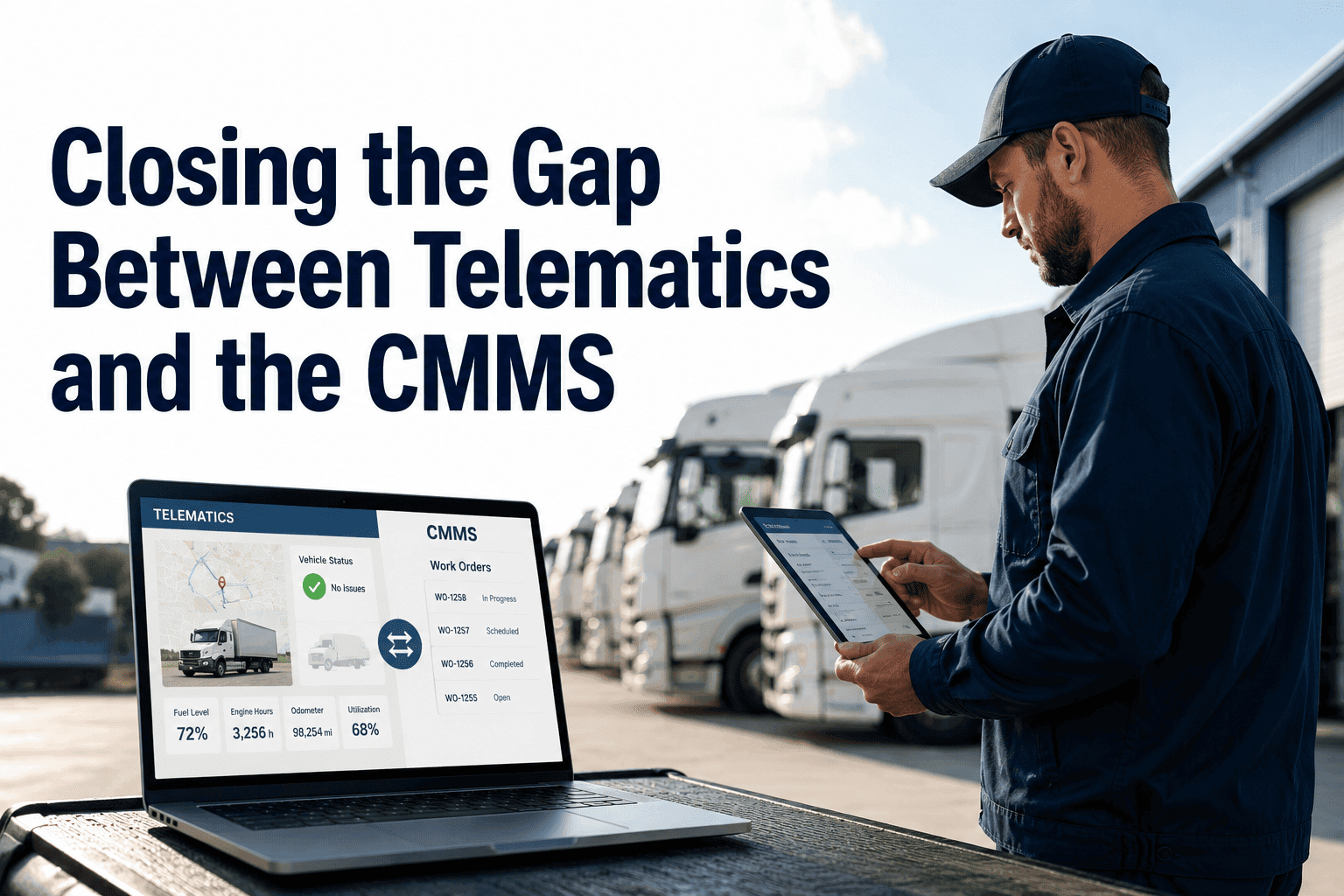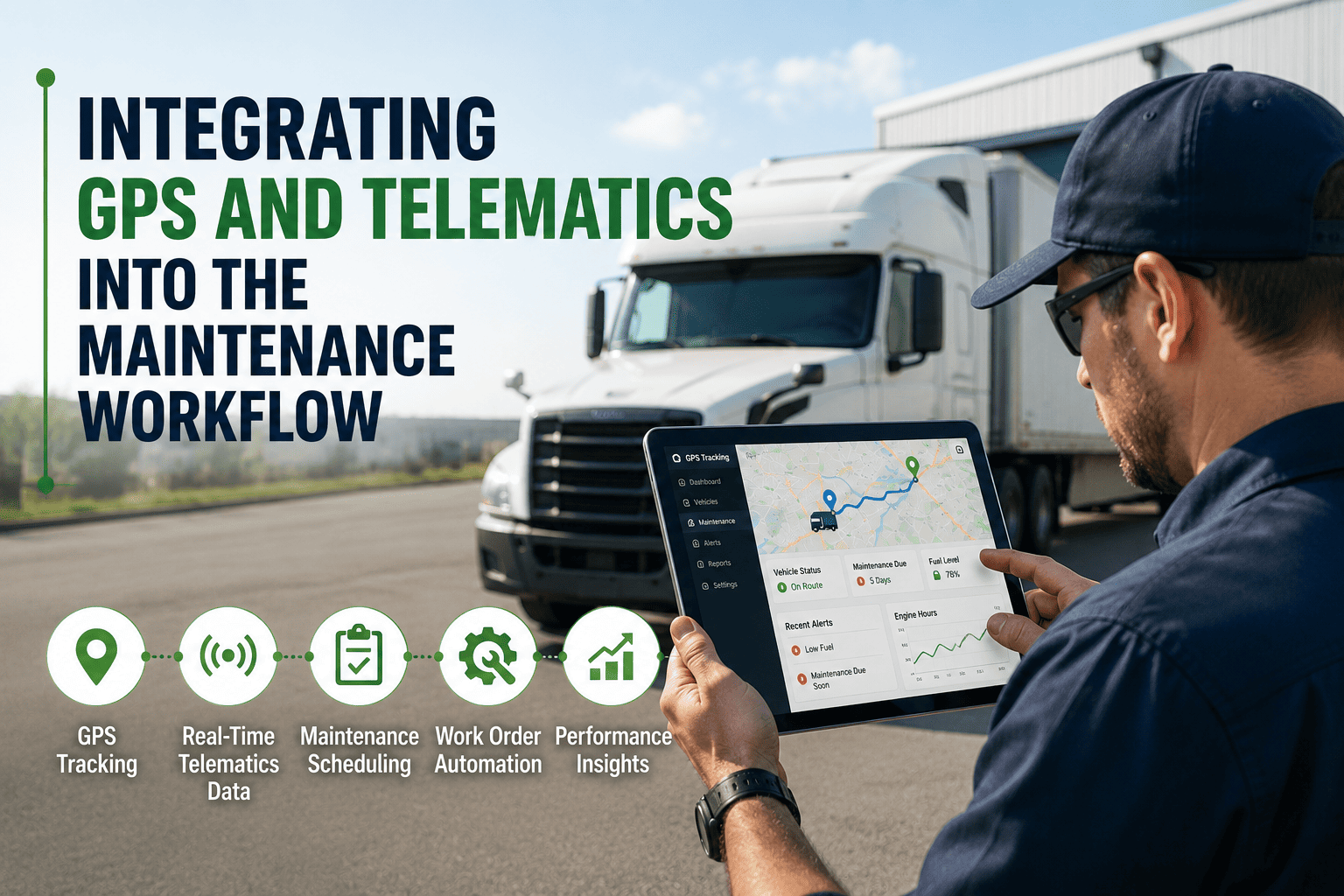
A mixed fleet that grew through acquisitions, regional expansion, or contractor onboarding usually inherits five, ten, or fifteen different telematics platforms — each with its own portal, login, and data model. Standardizing on a single provider by ripping and replacing every device is a $500K–$2M project that rarely clears a payback hurdle, and it idles assets during the swap. The pragmatic alternative is API integration: connect a single CMMS to every existing telematics provider through published APIs and let the platform normalize the data into one record per vehicle. Start Free Trial with Oxmaint and unify Geotab, Samsara, Motive, Verizon Connect, and the rest — no new hardware required.
TELEMATICS API INTEGRATION GUIDE
Still logging into six telematics portals to read one fleet?
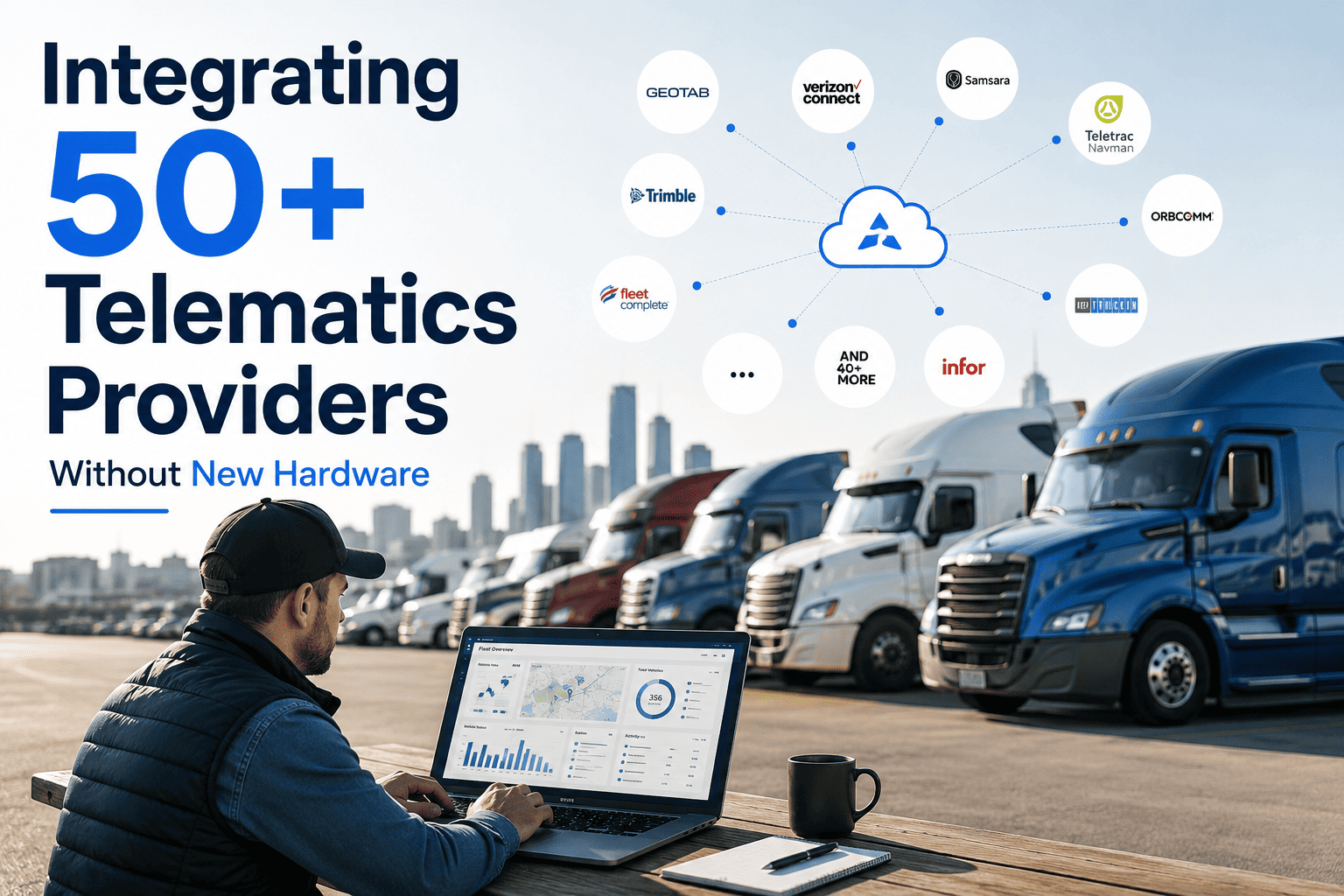
A mature CMMS integration layer connects to 50+ providers through published APIs — Samsara, Geotab, Motive, Verizon Connect, Webfleet, Fleet Complete, ORBCOMM and more — so every vehicle flows into a single record with the same PM triggers, fault-code routing, and reports, regardless of which dongle is plugged in under the dash.
THE COST OF FRAGMENTATION
Why rip-and-replace is the wrong default
When a 480-vehicle fleet operates across 11 telematics platforms, the cost of "standardization" is rarely just the new hardware — it is the downtime, the labor to re-install, and the months of dual-running while old contracts expire.
INTEGRATION ARCHITECTURE
One tenant, fifty providers, one normalized record
The integration is configured once per provider at the tenant level. After authentication, the CMMS polls or subscribes to each provider's API on a cadence you control — typically every 60–300 seconds for live vehicles — and maps the inbound payload to a common schema.
Each provider connection is a one-time setup: API key or OAuth token, rate-limit config, field mapping. From that point forward, vehicles from Samsara, Geotab, Motive, Verizon Connect, Webfleet, Fleet Complete, ORBCOMM, GPS Insight, Azuga, Bouncie, Fleetmatics, PeopleNet, Omnitracs, Zonar, Teletrac Navman and the long tail of regional providers all flow into the same CMMS.
Per-vehicle provider selection
In Oxmaint, telematics provider is assigned at the vehicle level, not the fleet level. A mixed fleet running Geotab on tractors and Motive on straight trucks simply tags each asset — the platform handles API translation transparently in the background.
Provider-agnostic reports
The data model normalizes fields across providers, so a MPG-per-vehicle report looks identical whether the feed came from a Geotab GO9 or a Samsara VG34. Dashboards, exports, and PM triggers all read from the same unified schema.
PM and fault-code routing
Odometer, engine hours, and J1939/ISO-TP fault codes are mapped to a common key. A DTC from a Verizon Connect unit triggers the same work-order workflow as one from an ORBCOMM unit — same priority, same assignment rules, same escalation path.
Transition-safe design
Fleets rolling out a new telematics standard can run legacy hardware in parallel until each vehicle's replacement cycle. The CMMS treats both feeds as first-class sources, so you never need a second maintenance platform during the cutover.
PROVIDER COVERAGE
The providers you already run, already supported
A 50+ provider integration library means the fleet you have today — not the fleet a vendor wishes you had — is the fleet you connect. Below is a representative slice of the connector catalog.
| Provider | Typical hardware | Core feed ingested | API auth model |
|---|---|---|---|
| Samsara | VG34 / GT34 gateway | GPS, odometer, fault codes, engine hours | API token |
| Geotab | GO9 / GO9 RVP | GPS, odometer, fault codes, fuel % | API token |
| Motive | AI Dashcam + Gateway | GPS, odometer, fault codes, harsh-event | API token |
| Verizon Connect | Reveal / Networkfleet | GPS, odometer, fault codes, ignition | API token |
| Webfleet | PRO 8 series | GPS, odometer, driving style, tachograph | API key + account |
| Fleet Complete | FC-200 / Trinity | GPS, odometer, fault codes, temperature | API token |
| ORBCOMM | GT 1100 / GT 700 | GPS, odometer, fault codes, trailer reefer | OAuth 2.0 |
| Zonar | V3 / EVTM | GPS, odometer, fault codes, inspection | API token |
| Teletrac Navman | TN4 / IQ Hub | GPS, odometer, fault codes, driver behavior | API token |
| + 41 more | Long-tail regional + OBD-II dongles | Field-mapped per provider schema | Token / OAuth per spec |
MIGRATION PATH
Consolidate over months, not overnight
A fleet moving from three legacy providers to a single new standard does not need a flag-day cutover. The multi-provider CMMS lets you migrate vehicles as their contracts expire or their devices fail — the maintenance record never gaps.
Connect every existing provider
Authenticate all current telematics APIs in the CMMS tenant. Every vehicle — regardless of provider — begins flowing into unified records with PM triggers, fault routing, and reporting active on day one.
Validate the normalized data
Run provider-agnostic reports side-by-side with each native portal for 90 days. Confirm MPG, odometer drift, and fault-code parity across Geotab, Samsara, Motive and others against the unified CMMS view.
Migrate at contract expiry
As each legacy telematics contract hits its renewal date, swap that subset of vehicles to the new standard. The CMMS record stays continuous — only the provider tag on the vehicle changes; no data migration, no re-onboarding.
Single-standard steady state
The fleet converges on one telematics provider while the CMMS retains its multi-provider capability for any future acquisition or contractor onboarding. New vehicles inherit the standard automatically; no IT project required.
WORKED EXAMPLE
A 180-truck regional fleet, three providers, one CMMS
Consider a regional carrier that acquired two smaller operators in 18 months. The combined fleet ran Geotab (110 units), Motive (45 units), and Verizon Connect (25 units) — three portals, three fault-code workflows, and PM triggers firing on three different odometer cadences.
"Connecting all three providers into Oxmaint took one afternoon per provider. Within a week, every truck — regardless of which dongle was installed — fed a single PM schedule, a single fault-code escalation rule, and a single weekly utilization report. We cancelled the planned $640K rip-and-replace and kept the legacy devices in service until their natural replacement."
UNIFY YOUR FLEET TODAY
Stop paying three telematics bills and reading three portals.
Connect every provider you already run into one CMMS — no new hardware, no device swap, no dual-platform limbo. Free 14-day trial, live in under a week.
FAQ
Telematics API integration, answered
Do I need to replace my existing GPS devices to use Oxmaint?
No. Oxmaint connects to your existing telematics providers through their published APIs. Whether your fleet runs Samsara, Geotab, Motive, Verizon Connect, Webfleet, or a mix of 10+ regional providers, each connection is configured once at the tenant level and every vehicle flows into the same CMMS record — the device stays in the truck.
How long does it take to connect a new telematics provider?
For a provider already in the 50+ connector library, setup typically takes one afternoon: authenticate with an API key or OAuth token, confirm rate limits, and validate the field mapping against a sample vehicle. New providers outside the catalog can usually be onboarded in one to two weeks depending on API documentation quality. Book a Demo to scope your specific providers.
Will reports look different depending on which provider feeds the data?
No. The normalization layer maps every provider's payload to a common schema, so MPG, odometer, engine hours, and fault codes appear in identical format regardless of source. A report comparing vehicles across Geotab, Samsara, and Motive reads as if the data came from a single platform.
Can I migrate vehicles to a new telematics provider gradually?
Yes — that is the core use case. Because provider selection happens per vehicle, you can run legacy and new providers in parallel and migrate units as contracts expire or devices fail. The CMMS record stays continuous; only the provider tag on the vehicle changes, so there is no data migration or re-onboarding step.
What happens if a telematics provider's API goes down temporarily?
The CMMS retains the last successful data point for each vehicle and flags the stale feed in the dashboard. PM triggers continue based on the most recent odometer or engine-hour reading, and fault-code routing resumes automatically once the API connection is restored — no manual intervention required.
READY WHEN YOU ARE
One CMMS. Fifty providers. Zero new hardware.
Connect the telematics you already have and start running unified PM, fault routing, and reporting this week.
Free 14-day trial · No credit card