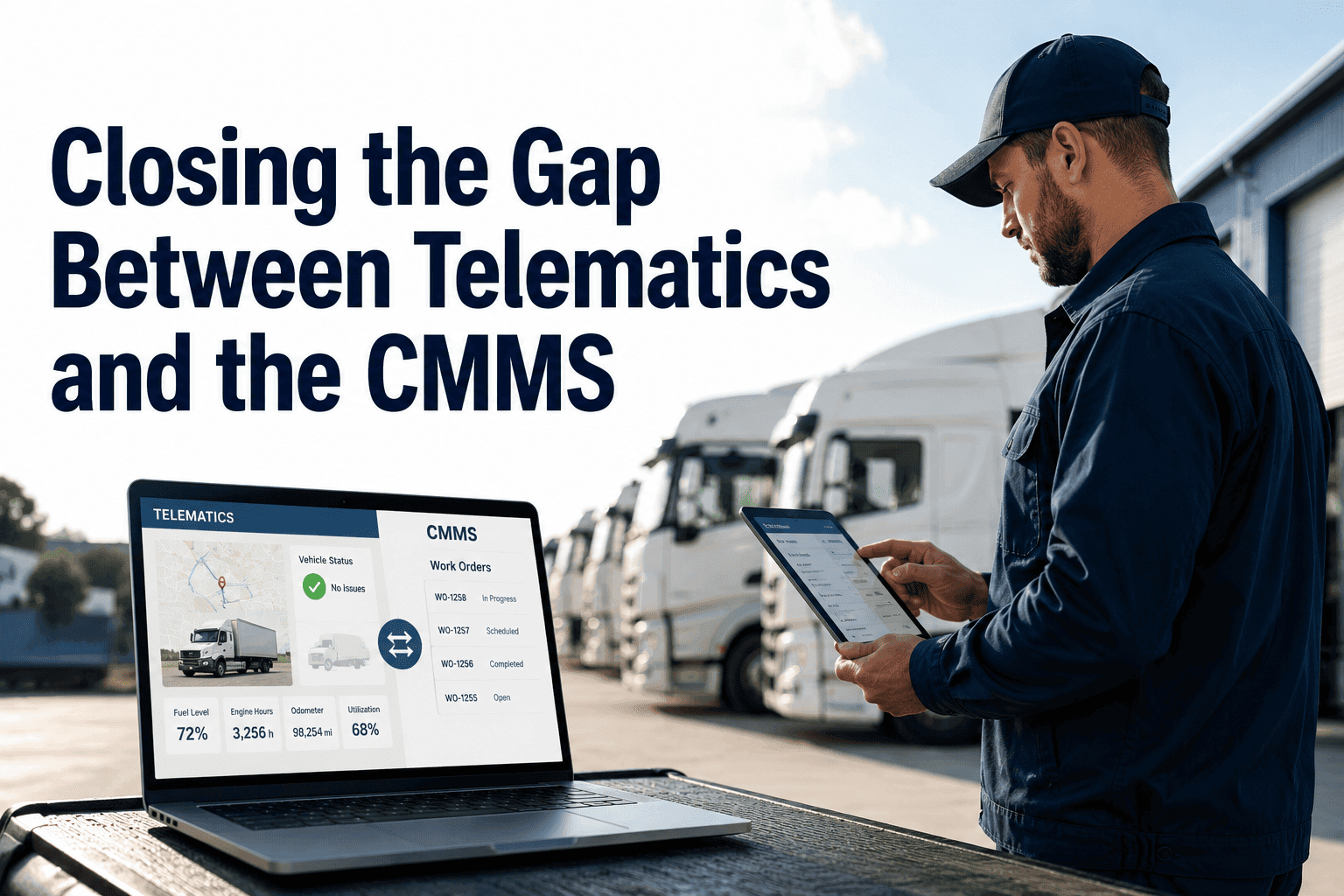
Most fleets in 2026 still run their telematics platform and their CMMS as two parallel universes — one screen shows fault codes, another screen holds work orders, and a technician manually copies odometer readings between them every Monday. That single disconnect is why PM triggers slip 15–25% behind schedule, IFTA takes 40 hours a quarter instead of four, and fault codes become roadside breakdowns instead of scheduled repairs. The fix is not ripping out either system; it is connecting the APIs both platforms already expose so data flows continuously in the background. This guide walks through the integration scope, the technical gotchas, and the ROI math that justifies the project — and you can Start Free Trial to see the live integration in Oxmaint before you finish reading.
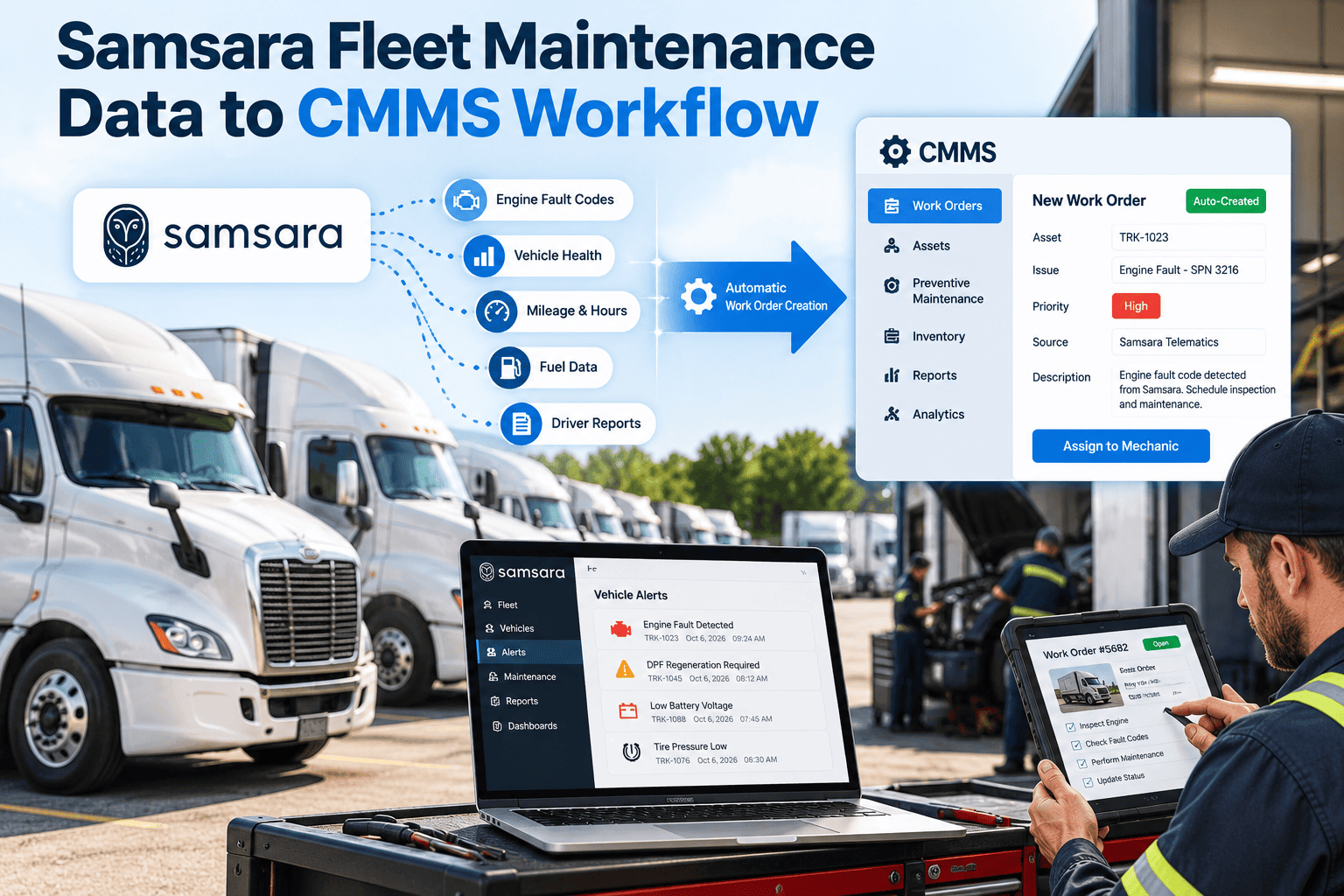
What if your work orders wrote themselves the second a fault code fired?
The average fleet runs four disconnected data systems — telematics, CMMS, IFTA, and fuel — and pays for it in slipped PMs, roadside failures, and 40-hour quarter-end reconciliations. Closing the gap is a one-time integration, not a rip-and-replace.
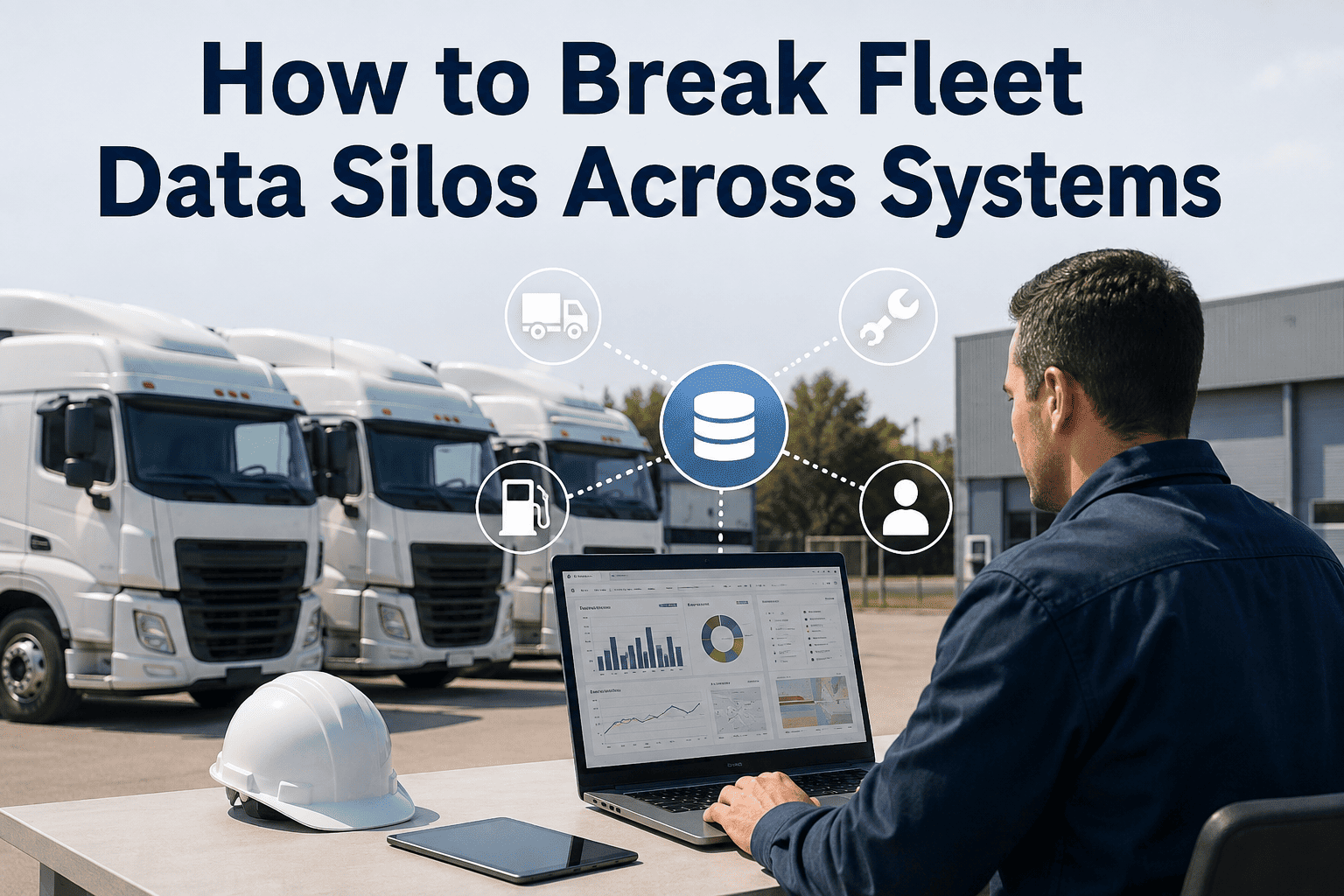
Four silos, one broken workflow
A 180-truck regional fleet typically owns four software seats that never talk to each other — and the technician in the middle pays the tax every week.
Fault codes nobody acts on
The dashboard lights up with SPN/FMI codes in real time, but maintenance only sees them when a driver complains — by then it is a breakdown, not a repair.
PM triggers slip every Monday
Odometer readings live in the telematics portal, but PM triggers live in a CMMS sheet a tech updates by hand — typos and skipped weeks compound quietly.
Quarter-end becomes a data project
Fuel, miles, and jurisdiction data sit in separate exports. Every reconciliation is a cross-referencing exercise that absorbs a full week of admin time each quarter.
Driver scorecards with two-fifths of the picture
Driver scorecards combine harsh-braking and speed events but miss idle time and ECM fuel consumption — so coaching targets the wrong behavior half the time.
Five data streams that close the gap
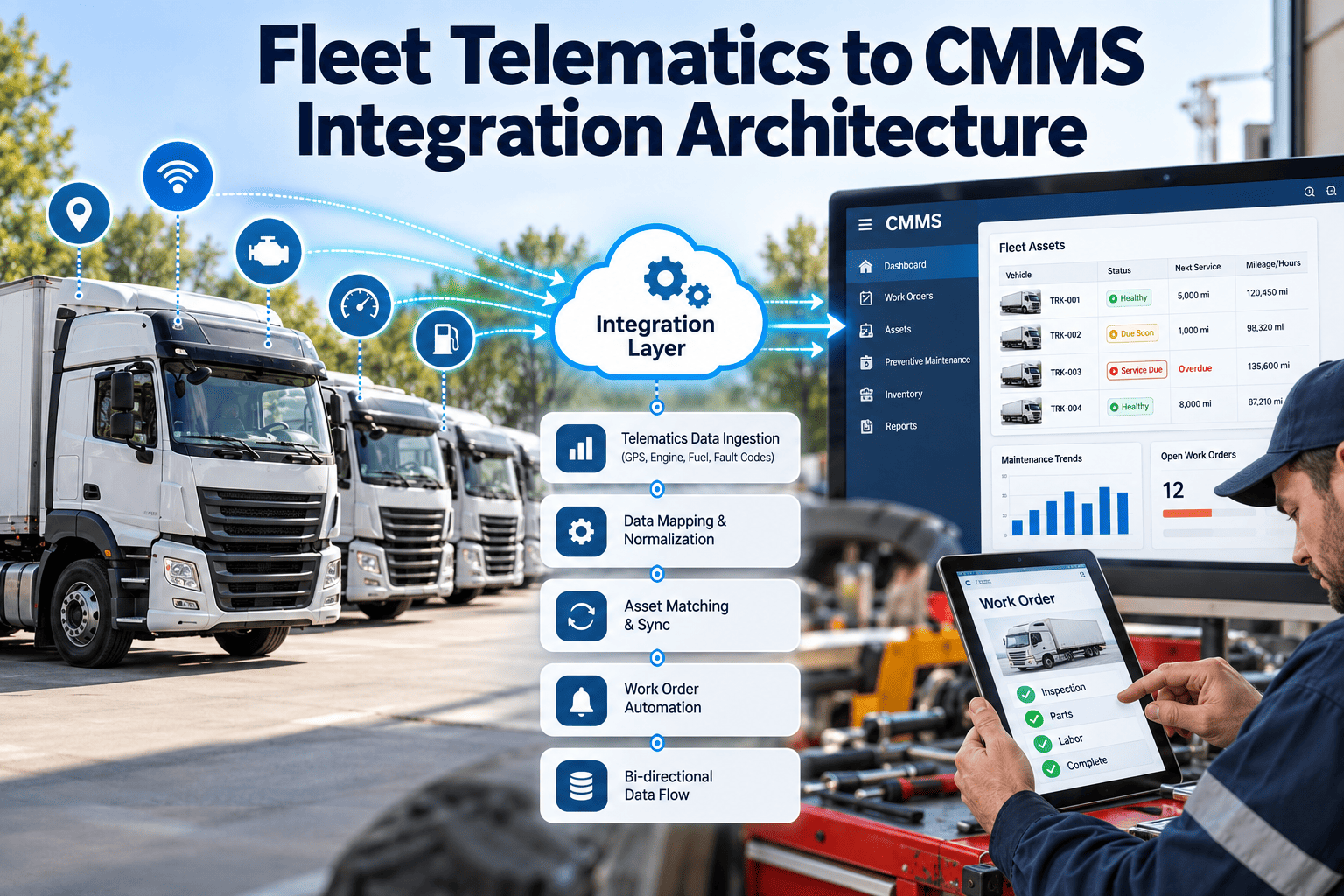
Modern telematics platforms and CMMS platforms both expose REST APIs built for exactly this use case. Once connected, these five streams flow continuously — no Monday spreadsheet ritual.
Odometer & engine hours
Streamed every 5–15 minLive odometer and engine-hour readings push into the CMMS so PM triggers evaluate against real usage, not last week's hand-typed number. A 180-asset fleet eliminates roughly 12 hours of manual data entry per week.
Fault codes → work orders
Severity-mappedSPN/FMI codes route to the CMMS based on a severity map: a derate-level code opens a high-priority work order instantly, a low-severity code queues into the next PM. No code goes unwatched.
Driver assignment
Event-linkedEvery fuel event, idle minute, and harsh-braking incident links to the responsible driver — so scorecards finally combine all five streams instead of two, and coaching targets the right behavior.
Fuel consumption from ECM
MPG-trackedEngine-reported fuel consumption feeds MPG tracking per asset and per driver, surfacing drag from under-inflated tires, bad injectors, or aggressive driving long before a fuel-card reconciliation would catch it.
Idle time
Coaching-readyIdle minutes per driver per shift flow into coaching reports. Fleets that close this loop typically cut idle fuel burn by 8–15% within the first quarter after go-live.
What changes the day integration goes live
Three KPIs move simultaneously once the data flows — and the numbers below are the typical range we see across mid-size fleets in the first 90 days.
Up from the 70–80% range typical with manual odometer entry. PM triggers evaluate continuously, so a truck hitting 25,000 mi on a Tuesday generates the work order on Tuesday.
Fault codes convert to scheduled repairs instead of roadside events. A single avoided tow-and-roadside on a Class 8 pays for roughly a quarter of the integration project.
IFTA and fuel reconciliation collapse from 40 hours a quarter to under 4. The data project becomes a review-and-sign-off.
Stop paying four software bills for one broken workflow.
Oxmaint's telematics-to-CMMS integration is a one-time setup that runs continuously in the background — PM triggers stay current, fault codes become work orders, and IFTA stops being a data project.
The silo vs. the integrated stack
Same fleet, same assets, same drivers — the only variable is whether the APIs are connected. The contrast is sharper than most fleets expect.
| Operational Metric | Silos Disconnected | Integrated via API |
|---|---|---|
| PM trigger accuracy | Manual odometer entry, 15–25% slippage | Streamed every 5–15 min, 94–97% on-time |
| Fault code response | Seen only when driver complains | Severity-mapped work order auto-created |
| IFTA quarter-end | 40 hours of cross-referencing | Under 4 hours — review and sign-off |
| Driver scorecard inputs | 2 of 5 relevant data streams | All 5 streams, per-driver attribution |
| Unplanned breakdowns | Baseline — codes become roadside events | 20–40% reduction in first 90 days |
| Admin labor (fuel + IFTA) | Full-time equivalent each quarter | 60%+ reduction, redirected to higher-value work |
We were paying for telematics, a CMMS, an IFTA tool, and a fuel platform — and a tech was still copying odometer readings by hand every Monday. Once the APIs were connected, PM compliance jumped from the high 70s to 96% in one quarter, and quarter-end went from a week of hell to an afternoon of review.
Telematics-to-CMMS integration, answered
Do we have to replace our current telematics provider or CMMS?
No. The entire point is integration, not replacement. Modern telematics platforms and CMMS platforms both expose REST APIs designed for this use case. Oxmaint connects to your existing telematics feed and writes work orders, PM triggers, and driver assignments into the CMMS layer you already use — no rip-and-replace, no new hardware.
How often does odometer and engine-hour data sync?
Typically every 5–15 minutes while the asset is running. That cadence keeps PM triggers current against real usage, so a truck crossing its PM threshold on a Tuesday generates the work order on Tuesday — not the following Monday when a technician gets around to updating the spreadsheet.
How are fault codes turned into work orders?
Each SPN/FMI code maps to a severity tier during setup. A derate-level code opens a high-priority work order instantly and can page the on-call tech; a low-severity code queues into the next scheduled PM. The mapping is configurable, so you decide which codes are urgent and which can wait. You can Book a Demo to see the severity-mapping screen live.
What does the setup actually involve?
It is a one-time configuration: authenticate the telematics API, map each asset to its CMMS record, define the fault-code severity tiers, and set the PM trigger thresholds. After that it runs continuously in the background. Most mid-size fleets are live inside two weeks of the kickoff call.
Is the ROI real or just vendor math?
The three headline numbers — PM compliance in the mid-90% range, 20–40% fewer unplanned breakdowns, and 60%+ less admin labor — are the typical range across fleets in the first 90 days after go-live. The worked example on this page uses a 180-asset fleet paying $2,800 per roadside event and $38/hr for admin labor; plug in your own numbers and the payback usually lands inside the first quarter.
Connect your telematics to your CMMS this week.
One-time setup. Continuous background sync. PM triggers that stay current, fault codes that become work orders, and IFTA that stops eating your quarter-ends.
Free 14-day trial · No credit card