Most fleet operations have GPS tracking installed — but fewer than half actually connect that data to the systems where maintenance decisions happen. The result is a visibility gap that costs fleets $3,500 to $6,200 per vehicle every year in missed preventive maintenance triggers, reactive repairs, and fuel waste that telematics should have caught. In 2026, 41% of fleet managers report their telematics data sits unused because it does not integrate with their maintenance or dispatch workflows. The average fleet runs four to seven disconnected software systems simultaneously, each holding a piece of the operational truth, none sharing it. Bridging that gap — connecting GPS location, engine diagnostics, driver behavior, and fuel data into a single maintenance workflow — is what separates fleets that track vehicles from fleets that actually prevent breakdowns. OxMaint unifies every telematics data stream into one platform where fault codes create work orders, odometer readings trigger PMs, and every signal drives action — not just a dashboard alert.
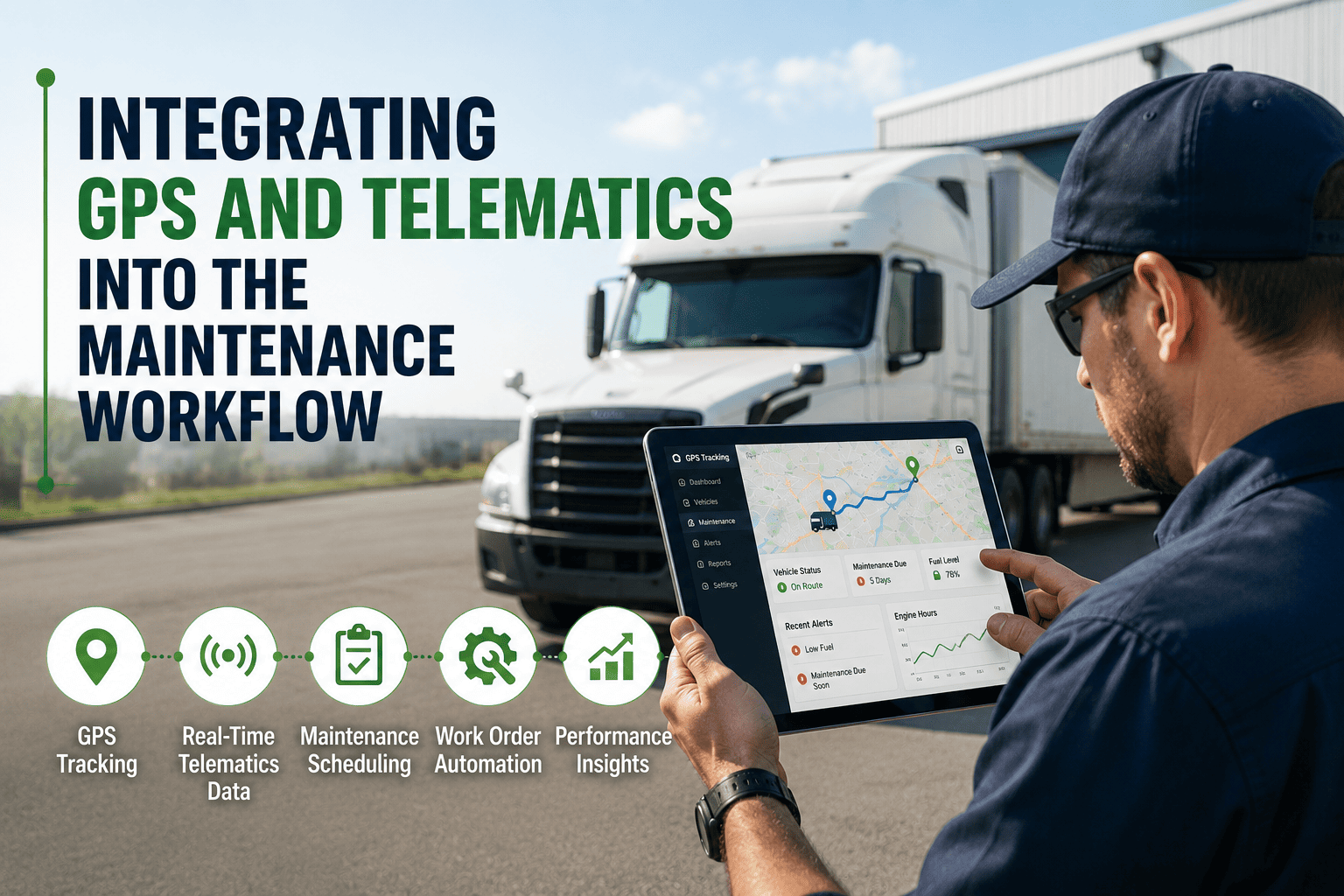
Integrating GPS and Telematics Into the Maintenance Workflow
Stop collecting data your maintenance team never sees. Connect live location, engine diagnostics, and driver behavior directly to the workflows that prevent breakdowns and control cost per mile.
Where Fleet Data Breaks Down — and What It Costs
The problem is not a lack of data. Your GPS devices, fuel cards, engine sensors, and ELD systems all generate valuable information. The problem is that each system stores its piece of the truth in isolation. When these systems cannot see each other, preventable breakdowns happen, PM intervals get missed, and cost-per-mile calculations are built on incomplete numbers.
Connect GPS, engine data, and fuel cards in one platform
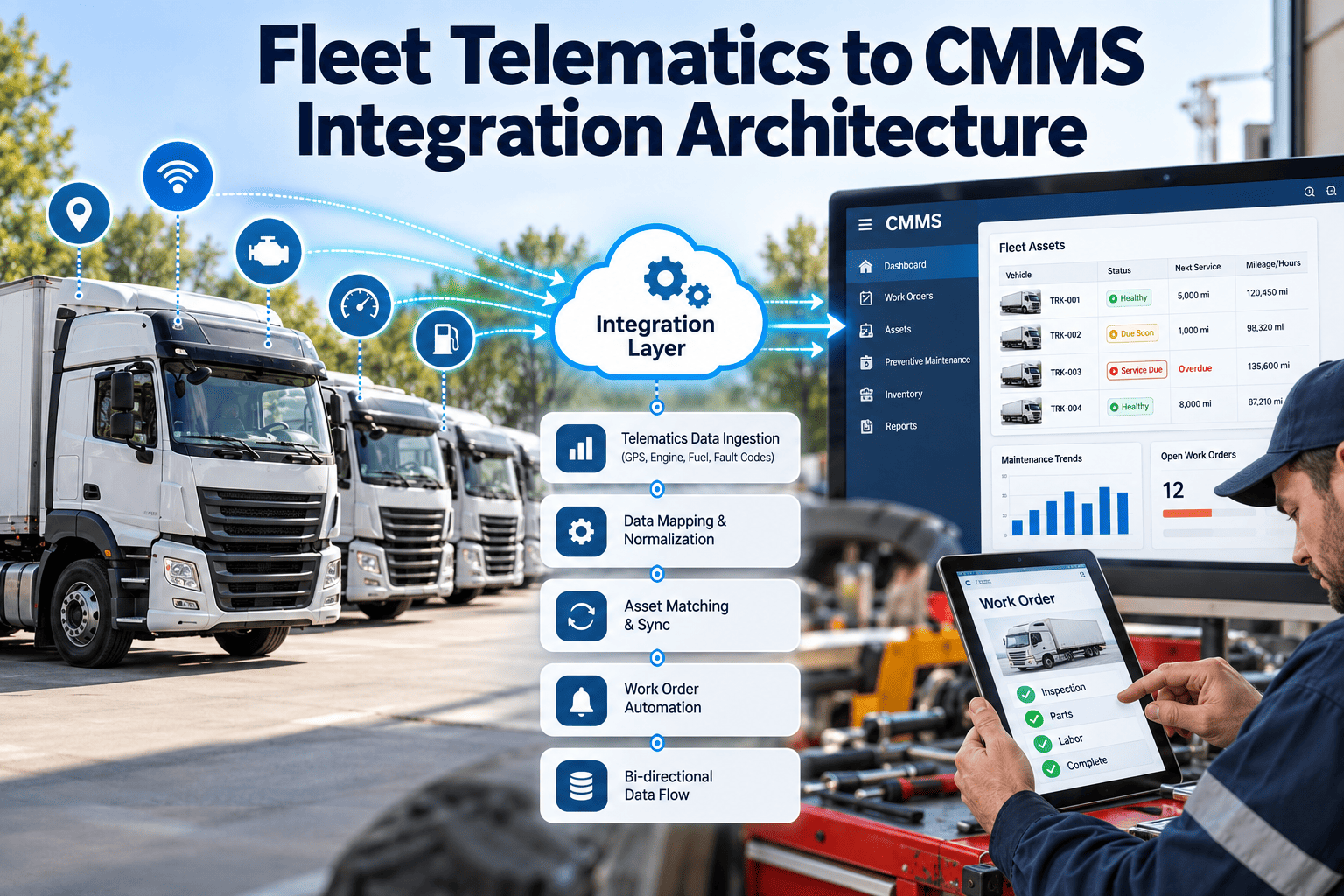
OxMaint integrates with Geotab, Samsara, Verizon Connect, and 15+ telematics providers. Fault codes create work orders. Odometer readings trigger PMs. No manual entry required.
What GPS and Telematics Actually Feed Into Maintenance
A telematics device collects hundreds of data points every second. But only four categories of that data matter for maintenance workflow integration. Each one unlocks a specific capability that is impossible when systems operate in isolation.
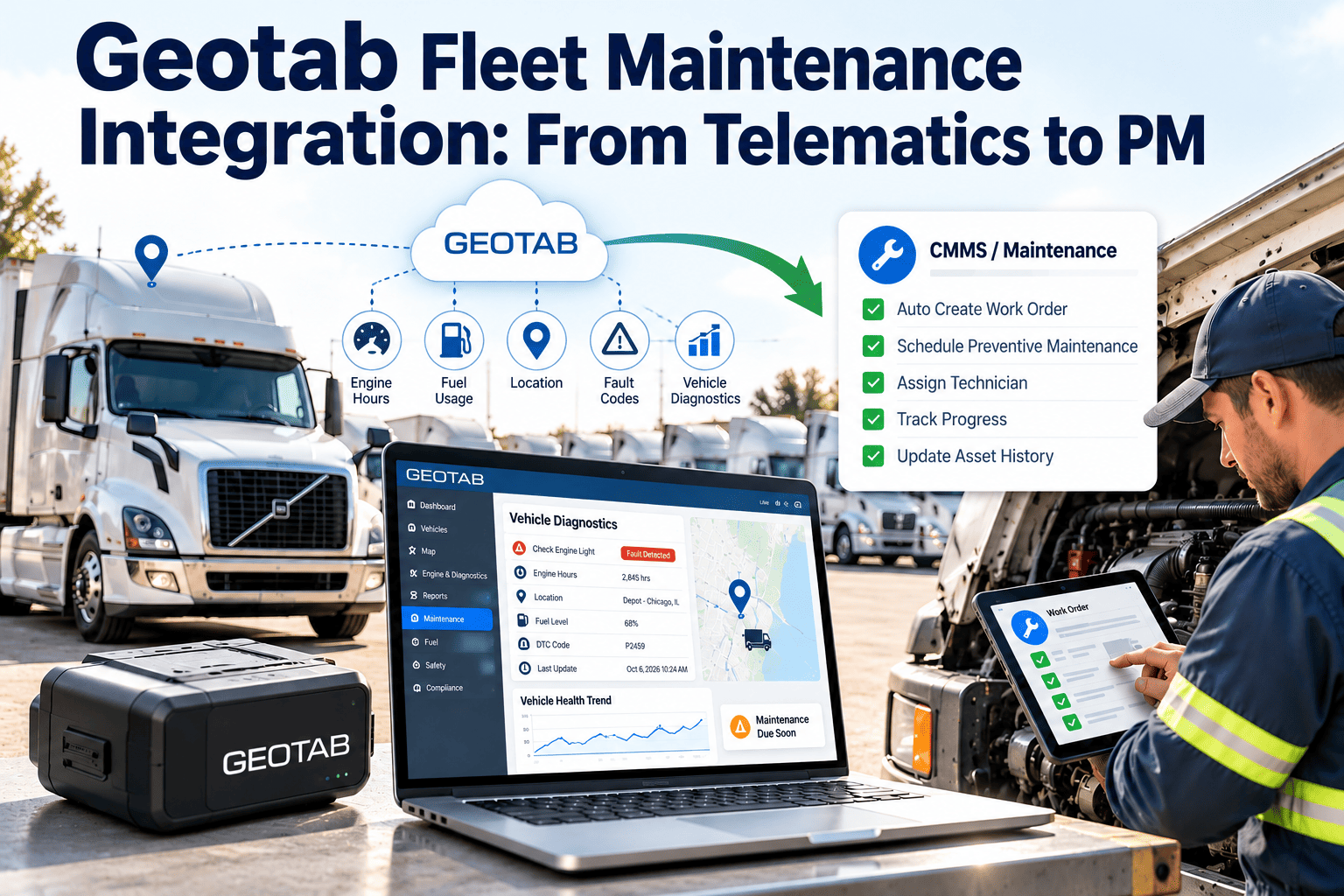
GPS position and continuous mileage sync replace manual odometer entry. PM work orders trigger automatically when real-time mileage crosses a threshold — eliminating the most common fleet maintenance failure: missed intervals because mileage was never reported.
OBD-II and J1939 diagnostic trouble codes (DTCs) stream from the engine control unit through telematics hardware to your CMMS. A cooling system warning or battery voltage drop auto-generates a diagnostic work order and assigns a technician — before the driver reports anything.
Per-vehicle fuel consumption, idle time cost, and MPG trending at the individual asset level expose the 15% of vehicles consuming 40% of your fuel budget. Fuel card transactions matched against telematics-reported consumption catch anomalies — overfills, off-route purchases, and theft — in real time.
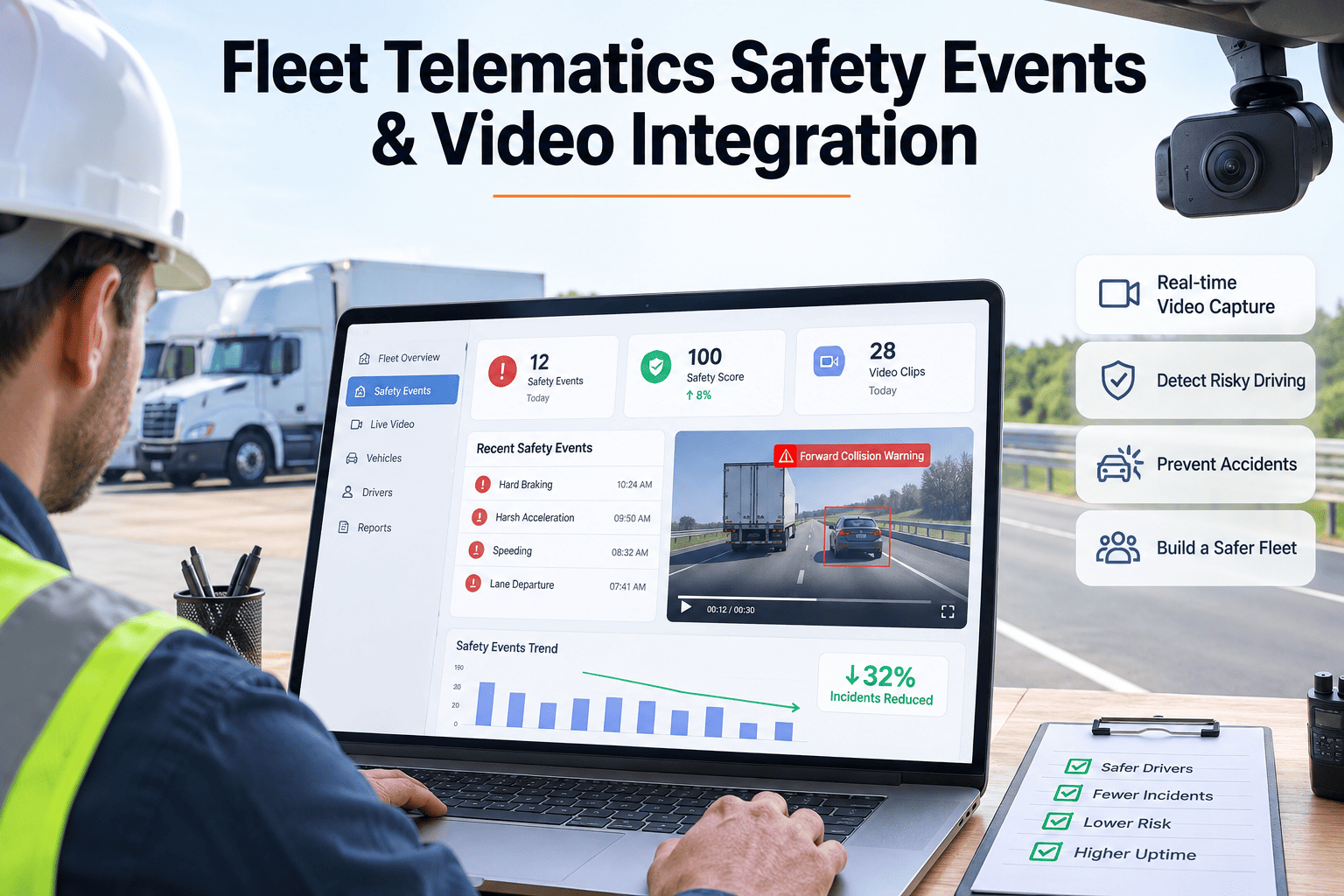
Harsh braking, rapid acceleration, speeding, and excessive idling are not just safety events — they are leading indicators of accelerated mechanical wear. A vehicle with consistent harsh braking data needs brake inspections sooner than calendar intervals suggest.
Where Does Your Fleet Sit on the Integration Scale?
Most fleets fall into one of four maturity levels. Each level represents a measurable gap in maintenance visibility, cost control, and operational efficiency. Identify where you are today — and what moving one level up would change.
| Level | Description | PM Trigger Method | Fault Code Response | Cost Visibility | Avg. Downtime Impact |
|---|---|---|---|---|---|
| Level 1 | No telematics — paper logs only | Calendar or manual odometer | Driver reports after failure | Spreadsheet estimates | Highest — 3x industry avg |
| Level 2 | GPS tracking installed, no CMMS link | Calendar + periodic manual sync | Alert email, manual work order | Per-vehicle fuel only | High — 1.8x industry avg |
| Level 3 | Telematics + CMMS connected via API | Live odometer + engine hours | Auto-generated work orders | True cost per mile | Low — at or below avg |
| Level 4 | Full integration: GPS + fuel + diagnostics + behavior | Usage-based + condition-based | Predictive alerts before failure | TCO per asset, real-time | Minimal — 50% below avg |
OxMaint connects your existing telematics to maintenance action
No hardware replacement needed. OxMaint integrates with the GPS and telematics providers you already use — Geotab, Samsara, Motive, Verizon Connect, and more — and starts triggering automated work orders from Day 1.
How to Integrate GPS and Telematics Into Your Maintenance Workflow
Integration is not a single IT project — it is a phased deployment that builds capability over time. This roadmap sequences each phase so that every step delivers measurable ROI before the next phase begins.
Inventory every data source — GPS devices, fuel cards, ELD hardware, OEM portals — and connect them to OxMaint via API. Establish the single vehicle master record that eliminates odometer discrepancies and duplicate asset entries across systems.
Sync real-time GPS mileage and engine hours to preventive maintenance schedules. PM work orders fire automatically when live readings cross configured thresholds — no manual entry, no missed intervals, no spreadsheet tracking.
Map DTC codes to CMMS task types so engine warnings auto-generate diagnostic work orders with actionable instructions — not raw fault codes. Prioritize high-frequency failure modes: cooling, electrical, and emissions systems first.
Connect fuel card feeds and driver behavior scoring to the maintenance layer. Fuel anomalies trigger alerts. Harsh braking patterns accelerate brake inspection schedules. Idle time data feeds driver coaching workflows.
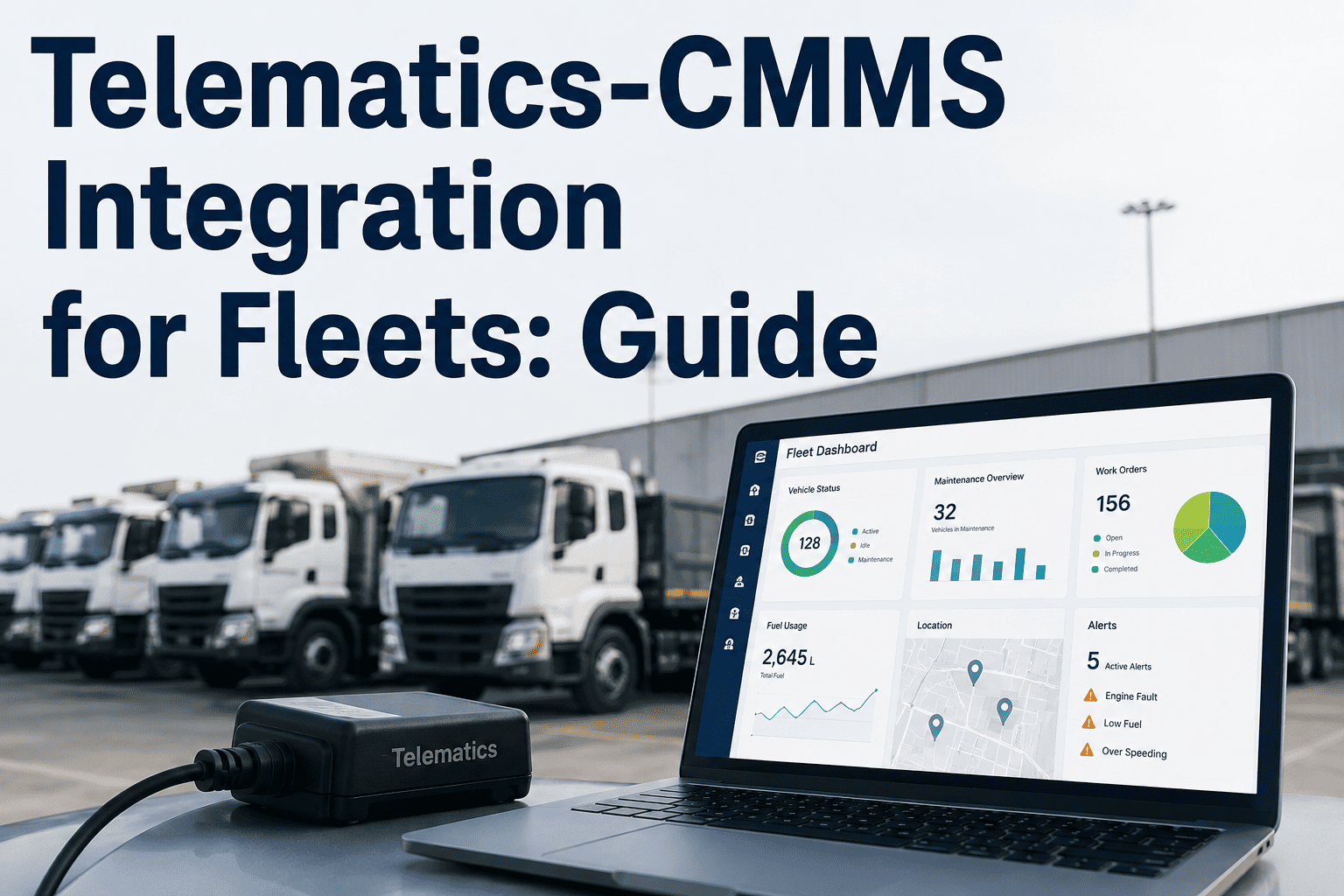
With all data layers unified, enable predictive failure alerts that forecast component issues weeks in advance. Calculate true total cost of ownership per asset in real time — fuel, maintenance, parts, downtime — from a single dashboard.
What Telematics Integration Saves — by Fleet Size
The savings from connecting telematics to your maintenance workflow scale with fleet size, but even small fleets see immediate payback. These estimates are based on industry-reported averages for fleets that move from disconnected GPS tracking to fully integrated maintenance workflows.
| Fleet Size | Annual Savings Range | Primary Savings Source | Typical Payback |
|---|---|---|---|
| 5-15 vehicles | $17,500 - $62,000 | Prevented breakdowns and fuel waste | 60-90 days |
| 15-50 vehicles | $52,500 - $248,000 | PM compliance and downtime reduction | 45-75 days |
| 50-100 vehicles | $175,000 - $496,000 | Predictive maintenance and TCO visibility | 30-60 days |
| 100-250 vehicles | $350,000 - $1.24M | Full lifecycle optimization per asset | Under 45 days |
| 250+ vehicles | $875,000 - $3.1M+ | Enterprise fleet intelligence at scale | Under 30 days |
Estimates based on $3,500-$6,200 per vehicle annual savings from industry telematics ROI studies. Actual results vary by fleet type, operating conditions, and current maintenance maturity level.
Frequently Asked Questions
Does OxMaint work with the telematics hardware we already have installed?
How does telematics integration actually trigger a work order?
How long does it take to go from disconnected GPS to full integration?
What ROI can we expect from telematics-to-CMMS integration?
Can we still use telematics dashboards alongside OxMaint?
Turn every telematics signal into maintenance action
Connect your fleet's GPS devices, fuel cards, engine diagnostics, and driver behavior data in one platform. OxMaint closes the integration gap so fault codes create work orders, odometer readings trigger PMs, and your team acts on data — not spreadsheets.