Your excavator just threw a fault code 200 miles from the nearest dealer. The concrete mixer's engine temperature spiked twice last week—and nobody noticed until it overheated on the highway. Meanwhile, your dispatcher is juggling spreadsheets trying to figure out which dump truck is actually available for tomorrow's pour. Welcome to construction fleet management without telematics.
Construction fleets face unique challenges that passenger vehicles and delivery trucks never encounter. Heavy equipment operates in extreme conditions—dust, vibration, load stress—while bouncing between job sites with limited connectivity. When a $400,000 excavator goes down mid-project, you are not just paying for repairs; you're paying delay penalties, idle crew wages, and potentially losing the next bid because you can't prove equipment reliability.
This case study examines how construction fleets are using telematics integration with CMMS platforms to transform reactive chaos into predictive control. Companies implementing these strategies report 35-50% reduction in unplanned downtime and 20-30% decrease in total maintenance costs. Ready to see what's possible? Start your free trial with Oxmaint CMMS.
What if every piece of equipment in your fleet could tell you exactly when it needs attention—before it fails on site?
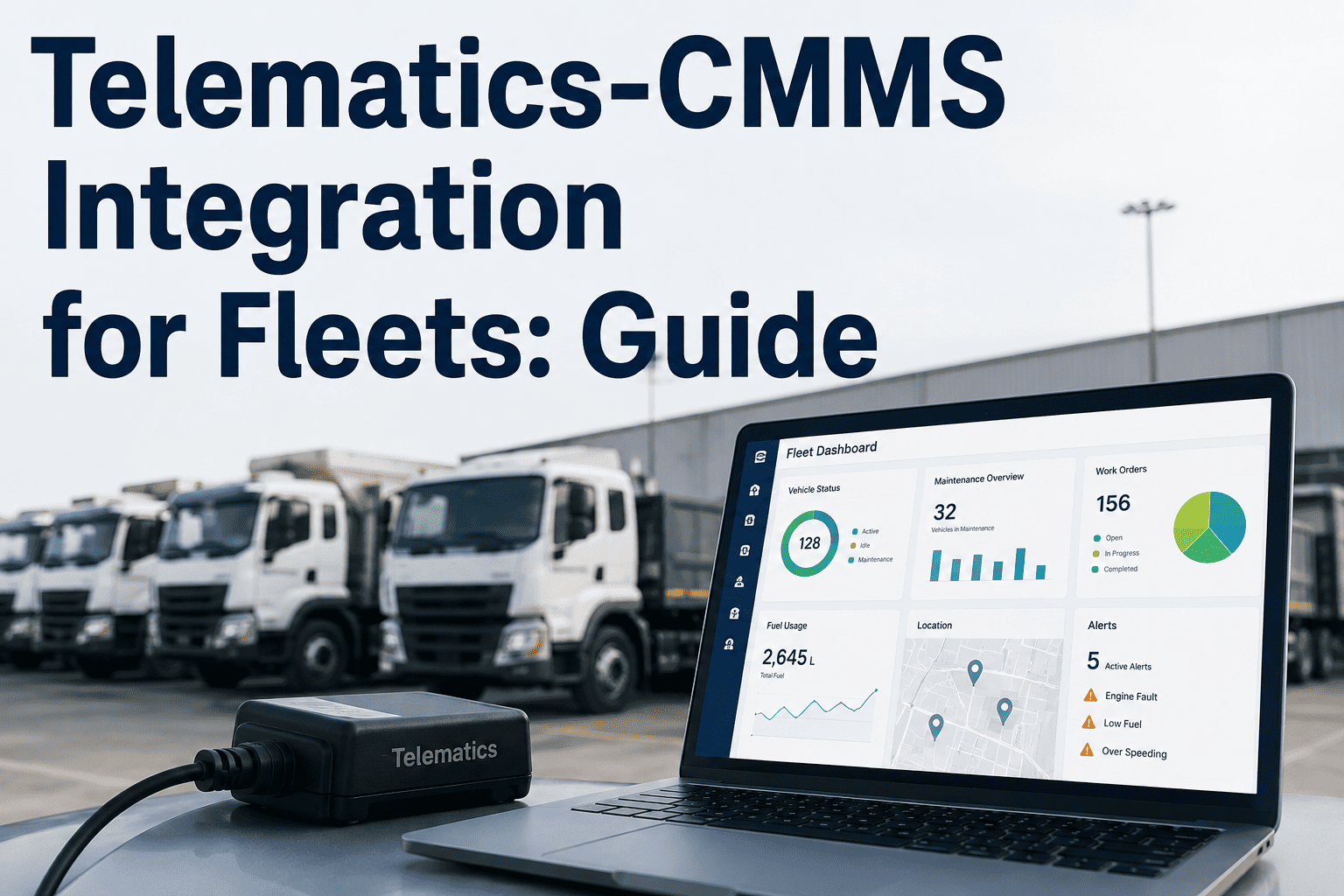
Telematics Integration for Fleet Insights: Case Study for Construction Fleets
Strengthen Fleet Management Service Quality with Smart Scheduling
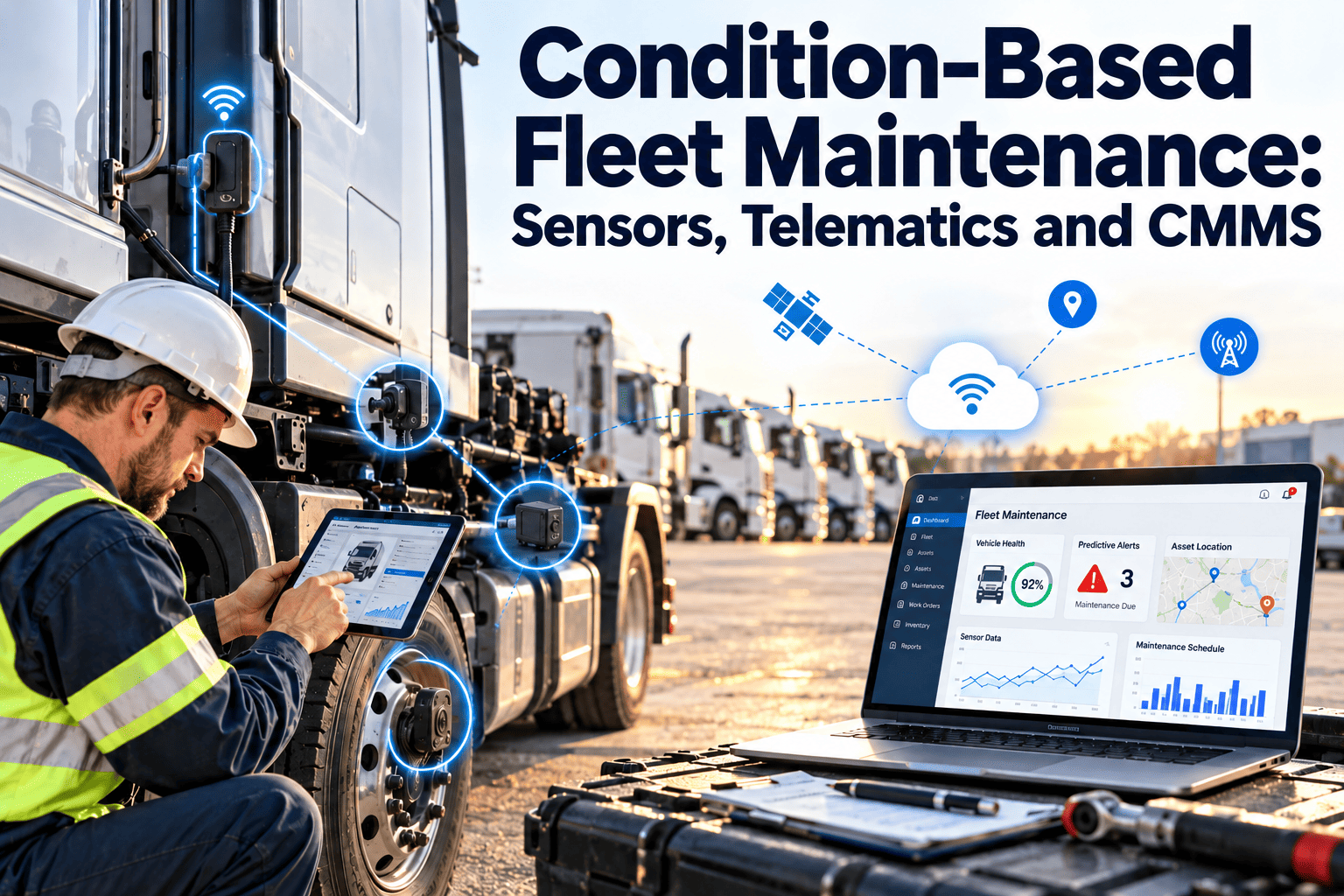
Smart scheduling isn't about creating more work orders—it's about creating the right work orders at the right time. When telematics data feeds directly into your maintenance software fleet management platform, you shift from calendar-based guessing to condition-based precision.
Telematics sensors continuously monitor engine hours, fuel consumption, GPS location, fault codes, and operating temperatures across your entire fleet.
CMMS algorithms compare current readings against baseline performance, manufacturer thresholds, and historical failure patterns.
When conditions warrant action, work order automation triggers the appropriate maintenance task with the right parts and technician assignment.
System schedules maintenance during planned downtime windows, coordinating with project timelines and equipment availability.
| Factor | Calendar-Based | Condition-Based with Telematics | Impact |
|---|---|---|---|
| Service Timing | Every 250 hours regardless of conditions | When oil analysis indicates degradation | 15-25% fewer unnecessary services |
| Failure Prediction | None—react when it breaks | 2-4 weeks advance warning | 70% reduction in catastrophic failures |
| Parts Inventory | Stock everything "just in case" | Order based on predicted needs | 30% lower inventory costs |
| Technician Utilization | Emergency calls disrupt schedules | Planned work optimizes routes | 25% more productive wrench time |
| Equipment Availability | 85-90% average uptime | 95-98% average uptime | 5-13% more billable hours |
The Construction Fleet Challenge
Construction equipment isn't like a delivery van that runs the same route daily. Each asset faces different stress profiles depending on the project, operator, terrain, and weather. A single wheel loader might move topsoil one week and demolition debris the next—completely different wear patterns requiring different maintenance approaches.
Excavators, dozers, loaders, and graders face extreme operating conditions. Hydraulic system failures, undercarriage wear, and engine overheating account for 60% of unplanned downtime.
Dump trucks, concrete mixers, and service vehicles operate on public roads with DOT compliance requirements. Brake systems, emissions components, and transmission failures are primary concerns.
Cranes, pavers, and specialty equipment require manufacturer-specific expertise. Single component failures can sideline irreplaceable assets for weeks awaiting parts.
Telematics Data Points That Drive Fleet Insights
Not all telematics data is equally valuable. Understanding which data points translate into actionable maintenance decisions separates effective condition monitoring from information overload.
| Data Category | What Sensors Track | Maintenance Trigger | Prevented Failure Cost |
|---|---|---|---|
| Engine Health | Coolant temp, oil pressure, fuel efficiency, fault codes | Deviation from baseline patterns | $12,000-40,000 |
| Hydraulic Systems | Fluid temperature, pressure, cycle times | Pressure drops or temperature spikes | $8,000-25,000 |
| Transmission | Shift patterns, fluid temp, slippage indicators | Abnormal shift behavior | $15,000-35,000 |
| Fuel System | Consumption rate, idle time, filter restrictions | Efficiency drops below threshold | $2,000-8,000 |
| Electrical | Battery voltage, alternator output, starter draw | Voltage irregularities | $1,500-5,000 |
| Undercarriage | Track tension, roller wear, idler alignment | Accelerated wear patterns | $20,000-60,000 |
Case Study: Regional Construction Company Fleet Transformation
A regional heavy civil contractor operating 85 pieces of equipment across 12 active job sites implemented telematics integration with Oxmaint CMMS. Here's what changed over 18 months:
- Paper-based maintenance logs at each job site
- Reactive repairs averaged 12 per month
- Equipment availability at 82%
- Annual maintenance spend: $1.4M
- No visibility into operator behavior impacts
- Compliance documentation scattered across sites
- Digital work orders with automatic asset tracking
- Reactive repairs reduced to 4 per month
- Equipment availability at 94%
- Annual maintenance spend: $980K
- Operator scorecards driving behavior improvement
- Audit-ready compliance logs for all inspections
Making Audits Painless — A Fleet Management Governance Model with Digital Logs
DOT inspections, OSHA compliance, insurance audits, customer due diligence—construction fleets face constant documentation requirements. Without centralized digital logs, proving fleet management compliance requirements becomes a scramble through filing cabinets, truck glove boxes, and email threads.
Inspections, services, and repairs logged with timestamps, photos, and digital signatures
All documentation tied to specific asset records in cloud-based CMMS
Pull complete maintenance history in seconds—sorted by date, type, or technician
Generate audit-formatted reports for any regulatory or customer requirement
Automatic DVIR tracking, brake inspection scheduling, hours of service integration, and annual inspection reminders eliminate missed deadlines.
Equipment inspection records, operator certification tracking, and incident documentation create defensible safety compliance history.
Maintenance history reports demonstrate proactive care, supporting lower premiums and faster claims resolution.
General contractors increasingly require equipment maintenance verification—digital logs provide instant proof of reliability.
Stop scrambling before every audit. Build compliance into your daily operations.
Implementation Roadmap: From Reactive to Predictive
Transitioning to telematics-driven maintenance doesn't happen overnight. This roadmap provides the milestones and KPIs for building a predictive maintenance fleet management program that delivers measurable results.
- Complete fleet inventory with asset identification in CMMS
- Install or verify telematics devices on all critical equipment
- Establish data integration between telematics provider and Oxmaint
- Configure baseline alert thresholds based on OEM specifications
- Define PM schedules triggered by engine hours and condition data
- Configure work order automation for fault code responses
- Implement spare parts planning based on predicted consumption
- Train technicians and operators on mobile inspection tools
- Refine alert thresholds based on actual fleet performance data
- Implement operator behavior scoring from telematics
- Establish KPI dashboards for management visibility
- Begin predictive analytics for high-value components
- Standardize processes across all job sites and equipment types
- Benchmark performance between operators, sites, and equipment
- Negotiate vendor contracts based on actual consumption data
- Expand condition monitoring to additional asset categories
IoT Sensors: What to Monitor First
Not every piece of equipment needs the same sensor package. Prioritize IoT sensors based on failure consequences, replacement costs, and historical problem areas.
| Equipment Type | Priority Sensors | Secondary Sensors | Investment Range |
|---|---|---|---|
| Excavators | Hydraulic pressure, engine temp, fuel level | Boom stress, undercarriage wear, idle time | $800-2,500/unit |
| Wheel Loaders | Transmission temp, tire pressure, engine hours | Bucket weight, fuel efficiency, cycle counting | $600-1,800/unit |
| Dump Trucks | Brake wear, engine diagnostics, GPS location | Payload weight, bed position, driver behavior | $400-1,200/unit |
| Concrete Mixers | Drum rotation, hydraulic pressure, engine temp | Water system, chute position, delivery timing | $700-2,000/unit |
| Generators | Runtime hours, fuel level, output voltage | Load percentage, coolant temp, oil pressure | $300-900/unit |
Fleet Management CMMS Best Practices
Technology alone doesn't fix broken processes. These fleet management CMMS best practices ensure your investment delivers maximum return.
Whether it's a $500,000 crane or a $500 generator, every trackable asset needs a record in your CMMS linked to its telematics device.
Too sensitive creates alert fatigue; too loose misses problems. Start with OEM specs and adjust based on your actual operating conditions.
Photos, measurements, parts used, time spent—complete records enable pattern analysis and support warranty claims.
Telematics shows what the machine does; operators know what it feels like. Combine both inputs for complete diagnostics.
Downtime reduction, PM compliance, cost per hour—track the metrics that matter and act on trends early.
Standardize naming conventions, inspection procedures, and reporting formats before expanding to additional locations.
ROI Calculator: What Telematics Integration Saves
The numbers tell the story. Here's how construction fleets typically calculate return on telematics-CMMS integration:
Expert Review
- Start with your highest-value equipment—the 20% of assets causing 80% of downtime costs
- Focus on fault code response automation before advanced predictive features
- Train operators on how their behavior affects equipment health scores
- Build spare parts planning around actual consumption data, not vendor recommendations
Conclusion
Construction fleets operate in conditions that punish reactive maintenance. Every unplanned breakdown creates cascading costs—repair expenses, crew idle time, project delays, and damaged customer relationships. Telematics integration with CMMS platforms transforms this chaos into control.
The technology exists today to know what your equipment needs before it fails. IoT sensors capture the data. Condition monitoring identifies the patterns. Work order automation triggers the response. The only question is whether you implement it proactively—or wait until your next excavator goes down mid-project.
Start with your critical equipment. Build from there. The ROI follows.