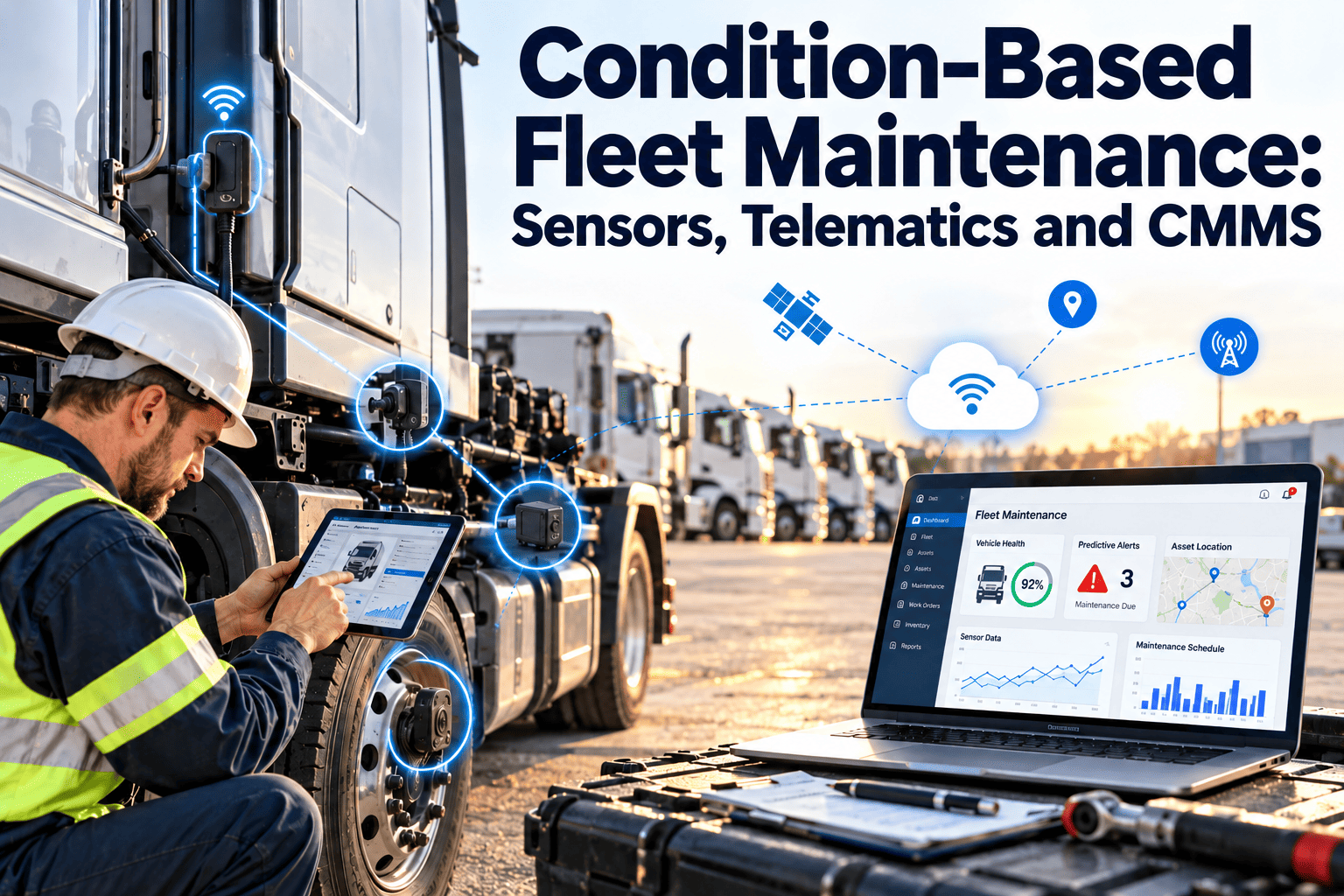
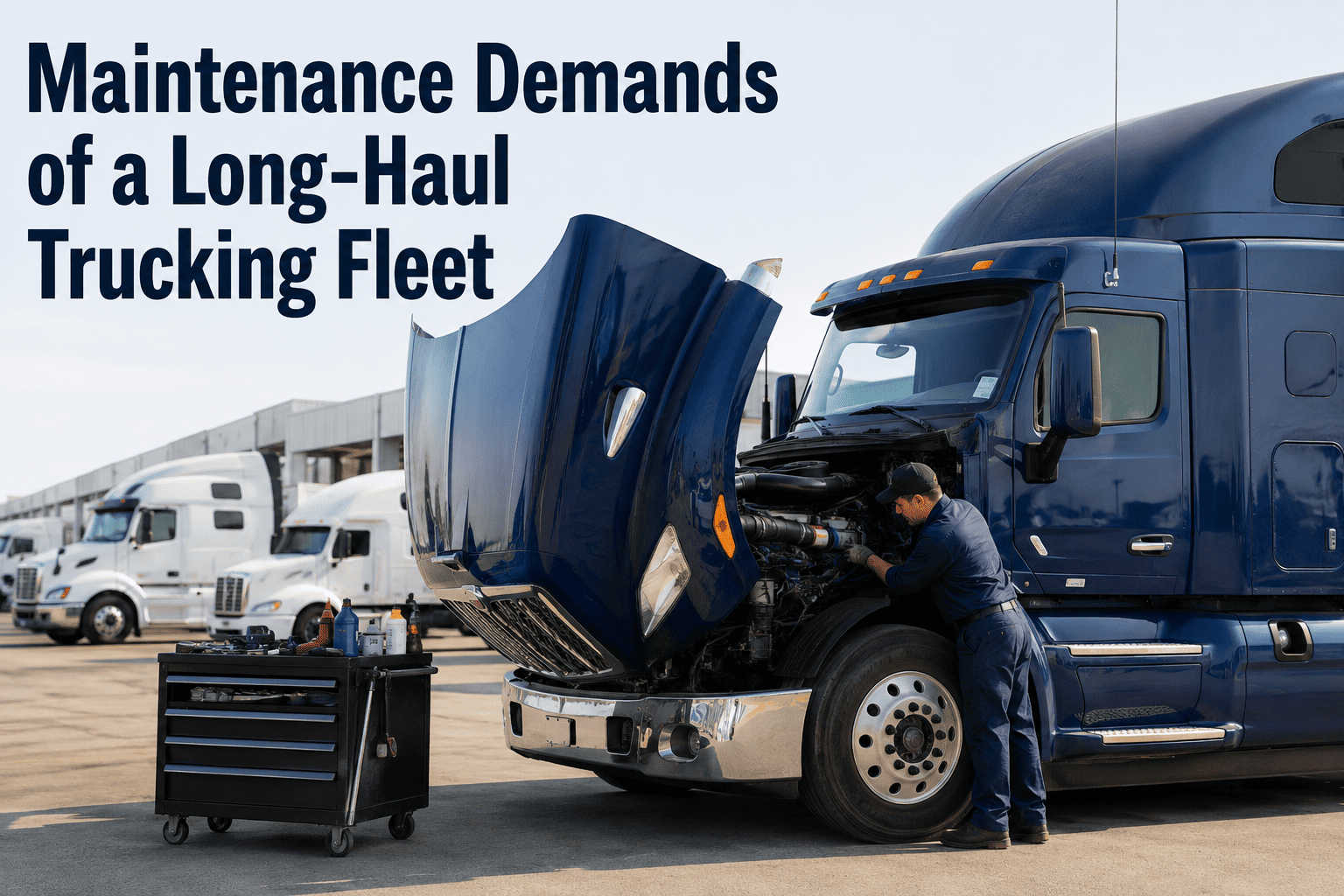
Your driver is 847 miles from the terminal when the check engine light illuminates. The telematics system shows fault code SPN 102—intake manifold pressure sensor. Is this a "limp home" situation or a "stop immediately" emergency? Your dispatcher pulls up the truck's history but finds scattered data across three different systems. Meanwhile, the clock ticks on a $45,000 load of produce with a 36-hour delivery window.
Long-haul trucking operates on razor-thin margins where a single breakdown can erase a month's profit. Yet most fleets run telematics, maintenance, and compliance systems as disconnected silos—generating data that never becomes actionable intelligence. This guide delivers a complete framework for telematics integration and SLA design that transforms raw sensor data into predictive maintenance fleet management decisions, audit-ready compliance documentation, and measurable cost reduction. Sign up free for Oxmaint CMMS to start integrating your fleet data today.
$1,047
Avg cost per roadside breakdown
41%
Breakdowns preventable with telematics
6.2 MPG
Fleet avg vs 7.1 MPG optimized
$18,400
Annual savings per truck
Modernize Fleet Management Audit Readiness with Connected Sensors
DOT auditors don't accept "the data is in another system" as an explanation. FMCSA compliance requires documented proof of vehicle inspections, driver qualifications, hours of service, and maintenance records—all accessible within minutes. IoT sensors connected to a unified CMMS create the audit trail automatically, eliminating manual data entry and the compliance gaps that trigger violations.
1
IoT Sensors Collect
Engine diagnostics, GPS location, driver behavior, fuel consumption, and component health data stream continuously from every truck
2
CMMS Processes
Oxmaint normalizes data from multiple telematics providers, correlates with maintenance history, and applies AI analytics for pattern detection
3
Audit Trail Generated
Every sensor reading, work order, parts replacement, and inspection creates timestamped, tamper-proof records ready for DOT review
| Compliance Area |
Requirement |
Telematics Data Source |
Auto-Documentation |
| FMCSA Hours of Service |
ELD mandate, driving limits, rest periods |
GPS + engine hours + driver ID |
Real-time HOS tracking with violation alerts |
| DOT Annual Inspections |
Brake, lighting, steering, suspension checks |
Component sensors + inspection apps |
Digital inspection forms with photo evidence |
| DVIR Requirements |
Pre/post-trip driver vehicle inspections |
Mobile app + fault code integration |
Automated defect tracking and resolution |
| EPA Emissions Standards |
DPF regeneration, DEF levels, idle compliance |
Engine ECU + aftertreatment sensors |
Emissions system health monitoring |
| IFTA Fuel Tax |
Miles traveled by jurisdiction, fuel purchased |
GPS tracking + fuel card integration |
Automatic jurisdiction mile calculation |
← Swipe to see more →
Telematics Integration Architecture for Long-Haul Fleets
Most long-haul fleets operate mixed equipment—Freightliners with Detroit Assurance, Kenworths with Paccar telematics, Volvos with Remote Diagnostics. Each OEM platform speaks its own language. The challenge isn't collecting data; it's normalizing it into a unified asset tracking fleet management system that enables cross-fleet analysis and consistent SLA measurement.
Freightliner / Detroit Connect
Engine fault codes and severity
Virtual Technician diagnostics
Fuel efficiency metrics
Predictive component alerts
Paccar / Kenworth & Peterbilt
PACCAR Connect telematics
MX engine diagnostics
Remote parameter updates
Service interval tracking
Volvo / Mack Remote Diagnostics
Remote Diagnostics alerts
Uptime Center integration
ASIST case management
Parameter programming
Third-Party ELD Platforms
Samsara, Geotab, KeepTruckin
Omnitracs, Platform Science
GPS tracking and geofencing
Driver behavior scoring
| Data Type |
Source |
Update Frequency |
AI Analytics Application |
Maintenance Action |
| Engine Fault Codes |
ECU via J1939 |
Real-time |
Severity classification, pattern matching |
Auto-generate work order with diagnosis |
| Fuel Consumption |
Fuel flow sensor |
Per-trip |
Efficiency trending, anomaly detection |
Flag trucks for energy management review |
| Oil Life / Quality |
Oil condition sensor |
Continuous |
Remaining life prediction |
Schedule oil service at optimal interval |
| Tire Pressure |
TPMS sensors |
Every 15 min |
Leak detection, temperature correlation |
Alert driver + schedule tire service |
| Brake Wear |
Brake stroke sensors |
Per-stop event |
Wear rate calculation, life prediction |
Schedule brake service before CSA violation |
| DPF Status |
Aftertreatment sensors |
Continuous |
Regen frequency, soot load trending |
Prevent forced regen situations |
← Swipe to see more →
SLA Design Framework for Maintenance Vendors
Telematics data without accountability is just expensive noise. SLA design transforms sensor insights into contractual performance requirements—vendors get paid based on outcomes, not just activity. When your telematics shows a truck sat for 6 hours waiting for a tire, that data becomes leverage for service-level negotiations.
Response Time SLAs
Critical
2 hours
Safety-critical failures (brakes, steering, tires)
Urgent
4 hours
Truck disabled but not safety-critical
Standard
24 hours
Scheduled PM and non-urgent repairs
Performance Metrics
90%+
First-Time Fix Rate
Repairs completed without return visit within 7 days
95%+
Parts Availability
Critical parts in stock for same-day service
98%+
Documentation Compliance
Complete digital records within 24 hours
Sign up for Oxmaint free to implement SLA tracking with automated vendor scorecards, or book a demo to see real-time SLA monitoring in action.
Transform Your Fleet Data Into Actionable Insights
Connect your telematics, automate maintenance workflows, and build audit-ready compliance documentation with Oxmaint CMMS
Operationalizing AI Insights — A Fleet Management Architecture with Integrations
Raw telematics data is useless without AI analytics to find patterns humans miss. A truck running 0.3 MPG below baseline might indicate injector wear, tire under-inflation, or driver behavior changes. AI correlates multiple data streams to pinpoint root causes and predict failures before they strand equipment 500 miles from home.
Telematics feeds from multiple OEM platforms and third-party providers normalized into unified data schema. 50+ data points per truck, updated every 30 seconds to 15 minutes depending on parameter.
Machine learning models trained on historical failure data identify degradation signatures. Compares current readings against vehicle baseline, fleet average, and known failure patterns from OEM manuals.
Each truck receives dynamic health scores by component system. Scores update continuously, with alerts triggered when probability of failure within 14/30/60 days exceeds configured thresholds.
Work orders generated automatically with diagnostic context, spare parts planning requirements, and recommended service procedures. Routes truck to nearest qualified vendor based on issue type and location.
4
Service Required
Within 48 hours
12
Schedule Soon
Within 14 days
127
Healthy
No action needed
Truck #4472
Transmission — Temperature trending +22°F above baseline
Predicted failure: 5-7 days
Work order #WO-8847 created, routed to Denver terminal
Truck #3891
DPF — Soot load increasing 3x normal rate
Forced regen likely within 200 miles
Driver notified, service scheduled at next fuel stop
Truck #5523
Fuel efficiency — 0.4 MPG below 30-day average
Investigate: injectors, air filter, tire pressure
Added to next PM checklist for diagnostic review
Multi-Site Rollouts: Scaling Telematics Integration
Single-terminal fleets can implement telematics integration in weeks. Multi-site operations with regional maintenance partners, diverse equipment, and varying compliance requirements demand a phased rollout strategy that maintains operational continuity while building toward unified fleet visibility.
Pilot Terminal
Select highest-volume terminal for pilot
Configure telematics integrations for primary OEM
Train dispatch and maintenance staff
Establish baseline KPIs for comparison
Success Metric:
90% data capture rate, staff proficiency
Regional Expansion
Roll out to 2-3 additional terminals
Add secondary OEM telematics integrations
Onboard regional maintenance vendors to portal
Implement SLA tracking and scorecards
Success Metric:
Vendor SLA compliance baseline established
Fleet-Wide Deployment
Complete rollout to all terminals
Enable AI analytics and predictive alerts
Configure automated spare parts planning
Integrate with accounting and fuel systems
Success Metric:
Full fleet visibility, predictive maintenance active
Fleet Management CMMS Best Practices
01
Integrate All Telematics Sources into Single Platform
Mixed fleets mean multiple telematics providers. Oxmaint CMMS normalizes data from Freightliner, Volvo, Paccar, and third-party ELDs into unified dashboards. One login, complete fleet visibility, consistent analytics across all equipment regardless of OEM.
02
Configure Preventive Maintenance Fleet Management by Hours and Miles
Long-haul trucks accumulate miles fast but operating hours vary with route profiles. Configure PM schedules with dual triggers—whichever threshold hits first generates the work order. Telematics provides real-time hour and mile counts for precise scheduling.
03
Attach OEM Manuals to Every Asset Profile
When a technician in Albuquerque needs torque specs for a DD15 injector, they shouldn't wait for a phone call to Detroit. Upload OEM manuals, service bulletins, and wiring diagrams directly to asset records. One scan of the truck's QR code provides complete documentation.
04
Automate Spare Parts Planning from Telematics Alerts
When AI analytics predicts a turbo failure in 3 weeks, the system should automatically check parts inventory, identify nearest stocking location, and reserve the component. Reactive parts ordering turns 4-hour repairs into 4-day delays.
05
Track Energy Management Metrics for Every Truck
Fuel represents 30%+ of operating costs. Monitor MPG trends by truck, driver, and route. A 0.5 MPG improvement across 100 trucks saves $180,000+ annually. Telematics identifies the maintenance and behavior factors driving efficiency variations.
06
Build Compliance Documentation Automatically
Every sensor reading, work order, and inspection creates audit trail records. When DOT auditors request maintenance history, export complete documentation in 60 seconds. No file room searching, no missing records, no scrambling before inspections.
Fuel Efficiency Gains
0.5 MPG improvement = 1,462 gal saved/truck/year
$562,870
Breakdown Prevention
41% reduction × 8 breakdowns/truck/year × $1,047
$343,416
PM Optimization
Extended intervals + reduced labor + parts savings
$127,000
Total Annual Savings
Per truck: $10,332 | Fleet-wide savings
$1,033,286
"We were running three separate systems—OEM telematics, a standalone ELD, and spreadsheets for maintenance tracking. After consolidating everything into Oxmaint with full telematics integration, we caught 23 potential breakdowns in the first quarter through predictive alerts. That's 23 loads that didn't get stranded roadside. The fuel efficiency visibility alone—identifying trucks running 0.5+ MPG below fleet average—saved us $340,000 in year one."
Michael Torres
VP of Maintenance, Heartland Express Logistics (187 trucks)
Ready to Integrate Your Fleet Telematics?
Join long-haul fleets using Oxmaint for predictive maintenance fleet management, SLA tracking, and audit-ready compliance documentation
1
Unify Your Data Sources
Telematics data trapped in OEM silos can't drive fleet-wide decisions. Integrate all sources into a single CMMS for consistent analytics, and reporting.
2
Design SLAs with Teeth
Vendor contracts without performance metrics are just expense agreements. Use telematics data to establish measurable SLAs and hold vendors accountable.
3
Let AI Find the Patterns
Humans can't monitor 50+ data points per truck across 100+ vehicles. AI analytics surfaces the anomalies that predict failures weeks in advance.
4
Build Compliance Into Operations
Audit readiness isn't a quarterly scramble—it's automatic when every sensor reading and work order creates timestamped documentation.
How long does telematics integration take to implement?
For single-OEM fleets with existing telematics, basic integration completes in 1-2 weeks. Multi-site rollouts with mixed equipment typically follow a 12-week phased approach. Oxmaint's pre-built integrations with major OEMs and ELD providers accelerate deployment significantly.
Sign up free to start your integration assessment.
What telematics platforms does Oxmaint integrate with?
Oxmaint integrates with all major OEM telematics (Detroit Connect, PACCAR Connect, Volvo Remote Diagnostics, Navistar OnCommand) plus third-party platforms including Samsara, Geotab, KeepTruckin, Omnitracs, and Platform Science. Custom API integrations available for proprietary systems.
Book a demo to discuss your specific integrations.
How accurate are AI-powered failure predictions?
Prediction accuracy depends on data quality and historical depth. Fleets with 6+ months of telematics history typically see 75-85% accuracy on major component failure predictions within 30-day windows. Accuracy improves as the system learns your specific equipment patterns and operating conditions.
Sign up free to start building your predictive maintenance baseline.
Can we use telematics data for vendor contract negotiations?
Absolutely—this is one of the highest-ROI applications. Documented response times, first-fix rates, and parts availability data provide objective leverage for SLA negotiations. Fleets using scorecard data typically achieve 15-25% improvement in vendor performance or negotiate better rates with higher-performing alternatives.
Book a demo to see SLA reporting capabilities.
How does telematics integration help with FMCSA compliance?
Telematics automatically documents hours of service, vehicle inspections, and maintenance records required by FMCSA regulations. DVIRs sync with fault code data for complete inspection records. When auditors request documentation, export complete compliance reports in under 60 seconds with full audit trail.
Sign up free to automate your compliance documentation.