The state auditor arrives unannounced at your public works department. They want maintenance records for every vehicle that responded to last winter's snow emergency—47 trucks, 3,200 service hours, and 14 months of documentation. Your fleet manager opens a filing cabinet, then another, then starts searching through email threads. Three hours later, you're still missing records for 12 vehicles. The audit finding will appear in next month's city council report.
Municipal fleets face compliance requirements that private operations never encounter: public records laws, council oversight, union agreements, federal grant conditions, and citizen accountability. Every maintenance decision, every fuel purchase, every vehicle replacement becomes a matter of public record. This guide delivers a complete framework for telematics integration and regulatory compliance specifically designed for municipal fleet operations—where transparency isn't optional and audit readiness is a daily requirement. Sign up free for Oxmaint CMMS to start building your audit-ready fleet management system.
78%
Municipal fleets fail first compliance audit
$847K
Avg federal grant at risk per audit finding
34 hrs
Staff time per audit with paper records
12 min
Audit response with integrated CMMS
Reimagine Fleet Management Service Quality Using AI + IoT Data
Municipal fleets exist to serve citizens—snow removal, emergency response, public transit, waste collection, park maintenance. Service quality isn't measured in profit margins; it's measured in streets plowed per hour, response times achieved, and routes completed on schedule. AI analytics and IoT sensors transform reactive maintenance into predictive operations that keep vehicles on the road when citizens need them most.
Snow Plows
12/12 Ready
Dump Trucks
8/9 Ready
Street Sweepers
4/4 Ready
1 dump truck scheduled for brake service tomorrow
Mowers
6/6 Ready
Utility Vehicles
8/8 Ready
Trailers
5/5 Ready
All preventive maintenance current
Vactor Trucks
2/3 Ready
Service Trucks
7/7 Ready
Backhoes
3/3 Ready
Vactor #2 - hydraulic pump replacement in progress
Engine Diagnostics
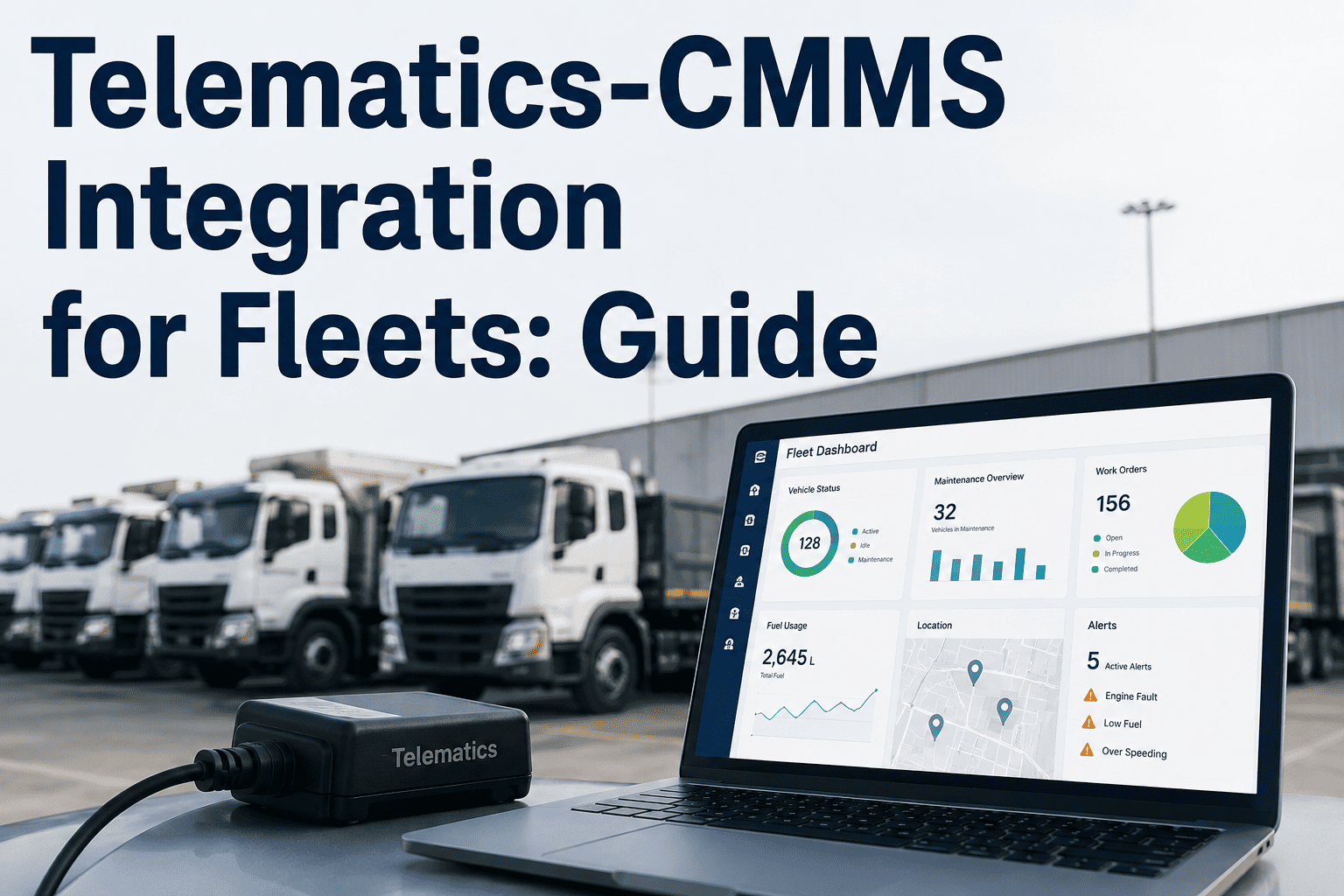
Real-time fault codes, temperature trends, and performance metrics from every vehicle. AI analyzes patterns to predict failures 2-4 weeks before breakdown.
Impact:
67% reduction in roadside breakdowns
Fuel Consumption Tracking
Per-vehicle and per-route energy management data identifies inefficient vehicles, routes, and operator behaviors. Essential for grant reporting and budget justification.
Impact:
12-18% fuel cost reduction
GPS Asset Tracking
Real-time location for every vehicle. Verify service delivery, optimize routing, and document response times for citizen inquiries and council reports.
Impact:
23% improvement in route efficiency
Component Health Sensors
Tire pressure, brake wear, hydraulic system health, and PTO engagement tracking. Automated alerts trigger work orders before component failure.
Impact:
41% longer component life
Municipal Fleet Compliance Requirements
Municipal fleets operate under multiple overlapping regulatory frameworks—federal, state, and local. Missing a single requirement can jeopardize grant funding, trigger audit findings, or create liability exposure. Your fleet management compliance requirements extend far beyond basic DOT regulations.
| Regulatory Area |
Requirements |
Documentation Needed |
Audit Frequency |
| Federal Motor Carrier (FMCSA) |
CDL verification, drug testing, hours of service, vehicle inspections |
Driver files, test results, DVIRs, maintenance records |
Random + complaint-based |
| EPA Clean Air Act |
Emissions compliance, idle reduction, alternative fuel reporting |
Emissions tests, fuel consumption logs, fleet composition |
Annual reporting |
| Federal Transit Administration |
State of good repair, asset management plans, safety certification |
Maintenance records, capital plans, safety audits |
Triennial review |
| OSHA Workplace Safety |
Equipment safety, operator training, incident reporting |
Training records, inspection logs, incident reports |
Complaint-based + random |
| State DOT Requirements |
Annual inspections, weight limits, permit compliance |
Inspection certificates, permits, registration |
Annual + roadside |
| Grant Compliance (FEMA, DOT, EPA) |
Asset utilization, matching funds, performance metrics |
Usage logs, financial records, outcome reports |
Per grant cycle |
← Swipe to see more →
Public Records Requests
Citizens can request maintenance records, fuel purchases, and vehicle costs. Response deadlines range from 3-30 days depending on jurisdiction. Complete digital records enable same-day response.
Council Budget Reviews
Annual budget justification requires detailed cost-per-mile, maintenance trends, and replacement schedules. Integrated CMMS provides instant reporting for budget hearings.
Union Agreement Compliance
Many municipal fleets operate under collective bargaining agreements covering maintenance staffing, outsourcing limits, and equipment assignments. Documentation proves compliance.
Insurance & Liability
Municipal liability requires documented maintenance history for every accident investigation. Missing records create presumption of negligence in litigation.
Build Your Audit-Ready Municipal Fleet System
Join municipal fleets using Oxmaint for compliance documentation, predictive maintenance, and citizen service optimization
Making Audits Painless — A Fleet Management Action Plan with SOPs
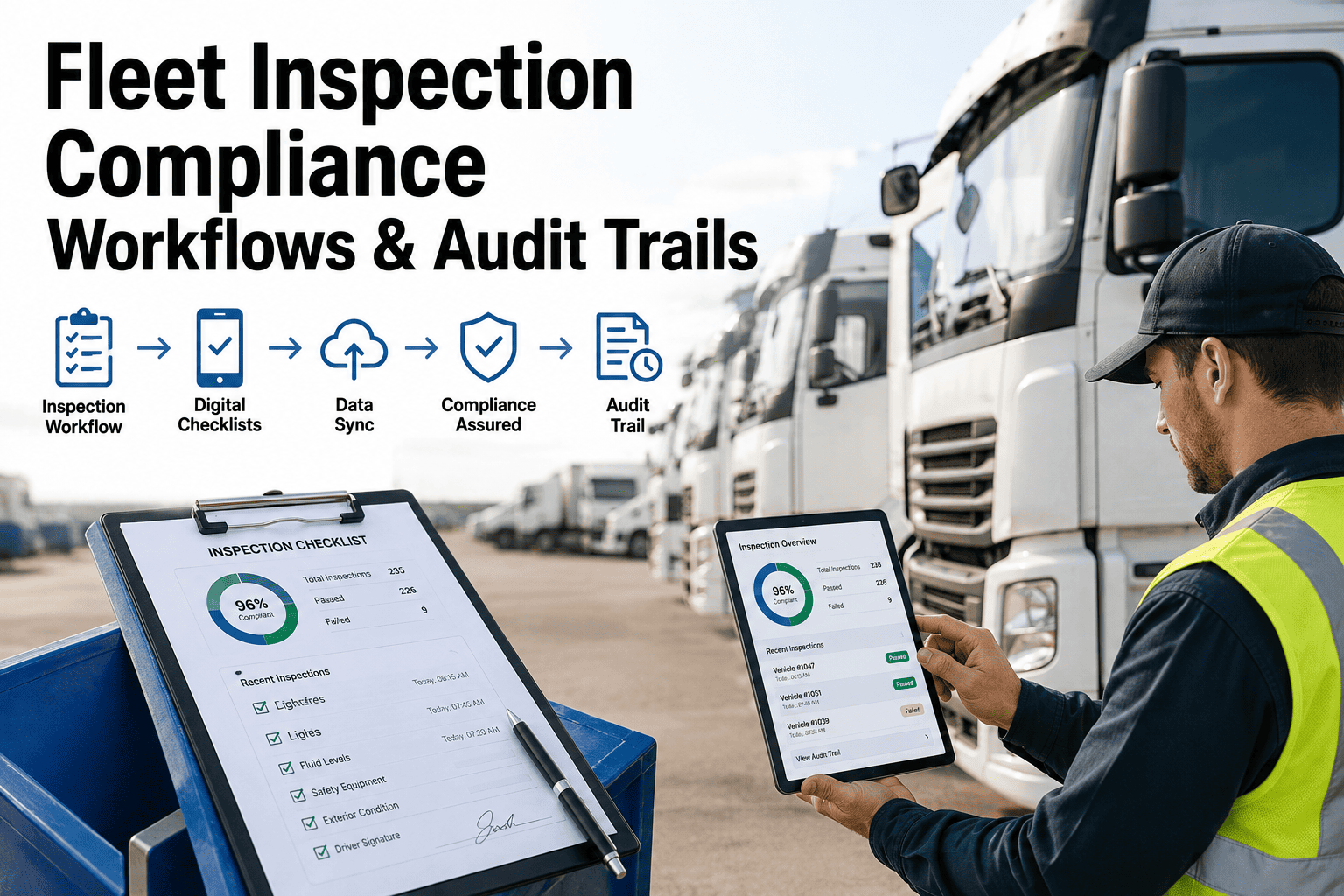
The difference between a 34-hour audit scramble and a 12-minute documentation export is systematic preparation. Standard Operating Procedures combined with work order automation create audit trail documentation automatically—every inspection, every repair, every fuel purchase logged with timestamps and digital signatures.
Pre-Trip Digital Inspection
Operator completes mobile checklist covering safety items, fluid levels, and equipment function. Photo documentation required for any defects.
Automatic Defect Routing
Defects flagged during inspection automatically generate work orders. Critical safety items trigger immediate supervisor notification.
Post-Trip Completion
End-of-shift inspection confirms vehicle condition. Fuel level, hour meter, and mileage automatically captured from telematics.
Compliance Impact:
Satisfies FMCSA DVIR requirements, creates liability protection documentation
Automated PM Triggers
Work orders generate automatically based on hours, miles, or calendar intervals. Telematics provides real-time meter readings—no manual tracking required.
Department Coordination
PM scheduling considers department operational needs. System prevents scheduling conflicts with planned service events or peak demand periods.
Compliance Documentation
Every PM creates complete record: technician, parts used, time spent, and inspection results. Digital signature confirms work completion.
Compliance Impact:
Demonstrates manufacturer maintenance requirements, supports warranty claims
Standardized Work Order Creation
Every repair request follows consistent format: problem description, vehicle identification, priority level, and requested completion date.
Parts & Labor Tracking
All parts issued against work orders with cost tracking. Labor hours recorded by technician for accurate cost-per-vehicle reporting.
Closure & Quality Check
Supervisor review required before work order closure. Road test documentation and quality verification creates complete repair record.
Compliance Impact:
Complete audit trail for all maintenance activities, cost tracking for budget reporting
Audit Response Capabilities
When auditors arrive—whether state DOT, federal grant reviewers, or internal audit staff—Oxmaint CMMS provides instant access to every record they need. No searching, no missing files, no "we'll get back to you."
Complete vehicle maintenance history
Digital inspection records with photos
Parts traceability and costs
Technician certifications and training
Fuel consumption by vehicle and department
Work order history with timestamps
PM compliance percentages
One-click PDF export for any date range
12 min
Average audit response time
100%
Documentation completeness
Zero
Missing record findings
Multi-Site Rollouts for Municipal Operations
Municipal fleets often span multiple facilities—main garage, satellite yards, department-specific locations. Multi-site rollouts require consistent processes across locations while accommodating department-specific needs and existing workflows.
Weeks 1-3: Central Garage Pilot
Configure Oxmaint CMMS for primary maintenance facility
Import existing vehicle and equipment records
Train fleet management staff on core workflows
Establish baseline KPIs for comparison
Success Criteria:
All work orders processed digitally, staff proficiency achieved
Weeks 4-6: Department Integration
Roll out mobile inspections to Public Works operators
Configure department-specific inspection checklists
Integrate telematics data from existing GPS systems
Enable fuel card integration for consumption tracking
Success Criteria:
Operators completing daily inspections, telematics flowing to CMMS
Weeks 7-10: Satellite Facilities
Extend system to Parks, Water/Sewer, and other departments
Configure location-specific inventory and parts
Train department supervisors on reporting dashboards
Enable cross-department asset sharing workflows
Success Criteria:
All departments live, unified reporting operational
Weeks 11-12: Optimization & Reporting
Configure council and management reporting dashboards
Enable predictive maintenance fleet management alerts
Establish audit response procedures and training
Document SOPs and ongoing training materials
Success Criteria:
Full compliance capability, predictive analytics active
Fleet Management CMMS Best Practices
01
Implement Mobile Inspections Fleet Management for All Operators
Every vehicle operator completes digital pre-trip and post-trip inspections via smartphone or tablet. Photo documentation, GPS location stamps, and automatic defect routing create complete inspection records that satisfy FMCSA requirements and protect against liability claims.
02
Connect Telematics for Real-Time Asset Tracking Fleet Management
Integrate existing GPS and telematics systems with Oxmaint CMMS. Automatic hour meter updates trigger PM schedules accurately. Fault code alerts generate work orders before operators report problems. Location data supports citizen inquiry response.
03
Automate Work Orders from Sensor Alerts
When telematics detects abnormal engine temperature, low tire pressure, or other condition monitoring alerts, work order automation creates repair tickets with diagnostic context. Technicians receive complete information before touching the vehicle.
04
Track Energy Management Metrics for Budget Reporting
Fuel consumption by vehicle, department, and route provides data for budget justification and grant reporting. Identify inefficient vehicles for replacement prioritization. Document alternative fuel usage for EPA compliance and sustainability reporting.
05
Maintain Complete Audit Trail for Every Transaction
Every inspection, work order, parts issue, and fuel transaction creates timestamped records with user identification. When auditors request documentation, export complete history for any vehicle or date range in seconds—not hours.
06
Configure Department-Specific Dashboards and Reports
Public Works needs snow plow readiness. Parks needs mower availability. Water/Sewer needs emergency response capability. Configure dashboards showing each department the metrics that matter for their operations and service delivery.
Fuel Efficiency Gains
12% reduction through monitoring and route optimization
$49,440
Breakdown Prevention
41% reduction × $847 avg cost per incident
$30,913
Audit Preparation Savings
34 hrs → 12 min per audit × 4 audits × $45/hr
$6,084
Extended Vehicle Life
Predictive maintenance extends replacement cycles 15%
$67,500
Total Annual Savings
Per vehicle: $2,052 | Fleet-wide annual savings
$153,937
"Before Oxmaint, our state DOT audit took three staff members four days to compile records—and we still had findings for missing documentation. After implementation, our last audit took 45 minutes. The auditor commented it was the most organized municipal fleet records she'd ever reviewed. Beyond compliance, we've reduced unplanned breakdowns by 38% and our council finally has accurate cost-per-mile data for replacement decisions."
Jennifer Martinez
Fleet Manager, City of Riverside Public Works (127 vehicles)
Ready to Transform Your Municipal Fleet Operations?
Join cities using Oxmaint for audit-ready compliance, predictive maintenance, and citizen service excellence
1
Compliance Is Non-Negotiable
Municipal fleets face federal, state, and local requirements plus public accountability. Integrated CMMS creates audit-ready documentation automatically.
2
Service Quality Drives Everything
Citizens depend on fleet availability for essential services. Predictive maintenance keeps vehicles operational when communities need them most.
3
SOPs Create Consistency
Standard procedures across departments ensure compliance regardless of staff turnover. Digital workflows enforce consistency automatically.
4
Data Justifies Decisions
Budget requests, replacement schedules, and staffing decisions require documented data. Integrated CMMS provides instant reporting for council presentations.
How long does municipal fleet CMMS implementation take?
Most municipal fleets complete full implementation in 10-12 weeks using our phased approach. Central garage goes live in weeks 1-3, with department rollouts following over the next 6-8 weeks. We work around your operational schedule—no service disruptions required.
Sign up free to start your implementation planning.
Can Oxmaint integrate with our existing GPS/telematics systems?
Yes. Oxmaint integrates with major municipal fleet telematics providers including Networkfleet, Geotab, GPS Trackit, and Samsara. We also connect with fuel card systems (WEX, Fuelman, Voyager) and existing ERP/financial systems. Custom integrations available for proprietary systems.
Book a demo to discuss your specific integrations.
How does Oxmaint help with federal grant compliance?
Grant compliance requires documented asset utilization, maintenance records, and performance metrics. Oxmaint automatically tracks all required data points and generates reports formatted for FTA triennial reviews, FEMA reimbursement claims, and EPA alternative fuel reporting.
Sign up free to see grant compliance reporting.
What about public records request compliance?
Oxmaint enables instant response to public records requests. Export complete maintenance history, fuel records, or cost data for any vehicle or date range in seconds. Redaction tools available for sensitive information. Most jurisdictions see same-day response capability vs. multi-day searches with paper records.
Book a demo to see public records capabilities.
How do we train seasonal and part-time staff on the system?
Mobile inspection apps require minimal training—most operators are proficient within 15 minutes. Role-based access means seasonal staff only see relevant functions. Built-in help guides and video tutorials support self-service training. We provide train-the-trainer sessions for your supervisors.
Sign up free to explore training resources.