AI Tire Pressure Monitoring (TPMS) for Commercial Fleets
By Alex Jordan on April 1, 2026
Tire failures account for 24% of all commercial vehicle out-of-service orders — making them the second most common reason a truck gets pulled from the road at a weigh station. Yet the majority of those failures were predictable: under-inflation builds heat, heat accelerates casing breakdown, and casing breakdown leads to blowout. AI-powered TPMS goes far beyond simple pressure alerts — monitoring temperature differentials, tread wear rate, load distribution, and inflation decay patterns to predict tire failure 1–3 weeks before it occurs. This guide covers how AI tire monitoring works, what failure modes it detects, which technologies power it including OBD integration, digital twin simulation, and SAP workflow sync, and how Oxmaint's predictive maintenance platform turns tire sensor data into scheduled replacements before a failure event occurs.
FLEET TIRE SAFETY · ARTICLE · 2026
AI Tire Pressure Monitoring: Predict Blowouts 1–3 Weeks Before They Happen
Oxmaint AI monitors tire pressure, temperature, tread wear, and inflation decay in real time — generating predictive alerts before a tire failure grounds your vehicle at the roadside or creates a safety incident at highway speed.
What AI Tire Monitoring Detects — That Standard TPMS Misses
Standard TPMS alerts you when pressure is already critically low — when the tire may already be damaged. AI monitoring detects the conditions that lead to failure weeks in advance. Oxmaint's tire AI is trained on vehicle-specific baselines, not generic pressure thresholds, delivering fewer false positives and more actionable early warnings.
Slow Inflation Decay
High Risk
Pressure loss of 2–5 PSI per week — invisible without monitoring — signals a developing slow puncture or valve stem failure weeks before the tire is dangerously under-inflated.
Thermal Overload Pattern
High Risk
Sustained sidewall temperatures above 70°C accelerate casing breakdown exponentially. AI detects abnormal heat signatures during normal operation — before physical casing damage is visible.
Uneven Wear Distribution
Medium Risk
Comparing wear rates across axles and sides identifies alignment, overloading, or suspension issues causing accelerated tread loss on specific positions before the tire reaches minimum tread depth.
Axle Load Imbalance
Medium Risk
Pressure differential between axle sides reveals load distribution problems — a common cause of premature shoulder wear and sidewall stress cracking that leads to blowout under load.
Pressure Spike Under Braking
High Risk
Abnormal pressure spikes during brake events indicate internal casing damage or bead seat separation — conditions invisible externally but detectable through sensor anomaly patterns.
Tread Depth Threshold Alert
Medium Risk
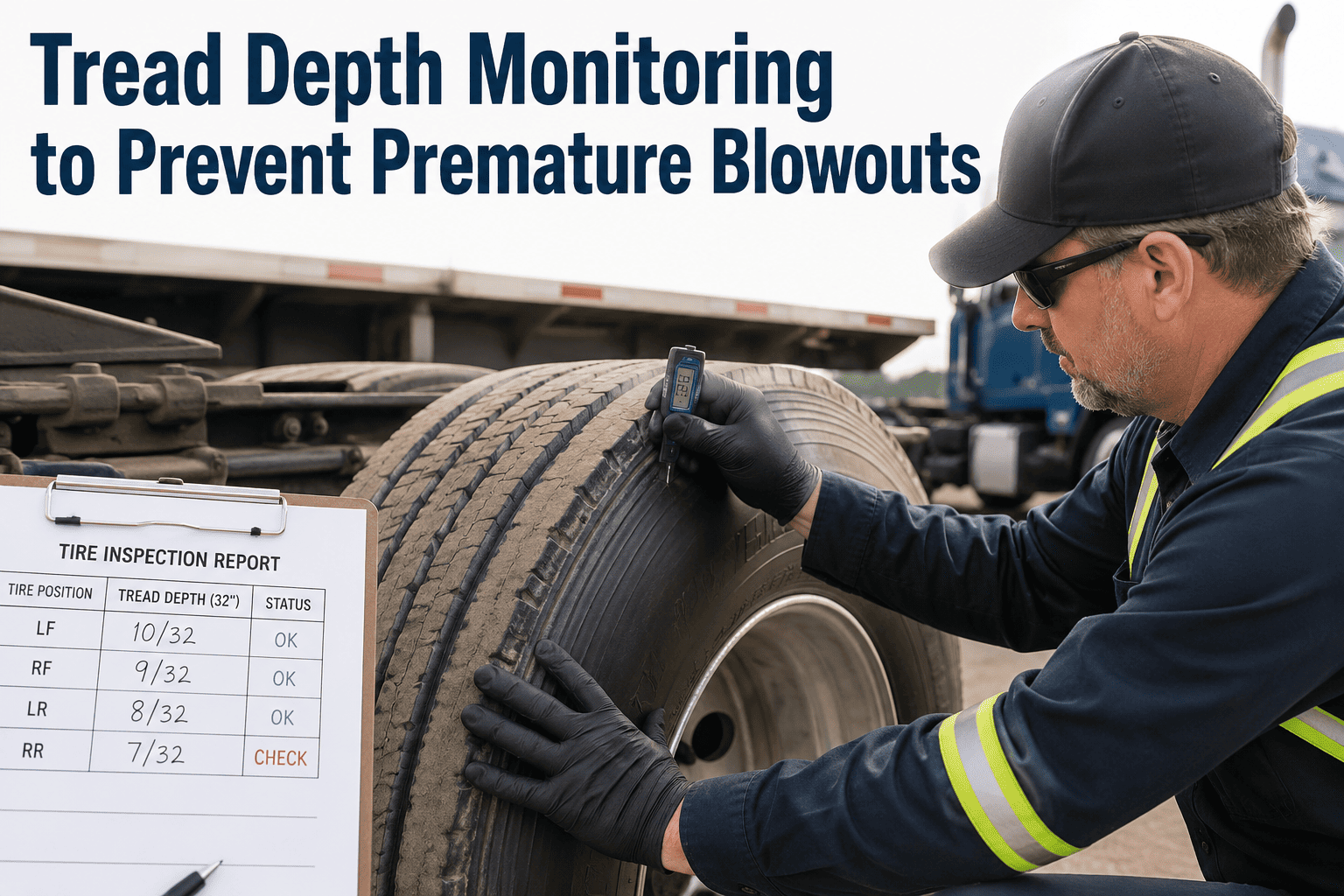
AI extrapolates tread wear rate and predicts the exact date each tire will reach the legal minimum — scheduling replacement before the vehicle fails an inspection or traction is compromised.
Technologies Behind AI Tire Monitoring
Accurate tire failure prediction requires data from multiple sources working together. Oxmaint fuses all six technology streams into a single tire health score per position, per vehicle — updated continuously and visible on one dashboard.
AI Camera Vision
Visual Inspection
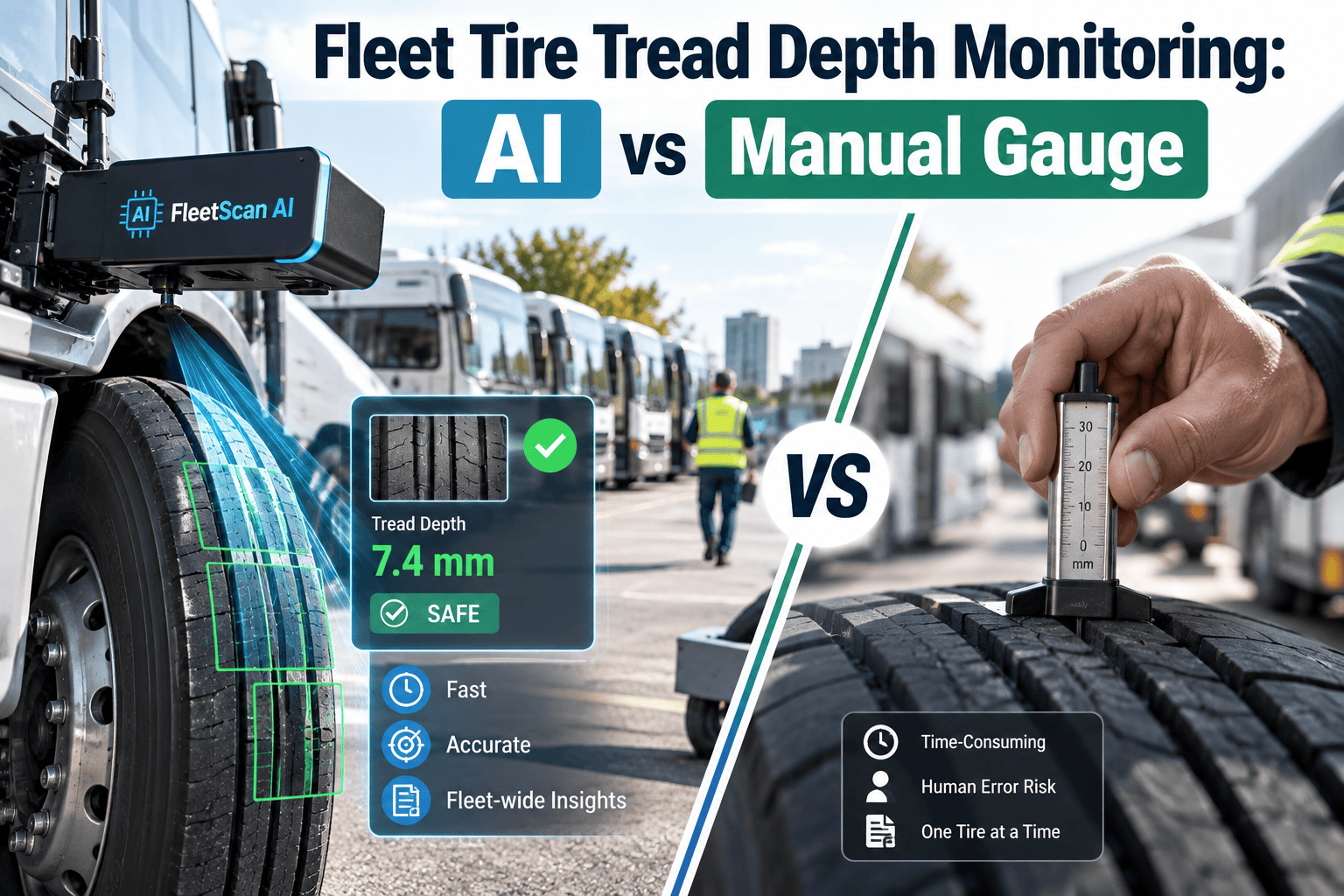
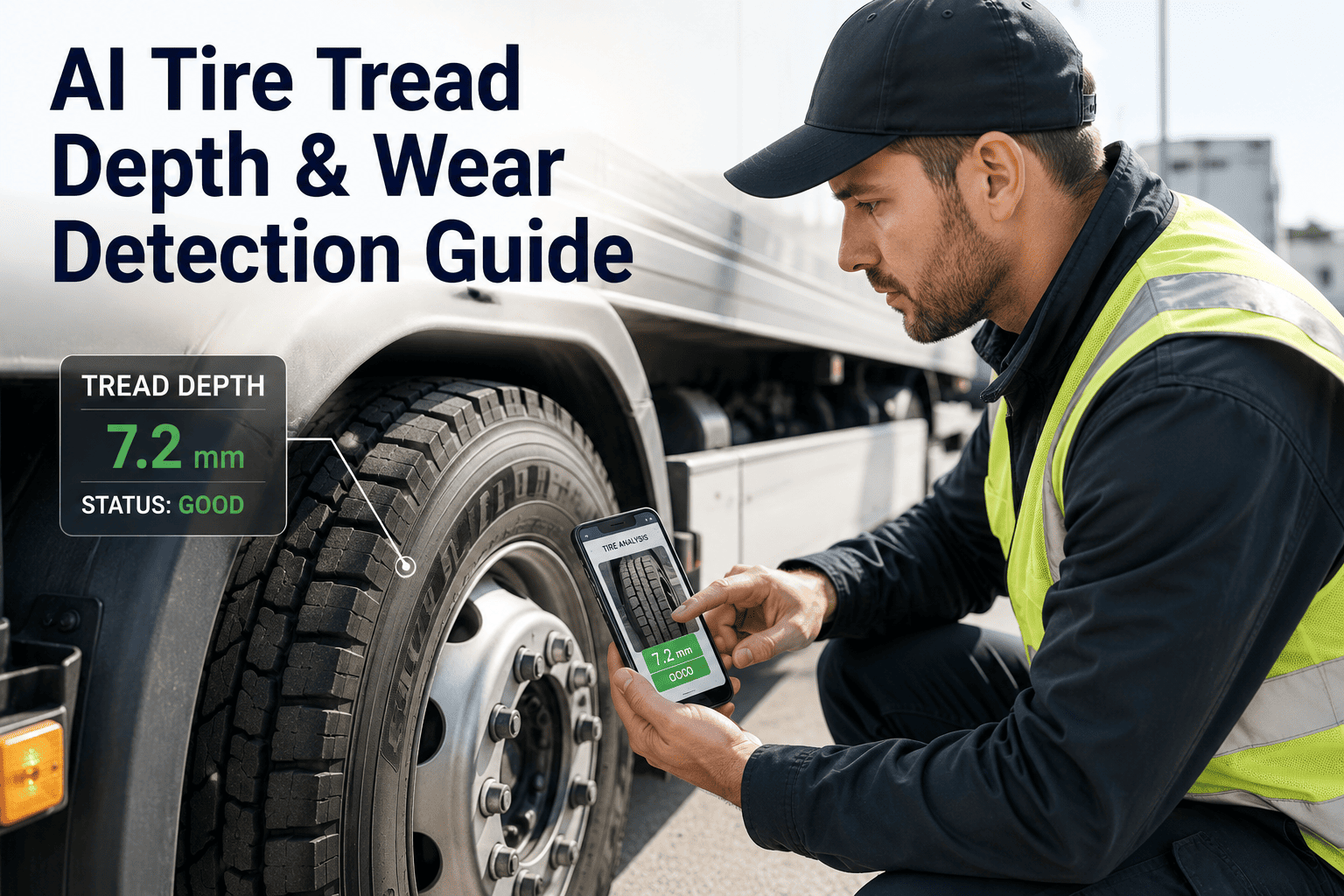
Camera systems measure tread depth and detect sidewall cracking, bulges, and foreign object damage during pre-trip walkarounds — automatically, without manual measurement.
AI Digital Twin
Predictive Model
A virtual tire model per vehicle position simulates wear progression under current route, load, and inflation data — predicting exact mileage to replacement for every tire on the fleet.
OBD-II & Telematics
Live Data Feed
Vehicle speed, load, braking events, and ABS data combine with tire sensor readings to build a complete picture of operating stress — enabling load-adjusted wear prediction.
PLC & SCADA
Depot Integration
Depot tire inflation equipment feeds automated inflation records directly into Oxmaint — so every pressure correction is logged against the vehicle's maintenance history automatically.
SAP & ERP Integration
Workflow Sync
AI-generated tire replacement work orders sync directly into SAP PM for parts procurement and scheduling — with automatic cost capture per axle position and vehicle.
Preventive + AI Hybrid
Layered Strategy
Scheduled tire rotations continue on fixed intervals for compliance. AI adds condition-triggered alerts between cycles — replacing tires based on actual condition, not calendar assumptions.
Compliance Categories AI Tire Monitoring Automates
Tire Compliance Categories Oxmaint Automates for Fleet Operations
Pressure Compliance
Continuous + Pre-Trip
Real-time pressure monitoring against manufacturer spec for every tire position. Pre-trip low-pressure alerts prevent drivers from departing with under-inflated tires. All readings logged automatically.
Tread Depth Compliance
Monthly + AI-Triggered
Wear rate modelling predicts legal minimum tread depth dates per tire. AI triggers replacement work orders 3–4 weeks before the tire reaches minimum — eliminating OOS violation risk at inspections.
Temperature Safety
Continuous — Route-Based
Thermal alerts fire when sustained sidewall temperatures exceed safe operating range. Route-adjusted benchmarks prevent false positives on normal summer highway operation.
"Oxmaint flagged abnormal heat patterns on four tires across our fleet during a summer long-haul run. We replaced them at the next depot stop. Two of those tires showed internal casing damage when dismounted — they would not have lasted another 200 miles."
— Fleet Safety Manager, Long-Haul Carrier, Texas USA · 2025
Tire Cost Impact — AI Monitoring vs Reactive Replacement
The total cost of tire management is not just the price of rubber — it includes fuel penalties from under-inflation, blowout events, OOS violations, and driver delays. Oxmaint's tire cost dashboard tracks all four per vehicle, per month, giving your CFO a complete tire economics picture.
Tire Cost Comparison — AI Monitoring vs No Monitoring
Annual cost per truck — 50,000 miles/year average
Cost Category
Without AI Monitoring
With Oxmaint AI
Annual Saving
Blowout events (avg 1.2/year)
$4,800–$9,600
$0–$800
$4,000–$8,800
Fuel penalty (under-inflation)
$1,200–$2,400
$200–$400
$1,000–$2,000
Premature tire replacements
$1,800–$3,600
$900–$1,400
$900–$2,200
OOS violations & fines
$800–$3,000
$0–$200
$800–$2,800
Downtime (roadside events)
$2,000–$5,000
$0–$500
$2,000–$4,500
Total Annual Cost per Truck
$10,600–$23,600
$1,100–$3,300
$9,500–$20,300
Oxmaint TPMS Platform Features
Real-Time Monitoring
Continuous — All Positions
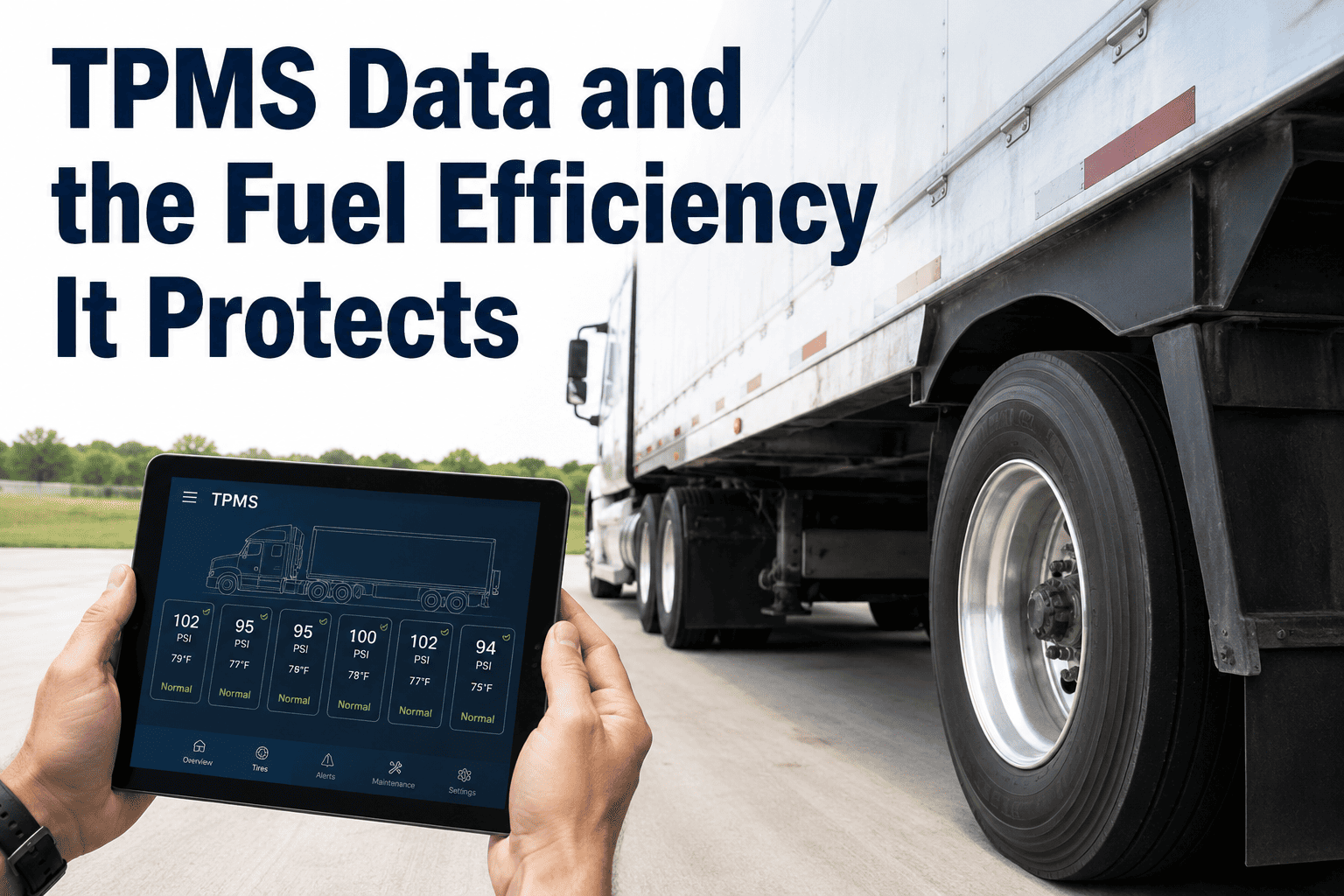
Pressure per tire position updated every 60 seconds
Sidewall temperature monitoring across all axles
Driver in-cab alert for immediate pressure events
Axle load distribution monitoring
Predictive Intelligence
AI-Triggered Alerts
Blowout risk score per tire — 1–3 weeks advance warning
Tread depth replacement date forecast per position
Rotation recommendation based on wear differential
Alignment issue detection from differential wear data
Compliance & Reporting
Audit-Ready Records
FMCSA 49 CFR 396.3 documentation automated
Full tire service history per position per vehicle
Accessible at roadside via mobile app under 60 seconds
Auto work order generation direct to shop and SAP PM
Monitor Fleet Tire Health on Oxmaint
Oxmaint tracks tire pressure, temperature, tread depth, and blowout risk in real time — alerting your team weeks before a failure and generating replacement work orders automatically.
Frequently Asked Questions — AI Tire Pressure Monitoring
How is AI tire monitoring different from standard TPMS?
Standard TPMS alerts when pressure is already critically low. Oxmaint AI detects slow decay trends, thermal anomalies, and wear patterns 1–3 weeks before any standard warning would activate.
Does Oxmaint TPMS require new hardware on every vehicle?
Vehicles with existing TPMS sensors or telematics require no new hardware. For vehicles without, retrofit valve-stem sensors install in under 30 minutes per vehicle with no downtime impact.
How much fuel saving does proper tire inflation deliver?
Every 10 PSI of under-inflation increases fuel consumption by approximately 0.3%. On a 50-truck fleet running 100,000 miles per year each, maintaining correct inflation saves $30,000–$60,000 annually in fuel alone.
Can Oxmaint detect alignment problems through tire data?
Yes. Differential wear rates between left and right tires on the same axle indicate alignment or suspension issues — often detectable via AI 4–6 weeks before a driver notices any pull or vibration.
Does AI tire monitoring satisfy FMCSA inspection requirements?
Yes. Oxmaint stores every pressure reading, alert, and service record under 49 CFR 396.3. Records are accessible at roadside via mobile app — giving inspectors auditable maintenance evidence instantly.
What ROI should I expect from AI tire monitoring?
On a 50-truck fleet, avoiding 1–2 blowout events per month and recovering fuel savings from proper inflation delivers $80,000–$180,000 annually — typically 4–8× the platform cost in Year One.
Prevent Tire Blowouts Before They Happen
Start monitoring fleet tire health with Oxmaint AI — free trial, no credit card required.
-for-commercial-fleets.png)