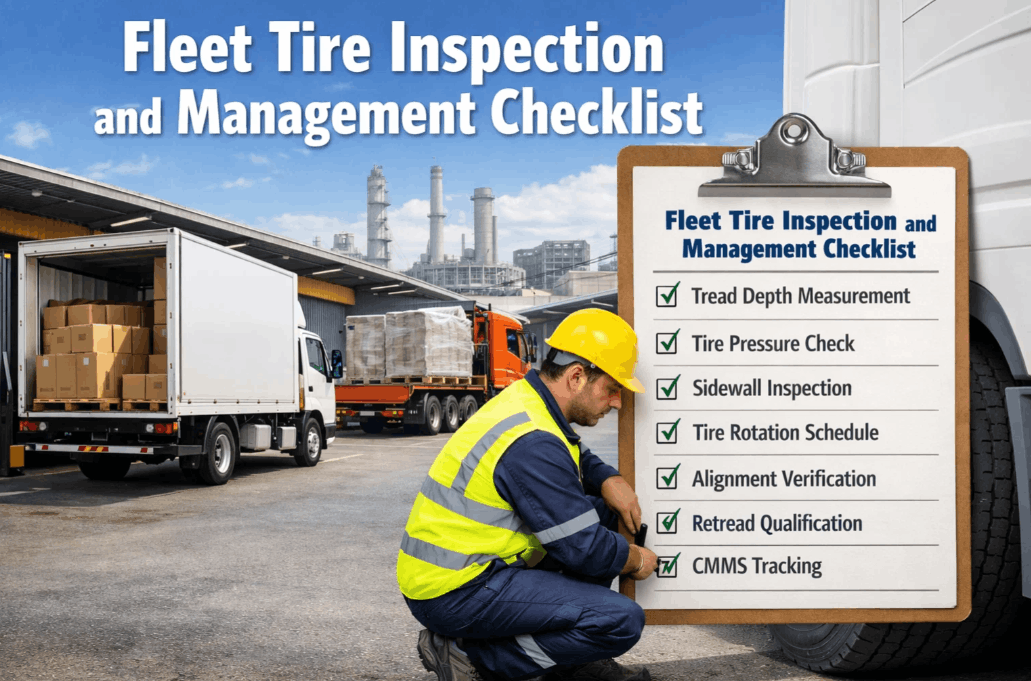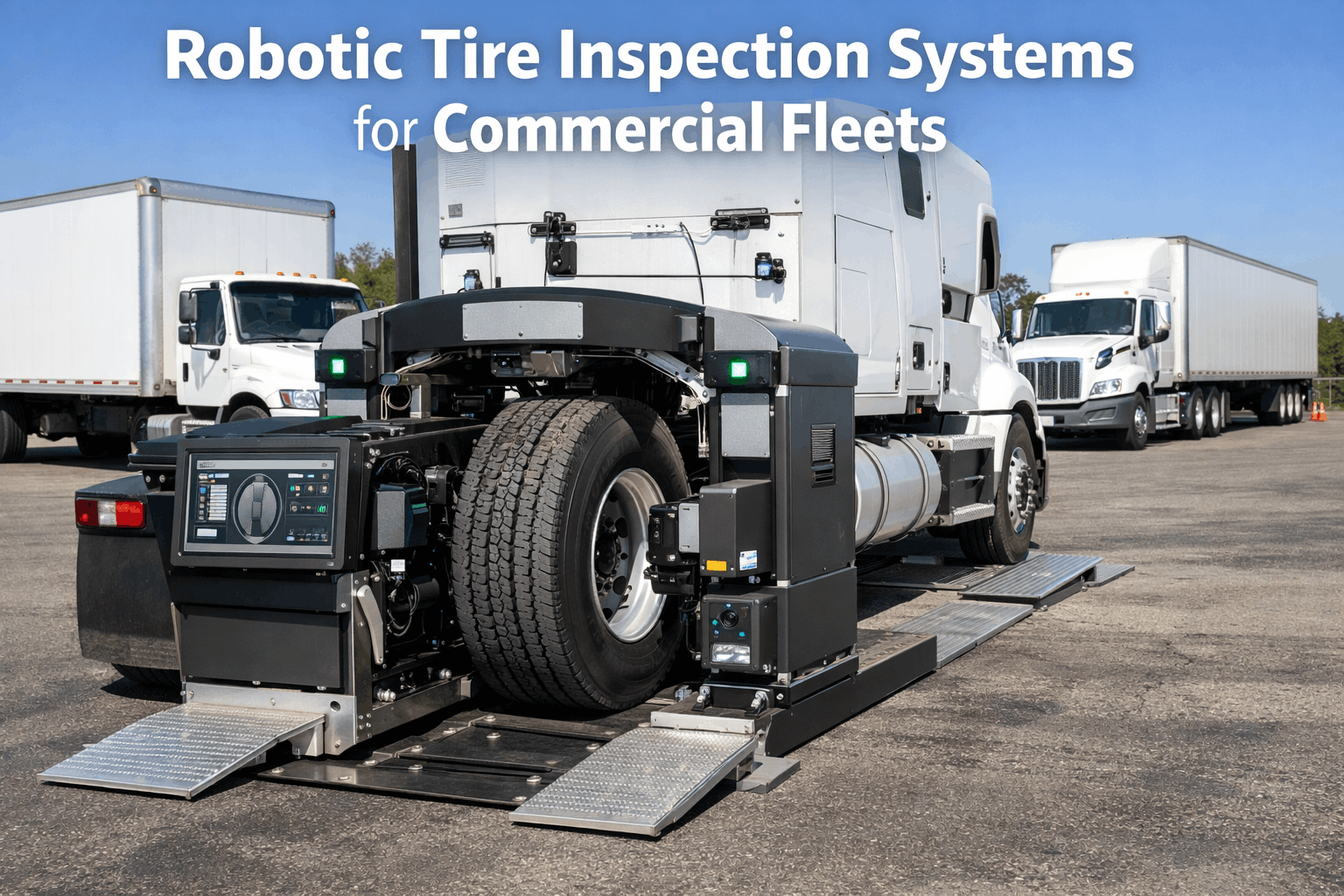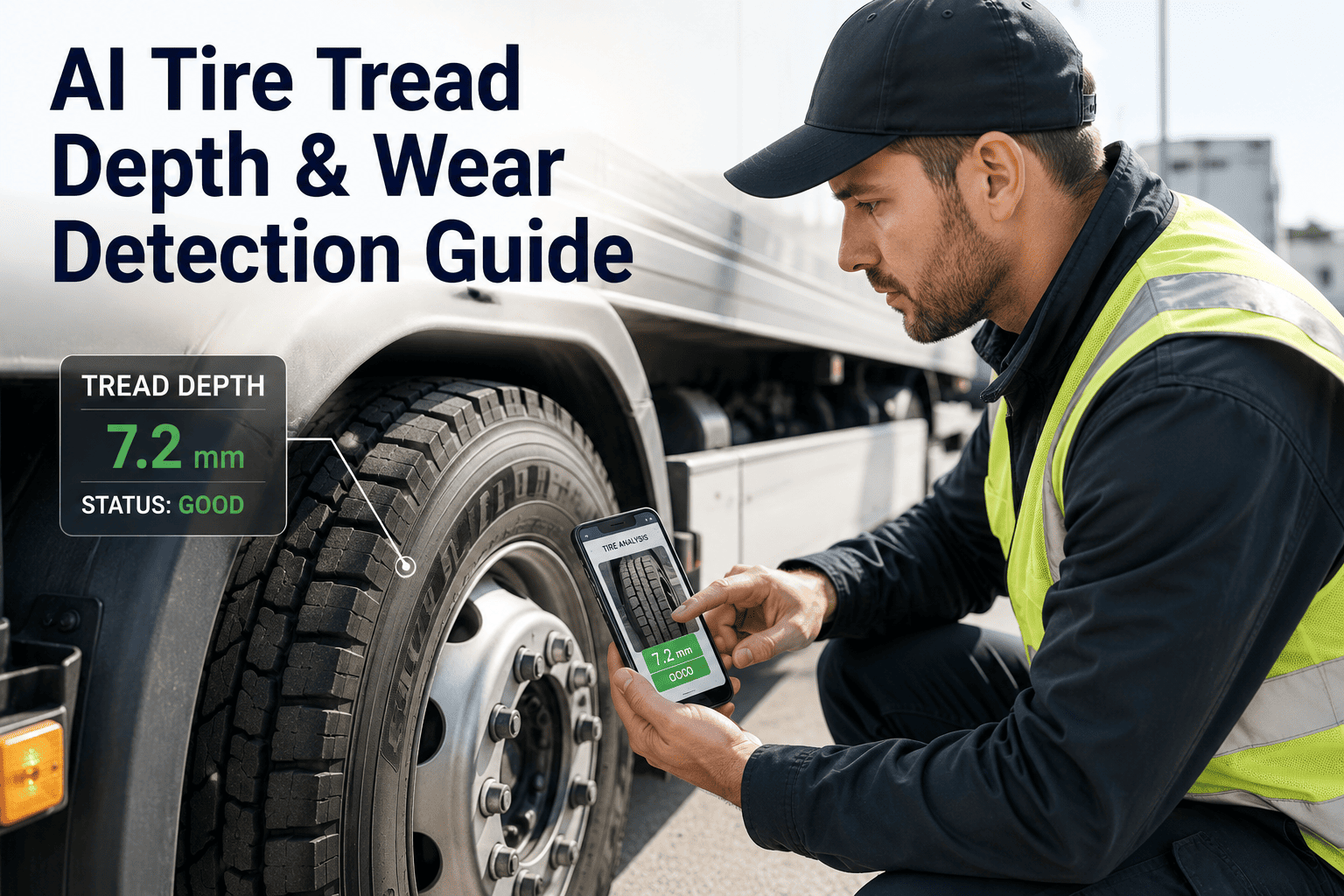
AI tire tread detection replaces the slow, error-prone manual gauge check with computer vision that captures exact tread depth on every vehicle, every inspection cycle. Automated tire wear detection closes the gap between a passing glance and a measurable, safety-critical record that FMCSA and fleet auditors expect. By deploying AI tire inspection at the drive-through lane, maintenance teams catch uneven wear, sidewall damage, and pressure-related anomalies long before a roadside failure or CSA violation. OxMaint brings this AI tire tread scanning directly into your CMMS workflow—triggering work orders, tracking replacement thresholds, and logging tire condition data per asset without a single spreadsheet. You can explore the full platform when you Start Free Trial or book a personalized walkthrough below.
What if every tire on every truck was measured to the 1/32" — automatically?
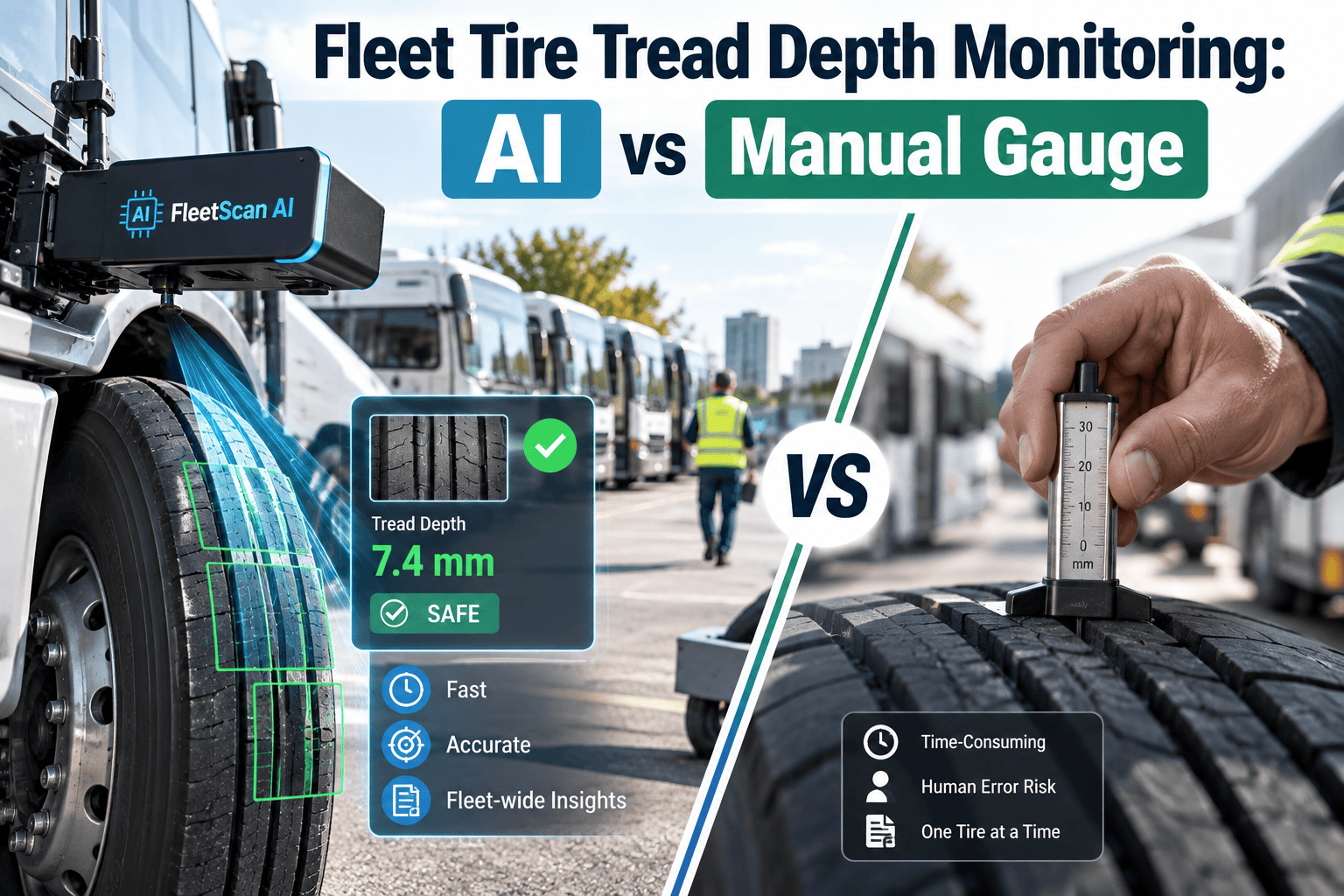
AI tire tread depth detection eliminates manual gauges and paper logs. Vehicles roll through the inspection lane; vision systems capture tread depth, wear patterns, and sidewall condition in seconds. OxMaint turns that data into predictive work orders before a tire becomes a roadside event.
Why fleet tire inspection can't stay manual anymore
A 50-truck fleet running weekly tread checks with a manual gauge spends roughly 260 staff-hours per year on tire inspection alone — and still misses 1 in 4 developing wear issues because the data never leaves the clipboard.
How AI tire tread scanning works in a fleet maintenance lane
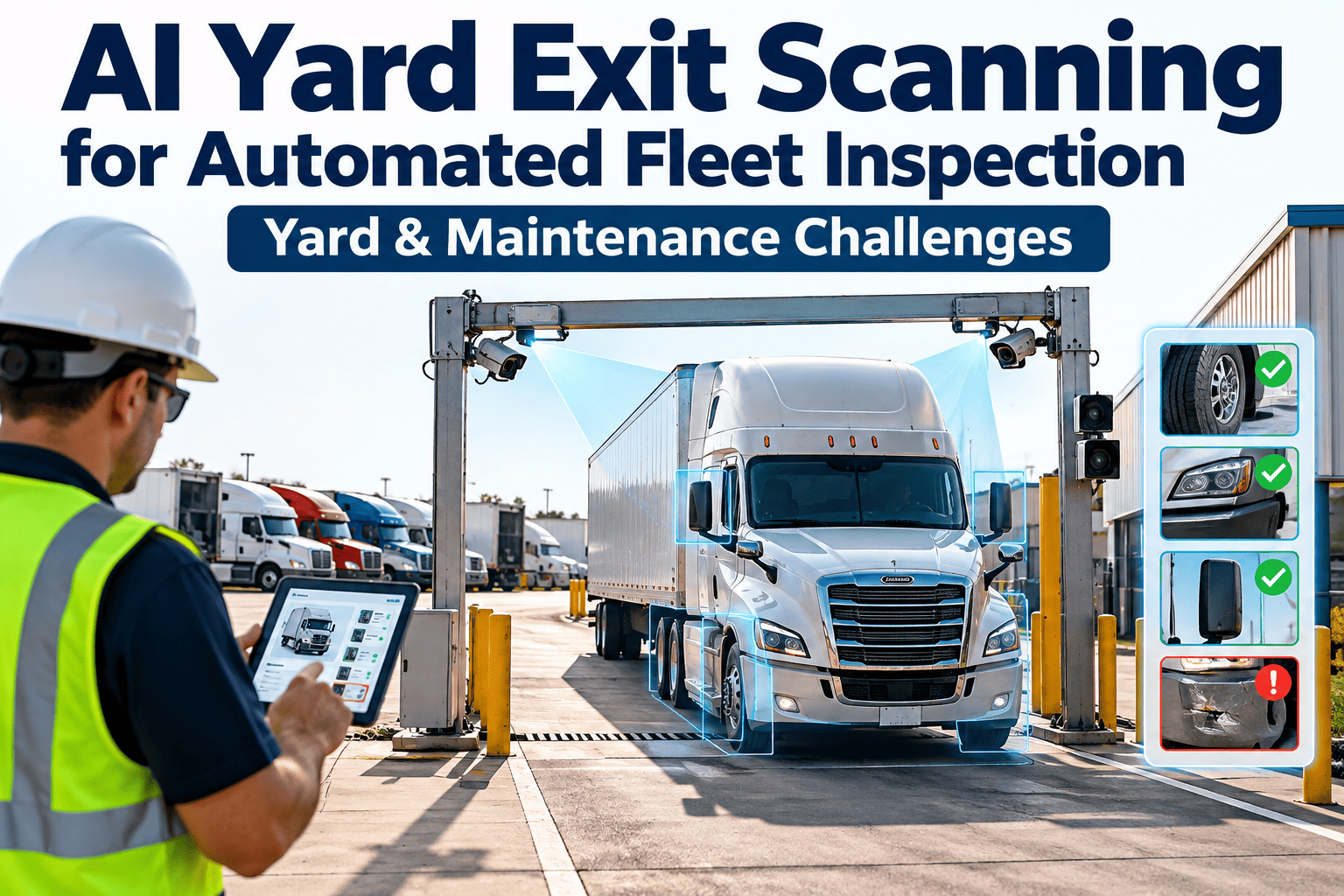
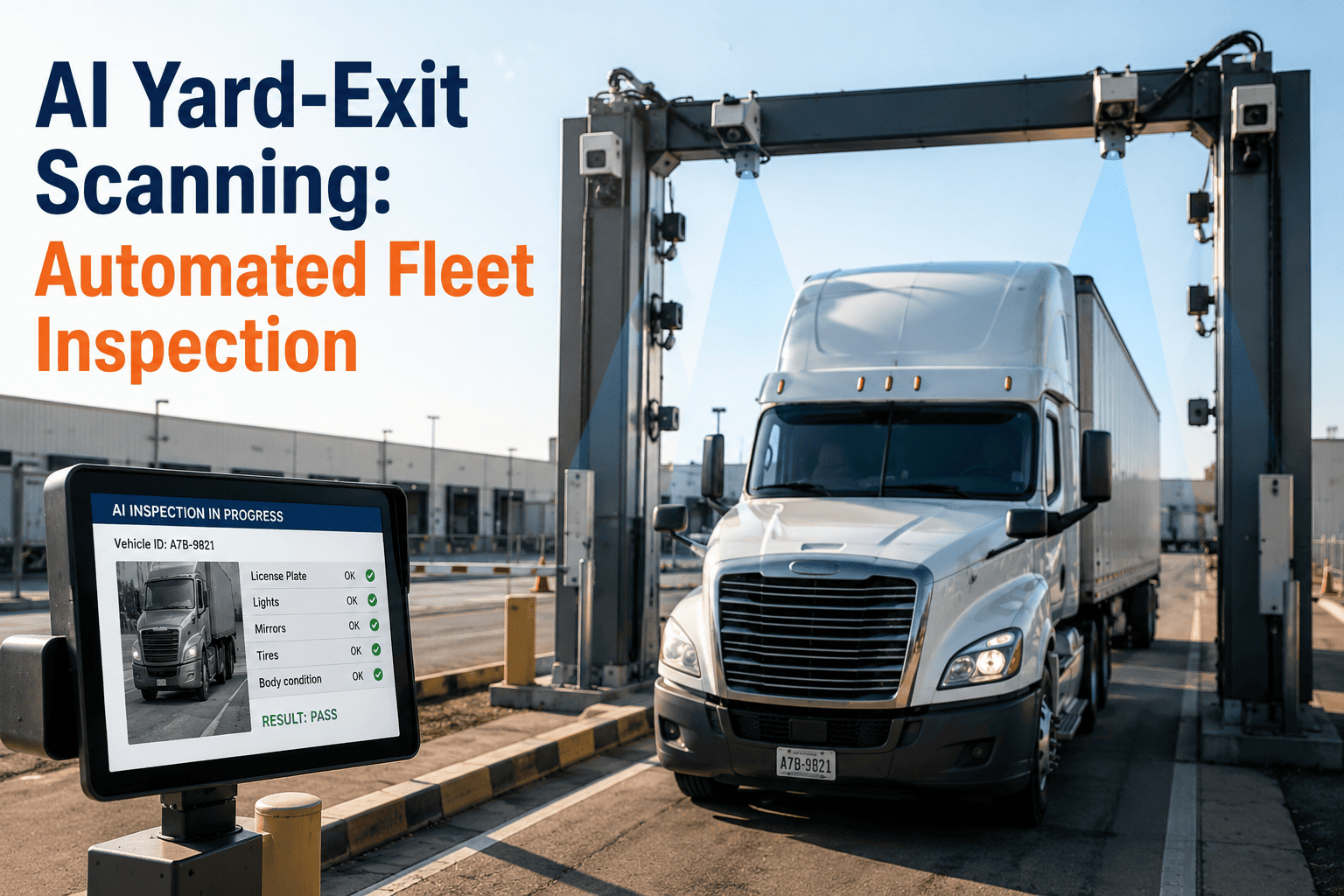
Automated tire inspection AI uses high-resolution imaging and depth-sensing cameras mounted at the drive-through lane or bay entrance. As a vehicle passes at 3–5 mph, the system captures every tire and produces a structured tread-depth report in under 8 seconds.
Multi-angle cameras and laser line scanners image each tire's tread pattern, sidewall, and shoulder as the vehicle enters the yard or bay. No stop required — capture works at low speed.
The AI model measures tread depth to 1/32" precision, flags cupping, feathering, camber wear, and shoulder erosion, and compares each reading to the axle's historical wear curve.
Structured tread readings, wear flags, and tire IDs post directly to the asset record in OxMaint. Threshold breaches auto-generate work orders; no manual data entry, no spreadsheets.
OxMaint's predictive engine projects remaining tread life based on wear rate, routes rotation and replacement work orders automatically, and flags repeat offenders for alignment or suspension inspection.
Tire condition detection: 11 failure modes AI catches before CSA does
AI tire condition detection goes beyond a single depth number. The vision model classifies wear patterns, structural anomalies, and pressure-related damage that a mechanic eyeballing a tread gauge will miss — especially on inner duals and trailer axles.
- Tread depth below 4/32" on steer axle
- Tread depth below 2/32" on drive or trailer
- Uneven depth across the same axle (delta > 2/32")
- Cupping and scalloping (suspension flags)
- Feathering (toe-alignment flag)
- One-sided shoulder wear (camber flag)
- Sidewall bulges and impact breaks
- Cuts, chunking, and stone-drilling damage
- Regrooving inconsistencies and exposed casing
- Center wear (over-inflation indicator)
- Edge wear on both shoulders (under-inflation)
- Mismatched tire diameter on dual assembly
Manual gauge checks vs AI tire tread depth detection
The table below maps the real differences fleet maintenance managers see when they move from clipboard tread checks to AI tire depth detection integrated with a CMMS.
| Inspection dimension | Manual gauge + paper log | AI tire tread detection + OxMaint |
|---|---|---|
| Time per vehicle (all tires) | 8–12 minutes, mechanic stops each wheel | Under 8 seconds at 3–5 mph, no stop |
| Measurement precision | 1/32" reading, human error on angle and pressure | 1/32" laser-verified, consistent every pass |
| Coverage | Often skips inner duals and trailer axles | 100% of tires, every axle, every pass |
| Wear-pattern analysis | Visual guess — cupping and camber wear missed | Classified automatically, linked to root cause |
| Data persistence | Clipboard or spreadsheet, lost within 30 days | Permanent asset-level record in OxMaint CMMS |
| Work-order trigger | Manual entry, delayed or forgotten | Auto-generated when tread drops below threshold |
| Audit readiness (FMCSA / CSA) | Incomplete logs, retroactive data entry | Time-stamped photo evidence per tire, per date |
A 120-truck regional fleet: from 14 roadside events to zero in year one
A regional less-than-truckload carrier operating 120 power units and 350 trailers was averaging 14 tire-related roadside events per year — costing an estimated $16,800 in fines, tows, and delayed-load penalties, plus uncounted customer churn.
ROI: The fleet recovered $15.5K in direct tire-event costs, eliminated 78 hours of mechanic inspection time, and avoided an estimated $40K in FMCSA intervention penalties. Payback on the AI + OxMaint deployment: under 4 months.
How OxMaint turns AI tire data into maintenance action
OxMaint is the AI-powered CMMS that connects tire tread readings to work orders, preventive schedules, inventory, and analytics — so vision data becomes maintenance action, not just a dashboard.
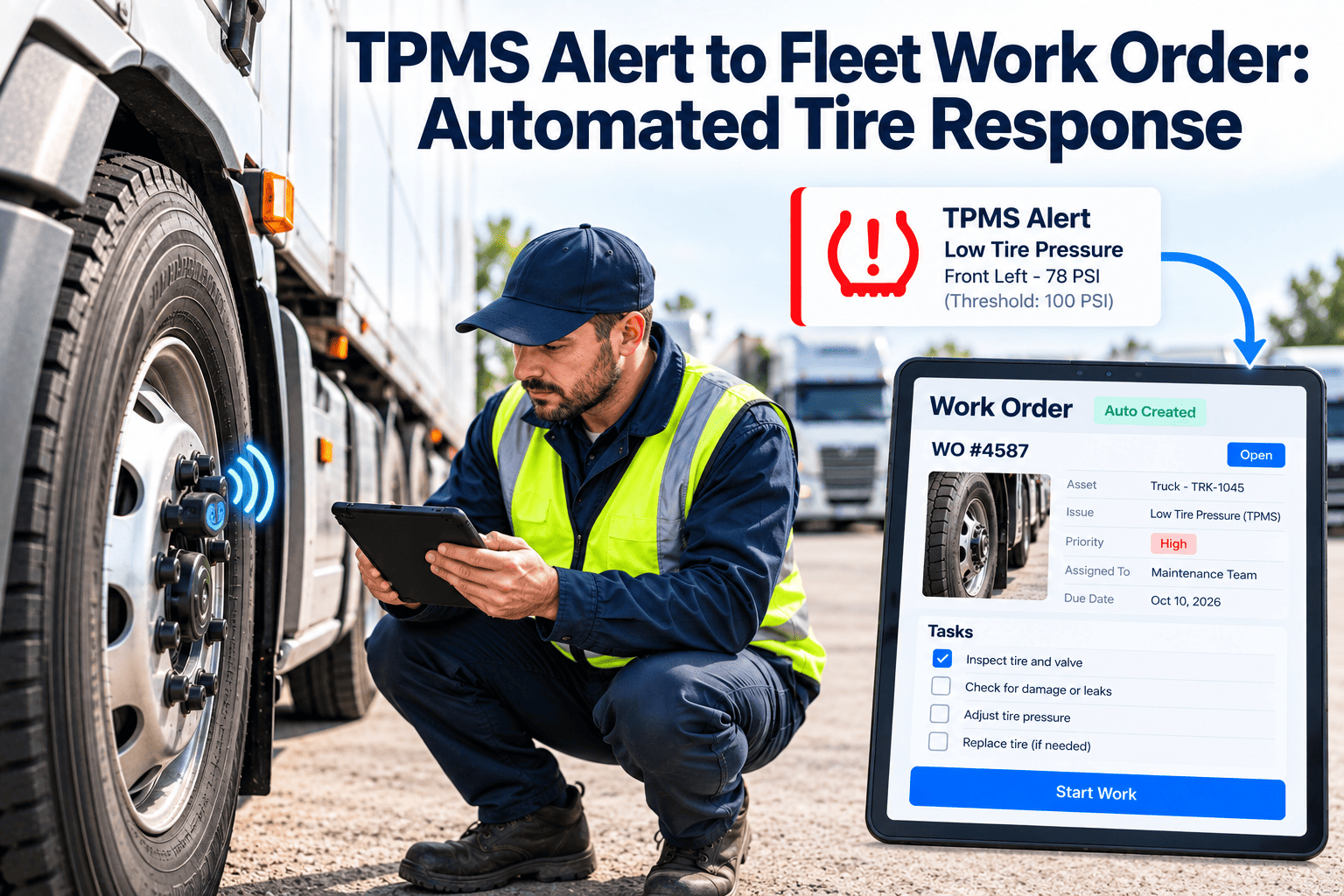
When AI tire tread depth detection logs a reading below your 4/32" or 2/32" threshold, OxMaint generates a work order tagged to the exact asset, axle, and tire position — no manual entry, no delay.
OxMaint tracks each tire's wear-rate curve and projects remaining useful life in days or miles. Maintenance planners see which tires will hit threshold in the next 30, 60, or 90 days — and schedule accordingly.
When a replacement work order fires, OxMaint reserves the correct size and tread pattern from spare-parts inventory — and alerts procurement when stock drops below the reorder point you define.
Every AI tire inspection generates a time-stamped, photo-backed record tied to the asset. FMCSA and DOT audits pull a complete tread history in seconds — no retroactive spreadsheet reconstruction.
See OxMaint AI tire inspection on your fleet — book a 30-minute demo
Watch how tread-depth readings flow from the lane into work orders, predictive alerts, and audit-ready records. We'll map it to your assets, your routes, and your tire specs.
AI tire tread detection: what fleet managers ask most
AI tire tread depth detection measures to 1/32" precision using laser-line scanning and high-resolution vision — matching or exceeding manual gauge accuracy. The key advantage is consistency: the system applies the same measurement angle and pressure every time, on every tire, including inner duals that mechanics routinely skip. Field validation against certified gauges typically shows variance under 1/32".
No. Most AI tire tread scanning systems capture full readings at 3–5 mph as the vehicle rolls through a yard entrance, fuel island, or bay door. There is no need to stop, jack up the vehicle, or position a gauge manually — which is why a 120-truck fleet can scan every tire in under 20 minutes during normal yard traffic.
The vision system sends structured tread-depth readings, wear-pattern classifications, and photo evidence via API to the CMMS. In OxMaint, each reading posts to the asset record, triggers threshold-based work orders, and updates predictive wear curves automatically. You can see it in action — book a demo and we'll show the full data flow on a live instance.
Beyond depth measurement, AI classifies cupping, feathering, one-sided shoulder wear, center wear, sidewall bulges, cuts, chunking, stone drilling, and dual-tire diameter mismatch. Each pattern maps to a probable root cause — alignment, suspension, inflation, or casing failure — so the work order OxMaint generates includes diagnostic context, not just a "replace tire" flag.
Yes. AI tire tread detection produces time-stamped, photo-backed tread-depth records that satisfy FMCSA periodic inspection documentation requirements. OxMaint stores every reading permanently per asset, so CSA audits and DOT reviews pull a complete, defensible tire history — no paper logs, no retroactive data entry. You can start building that audit trail today with a Start Free Trial account.
Stop guessing about tire condition. Start measuring every tire, every pass.
Deploy AI tire tread detection with OxMaint and turn vision data into predictive work orders, audit-ready records, and measurable cost avoidance — in under 30 days.
Free 14-day trial · No credit card