Tires are one of the most expensive recurring costs in fleet operations, yet most teams still manage them reactively — replacing after blowouts, guessing rotation schedules, and losing track of service histories buried in spreadsheets. An Asset Master Workflow for Tires changes that entirely. It gives your tire teams a structured, digital-first approach to register every tire as an individual asset, automate inspections, schedule preventive maintenance, and track the full lifecycle from installation to disposal. Whether you manage 50 tires or 5,000, a well-built CMMS workflow eliminates guesswork, reduces costs by up to 30%, and keeps your fleet rolling safely. Ready to bring structure to your tire operations? Sign Up Free and start building your tire asset master today.
What Is an Asset Master Workflow for Tires?
An Asset Master Workflow is a structured digital process within a CMMS (Computerized Maintenance Management System) that treats every tire as an individually tracked asset — complete with its own identity, service history, and maintenance schedule. Instead of managing tires as anonymous consumables, this workflow assigns each tire a unique ID, logs its installation date, tracks mileage, records inspection results, and triggers automated maintenance tasks like rotations, pressure checks, and replacements.
Why Tire Teams Need a Dedicated CMMS Workflow
Tires represent one of the top three maintenance expenses for most fleets, yet they remain one of the least systematically managed assets. Without a structured workflow, tire teams face a cascade of problems — from missed rotations that accelerate uneven wear to compliance gaps during DOT inspections. A CMMS-driven workflow solves these challenges by creating a single source of truth for every tire in your fleet.
Fleet teams using digital tire management workflows report fewer tire-related roadside service calls, more successful retread programs, and significantly lower cost-per-mile. When every tire is tracked, every inspection is logged, and every maintenance task is automated, your team moves from reactive firefighting to proactive asset management. Want to see how it works? Book a Demo to explore OxMaint's tire workflow in action.
Stop Losing Money on Reactive Tire Management
OxMaint's Asset Master Workflow helps tire teams automate inspections, track every tire's lifecycle, and cut maintenance costs by up to 30%.
The 6-Step Tire Asset Master Workflow
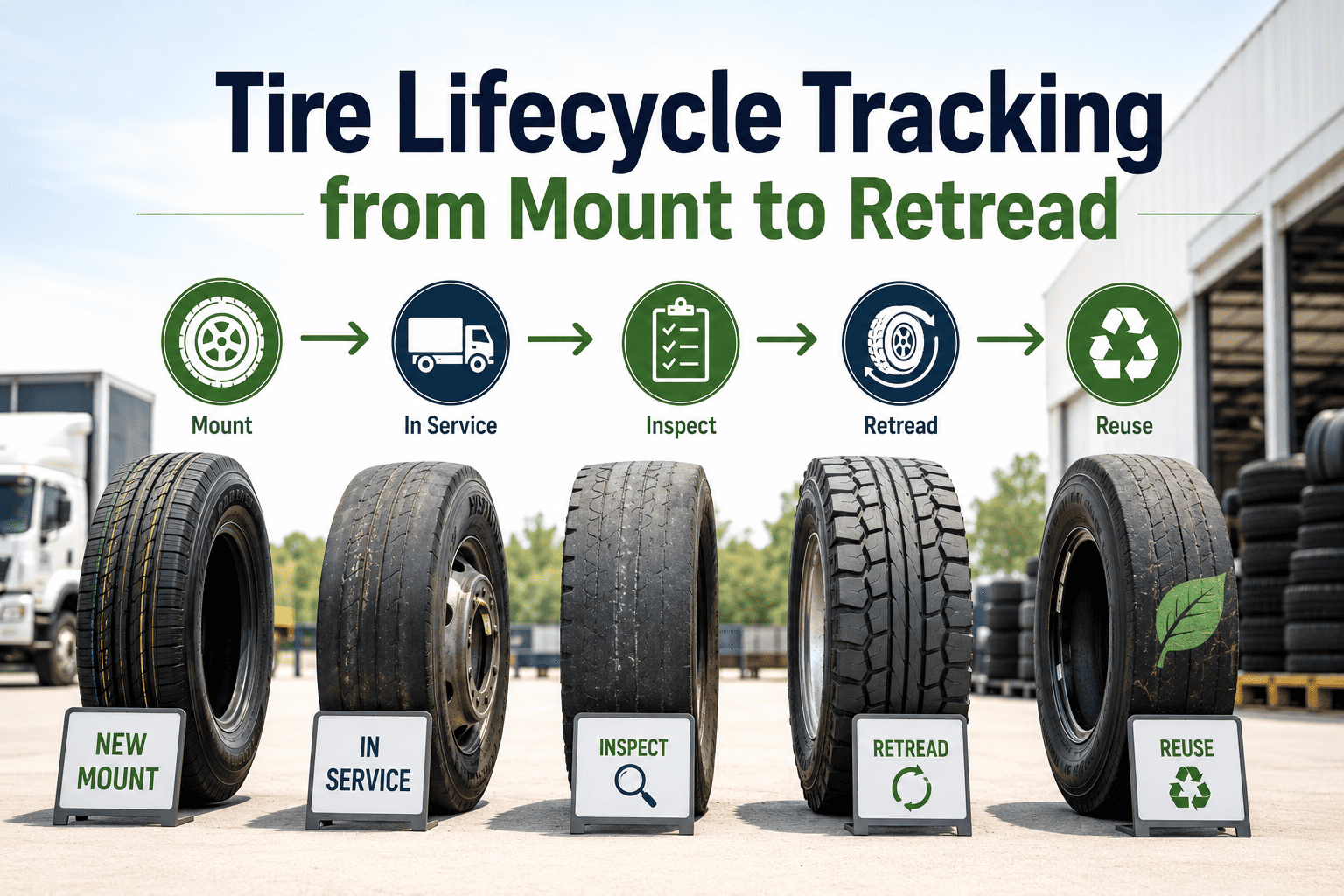
A well-designed tire workflow follows a logical sequence that mirrors how tire teams actually operate in the field. Here is the step-by-step process that OxMaint enables for your tire management operations, from the moment a tire enters your inventory to the day it leaves.
Tire Asset Registration
When a new tire arrives, register it in OxMaint with all critical specifications — brand, model, size, aspect ratio, rim diameter, load index, speed rating, DOT serial number, and purchase date. This creates the tire's permanent digital identity that follows it through every stage of its lifecycle. Assign it to your tire inventory with a unique asset ID for instant lookup.
Installation and Position Assignment
When a tire is mounted on a vehicle, log the installation in the system — recording the vehicle, axle position (steer, drive, or trailer), and exact wheel location (left outer, right inner, etc.). This position tracking is essential for managing rotation schedules and analyzing wear patterns across different positions and vehicle types.
Scheduled Inspections and Data Capture
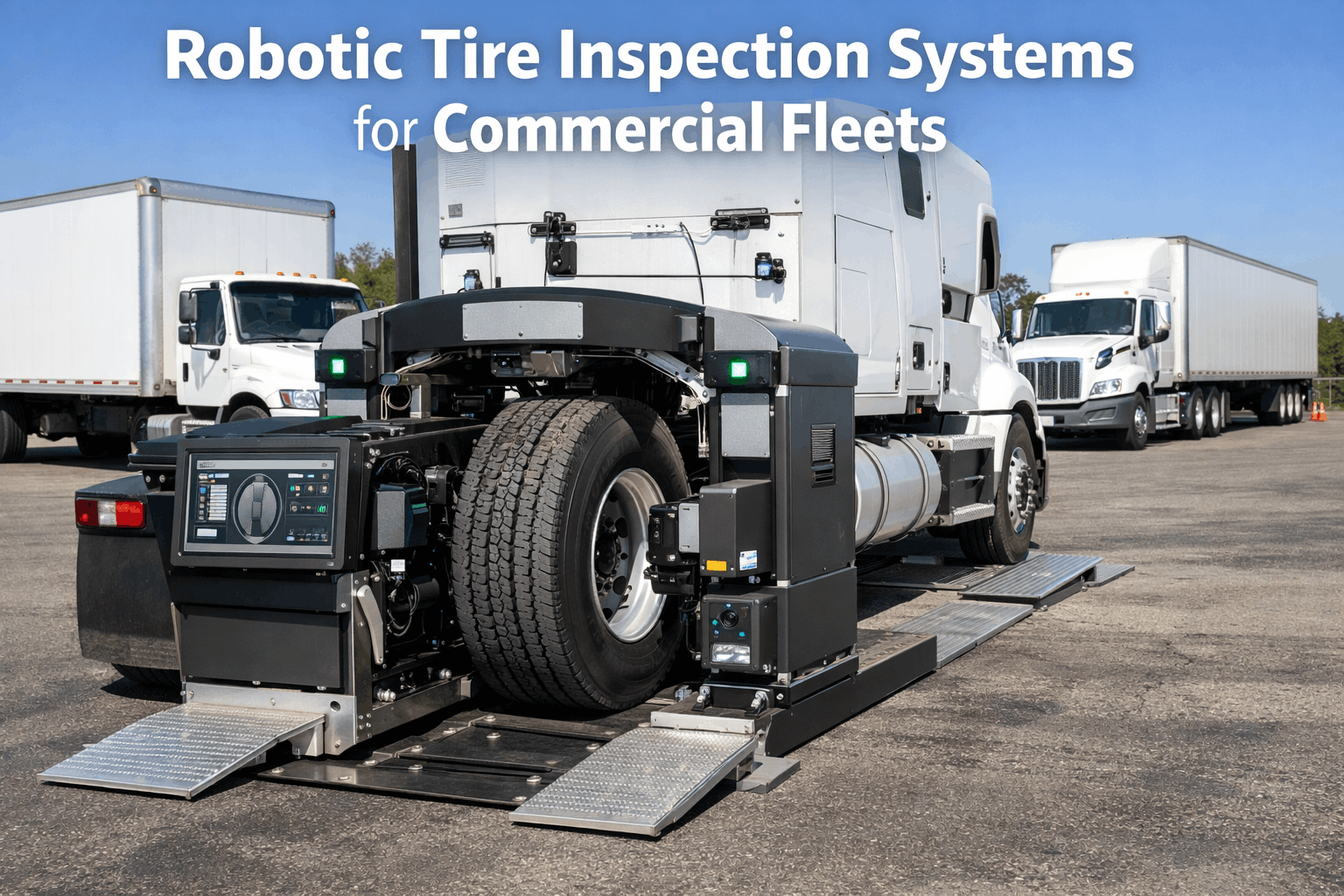
OxMaint automatically schedules tire inspections based on your fleet's requirements — daily pre-trip checks for drivers and monthly detailed inspections for technicians. Inspection checklists capture tread depth, air pressure, visible damage, and wear patterns. All data flows directly into the tire's service history, building a rich performance profile over time.
Preventive Maintenance Triggers
Based on the data collected, OxMaint automatically generates work orders for tire rotations (typically every 5,000–10,000 miles), pressure adjustments, alignment checks, and balancing. When tread depth falls below your configured threshold — say 4/32 of an inch — the system flags it for replacement before it hits the federal minimum of 2/32 inches. Every task is trackable and assignable.
Performance Analytics and Reporting
OxMaint aggregates tire data into actionable reports — cost-per-mile by brand, average tread life by vehicle type, pressure compliance rates, and rotation adherence. These insights help you compare tire brands objectively, forecast replacement budgets accurately, and identify vehicles or routes that cause abnormal wear. Data replaces guesswork in every purchasing and maintenance decision.
End-of-Life Management
When a tire reaches the end of its usable life, the workflow manages the final disposition — whether that is retreading for extended use, warranty claim processing, or environmentally compliant disposal. The complete lifecycle record supports warranty claims with documented evidence and helps you calculate true total cost of ownership for every tire in your fleet.
This structured approach ensures nothing falls through the cracks. Every tire is accounted for, every maintenance task is triggered on time, and every dollar spent is tracked. Sign Up to start implementing this workflow for your tire team today.
Key Metrics Your Tire Workflow Should Track
Without measurable data points, tire management remains guesswork. A well-configured CMMS workflow captures and visualizes the metrics that matter most to tire teams. Here are the critical KPIs that OxMaint tracks automatically within your tire asset master workflow.
Best Practices for Tire Teams Using CMMS Workflows
Having a digital workflow is only half the equation — how your team uses it determines the results you get. Industry experts consistently identify these practices as the difference between fleets that struggle with tire costs and those that optimize them. Here is how to get the most out of your OxMaint tire workflow.
Ready to Transform Your Tire Management?
Join fleet teams that have reduced tire-related downtime, cut costs, and achieved full compliance with OxMaint's asset master workflows.
How OxMaint Powers Your Tire Workflow
OxMaint is purpose-built for fleet maintenance teams who need structured workflows without the complexity of enterprise systems. For tire teams specifically, OxMaint provides everything you need to move from reactive tire management to a fully proactive, data-driven operation. Here is what makes the platform ideal for tire asset management.
OxMaint grows with your fleet — whether you are managing tires for 20 vehicles or 2,000. The platform is cloud-based, mobile-ready, and designed for teams that need results without lengthy implementation cycles. Sign Up to get started in minutes, or Book a Demo to see the tire workflow configured for your specific fleet.
Frequently Asked Questions
What is an Asset Master Workflow for Tires in a CMMS
An Asset Master Workflow for Tires is a structured digital process that treats every tire as a tracked asset within a CMMS platform. It covers the entire lifecycle — from registration with full specifications, through installation and position assignment, scheduled inspections and preventive maintenance, performance analytics, and finally end-of-life disposition. The workflow automates tasks like rotation scheduling, pressure check reminders, and replacement alerts based on configurable thresholds.
How does tire asset tracking reduce fleet maintenance costs
Tire asset tracking reduces costs in multiple ways. By automating rotation schedules, tires wear more evenly and last longer. Pressure monitoring prevents the fuel waste caused by underinflation (which can reduce fuel efficiency by 0.2% for every 1 PSI drop). Brand-level performance data helps you invest in tires that deliver the lowest cost-per-mile for your specific operations. Fleets with active tire management programs consistently report 15–30% reductions in total tire-related expenses.
How often should fleet tires be inspected
Industry best practice calls for two levels of inspection: daily visual checks by drivers during pre-trip inspections (looking for visible damage, bulges, or obvious pressure loss) and monthly detailed inspections by technicians measuring tread depth and tire pressure with calibrated tools. High-mileage fleets or vehicles operating in harsh conditions may benefit from more frequent technical inspections. OxMaint automates both inspection schedules and sends reminders to the right people.
Can OxMaint track tire position and rotation history
Yes. OxMaint allows you to log the exact axle and wheel position for every tire installation. When a tire is rotated, the new position is recorded along with the mileage at rotation. This creates a complete position history that helps you analyze wear patterns by position, optimize rotation sequences, and identify alignment or suspension issues that cause abnormal wear on specific positions.
What tire metrics should fleet managers track
The most critical tire metrics include cost-per-mile (total tire cost divided by miles traveled), tread depth trends over time, pressure compliance rates (percentage of tires within spec), rotation adherence (how consistently intervals are followed), total cost of ownership per tire, and unplanned downtime caused by tire failures. OxMaint calculates and visualizes all of these metrics automatically from the data captured through your tire workflow.
How quickly can we implement a tire asset master workflow
With OxMaint, most fleet teams can have a basic tire workflow operational within a few days. The process involves configuring your tire specifications, setting up inspection checklists, defining maintenance triggers (mileage or time-based), and registering your existing tire inventory. OxMaint's cloud-based platform requires no complex installation. For teams wanting hands-on guidance, our team provides onboarding support to ensure your workflow matches your operational needs from day one.