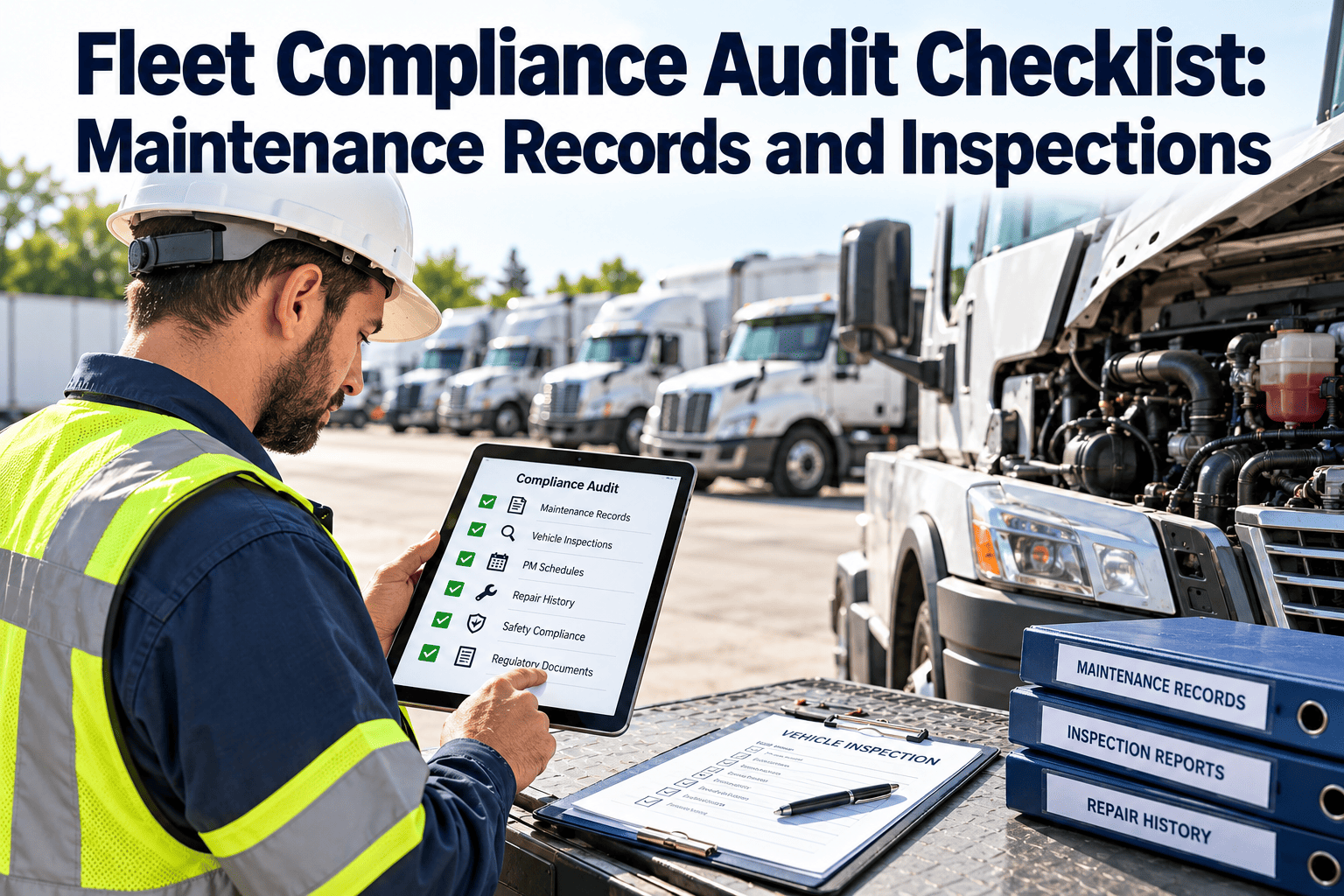
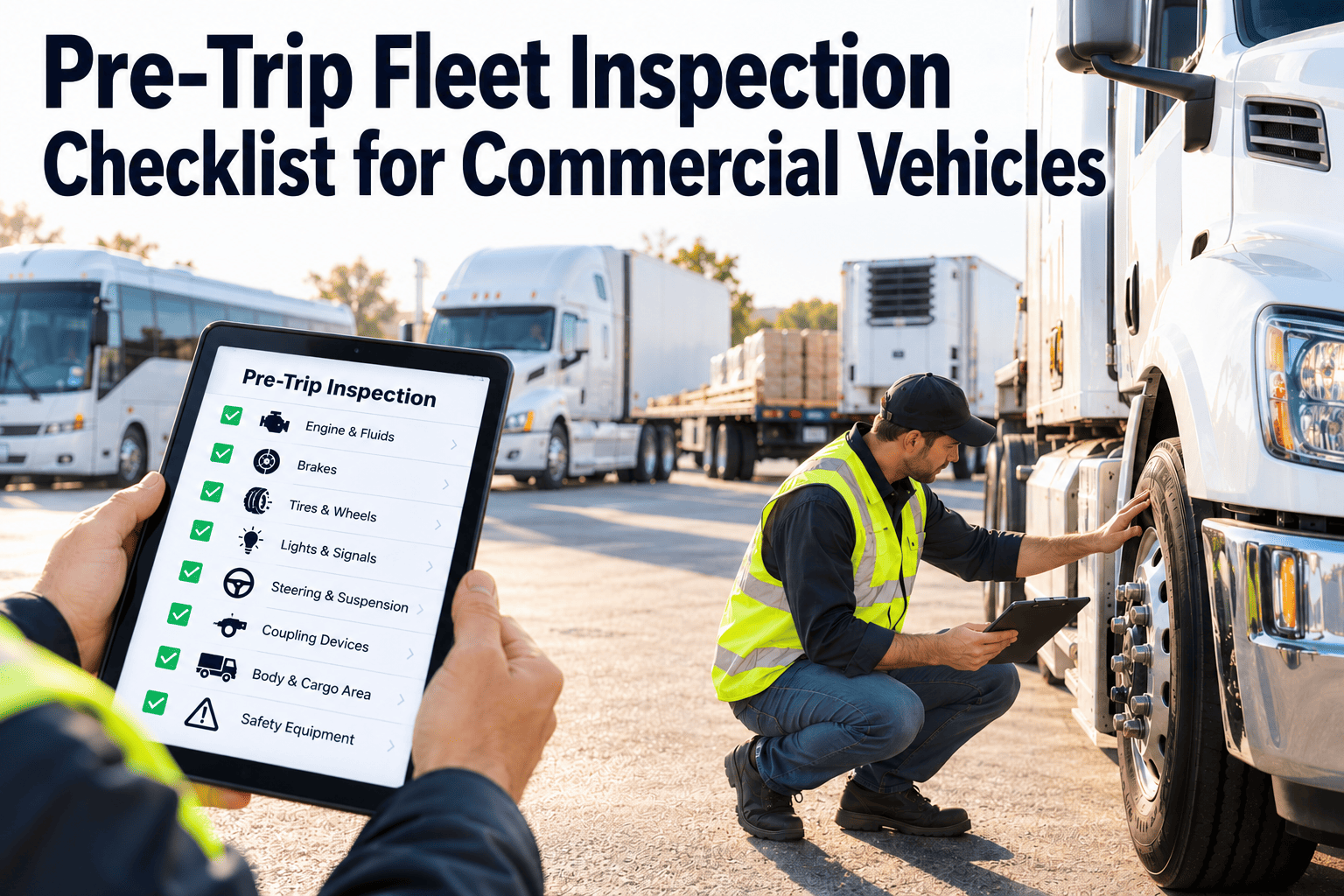
For fleet managers operating commercial vehicles, transmission maintenance isn't just about keeping trucks running—it's a federal compliance requirement that can make or break your business during a DOT audit. Under FMCSA regulations, every motor carrier must systematically inspect, repair, and maintain all commercial motor vehicles, including detailed documentation of transmission services. Failure to maintain proper records can result in costly violations, increased audit scrutiny, and even out-of-service orders that bring your operations to a halt.
DOT & FMCSA Transmission Compliance: Stay Audit-Ready
Prevent costly violations, reduce downtime by up to 50%, and keep your fleet running with audit-ready transmission maintenance documentation.
Why Transmission Compliance Matters for Commercial Fleets
Transmission failures in commercial vehicles account for approximately 2% of all documented roadside breakdowns, but when they occur, the consequences are disproportionately severe. Unlike a flat tire that can be resolved in hours, a transmission failure can sideline a vehicle for 5–10 business days, costing thousands in repairs and tens of thousands in lost revenue and delayed deliveries.
Under FMCSA regulations (49 CFR Part 396), every motor carrier operating commercial motor vehicles (CMVs) in interstate commerce is required to maintain a systematic inspection, repair, and maintenance program. Section 396.3 specifically mandates that carriers keep records for each vehicle, including documentation of all maintenance activities performed—transmission services included. These records must capture the nature of the work done, the date, the odometer reading, and the identity of the person or entity performing the service.
The Federal Motor Carrier Safety Administration (FMCSA) uses the Compliance, Safety, Accountability (CSA) program to monitor carrier safety performance. Transmission-related defects discovered during roadside inspections are recorded under the Vehicle Maintenance BASIC (Behavior Analysis and Safety Improvement Category). Accumulating violations in this category increases your carrier's percentile ranking, which directly triggers more frequent audits, interventions, and can ultimately lead to an unsatisfactory safety rating.
Critical Fact: Fleet vehicles enrolled in preventive maintenance programs experience approximately 20% fewer maintenance-related downtime days annually. For transmission systems specifically, regular fluid analysis and scheduled maintenance can prevent the $3,000–$9,000 replacement costs entirely, while also reducing your CSA Vehicle Maintenance BASIC score.
The Real Cost of Transmission Non-Compliance
Transmission Failure Impact Breakdown
The financial math is compelling: a single neglected transmission fluid change—costing roughly $270—can wipe out years of perceived savings when a catastrophic failure strikes. With downtime costs ranging from $448 to $760 per day and the repair bill itself reaching $3,000–$9,000, a preventable transmission failure can easily exceed $12,000 when factoring in a full week of repairs and lost revenue.
Beyond direct costs, non-compliance carries regulatory penalties. FMCSA violations for failure to maintain vehicles per 49 CFR 396.3 can result in fines of up to $16,000 per violation. If an out-of-service order is issued and the carrier continues to operate the vehicle, penalties can escalate to $27,000 or more. Repeated violations may result in a "Conditional" or "Unsatisfactory" safety rating, which can disqualify your carrier from operating altogether.
Insurance implications are equally significant. Carriers with poor CSA scores and documented maintenance failures face premium increases of 15–30%. Some insurers may refuse to renew coverage entirely, forcing carriers into high-risk pools with substantially higher rates.
DOT Transmission Record Requirements (49 CFR 396.3)
The FMCSA requires motor carriers to maintain records that document the systematic inspection, repair, and maintenance of every commercial motor vehicle under their control. For transmission systems, this means keeping thorough, organized documentation that an auditor can review at any time. Below is a complete breakdown of what your records must include:
Audit-Ready Documentation Checklist
Under 49 CFR 396.3(c), records must be retained for one year while the vehicle is under the carrier's control and for six months after the vehicle leaves your fleet. For annual inspections required under 49 CFR 396.17, records must be retained for 14 months. During a compliance review, incomplete or missing maintenance files are among the most common triggers for citations and can escalate a routine audit into a comprehensive investigation.
Record Retention Tip: Digital maintenance records are fully acceptable under FMCSA regulations and are actually preferred by many auditors. Electronic systems with timestamped entries, automated backup, and search capabilities make it significantly easier to produce records during a surprise audit or compliance review.
Simplify Your Transmission Compliance Workflow
Stop chasing paperwork and risking audit failures. OxMaint digitizes your transmission maintenance logs, sends automated service reminders based on mileage and time intervals, and keeps your entire fleet audit-ready 24/7 with instant record retrieval.
Transmission Maintenance Intervals by Operation Type
Transmission service intervals vary significantly based on the type of operation, transmission type (manual vs. automated manual vs. automatic), and operating conditions. The FMCSA does not prescribe specific transmission maintenance intervals—instead, carriers are required to follow OEM recommendations and establish intervals appropriate for their specific operating environment. Here are industry-standard guidelines:
Line-Haul / Highway Operations
Modern automated manual transmissions (AMTs) used in long-haul applications can extend lubricant change intervals up to 750,000 miles under ideal conditions. Manual transmissions in the same application typically require fluid changes every 100,000–150,000 miles. Critical checkpoints include clutch adjustment verification, input shaft bearing condition, and shift linkage inspection. Extended highway operation generates less heat stress but requires attention to vibration-related wear patterns and seal integrity.
Vocational & Heavy-Duty Applications
Construction, mining, logging, and refuse operations place extreme demands on transmission systems. Stop-and-go duty cycles, heavy payload operation, and off-road conditions can reduce service intervals by 50–75% compared to highway applications. Fluid analysis should be performed every 25,000–50,000 miles, with complete fluid changes based on analysis results. PTO (Power Take-Off) equipped vehicles require additional inspection of PTO mounting, drive gears, and associated seals at each service interval.
Warning Signs Requiring Immediate Inspection
Delayed or harsh gear engagement, grinding or whining noises during shifts, transmission fluid leaks (check for dark or burnt-smelling fluid), gear "jump out" under load, abnormal vibration during acceleration, overheating warnings, and difficulty shifting between gears. Any of these conditions reported on a DVIR must be addressed before the vehicle returns to service per 49 CFR 396.11. Failure to repair a reported defect before dispatch is a separate violation.
Transmission Fluid Analysis: A Compliance Best Practice
While not specifically required by FMCSA regulations, transmission fluid analysis is widely recognized as a best practice that demonstrates proactive maintenance. Oil analysis can detect metal particles indicating gear wear, contamination from coolant leaks, oxidation from overheating, and degradation of additive packages. Many fleet managers include fluid analysis results in their maintenance records as evidence of systematic maintenance—a factor that auditors view favorably during compliance reviews.
Building Your Transmission Compliance Process
A compliant transmission maintenance program is not just a set of tasks—it's a documented system that demonstrates to auditors your carrier takes vehicle maintenance seriously. Here's how to build a process that satisfies both FMCSA requirements and operational efficiency:
Schedule
Establish PM intervals based on OEM transmission maintenance schedules, adjusted for your specific duty cycles, operating environment, and historical failure data. Document your scheduling methodology in your written maintenance policy.
Inspect
Ensure drivers complete DVIRs every trip per 49 CFR 396.11, with specific attention to transmission performance. Schedule periodic detailed inspections including fluid level checks, leak detection, shift quality assessment, and external component condition.
Document
Record every service action digitally with timestamps, odometer readings, technician identification, parts used (with part numbers), labor time, and detailed work descriptions. Attach fluid analysis reports and photos of wear components when applicable.
Analyze & Improve
Review maintenance data regularly to identify failure trends, optimize service intervals, predict upcoming needs, and calculate total cost of ownership per vehicle. Use this data to refine your PM program and demonstrate continuous improvement to auditors.
The fundamental goal of your maintenance program, as stated in 49 CFR 396.3(a), is to ensure that each vehicle subject to your control is properly maintained and that the vehicle is not operated in a condition likely to cause an accident or breakdown. A well-designed preventive maintenance program is the single most effective way to satisfy this requirement while keeping your CSA scores healthy and your fleet productive.
What Happens During a DOT Compliance Review?
A DOT compliance review (formerly called a "safety audit") is a comprehensive examination of your carrier's operations, safety management practices, and regulatory compliance. The FMCSA conducts these reviews either at your principal place of business or, increasingly, through offsite electronic review of your records. Understanding what auditors look for helps you prepare and maintain continuous compliance.
Vehicle Maintenance Factor Review
During the vehicle maintenance portion of a compliance review, auditors will examine a sample of your fleet's maintenance records. The sample size depends on your fleet size—typically 10% of vehicles or a minimum of 5 vehicles, whichever is greater. For each vehicle sampled, the auditor reviews:
Complete Maintenance Files
Every inspection, service, and repair must be documented with dates, detailed descriptions of work performed, parts used with specifications, cost information, and the name and signature of the technician who performed or supervised the work. Transmission-specific records should clearly identify the type of service (fluid change, filter replacement, adjustment, overhaul) and any diagnostic findings.
Systematic PM Evidence
Auditors look for evidence of a structured maintenance program—not just reactive repairs. This means documented PM schedules showing consistent intervals, records showing services performed on or before their due dates, and a written maintenance policy that outlines your program. Gaps in PM schedules or a pattern of overdue services are red flags that can change the scope and outcome of the review.
Common Transmission-Related Audit Violations
The most frequently cited transmission-related violations during DOT compliance reviews include: failure to maintain required maintenance records (396.3), operating a vehicle with known transmission defects not corrected before dispatch (396.7), failure to have a systematic maintenance program (396.3(a)), incomplete DVIRs that omit transmission defect reports (396.13), and failure to retain records for the required time periods (396.3(c)). Each violation is assigned a severity weight that impacts your overall safety rating determination.
Audit Preparation Tip: Operating a vehicle that has been placed out-of-service for transmission defects is an automatic failure that can result in an "Unsatisfactory" safety rating. Ensure every transmission issue flagged in a DVIR or roadside inspection is repaired and documented before the vehicle returns to service. Maintain a separate log of out-of-service resolutions with repair confirmation signatures.
Safety Rating Determination
After the compliance review, FMCSA assigns one of three safety ratings: Satisfactory, Conditional, or Unsatisfactory. The Vehicle Maintenance factor is one of six factors evaluated. A "Conditional" rating means your operations have deficiencies that need correction—you'll receive a notice and a timeline to demonstrate improvement. An "Unsatisfactory" rating for a carrier operating passenger vehicles or hazardous materials results in immediate operational restrictions. For general freight carriers, you'll have 45 days to take corrective action before your operating authority may be suspended.
Annual Inspection Requirements for Transmissions (49 CFR 396.17)
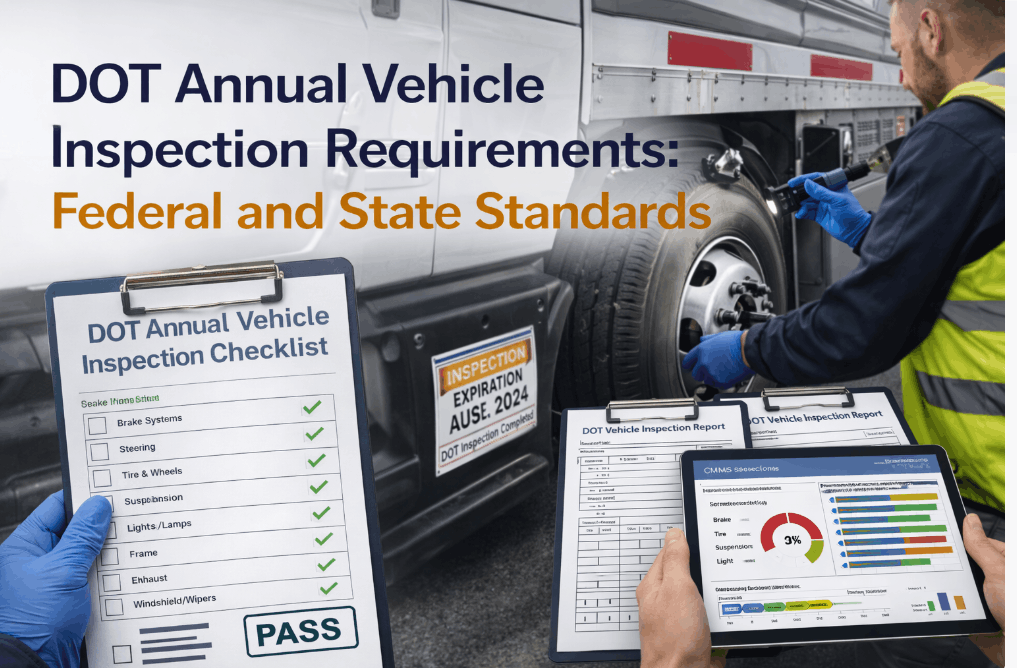
Beyond routine maintenance, 49 CFR 396.17 requires that every commercial motor vehicle be inspected at least once every 12 months. This annual inspection must be performed by a qualified inspector and must cover all components listed in Appendix A to Subchapter B of the Federal Motor Carrier Safety Regulations, which includes the transmission and drivetrain assembly.
During the annual inspection, the transmission must be evaluated for proper operation, evidence of leaks, security of mounting, condition of the clutch (for manual transmissions), driveline component integrity, and proper fluid levels. The inspector must document findings on a report that includes the inspector's name, qualifications, the date and location of inspection, vehicle identification, and a detailed listing of all components inspected with their condition.
The annual inspection report or a copy must be kept on the vehicle or maintained at the carrier's principal place of business. If your vehicle is inspected during a roadside check and the annual inspection is expired or unavailable, the vehicle will be placed out of service under the North American Standard Out-of-Service Criteria—regardless of the vehicle's actual mechanical condition.
Driver Responsibilities for Transmission Compliance
Drivers play a critical front-line role in transmission compliance. Under 49 CFR 396.11, drivers must complete a written Driver Vehicle Inspection Report (DVIR) at the end of each driving day. The report must cover the condition of specific components including the transmission and drivetrain. If a defect is found that could affect safe operation, the driver must report it, and the carrier must repair it before dispatching the vehicle again.
Under 49 CFR 396.13, before driving a motor vehicle, the driver must be satisfied that the vehicle is in safe operating condition. This includes reviewing the previous driver's DVIR, confirming that any reported defects have been repaired or determined to not require repair, and signing the report to acknowledge their review. For transmission-related items, drivers should specifically check for unusual noises, difficulty shifting, fluid leaks under the vehicle, and warning lights on the dashboard.
Training your drivers to recognize early signs of transmission problems—such as hard shifting, delayed engagement, slipping between gears, or unusual vibrations—is one of the most effective ways to catch issues before they become roadside breakdowns or inspection violations. Consider including transmission awareness in your regular safety meetings and providing reference cards that list the specific transmission symptoms to watch for and report.
Ready to Streamline Your Transmission Compliance?
Join thousands of fleet managers who trust OxMaint to keep their maintenance records organized, their vehicles DOT-compliant, and their audits stress-free. Automate your PM scheduling, digitize your DVIRs, and access complete maintenance histories instantly.