Your excavator operator radios from the jobsite: "Unit 47 is throwing a warning light—hydraulic temperature." The $380,000 machine sits idle while you scramble to diagnose remotely. Is it a sensor glitch? Failing pump? Low fluid? Without real-time vehicle health monitoring integrated with your CMMS, every decision is a guess—and wrong guesses cost $1,200+ per hour in project delays.
This guide transforms construction fleet management from reactive firefighting to predictive intelligence. Using AI analytics, IoT sensors, and work order automation, you'll detect equipment problems before they strand machines, coordinate vendors efficiently and maintain the audit trail that fleet management compliance requirements demand.
Ready to monitor your construction fleet health in real-time? Start with Oxmaint CMMS and transform equipment visibility today.
The Transformation: Before vs. After CMMS
23% unplanned downtime average
Reactive repairs cost 3-5x more
Failures surprise you on the jobsite
Paper records buried in file cabinets
Compliance audits take days to prepare
Vendor calls are frantic and uncoordinated
8% unplanned downtime (65% reduction)
90% of repairs are planned and scheduled
73% of failures predicted weeks ahead
Complete digital audit trail, searchable
Compliance reports generated in minutes
Automated vendor dispatch with SLA tracking
Industry Reality Check
$260B
Annual cost of unplanned downtime in US manufacturing and construction
82%
Of companies have experienced unplanned downtime in the past 3 years
3-5x
Cost multiplier for emergency repairs vs. planned maintenance
91%
Of fleet managers say predictive maintenance improves safety
Streamline Fleet Management Compliance Using AI + IoT Data
Not all equipment deserves equal monitoring investment. Prioritize based on downtime cost, and failure predictability—you'll get 80% of the benefit from monitoring 20% of your fleet.
Equipment Monitoring Priority Matrix
Priority 1: Monitor First
Heavy Earthmoving & Concrete
Excavators, Dozers, Loaders, Concrete Pumps, Batch Plants
Downtime Cost
$200-500/hr
Predictability
High (85%+)
Key Sensors
Hydraulic, Engine, Thermal
Priority 2: Monitor Second
Lifting & Paving Equipment
Cranes, Telehandlers, Aerial Lifts, Pavers, Rollers
Downtime Cost
$150-400/hr
Predictability
Medium-High (70%+)
Key Sensors
Load, Safety, Vibration
Priority 3: Monitor Third
Hauling & Support Equipment
Dump Trucks, Generators, Compressors, Light Towers
Downtime Cost
$50-200/hr
Predictability
Medium (60%+)
Key Sensors
Engine, Drivetrain, Fuel
TIP
Start with your pain points. A single prevented excavator failure ($15K-50K repair + $1,200/hr downtime) pays for 6+ months of CMMS costs. Begin with the machines that hurt most when they fail.
Categorize and prioritize your fleet with Oxmaint CMMS asset management.
The 6 Systems That Account for 85% of Failures
You don't need to track everything—you need to track what matters. These six systems are responsible for the vast majority of construction equipment failures. Monitor them effectively and you'll catch problems 2-4 weeks before they strand machines.
Oil Pressure
25-65 PSI
<20 PSI
Coolant Temp
180-220°F
>230°F
Fuel Rate
±10%
>15% spike
System Pressure
2,500-5,000 PSI
<2,000 PSI
Oil Temp
100-180°F
>200°F
Filter Delta-P
<15 PSI
>25 PSI
Highest Failure Rate
Trans Temp
160-220°F
>240°F
Differential
150-200°F
>220°F
Track Tension
OEM spec
±15%
Battery
12.4-14.5V
<12.0V
Alternator
13.5-14.8V
<13.0V
Boom Stress
Within rated
Overload
Pin/Bushing
<0.5mm
>1.0mm
Interlocks
Functional
Bypassed
LMI Status
Calibrated
Error
TIP
Hydraulics + Engine = 60% of problems. If you can only monitor two things, monitor these. Most construction equipment failures give warning signs 2-4 weeks before failure through temperature and pressure anomalies.
Configure custom monitoring thresholds with Oxmaint CMMS AI analytics.
See Your Entire Fleet Health at a Glance
Stop guessing which machine will fail next. Get real-time visibility into every asset's condition—hydraulics, engine, electrical—all in one dashboard. Construction fleets using Oxmaint reduce unplanned downtime by 35% in the first year.
No credit card required • Setup in under 1 hour
Aligning Teams and Vendors — The Operating Model
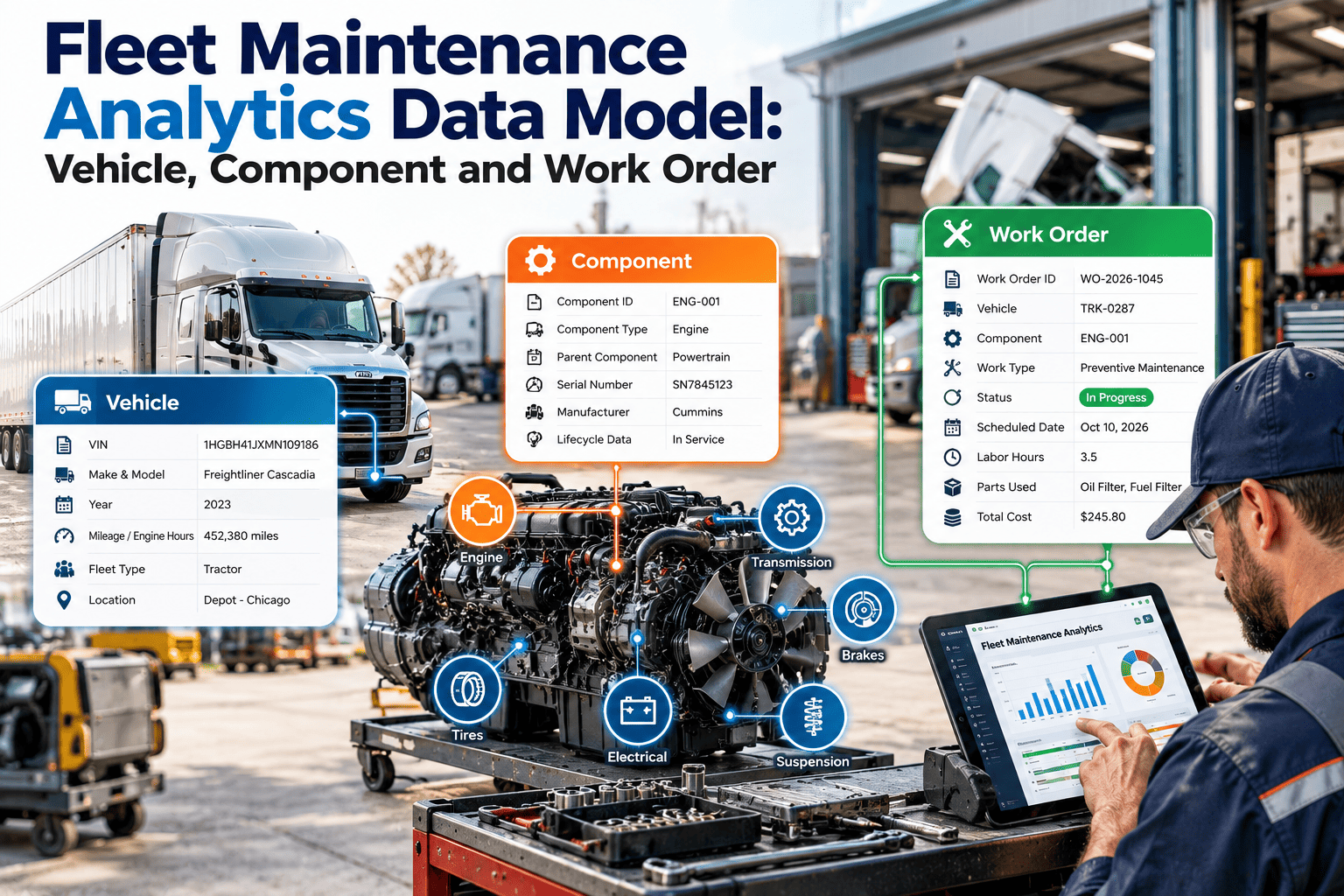
Data alone doesn't prevent failures—action does. The real value of vehicle health monitoring comes when sensor data automatically triggers work orders, dispatches technicians, and orders parts without manual intervention.
1
Data Collection
OEM telematics, aftermarket IoT, barcode/QR inspections, operator input
2
Oxmaint CMMS
Data normalization, AI anomaly detection, predictive models
3
Automated Action
Work orders, technician dispatch, parts requisition, vendor alerts
Integration Checklist
OEM Telematics Connected
CAT Product Link, JDLink, KOMTRAX
Aftermarket Sensors Integrated
Samsara, Geotab, CalAmp
Mobile Inspections Active
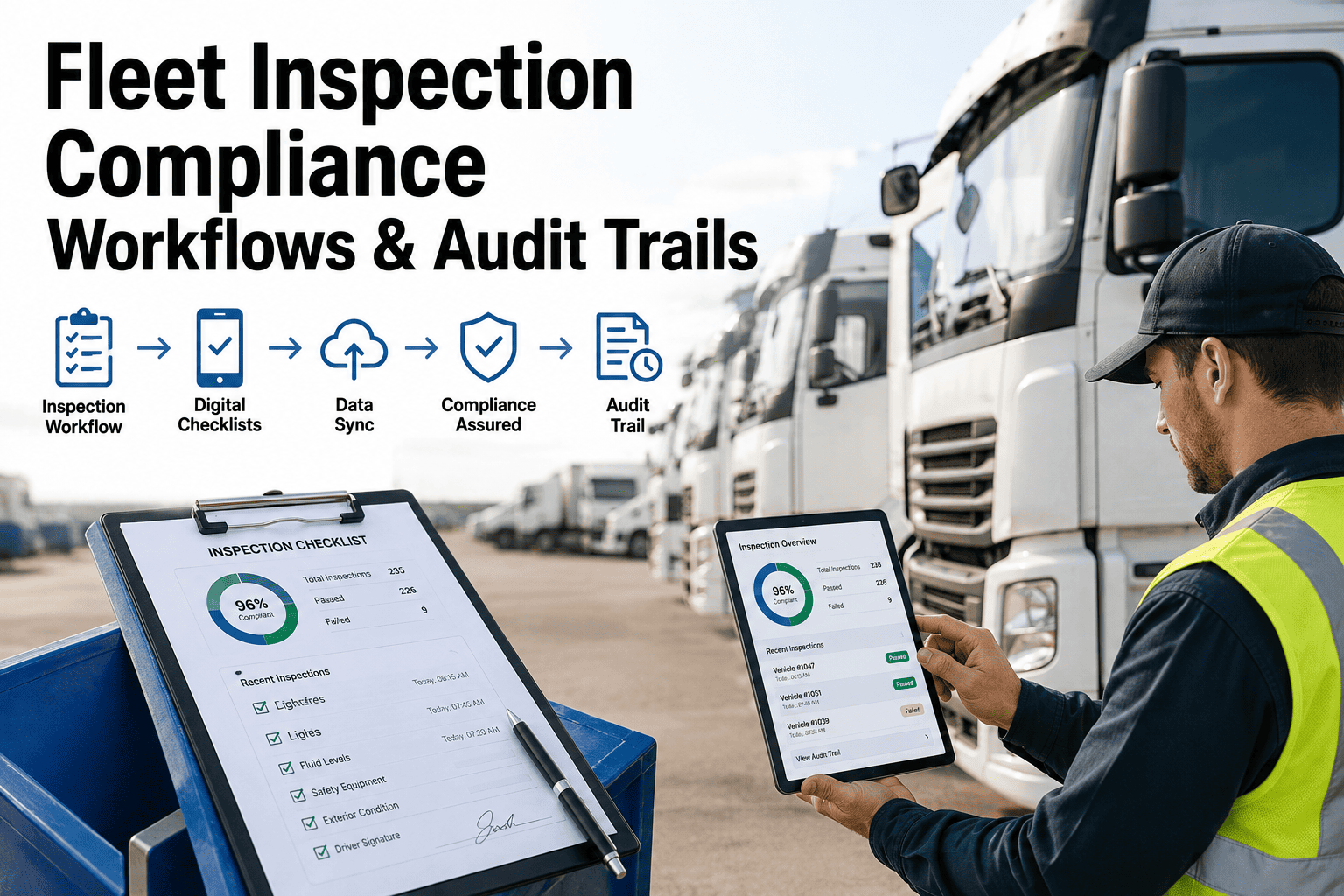
Digital pre-trip via mobile app
Work Order Automation On
Alerts auto-create work orders
Vendor Portal Live
External providers see assigned work
Compliance Logs Automated
Audit trail without manual entry
TIP
Connect everything to one platform. The average construction fleet has 5+ data sources. Without CMMS integration, you're checking multiple systems and missing connections. Unified data = faster diagnosis.
Connect all your data sources with Oxmaint CMMS API integrations.
Alert Classification: Respond Right, Not Always
Alert fatigue kills CMMS programs. When everything is urgent, nothing gets attention. This framework classifies alerts by true severity so critical issues get immediate response while minor items wait for scheduled service.
Triggers: Safety fault, engine shutdown, major pressure loss, structural alarm
Action: Stop operation → Emergency work order → Fleet manager alerted → Dispatch technician
Triggers: Active fault code, parameter trending critical, fluid analysis abnormal
Action: Continue with caution → Priority work order → Technician assigned within 2 hours
Triggers: Minor stored codes, PM approaching, efficiency drop 10-15%
Action: Normal operation → Scheduled work order → Added to technician queue
Triggers: Informational codes, cosmetic issues, software updates available
Action: Log for next service → Bundle with other items → Monitor for escalation
TIP
Only 15-20% of alerts need immediate action. Configure your CMMS to auto-classify and route alerts so your team focuses on what matters. SLA reporting tracks response time compliance by severity.
Configure intelligent alert rules with Oxmaint CMMS work order automation.
5 Mistakes That Sabotage Fleet Monitoring Programs
Learn from others' failures so you don't repeat them.
1
Trying to Monitor Everything at Once
Start with your highest-cost equipment. A 200-unit fleet should pilot with 40-50 machines, prove value, then expand.
Fix: Prioritize by downtime cost, not fleet size
2
Ignoring Operator Buy-In
If operators see inspections as punishment rather than protection, they'll resist. Involve them early.
Fix: Demonstrate time savings over paper forms
3
Setting Too Many Alerts
Alert fatigue is real. Start with critical thresholds only, then add more as your team adapts.
Fix: Begin with 5-10 alerts per equipment type
4
Data Without Workflow
Telematics data without action is just noise. Ensure every alert has a defined response path.
Fix: Map every alert to a work order template
5
Expecting Instant ROI
CMMS value compounds over time. The first prevented failure might take 3 months to see.
Fix: Track leading indicators while waiting for results
Vendor Coordination Made Simple
Construction equipment requires specialized expertise. Smart vendor coordination gets the right expert to the right machine with the right parts.
OEM Dealer
Warranty, engine major, factory diagnostics
24-48 hrs
Hydraulic Specialist
Pump rebuilds, valve repair, cylinder service
4-8 hrs
Mobile Service
Field repairs, remote sites, preventive maintenance
4-24 hrs
Undercarriage Shop
Track/tire, final drives, scheduled rebuilds
Scheduled
Track These Vendor KPIs
Response Time
Target: >95% within SLA
First-Time Fix
Target: >85%
Mean Time to Repair
Benchmark by type
Cost per Hour
Compare quarterly
Track vendor performance with Oxmaint CMMS SLA reporting.
Compliance Without the Paperwork
OSHA, DOT, ANSI, client requirements—construction fleet compliance is complex. The right CMMS captures everything automatically.
OSHA 1926
Daily pre-op inspections, defect correction, operator training
Auto-logged via mobile inspections, defect-to-repair tracking
DOT / FMCSA
Pre-trip inspections (DVIR), annual inspections, maintenance records
Digital DVIR, PM scheduling, complete service history
OSHA Crane
Annual/monthly/daily inspections, load testing, operator qualification
Certification tracking, inspection scheduling, operator records
Client/Contract
Varies—often stricter than regulations
Audit trail export, custom reports, documentation packages
TIP
If it's not documented, it didn't happen. CMMS creates timestamped compliance logs automatically. When OSHA asks for records or a client audits maintenance history, you generate reports in minutes—not days.
Build audit-ready documentation with Oxmaint CMMS compliance logs and audit trail.
Calculate Your Savings
25 Units
50 Units
100 Units
Current Unplanned Downtime
580 hrs/yr
1,160 hrs/yr
2,320 hrs/yr
Downtime Cost @ $300/hr
$174,000
$348,000
$696,000
35% Reduction = Annual Savings
$60,900
$121,800
$243,600
Typical Payback Period
4-6 months
3-5 months
2-4 months
24-Week Implementation Roadmap
Weeks 1-4
Assessment
Inventory equipment, assess current monitoring, define priorities, establish baseline KPIs
Weeks 5-8
Configuration
Set up CMMS, connect telematics APIs, configure alert rules, build PM schedules
Weeks 9-14
Pilot
Deploy on 25% of fleet, train operators and technicians, validate alerts, refine processes
Weeks 15-24
Full Rollout
Expand to all equipment, onboard vendors, enable predictive analytics, activate compliance reporting
Plan your implementation with Oxmaint implementation specialists.
Results from Construction Fleets Like Yours
35%
Reduction in unplanned downtime
85-unit heavy civil fleet, Texas
$182K
Annual maintenance cost savings
120-unit general contractor, California
73%
Failures now predicted in advance
Average across 50+ construction fleets
90%
Repairs now planned vs emergency
Previously 23% unplanned → 8%
"In heavy civil construction, an idle excavator isn't just a maintenance problem—it's a $400/hour project delay cascading across the entire operation. Before implementing CMMS-based health monitoring, we averaged 23% unplanned downtime across our 85-unit fleet. Now we're at 8%, and 90% of our repairs are planned rather than emergency callouts. The integration between our OEM telematics, fluid analysis program, and Oxmaint work order automation means we catch problems weeks before they strand equipment. Any fleet manager still using spreadsheets is leaving money in the dirt."
JM
James Mitchell, P.E.
VP of Equipment Operations, Granite Mountain Constructors
30 years in construction equipment management
Stop Reacting to Breakdowns. Start Predicting Them.
Every hour your equipment sits idle costs you $1,200+. Every emergency repair costs 3-5x more than planned maintenance. Join 500+ construction fleets that have transformed from reactive firefighting to predictive fleet management with Oxmaint CMMS.
No credit card required • 14-day free trial • Setup in under 1 hour
Frequently Asked Questions
Q: We have equipment from 5+ manufacturers. Can one CMMS handle all of them?
A: Yes.
Oxmaint CMMS integrates with all major OEM telematics platforms (CAT, Deere, Komatsu, Volvo, Hitachi, Liebherr, etc.) plus aftermarket systems like Samsara and Geotab. Data normalizes into one unified dashboard regardless of source. For equipment without telematics, barcode/QR mobile inspections capture health data manually.
Q: How long until we see ROI?
A: Most construction fleets see positive ROI within 4-8 months. Primary savings come from reduced unplanned downtime (35-50% reduction typical), extended component life through predictive maintenance fleet management, and reduced emergency callout premiums. A single prevented excavator failure often covers 6+ months of CMMS costs.
Q: Our operators aren't tech-savvy. Will they actually use mobile inspections?
A: The Oxmaint mobile app is simpler than the paper forms it replaces. Operators scan an equipment barcode/QR tag, tap through a visual checklist, snap photos of any issues, and submit—typically in 3-5 minutes. Most operators prefer it within a week because it's faster than paperwork and works offline for remote sites.
Q: Can we start small and scale up?
A: Absolutely—we recommend it. Start with your highest-cost equipment (typically 20-25% of fleet) to prove value and refine processes before full rollout.
Schedule a consultation to plan your phased approach. The platform scales from 10 to 1,000+ assets with the same features.
Q: What if we already have telematics but don't use the data effectively?
A: This is the most common scenario we see. Telematics generates data; CMMS makes it actionable. The integration connects your existing telematics to automated work orders, spare parts planning, and compliance documentation. You're already paying for the data—now you'll actually use it.
Start connecting your telematics today.