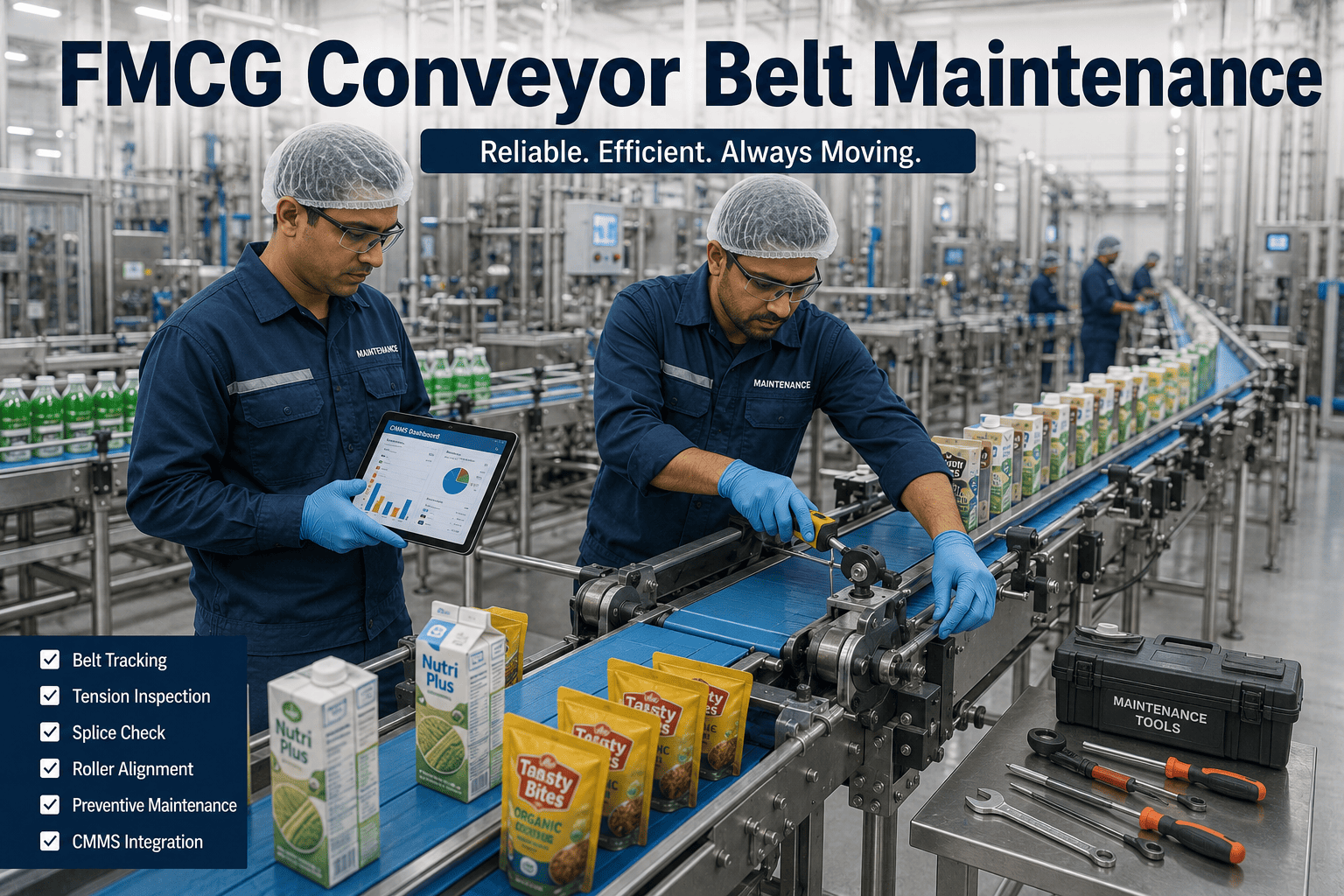
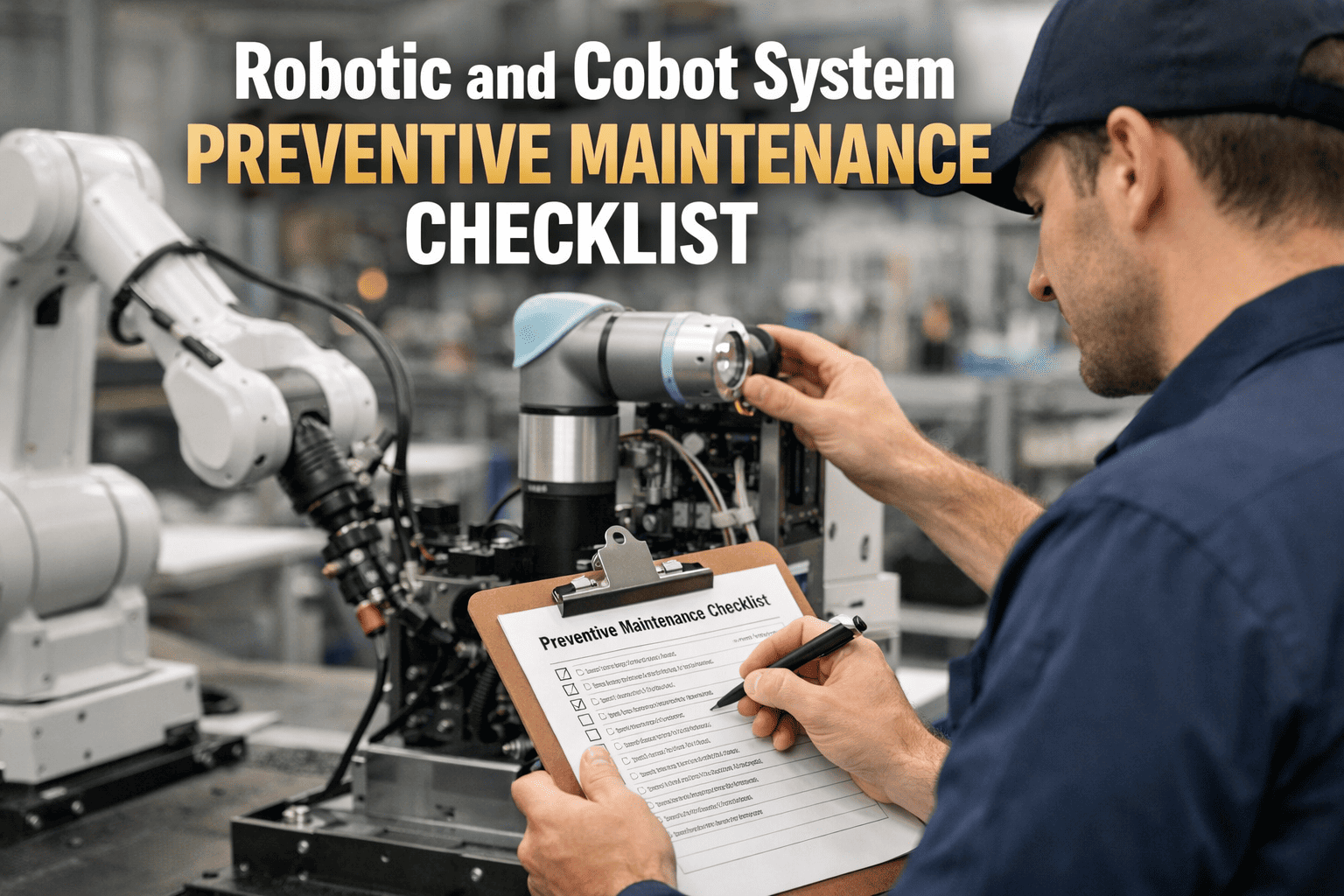
Conveyor systems are the circulatory system of an FMCG plant — when they stop, everything stops. A belt that tracks 10mm off-centre becomes a belt that tears in 48 hours. A bearing running 12°C above baseline becomes a seized bearing in a week. And a jammed conveyor in a continuous production line doesn't just cost the time to clear it — it costs the entire line's throughput from the moment it stops. This checklist covers every inspection task for belt conveyors, roller conveyors, chain conveyors, and screw conveyors — structured by frequency, aligned to Oxmaint's Preventive Maintenance Scheduling module, and built so every inspection generates a timestamped maintenance record that catches deterioration before it becomes downtime.
1. Belt Condition and Tracking
Belt tracking failures are the leading cause of conveyor downtime in FMCG plants. A belt running off-centre wears the edge, damages the frame, spills product, and eventually tears — each stage costing more than the previous one. Early detection through structured tracking inspection is the only prevention.
2. Drive Systems — Motors, Gearboxes, and Pulleys
The drive system is the highest-energy component in any conveyor — and the most expensive to replace reactively. Motor and gearbox failures on a production conveyor don't produce fault codes before they fail. They produce heat, vibration, and noise — all detectable with the right inspection protocol.
3. Rollers, Idlers, and Frame
Seized rollers are one of the most common root causes of belt damage in FMCG conveyors. A seized carrying idler creates a flat spot that wears through the belt. A misaligned idler deflects the belt off centre. Both failures are invisible in normal operation — only a structured roller inspection programme catches them before the belt fails.
4. Chain and Slat Conveyors
Chain conveyors in FMCG facilities operate in harsh conditions — washdown environments, product contamination, and high cycle counts. Chain elongation (stretch) is the primary wear indicator, and it's measurable with a simple gauge. A chain that has elongated 2% beyond nominal pitch will jump sprocket teeth and fail catastrophically — giving no warning.
5. Screw Conveyors
Screw conveyors in FMCG facilities handle bulk powders, granules, and semi-solids — materials that compact, bridge, and cake around the screw flight if the conveyor is not maintained. Hanger bearing failure is the most common screw conveyor failure mode, and it's entirely predictable with monthly inspection.
6. Conveyor Safety Devices
Conveyor safety devices in FMCG plants are governed by OSHA 1910.212 and the specific machine safeguarding requirements of each conveyor type. Pull cord e-stops, belt misalignment switches, zero-speed switches, and nip point guards are all life-safety devices — and all must be tested at documented frequencies to demonstrate they function when needed.