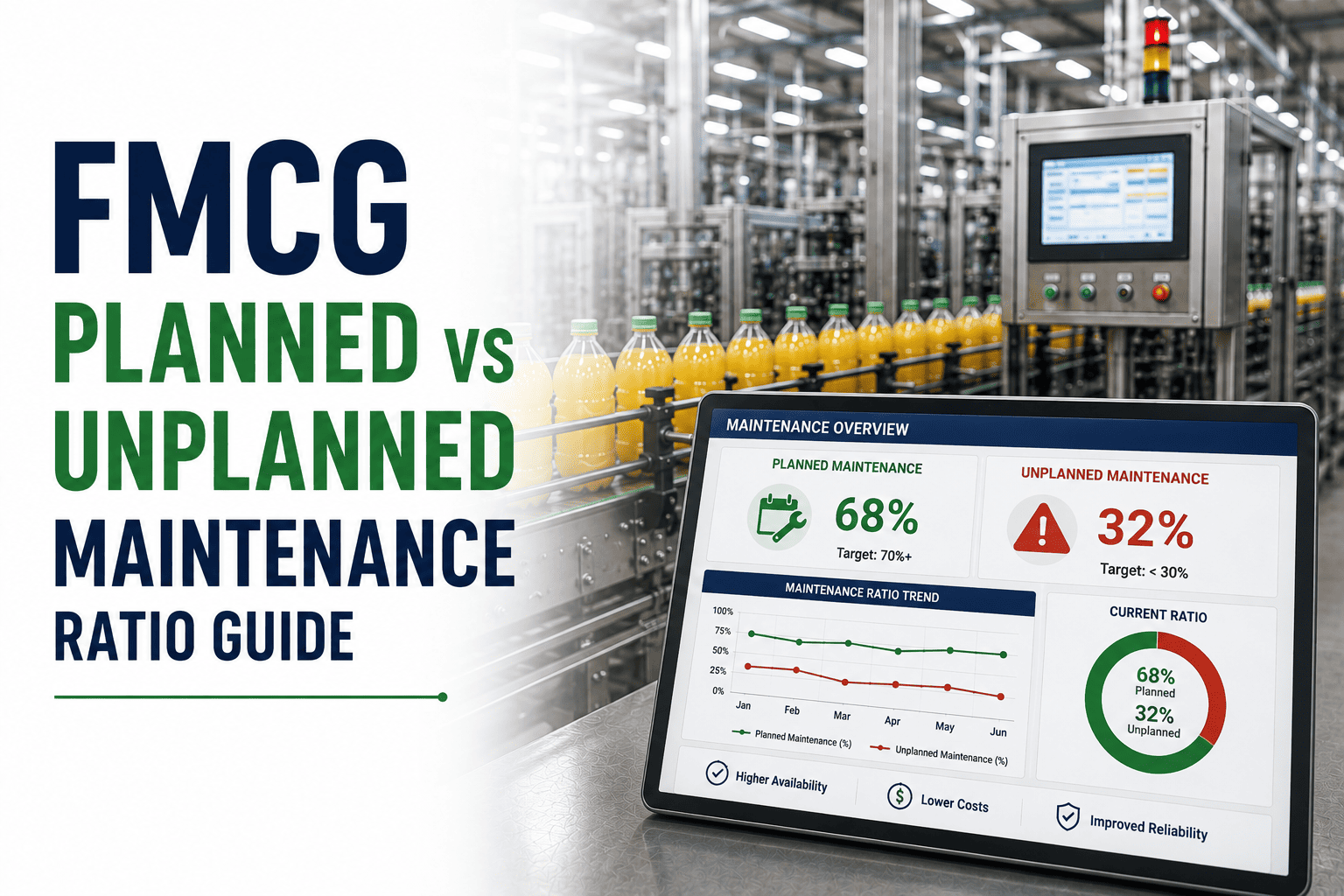
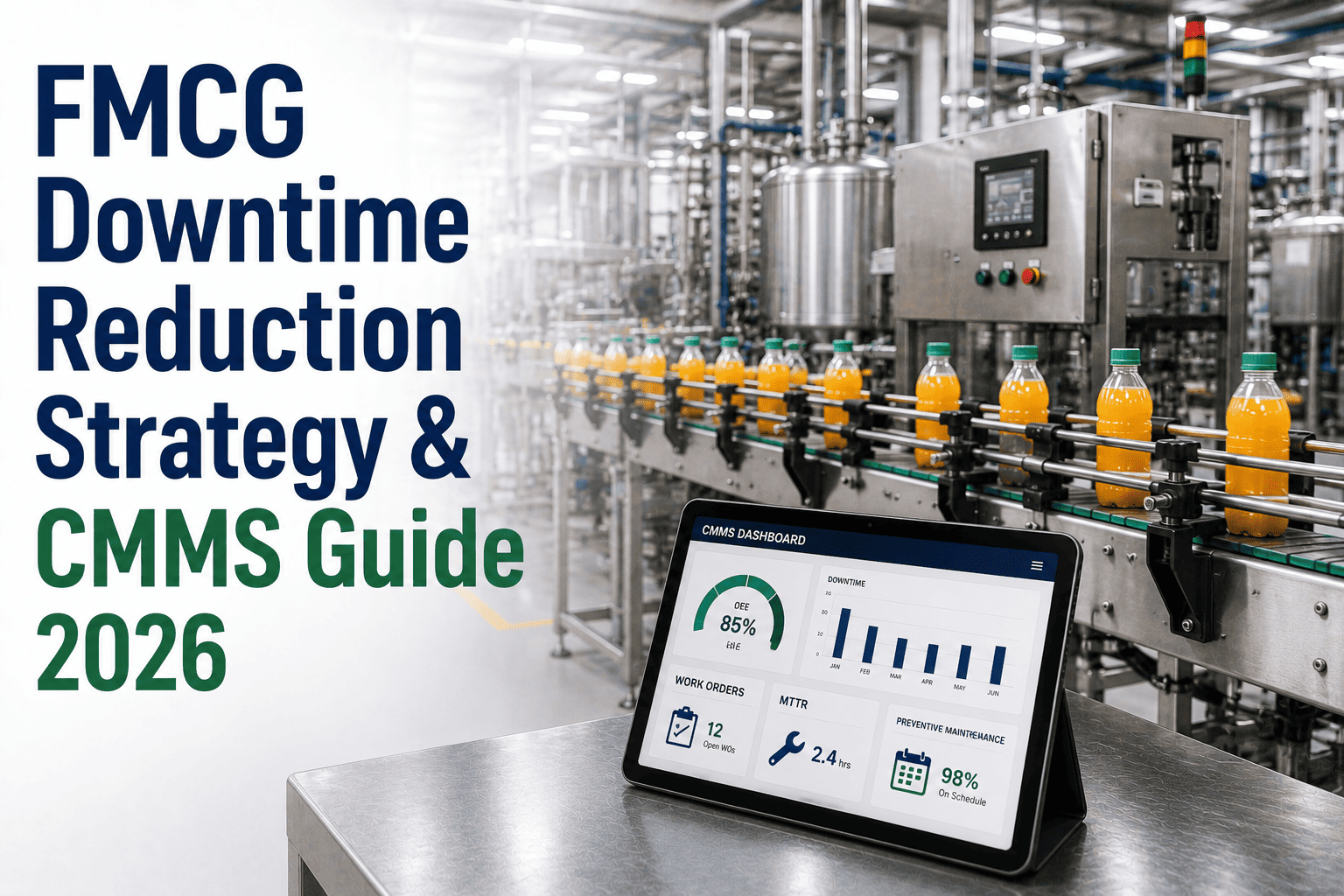
Ask a maintenance team what percentage of their work is planned versus firefighting, and the honest answer is often uncomfortable. The ratio between planned and unplanned maintenance is one of the clearest signals of how mature a plant's reliability program actually is, more telling than almost any other single number on the maintenance dashboard. Sign up to start measuring your real planned-to-unplanned split.
The Ratio That Predicts Everything Else
The planned-to-unplanned maintenance ratio measures how much of a team's work is scheduled in advance versus reacted to as it happens. World-class plants operate at 80:20 or better. A plant stuck near 50:50, or worse, isn't just less efficient, it's spending its maintenance budget on the most expensive kind of work there is.
The 38% to 94% Transformation
Before
38%
Typical starting point for PM compliance on a plant still running maintenance reactively, with schedules routinely skipped for firefighting
After
94%
Achievable PM compliance once scheduling, parts availability, and escalation rules are rebuilt around a CMMS instead of memory and paper
Where FMCG Plants Typically Sit
| Maturity Level |
Planned : Unplanned Ratio |
| Reactive |
Around 50:50 or worse, with firefighting consuming most of the team's time and budget |
| Developing |
Roughly 65:35, with scheduling underway but still frequently disrupted by emergencies |
| World-class |
80:20 or better, where unplanned work is the exception, not the operating pattern |
Know Your Real Ratio, Not A Guess
OxMaint tracks every work order by type automatically, so your planned-to-unplanned ratio is a real number, updated continuously, not an annual estimate. Sign up for a free trial to start measuring your true ratio, or book a demo to see your maintenance mix mapped out.
What Actually Drives Unplanned Work
Cause
Skipped PM Tasks
A missed scheduled inspection often turns into an unplanned breakdown weeks later, and the connection rarely gets traced back
Cause
Parts Not On Hand
A planned job that can't proceed because a part isn't in stock often gets deferred until it becomes an emergency instead
Cause
No Escalation Path
Without a rule that flags overdue PM work automatically, it silently slips down the priority list until the equipment forces the issue
The Path From Reactive To Planned
1
Measure The True Baseline
Classify every work order from the past few months as planned or unplanned to get an honest starting ratio before setting any target
2
Automate Escalation On Overdue PM
A scheduled task that slips past its due date should trigger a visible alert, not disappear quietly into a backlog nobody revisits
3
Tie Parts Availability To The PM Schedule
Reserve critical parts against upcoming planned work so a stockout never becomes the reason a scheduled job gets deferred
Why This Is A CMMS Metric, Not A Manual One
Tracking planned versus unplanned work by hand is easy to fudge, since a job that started reactive but got scheduled midway is hard to classify consistently. A CMMS that tags every work order by origin automatically is what keeps the ratio honest, week after week, and makes real improvement visible rather than assumed.
Frequently Asked Questions
Q
Why is 80:20 considered the world-class target?
At that ratio, unplanned work becomes the rare exception rather than a regular occurrence, which means the team spends most of its time preventing failures instead of reacting to them.
Q
How long does it typically take to shift the ratio meaningfully?
Moving from a reactive starting point into the 80:20 range is usually a multi-quarter effort, since it depends on PM compliance, parts availability, and escalation discipline all improving together, not just one of them.
Q
Does a good ratio guarantee low downtime?
It correlates strongly but isn't a guarantee on its own. The ratio needs to be paired with PM tasks that actually target the right failure modes, otherwise a plant can be highly planned but still poorly maintained.
Move Your Ratio From Reactive To Planned
OxMaint classifies every work order automatically and flags overdue PM before it becomes an emergency, so your planned-to-unplanned ratio improves and stays that way. Sign up for a free trial to start measuring your true ratio, or book a demo to see it on your own plant.