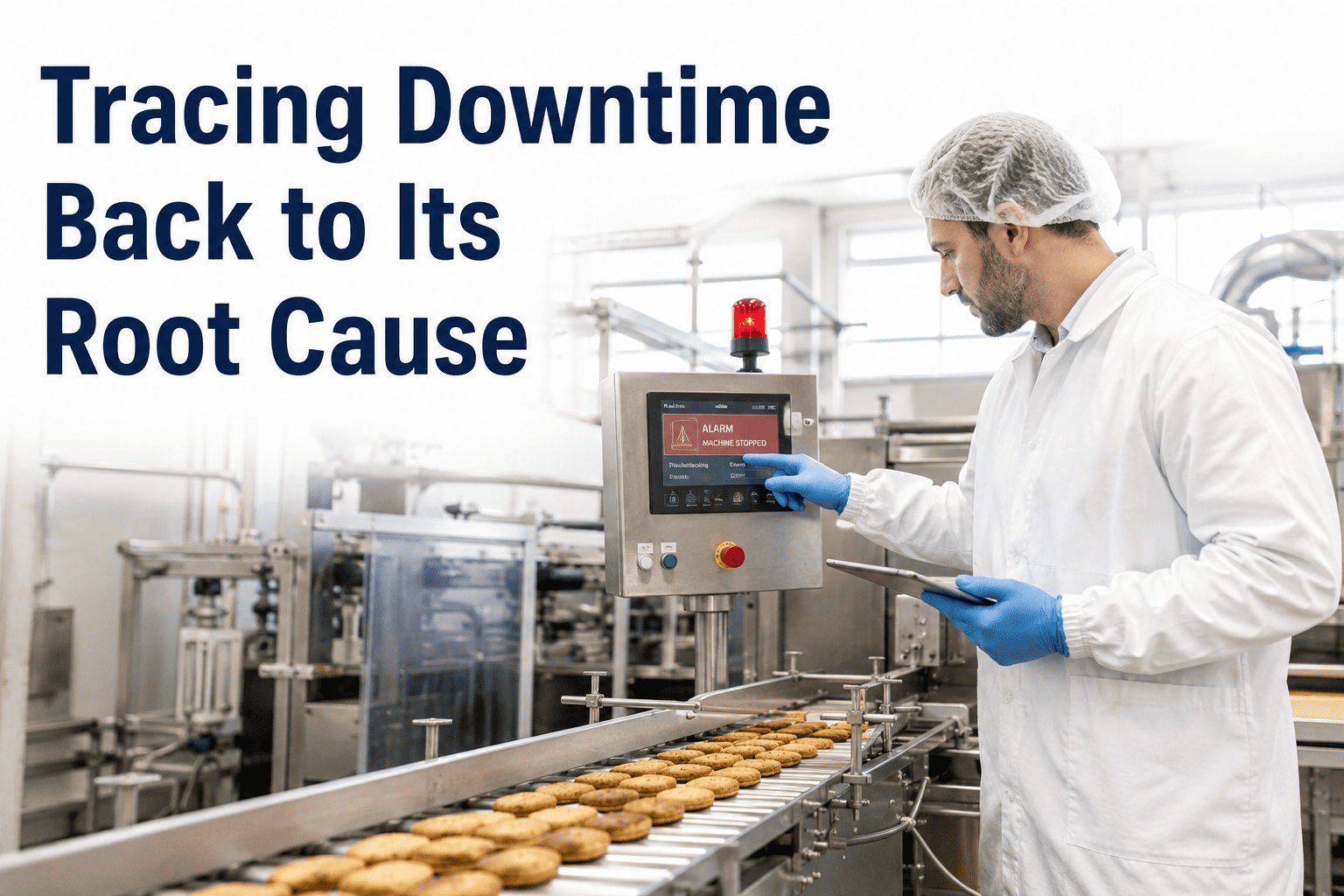
A bakery in Pennsylvania replaced the same air compressor motor three times in 14 months. Each time, the maintenance team diagnosed "motor failure," ordered a replacement, and moved on. Total cost: $23,400 in motors, plus $67,000 in downtime across the three events. On the fourth failure, a new reliability engineer asked a different question: "Why do motors keep failing on this specific compressor?" The answer took two hours to find. A loose foundation bolt was causing vibration that exceeded motor bearing tolerances. The $45 bolt repair ended the cycle permanently. Three motors died because nobody asked "why" deeply enough.
This is why root cause analysis exists—and why it matters more than any other maintenance discipline. Fixing symptoms feels productive. Finding root causes actually is productive. In food manufacturing, where compressor failures mean contamination risks, production losses, and audit complications, the difference between symptom-fixing and root-cause-solving is the difference between maintenance chaos and operational excellence. Facilities that implement formal RCA programs reduce repeat failures by 78%.
Sign in to start tracking root causes or book a demo to see how facilities eliminate repeat failures.
Root Cause Analysis
Root Cause Analysis of Air Compressor Failures in Food Manufacturing
Stop fixing symptoms. Start eliminating the reasons failures happen in the first place.
Reduction in Repeat Failures
Of Failures Are Repeat Events
Cost of Repeat vs. First Failure
2 hrs
average
Time to Complete Effective RCA
Why Most Troubleshooting Fails
When an air compressor fails, there's pressure to get it running again fast. Production is waiting. Costs are mounting. So maintenance teams fix the obvious problem—replace the failed part, reset the alarm, restart the machine—and move on. This feels efficient. It's actually the most expensive approach possible.
The failed part is almost never the root cause. It's the symptom of something deeper: inadequate lubrication, contamination, thermal stress, electrical issues, or human factors that created the conditions for failure. Fix the symptom without addressing the cause, and you've scheduled the next failure. You just don't know when it will arrive.
65%
Of air compressor failures are repeat events—the same failure mode happening again because the root cause was never addressed. Each repeat costs 5x the original event when you factor in cumulative downtime and escalating damage.
Break the cycle of repeat failures. Book a demo and see how facilities document root causes and track them to permanent resolution.
The 5-Why Method: Simple But Powerful
The most effective RCA technique is also the simplest: keep asking "why" until you reach something you can prevent. Most people stop too early—at the physical cause. True root causes are almost always systemic: missing procedures, inadequate training, flawed designs, or organizational blind spots.
The Core Principle
For every failure, there's a chain of causation. The visible failure is the end of the chain. Your job is to trace backward—link by link—until you find a cause you can actually prevent. That's usually 5 levels deep, sometimes more.
Why #1
Physical Cause
What physically failed or malfunctioned? (Bearing seized, motor burned out, seal leaked)
Why #2
Condition Cause
What condition led to that physical failure? (Lack of lubrication, overheating, contamination)
Why #3
Behavioral Cause
What behavior or action (or inaction) created that condition? (PM task skipped, wrong oil used)
Why #4
Procedural Cause
What procedural gap allowed that behavior? (No checklist, unclear specification, no verification)
Why #5
Systemic Root Cause
What systemic issue created the procedural gap? (Training deficiency, resource constraints, cultural factors)
⚠️ Common Mistake: Stopping at Why #1 or #2. If your corrective action is "replace the failed part," you haven't found the root cause. Keep asking why until you reach something you can permanently prevent.
Complete RCA Case Studies
Theory becomes clear through examples. Here are four detailed root cause analyses from actual food manufacturing facilities, showing how proper investigation reveals preventable systemic issues:
Initial Problem Statement
100 HP rotary screw compressor trips on high discharge temperature approximately every 3 months. Each event causes 2-4 hours of downtime while the unit cools and restarts. Maintenance has been adding oil and cleaning cooler fins after each event.
5-Why Analysis
1
Why did the compressor overheat?
Discharge temperature reached 235°F (limit: 220°F)
2
Why was discharge temperature so high?
Oil cooler was blocked with dust/debris, reducing heat transfer by ~40%
3
Why was the cooler blocked?
Cooler cleaning was not being performed regularly—last cleaning was 4 months prior
4
Why wasn't cooler cleaning performed?
No PM task existed for cooler cleaning; it was done reactively after overheating events
5
Why was there no PM task?
ROOT CAUSE: Original PM schedule was copied from a different facility with cleaner environment; never adapted to this plant's dusty flour processing conditions
Corrective Actions
Immediate: Deep clean all cooler surfaces, verify proper heat transfer
Root Cause Fix: Added monthly cooler cleaning task to PM schedule with photo verification requirement
Systemic Fix: Conducted environment assessment of all equipment; adjusted PM frequencies based on actual conditions, not copied templates
Outcome
Zero overheating events in 18 months since implementation. Estimated savings: $24,000/year in avoided downtime and emergency repairs.
Initial Problem Statement
QA discovered oil traces on packaging equipment during routine sanitation inspection. Source traced to compressed air system. 2,400 units quarantined. No obvious compressor malfunction—all parameters appeared normal.
5-Why Analysis
1
Why was there oil in the compressed air?
Oil carryover exceeded acceptable limits (measured 0.8 mg/m³ vs. 0.01 mg/m³ spec)
2
Why was oil carryover so high?
Coalescing filter had failed—media had collapsed, allowing oil bypass
3
Why did the filter fail?
Filter was 14 months old; manufacturer recommends replacement at 8,000 hours (~11 months)
4
Why wasn't the filter replaced on schedule?
Filter changes were tracked on paper log that was lost during office relocation 6 months prior
5
Why was critical PM tracking dependent on paper?
ROOT CAUSE: No CMMS system in place; all maintenance tracking relied on informal paper-based methods without backup or verification
Corrective Actions
Immediate: Replace all filters in compressed air system; verify air quality with testing
Root Cause Fix: Implemented Oxmaint CMMS with automatic PM scheduling and digital tracking
Systemic Fix: Established filter differential pressure monitoring with automated alerts at 80% of change threshold
Outcome
Zero contamination events since. All PM tasks now tracked digitally with automatic reminders. Filter changes occur at optimal timing based on ΔP readings, not arbitrary schedules.
Initial Problem Statement
Air compressor bearings have failed four times in the past two years. Curiously, three of the four failures occurred on weekends or holidays. Bearing suppliers confirmed quality is consistent. Maintenance suspected "bad luck."
5-Why Analysis
1
Why did bearings fail?
Bearing examination showed classic lubrication starvation damage patterns
2
Why was there lubrication starvation?
Oil level dropped below minimum; sight glass showed nearly empty sump
3
Why was oil level so low?
Gradual oil consumption over extended runtime without daily checks
4
Why weren't daily oil checks performed?
Weekend/holiday shifts had reduced staffing; compressor room checks were skipped to cover production floor
5
Why were essential checks skipped during reduced staffing?
ROOT CAUSE: No documented priority list for reduced-staff shifts; operators made ad-hoc decisions about which tasks to skip without understanding consequences
Corrective Actions
Immediate: Install low oil level alarm with remote notification capability
Root Cause Fix: Created "Essential Tasks" checklist specifically for reduced-staffing shifts with compressor checks marked as non-negotiable
Systemic Fix: Trained all operators on equipment criticality and failure consequences; documented in standard work procedures
Outcome
Zero bearing failures in 30 months since. Weekend shifts now have clear task priorities. Low oil alarm has activated twice, catching issues before damage occurred.
Initial Problem Statement
Packaging line experiences pressure drops (below 90 PSI) 3-4 times per week, causing rejected packages and line stoppages. Maintenance has been adjusting pressure setpoints higher to compensate. Problem persists and seems to be worsening.
5-Why Analysis
1
Why does pressure drop below 90 PSI?
Demand exceeds compressor supply capacity during peak production periods
2
Why does demand exceed capacity?
System leak survey revealed 23% leakage rate—equivalent to losing 35 CFM of capacity
3
Why is the leak rate so high?
27 individual leaks identified; many at quick-connect fittings installed during recent line expansion
4
Why were leaky fittings installed?
Expansion project used lowest-cost fittings; no specification for fitting quality existed
5
Why was there no fitting specification?
ROOT CAUSE: Engineering and Maintenance had no formal communication process for equipment modifications; Maintenance wasn't consulted on component selection for the expansion project
Corrective Actions
Immediate: Repair all 27 identified leaks; replace substandard fittings with quality components
Root Cause Fix: Created compressed air component specification document with approved fitting types and installation standards
Systemic Fix: Established Management of Change (MOC) process requiring Maintenance review of all equipment modifications before implementation
Outcome
Pressure drops eliminated. System now maintains 105-115 PSI consistently. Pressure setpoint returned to normal. Energy consumption decreased 18% after leak repairs. Annual savings: $14,000.
Document Every Root Cause. Eliminate Every Repeat Failure.
Oxmaint captures RCA findings, tracks corrective actions to completion, and monitors for recurrence—turning one-time investigations into permanent improvements.
The Fishbone Diagram: Organizing Complex Failures
When failures have multiple potential causes, the Fishbone (Ishikawa) diagram helps organize investigation systematically. For air compressor failures, these six categories capture most root causes:
Machine
Equipment-related causes
- Age-related wear
- Design limitations
- Component quality issues
- Inadequate capacity
- Sensor/control failures
Method
Procedure-related causes
- Missing PM procedures
- Incorrect procedures
- Outdated work instructions
- No startup/shutdown protocol
- Inadequate inspections
Material
Consumable/supply causes
- Wrong oil specification
- Contaminated lubricant
- Substandard replacement parts
- Poor filter quality
- Incorrect refrigerant
Manpower
Human-related causes
- Insufficient training
- Inadequate staffing
- Fatigue/workload issues
- Communication failures
- Skill gaps
Measurement
Monitoring-related causes
- Uncalibrated gauges
- Missing instrumentation
- Inadequate alarm setpoints
- No trend monitoring
- Infrequent inspections
Environment
External condition causes
- High ambient temperature
- Dusty/dirty conditions
- Humidity extremes
- Poor ventilation
- Corrosive atmosphere
RCA Documentation Requirements
An RCA that isn't documented is an RCA that never happened—at least from an audit and organizational learning perspective. Here's what every RCA record should capture:
01
Failure Event Details
Date, time, equipment ID, shift, operator on duty, exact symptoms observed, immediate actions taken, production impact (units, hours, dollars)
02
Investigation Record
Who conducted RCA, when investigation occurred, what data was reviewed, who was interviewed, physical evidence examined
03
Causal Chain Analysis
Complete 5-Why chain or Fishbone diagram, evidence supporting each "why" level, distinction between symptoms and root cause
04
Corrective Action Plan
Specific actions for each cause level (immediate, root cause, systemic), responsible person, target completion date, resources required
05
Verification & Follow-up
How completion will be verified, effectiveness metrics, monitoring period, criteria for closing the RCA
06
Lessons Learned
Broader applicability to other equipment, procedure updates needed, training implications, communication to other shifts/sites
Building an RCA Culture
Tools and techniques only work when the organization supports them. Building a culture where RCA happens consistently requires deliberate effort:
Clear Triggers
Define which events require formal RCA: unplanned downtime >2 hours, repeat failures, safety incidents, quality events, high-cost repairs. Without clear triggers, RCA becomes optional.
Protected Time
RCA takes 2-4 hours to do properly. If technicians don't have protected time for investigation, it won't happen. Schedule RCA time just like you schedule PM time.
Blame-Free Environment
If RCA is used to assign blame, people will hide information. Focus on fixing systems, not punishing individuals. The goal is prevention, not prosecution.
Tracking & Accountability
Track corrective actions to completion with deadlines and owners. Unfinished corrective actions are worse than no RCA—they prove you knew the problem and didn't fix it.
Share Learnings
Communicate RCA findings across shifts, departments, and sites. The same root causes often exist in multiple places. One good RCA can prevent failures elsewhere.
Measure Effectiveness
Track repeat failure rates over time. If the same failures keep happening, your RCA program isn't working. Target: zero repeat failures within 12 months of RCA completion.
Make Root Cause Analysis Systematic
Oxmaint guides teams through structured RCA workflows, tracks corrective actions to completion, and monitors for failure recurrence—turning investigations into lasting improvements.
Frequently Asked Questions
How long should a root cause analysis take?
A thorough RCA typically requires 2-4 hours of focused investigation for most air compressor failures. Complex events involving multiple factors may take longer. The investment is worthwhile: a 3-hour RCA that prevents repeat failures saves hundreds of hours of future downtime and repair work.
When should we conduct root cause analysis?
Conduct RCA for: any unplanned downtime exceeding 2 hours, repeat failures (same failure mode on same equipment), safety-related incidents, quality or contamination events, and any repair exceeding $5,000. These thresholds can be adjusted based on your facility's risk tolerance and equipment criticality.
What's the difference between a symptom and a root cause?
A symptom is what you observe (bearing failed, motor overheated, pressure dropped). A root cause is why it happened at the systemic level (no PM schedule, inadequate training, missing specification). If your corrective action is "replace the part," you've addressed a symptom. If it's "update the PM schedule and verify completion," you've addressed a root cause.
How do we know if RCA was effective?
The ultimate measure is simple: the same failure doesn't happen again. Track "repeat failure rate" as a key metric. If the same equipment fails from the same cause within 12 months of completing an RCA, the investigation missed something or corrective actions weren't fully implemented. Target: zero repeat failures.
Who should be involved in RCA investigations?
Include the technician who responded to the failure, operators who work with the equipment daily, and a facilitator trained in RCA methodology. For complex events, add engineering support and supervision. Multiple perspectives catch root causes that individuals miss.
Sign in to see how Oxmaint facilitates team-based RCA investigations.