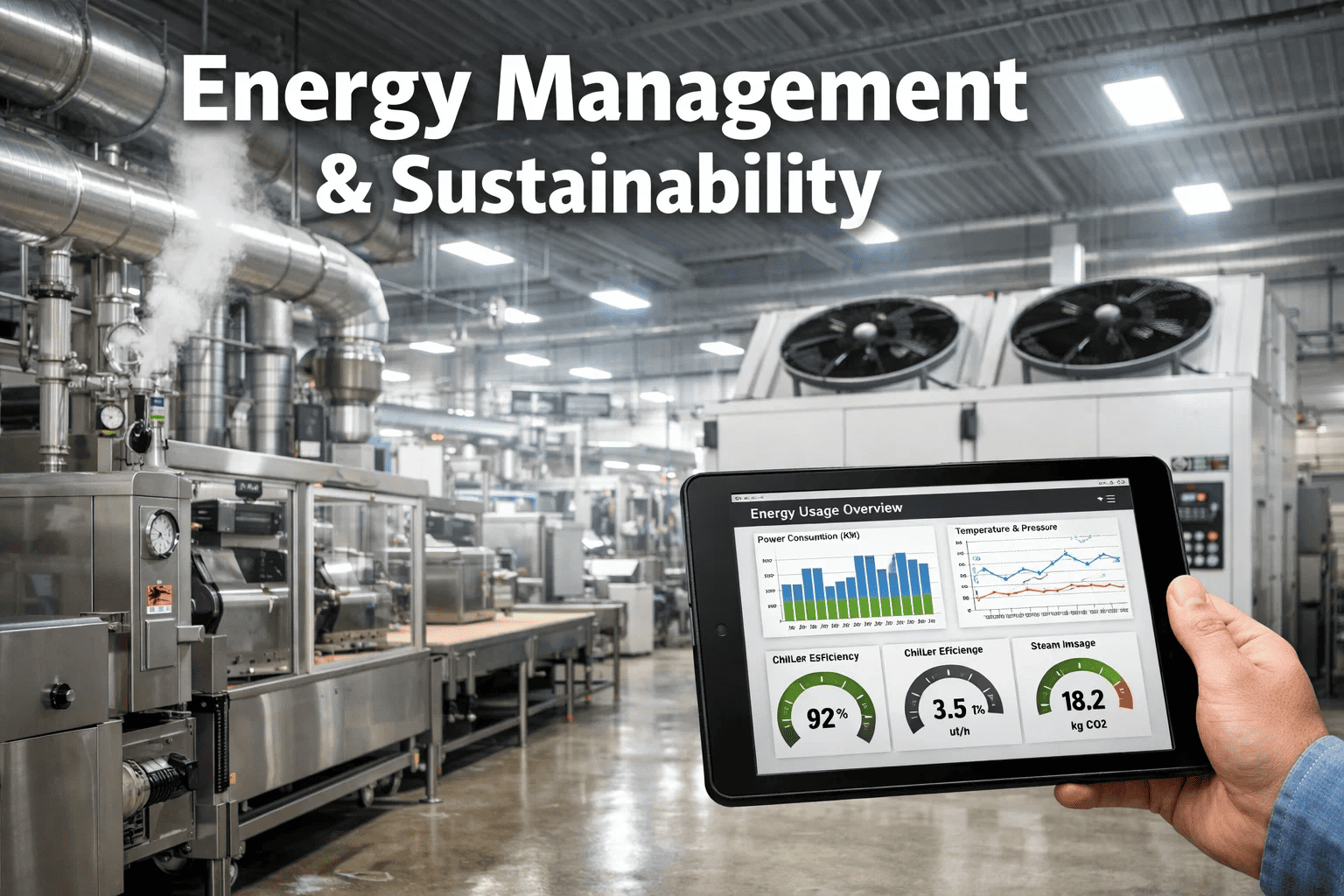
A food processing plant with 400 assets cannot afford to apply the same maintenance strategy to every piece of equipment — treating a critical pasteuriser the same as a non-critical conveyor guard motor wastes resources on low-risk assets while under-maintaining the ones that actually shut down production. Reliability-Centered Maintenance uses systematic failure analysis (FMEA) to determine the right maintenance strategy for each asset based on what happens when it fails — not just whether it might fail. Plants that implement RCM reduce unplanned downtime by 40-60%, cut maintenance costs by 20-30%, and improve food safety compliance by documenting failure mode consequences linked to HACCP critical control points. The methodology is proven — the challenge is execution, and that requires a CMMS that can manage criticality rankings, FMEA records, and strategy-specific PM schedules per asset. Book a demo to see how OxMaint supports RCM implementation with asset criticality scoring, failure mode tracking, and strategy-aligned maintenance scheduling. Start a free trial and begin your first criticality assessment today.
Reliability-Centered Maintenance (RCM) for Food Processing Equipment
FMEA-driven failure analysis, asset criticality ranking, strategy selection per failure mode, and CMMS-managed reliability programmes that align maintenance effort with actual risk and consequence.
What Is Reliability-Centered Maintenance?
Reliability-Centered Maintenance is a systematic methodology that determines the most effective maintenance strategy for each asset based on the consequences of its failure modes — not based on arbitrary time intervals or manufacturer recommendations alone. RCM asks seven structured questions about every critical asset: What does it do? How can it fail? What causes each failure? What happens when it fails? Does it matter? Can we predict or prevent it? What should we do if we cannot? The answers drive maintenance strategy selection — predictive, preventive, condition-based, or run-to-failure — matched precisely to the risk profile of each asset. Want to see RCM methodology applied in a CMMS? Start a free trial and book a demo to walk through asset criticality assessment and FMEA in OxMaint.
The RCM Process: From Analysis to Execution
RCM is not a one-time exercise — it is a continuous cycle of analysis, strategy selection, execution, and refinement. Each step builds on the previous one, and the CMMS serves as the execution engine that translates FMEA findings into scheduled maintenance actions.
Stop Maintaining Everything the Same Way. Start Maintaining Based on Risk.
OxMaint supports the full RCM cycle — asset criticality scoring, FMEA documentation, strategy-aligned PM scheduling, and reliability KPI tracking — so you spend maintenance resources where they deliver the highest return.
Common Food Equipment Failure Modes and RCM Strategies
Every food processing asset has characteristic failure modes that FMEA analysis reveals. The RCM strategy is selected based on the failure pattern (random, age-related, or infant mortality) and the consequence severity (safety, production, or cost). This table shows typical food equipment failure modes and the RCM-recommended strategy for each.
Blanket PM vs. RCM-Optimized Maintenance
The difference between applying the same PM schedule to every asset and targeting maintenance effort based on FMEA-identified failure modes is the difference between 60% and 90% maintenance effectiveness — with 20-30% lower cost. See how this optimisation applies to your plant — start a free trial and book a demo to see RCM strategy mapping in OxMaint.
Key Reliability KPIs OxMaint Tracks
Frequently Asked Questions
How does RCM differ from standard preventive maintenance in food plants?
Standard PM applies the same time-based or calendar-based schedule to every asset regardless of its failure patterns or consequence severity. RCM uses systematic FMEA analysis to determine the right strategy for each failure mode — some assets get predictive monitoring, some get usage-based PM, some get time-based PM, and non-critical assets may be run to failure intentionally. The result is maintenance effort precisely matched to risk, which typically reduces costs by 20-30% while improving reliability by 40-60%. Book a demo to see RCM strategy mapping in OxMaint.
What is FMEA and how does it apply to food manufacturing maintenance?
Failure Mode and Effects Analysis is the systematic process of identifying how each asset function can fail, why it fails, and what the consequences are. In food manufacturing, FMEA is particularly powerful because it connects maintenance strategy to HACCP — failure modes that affect food safety CCPs get the highest priority and most rigorous maintenance strategies. OxMaint stores FMEA records per asset, calculates Risk Priority Numbers, and automatically generates maintenance tasks aligned to the FMEA findings. Start a free trial to configure FMEA-based maintenance.
How long does it take to implement RCM in a food processing plant?
A full RCM implementation across an entire food plant typically takes 6-12 months, but the approach should be phased. Begin with the top 18-20% of critical assets — the ones that drive 80% of downtime and food safety risk. This initial phase can be completed in 4-8 weeks and delivers immediate, measurable improvements while the methodology is extended to remaining assets over subsequent quarters. OxMaint provides criticality assessment templates that accelerate the initial asset ranking phase. Book a demo to plan your RCM implementation roadmap.
Can OxMaint track MTBF and MTTR per asset for reliability analysis?
Yes. OxMaint calculates MTBF and MTTR automatically from work order completion data per asset. The system trends these metrics over time, allowing reliability engineers to verify that RCM strategies are improving asset performance. When MTBF decreases or MTTR increases for a critical asset, the system flags it for strategy review — ensuring that maintenance approaches are continuously refined based on actual reliability data. Start a free trial to activate reliability KPI tracking.
Maintain What Matters Most. Let Data Decide the Rest.
Asset criticality scoring, FMEA-driven strategy selection, reliability KPI tracking, and optimized PM scheduling — one CMMS platform that turns reliability engineering into daily maintenance practice.