Brewery equipment failures do not just interrupt production — they compromise batch integrity, contaminate fermentation vessels, and in worst cases, trigger product recalls that damage brand reputation built over years. For head brewers, operations managers, and maintenance leads running craft and commercial brewing facilities across the USA, UK, Australia, Canada, UAE, and Germany, the discipline separating consistently excellent product from expensive failures is not recipe quality alone — it is the maintenance program keeping fermenters, bright tanks, CIP systems, and packaging lines in specification, batch after batch. start a free trial or book a demo to see how Oxmaint structures brewery maintenance from fermenter to packaging line.
Bring Structure to Your Brewery Maintenance Program
Oxmaint gives brewery maintenance teams automated PM scheduling for fermenters, bright tanks, CIP systems, and packaging lines — with full asset history, compliance documentation, and mobile-first work orders built for the brewery floor.
What Brewery Equipment Maintenance Actually Covers
Brewery maintenance spans a uniquely broad range of assets — from the precision of fermentation temperature control systems and the chemistry of CIP cleaning to the mechanical reliability of packaging lines and the food safety compliance of sanitation procedures. Unlike general manufacturing, brewery maintenance directly intersects with product quality at every equipment touchpoint: a failed CO2 pressure relief valve affects carbonation; a worn fermenter seal introduces oxygen; a degraded CIP spray ball leaves biofilm that compromises the next batch. start a free trial and register your brewery assets in Oxmaint within the first session.
The 8 Brewery Asset Classes That Drive Quality and Uptime
Fermentation Vessels
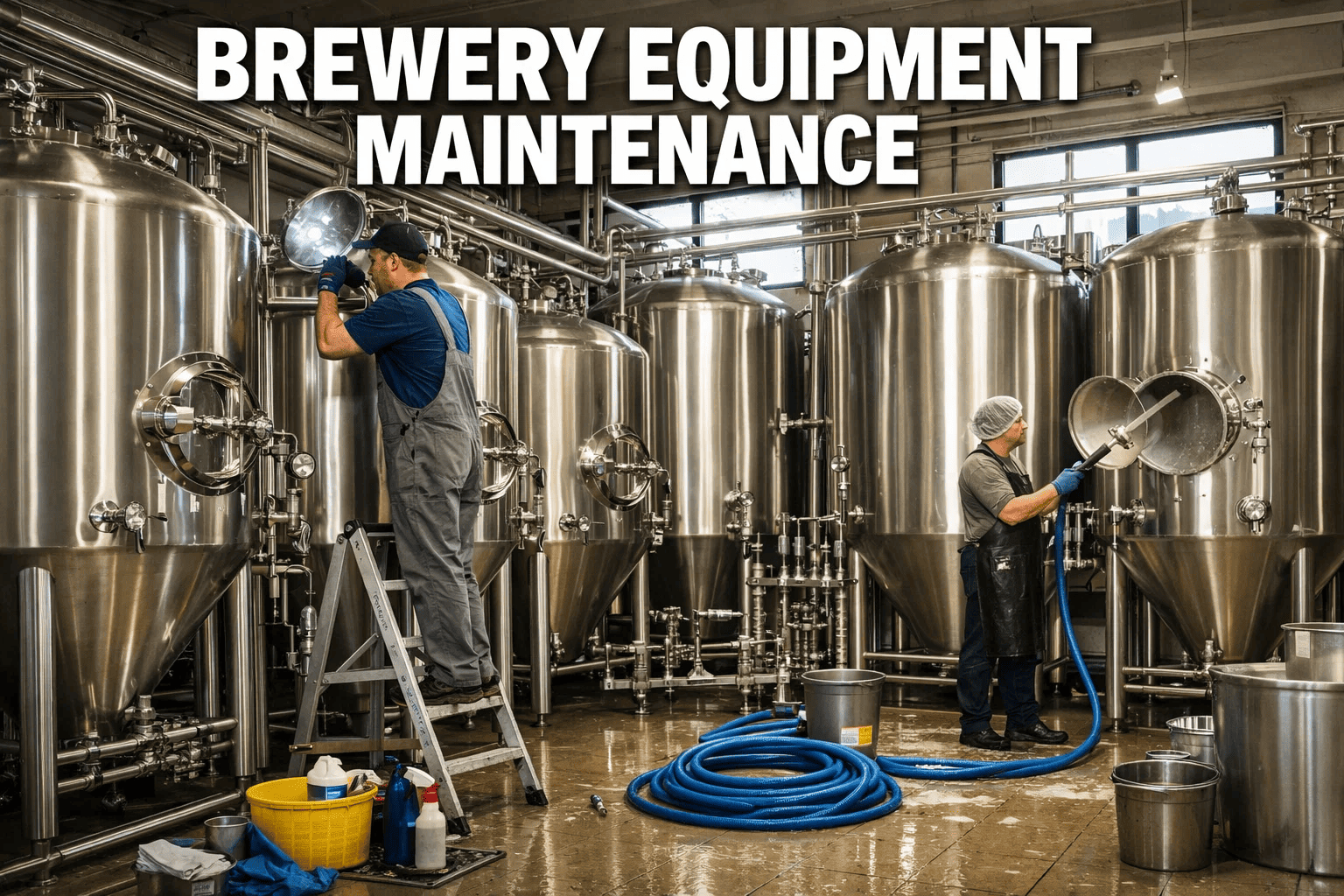
Cylindroconical fermenters require regular seal inspection, pressure relief valve testing, temperature sensor calibration, and CIP validation. Cone valve and racking arm seal wear are the primary failure modes — each creating contamination and oxygen ingress risk.
Bright Beer Tanks
Carbonation stone integrity, pressure gauge calibration, and seal condition are critical in bright tanks. Failed carbonation stones produce uneven carbonation that drives product rejects. Quarterly pressure vessel statutory inspections are required in most jurisdictions.
CIP Systems
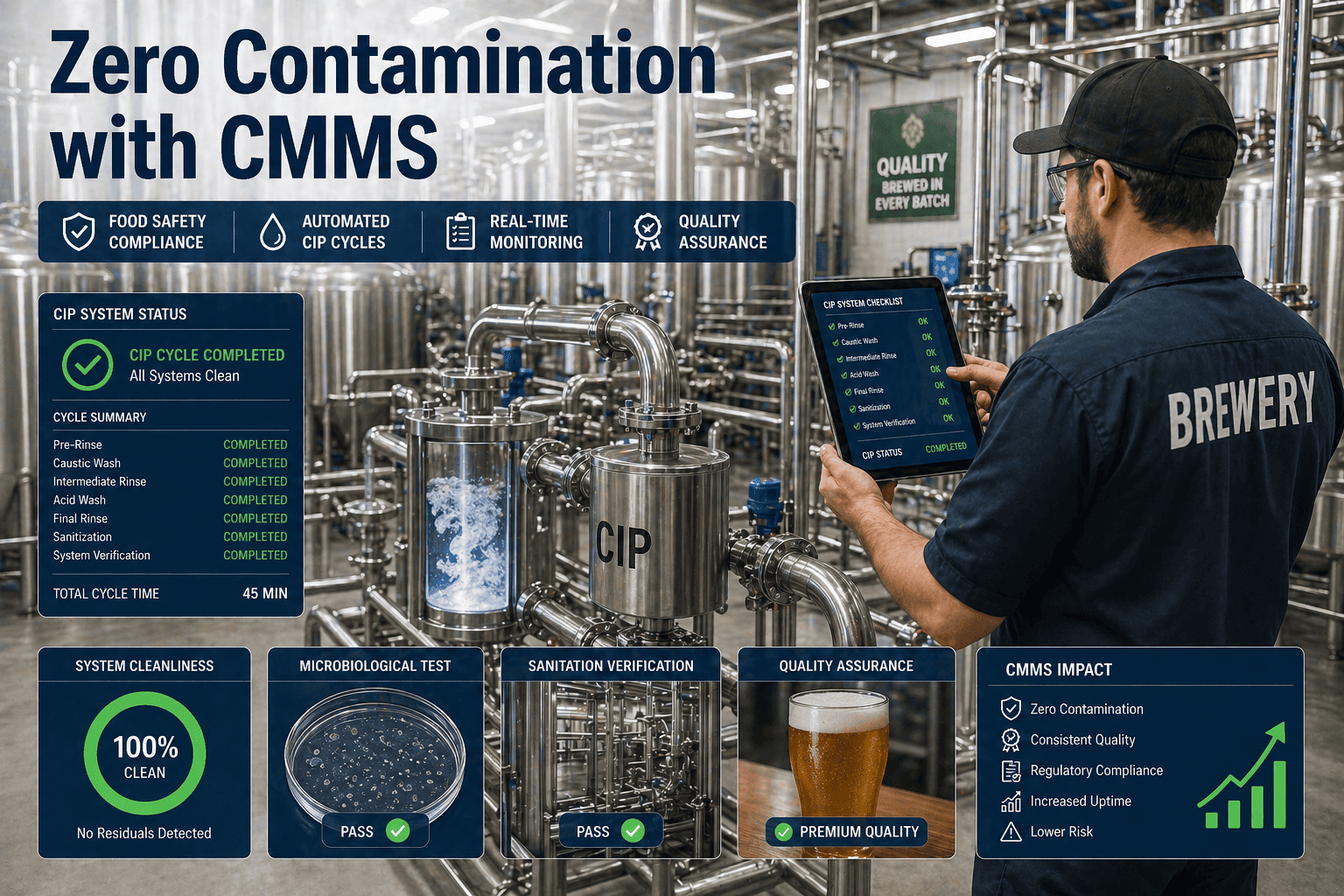
Clean-in-place systems are the microbiological backbone of brewery operation. Spray ball condition, pump flow rate, chemical dosing accuracy, and temperature validation must be verified at each CIP cycle. Deferred CIP maintenance is the leading cause of microbial contamination events in breweries.
Refrigeration and Glycol Systems
Glycol chiller compressors, heat exchangers, and distribution pump systems maintain fermentation temperature control. Glycol concentration, refrigerant charge, and heat exchanger fouling require quarterly verification — with failures causing temperature excursions that stall or destroy fermentation batches.
Brewhouse Equipment
Mash tuns, lauter tuns, kettles, and whirlpools involve steam heating elements, agitator drives, false bottom and screen integrity, and temperature/level instrumentation. Steam system PM, agitator gearbox servicing, and screen replacement are the primary scheduled tasks.
Packaging Lines
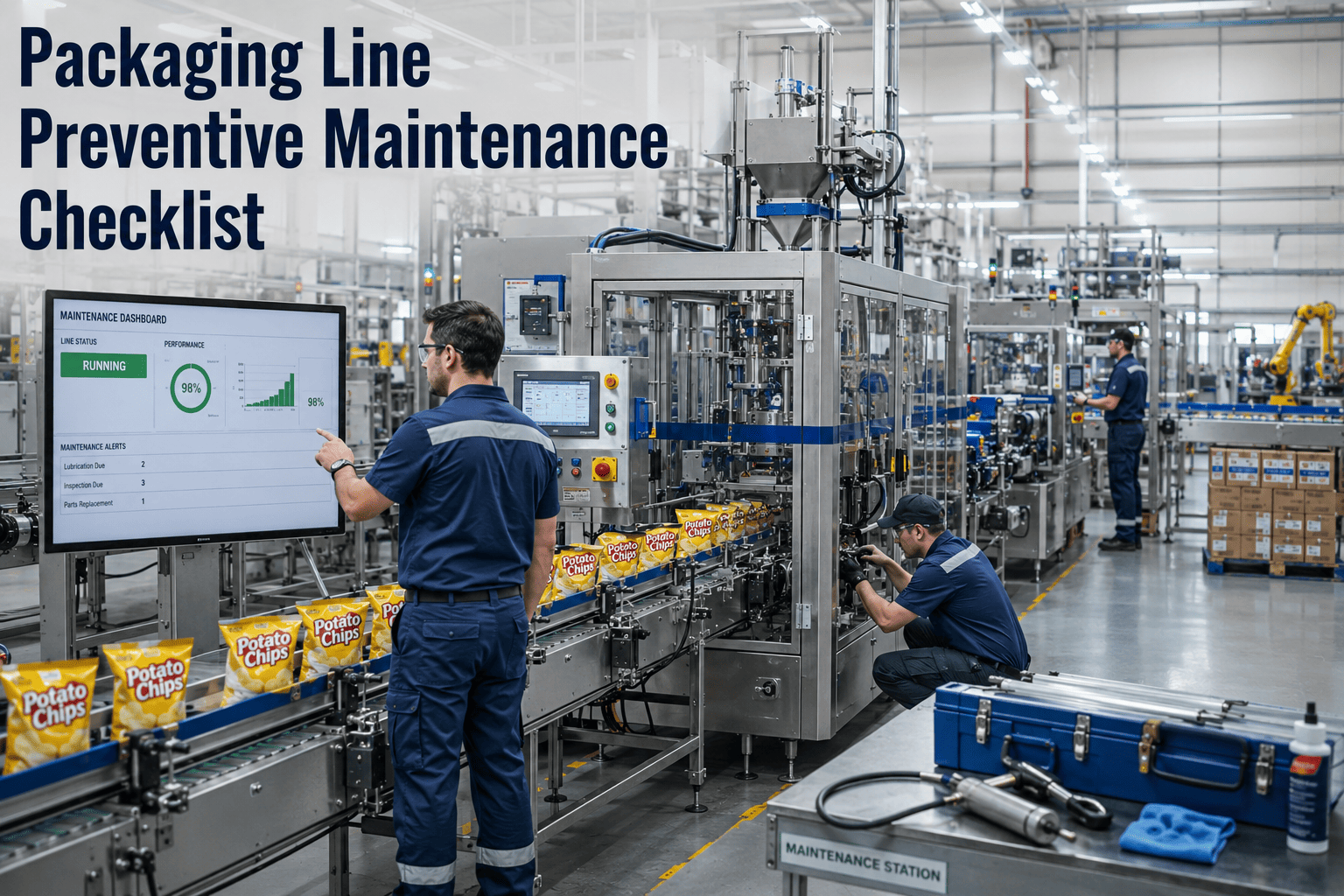
Canning and bottling lines involve filler head seals, seamer chuck wear, label applicator alignment, and tunnel pasteurizer temperature profiling. Filler seal failure introduces oxygen — the primary enemy of beer shelf life. Weekly filler head inspection is non-negotiable in high-volume operations.
CO2 Recovery and Dosing Systems
CO2 purity, pressure regulation, and carbonation accuracy are production-critical. CO2 purity testing, regulator calibration, and carbonation stone inspection must be logged. Compressed gas system statutory inspection requirements apply in all target markets.
Utilities — Steam, Water, Air
Boilers, RO water systems, compressed air treatment, and effluent handling are the support utilities that enable every other brewery system. Water quality, steam pressure, air quality class, and effluent consent compliance require regular testing and documented records.
Where Brewery Maintenance Programs Break Down
Deferred CIP Validation Cycles
CIP spray ball inspections and cycle validation deferred under production pressure are the leading cause of biofilm formation in fermenters and bright tanks — producing microbial off-flavours that trigger batch rejection and customer complaints.
Uncalibrated Temperature Instruments
Fermentation temperature sensors drifting beyond tolerance produce yeast stress conditions that generate off-flavours. Without quarterly calibration cycles in the CMMS, temperature excursions go undetected until sensory panel review flags the batch.
Seal and Gasket Failures
Fermenter and bright tank seal degradation — particularly butterfly valve seats and manway gaskets — causes oxygen ingress that accelerates product oxidation. Without scheduled seal replacement programs, failures occur in-batch at the worst possible moment.
Missing Pressure Vessel Records
ASME (USA), PED (EU), and PSSR 2000 (UK) require statutory inspection records for all pressure vessels — including fermenters, bright tanks, and CO2 cylinders. Expired certificates create regulatory exposure that third-party auditors and insurers flag immediately.
How Oxmaint Powers Brewery Maintenance Excellence
Oxmaint registers every brewery asset — from individual fermenters and CIP circuit components to packaging line filler heads and glycol chillers — and connects them to automated PM schedules, calibration workflows, inspection checklists, and compliance certificate tracking. book a demo to see the brewery maintenance workflow in action.
Full Brewery Asset Hierarchy
Register every vessel, system, and component with model data, install date, and service history — creating the permanent digital record that supports both PM scheduling and CapEx planning.
Automated CIP and Vessel PM
Schedule CIP spray ball inspections, seal replacements, temperature calibrations, and pressure vessel statutory checks — each triggering mobile work orders to the right technician at the right time.
Pressure Vessel Certificate Tracking
Store ASME, PED, and PSSR inspection certificates for every fermenter and bright tank. Automatic expiry alerts trigger renewal 60 days before the window closes — eliminating certificate lapses during audits.
Instrument Calibration Schedules
Schedule temperature sensor, pressure gauge, flow meter, and CO2 analyzer calibration cycles — with calibration certificates attached to asset records and expiry alerts built into the PM calendar.
Packaging Line PM and OEE
Track filler head seal condition, seamer chuck wear, and pasteurizer temperature profiling in scheduled work orders. Monitor packaging line OEE at the fill/seal level to identify performance loss before it impacts throughput.
Audit-Ready Maintenance Records
Every inspection, calibration, and repair generates a date-stamped, technician-signed record. BRCGS Certificate of Analysis auditors, HACCP reviewers, and insurance inspectors retrieve the full maintenance history in seconds.
Reactive Brewery Maintenance vs. Oxmaint Planned Program
Brewery Maintenance ROI Statistics
Frequently Asked Questions
How often should CIP systems be validated in a brewery?
CIP validation frequency depends on the risk level of the vessels being cleaned and the production schedule. Production vessels — fermenters and bright tanks — should have their CIP cycles validated at a minimum quarterly, with spray ball inspection at every third CIP cycle or monthly, whichever comes first. Any change to CIP chemical concentration, temperature, or cycle time requires immediate revalidation. BRCGS and SQF-certified breweries are expected to maintain complete CIP cycle records including time, temperature, chemical concentration, and flow rate for every cleaning event.
What are the most common causes of beer contamination linked to maintenance failures?
The most common maintenance-related causes of brewery contamination are: degraded CIP spray balls leaving biofilm in fermenters; worn butterfly valve seats and manway gaskets allowing air ingress; failed filler head seals introducing dissolved oxygen into packaged product; incorrectly calibrated CO2 dosing producing carbonation variation; and glycol system failures causing fermentation temperature excursions that stress yeast and generate off-flavor compounds. All five failure pathways are preventable through scheduled PM programs tracked in a CMMS.
Do brewery fermenters and bright tanks require statutory pressure vessel inspection?
Yes. Fermenters and bright tanks operating above atmospheric pressure are classified as pressure vessels in most jurisdictions and require statutory inspection under ASME (USA), PED/PSSR (EU/UK), and equivalent Australian, Canadian, and UAE frameworks. Inspection frequency and certification requirements vary by jurisdiction and operating pressure. A CMMS system tracking certificate expiry dates — with automated renewal alerts — is the most reliable way to ensure statutory inspection windows are not missed across a multi-vessel or multi-site brewery operation.
Can Oxmaint manage brewery maintenance across multiple production sites?
Yes. Oxmaint's multi-site asset management supports brewery groups operating production facilities in multiple locations — with site-level asset records, PM schedules, and compliance documentation maintained independently while portfolio-level dashboards provide aggregate visibility across all sites. Maintenance managers can view overdue tasks, upcoming PM, and compliance certificate status across every brewery in the group from one centralized platform, with mobile-first work orders delivered to technicians at each individual site.
Protect Your Batches. Protect Your Brand. Start with Oxmaint.
Breweries across the USA, UK, Australia, and UAE use Oxmaint to maintain fermenters, CIP systems, bright tanks, and packaging lines with the consistency and documentation that great beer — and great audits — require.