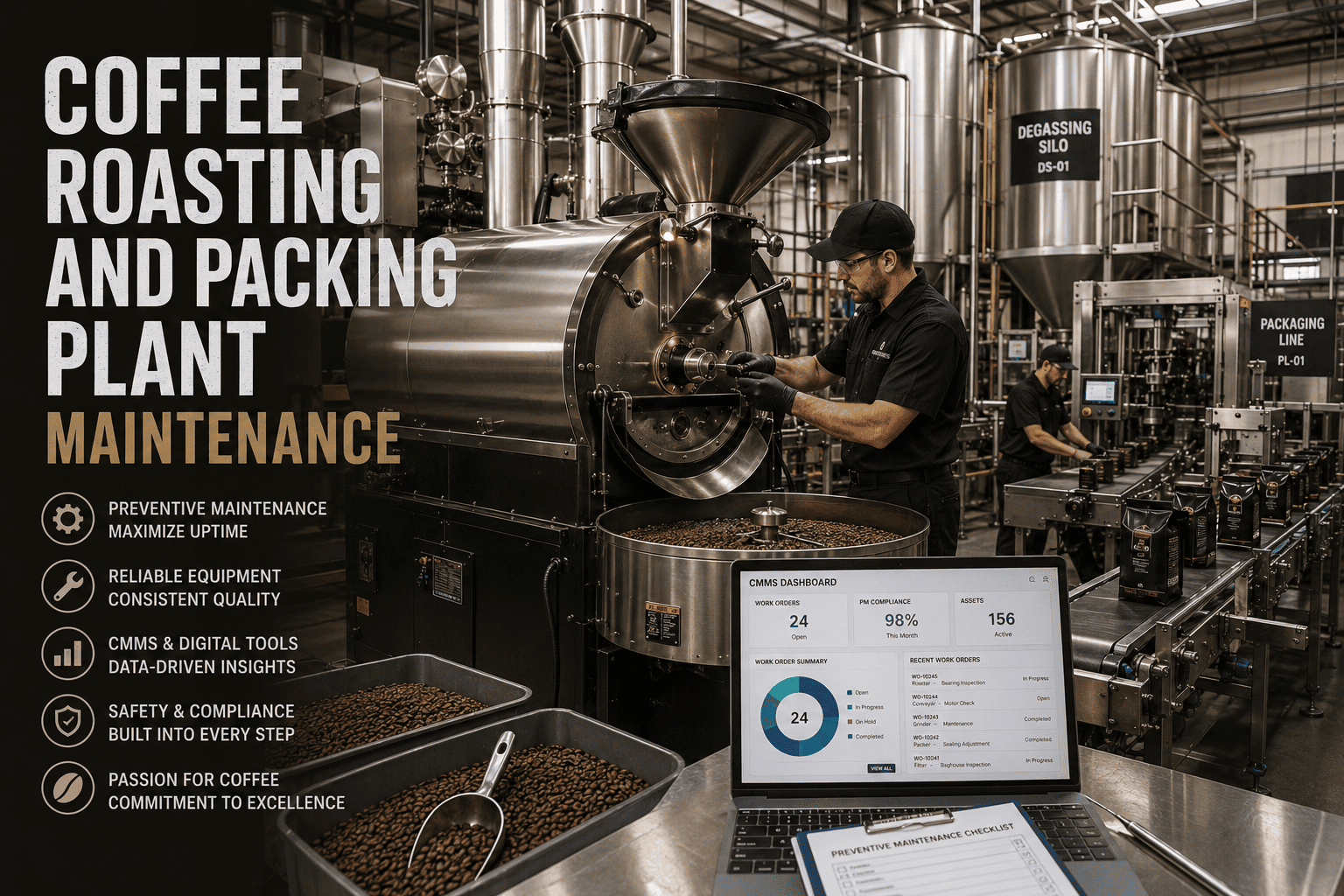
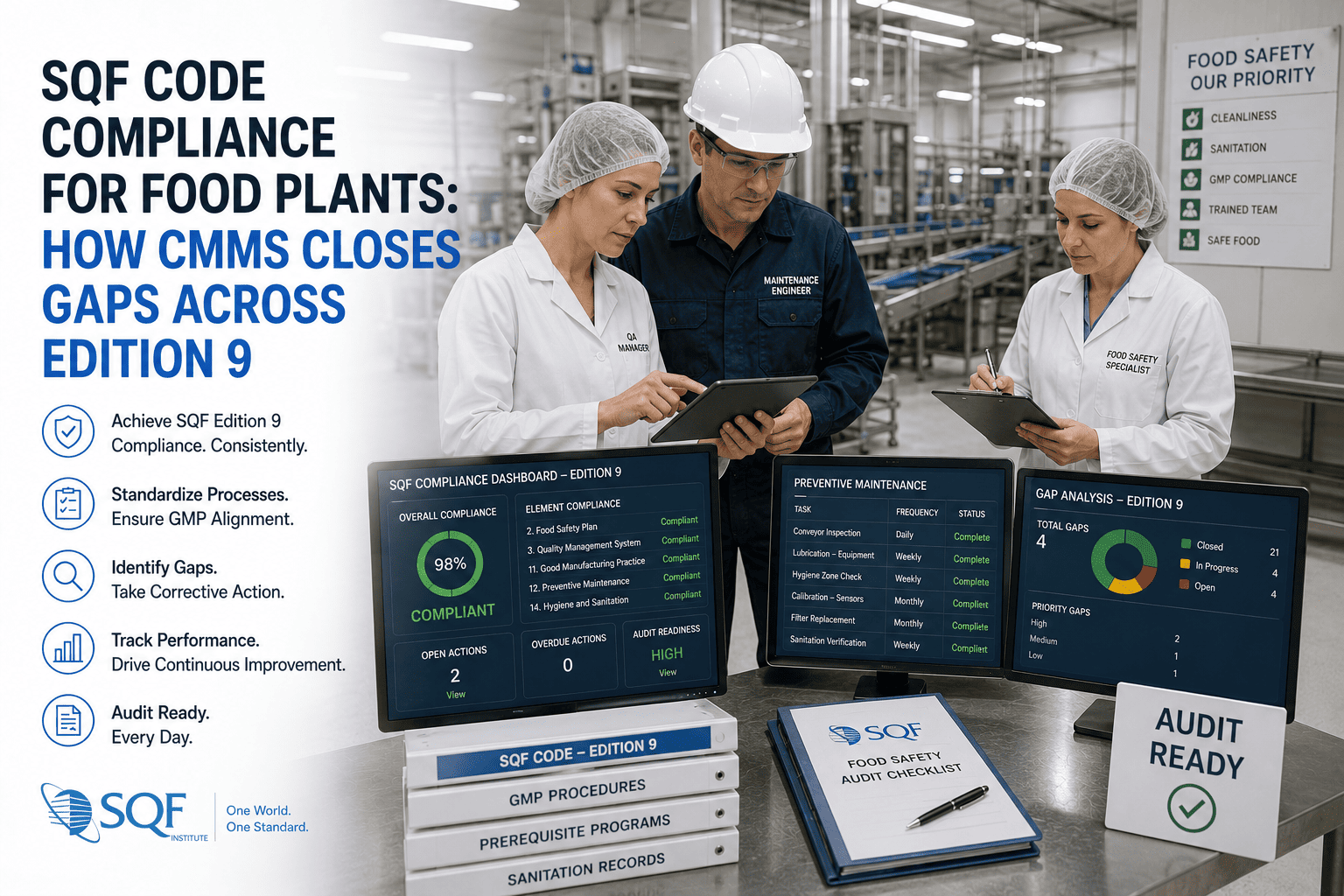
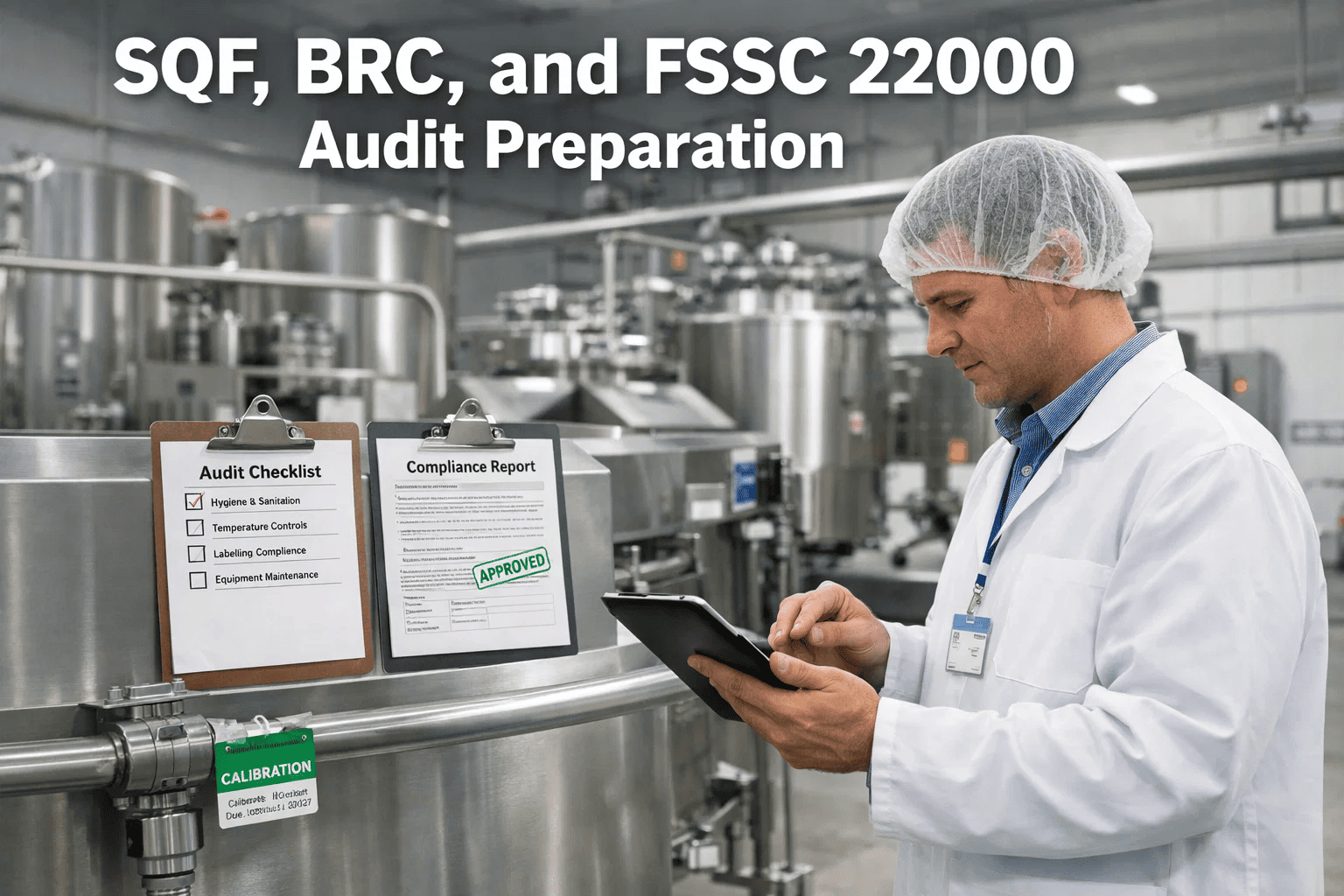
Coffee roasting plants run a process chain that few other food categories share: green bean intake, drum or fluid-bed roasting at 200°C to 230°C, afterburner emission control at 650°C to 816°C, degassing silos, grinding lines, and packing operations that meet FDA registration under the Food Safety Modernization Act. Every stage has its own maintenance discipline, every stage has its own regulatory footprint, and every stage interacts with the others — a misfiring afterburner triggers an air quality violation, a clogged degassing valve creates a CO buildup hazard, a fouled grinder produces diacetyl exposure issues for operators. Plants running structured CMMS programs against this chain hold cleaner FDA inspections, lower afterburner permit risk, and measurably better roast-batch consistency, which is why roastery directors chasing compliance and yield start a free trial on a single roaster line and validate the engine before extending it across the floor.
Coffee Process Operations Brief
Coffee Roasting and Packing Plant Maintenance — Drum Roasters to Packing Lines
Drum roasters, afterburners, degassing silos, grinders, packing lines, FDA registration, and CMMS-tracked PM and emission logs that survive air quality and food safety audits.
650-816°C
Afterburner operating range required for thermal emission destruction in roasting plants
FSMA
Every coffee roasting facility must register with the FDA, renewable every 2 years
5.0 ppb
NIOSH Recommended Exposure Limit for diacetyl across full shift in coffee operations
10 g/m³
Peak organic air pollutant emissions before afterburner cleaning in green coffee roasting
The Coffee Roasting Maintenance Chain From Green to Packed
A roasting plant is a process facility, not a manufacturing line. Green coffee enters at intake, passes through cleaning and destoning, drops into a drum or fluid-bed roaster where heat develops the flavor compounds, cools in a tray with airflow, degasses in silos for hours to days as CO and CO2 release, grinds for specific product profiles, and packs into bags, pods, or capsules with degassing valves to manage residual gas release.
Maintenance discipline crosses six functional areas: roaster mechanical and burner integrity, afterburner combustion and temperature compliance, degassing and CO management, grinder dust and diacetyl exposure control, packing line seal integrity, and the FDA-required preventive controls documentation that ties the chain together. The CMMS approach makes every one of these areas a recoverable record on the asset hierarchy, so roastery managers ready to install that record-keeping discipline book a demo to walk through the chain on a real plant layout.
A coffee roasting plant without afterburner temperature logs is one inspector visit away from a permit violation.
The Six Process Stages and Their Maintenance Disciplines
The process chain breaks into six functional stages, each with its own equipment class, its own PM cadence, and its own compliance touchpoint. Map them all into the CMMS and the plant runs as one system instead of six disconnected zones.
STAGE 1
Green Bean Intake and Cleaning
Destoners, magnetic separators, and color sorters protect the roaster from foreign material. Weekly cleaning, monthly magnet pull test, quarterly sorter calibration form the PM core.
STAGE 2
Drum or Fluid-Bed Roaster Operation
Burner integrity, drum rotation, thermocouple accuracy, exhaust fan condition. Daily startup checks, weekly thermocouple verification, monthly burner combustion analysis.
STAGE 3
Afterburner Emission Control
Thermal or catalytic afterburners must hit 650 to 816°C to incinerate VOCs and CO. Daily temperature logging, weekly burner inspection, annual permit-mandated stack test.
STAGE 4
Degassing Silo and CO Management
Freshly roasted coffee releases CO and CO2 for days. Silo gas monitors, vent integrity, and personnel access controls require daily verification and quarterly recalibration.
STAGE 5
Grinding Line and Operator Exposure
Grinder dust control and diacetyl exposure containment under NIOSH RELs. Weekly dust collector inspection, quarterly air sampling, annual third-party industrial hygiene review.
STAGE 6
Packing Line With Degassing Valves
Filling, sealing, and one-way degassing valve placement on bags. Daily seal integrity check, weekly valve placement audit, monthly fill-weight verification against MAV.
Pain Points That Drive Roastery Compliance and Margin Risk
Roastery operations carry a unique compliance burden because air quality, food safety, occupational exposure, and product integrity all converge in the same plant. The four pain points below recur across small-batch craft roasters and industrial-scale plants alike.
Afterburner Temperature Logs Missing or Incomplete
Local air quality agencies require continuous logging of afterburner discharge temperature for one minute after each roast cycle. Plants logging temperatures on paper sheets routinely have gaps that surface during permit review and trigger corrective action notices.
FDA FSMA Preventive Controls Documentation Gaps
FSMA requires documented preventive controls, monitoring procedures, corrective actions, and verification records. Roastery plants tracking these in binders fail the documentation pull during FDA inspections, triggering follow-up visits and corrective action plans.
Diacetyl and 2,3-Pentanedione Exposure Risk
Grinding and flavoring areas can exceed NIOSH RELs for diacetyl and 2,3-pentanedione. Without quarterly air sampling tied to the asset record, exposure trends go undetected until a worker raises a respiratory health concern.
Roast Profile Drift From Uncalibrated Thermocouples
A drifted thermocouple shifts roast development by 30 to 60 seconds without operator awareness. The flavor profile fails the cupping panel, the batch is downgraded, and the recovery cost runs through Q&A budget unattributed to the actual maintenance gap.
These four pain points share one root cause: the maintenance record, the temperature log, the air sample, and the calibration sheet do not live on the asset. Unify them on the roaster, afterburner, silo, grinder, and packing line assets — and the compliance gap closes, the exposure trend becomes visible, and the cupping panel stabilizes, which is the operational improvement roastery managers install when they start a free trial on a single roaster line.
Roasted coffee releases CO for days — silo gas monitoring that drifts undetected is an industrial hygiene incident waiting for a witness.
How OxMaint Operationalizes Roastery Maintenance and Compliance
OxMaint configures the roastery plant as a multi-system property: intake, roasting, afterburner, degassing, grinding, packing — each a System under the property, each with assets and components beneath. PM, temperature logs, air samples, calibration sheets, and FDA documentation flow into the same record.
01
Afterburner Temperature Logging Automation
Thermocouple data streams continuously to the afterburner asset record. Permit-required logs export as PDF for the requested date range. Air quality agencies see complete logs, not reconstructed ones.
02
FSMA Preventive Controls Documentation
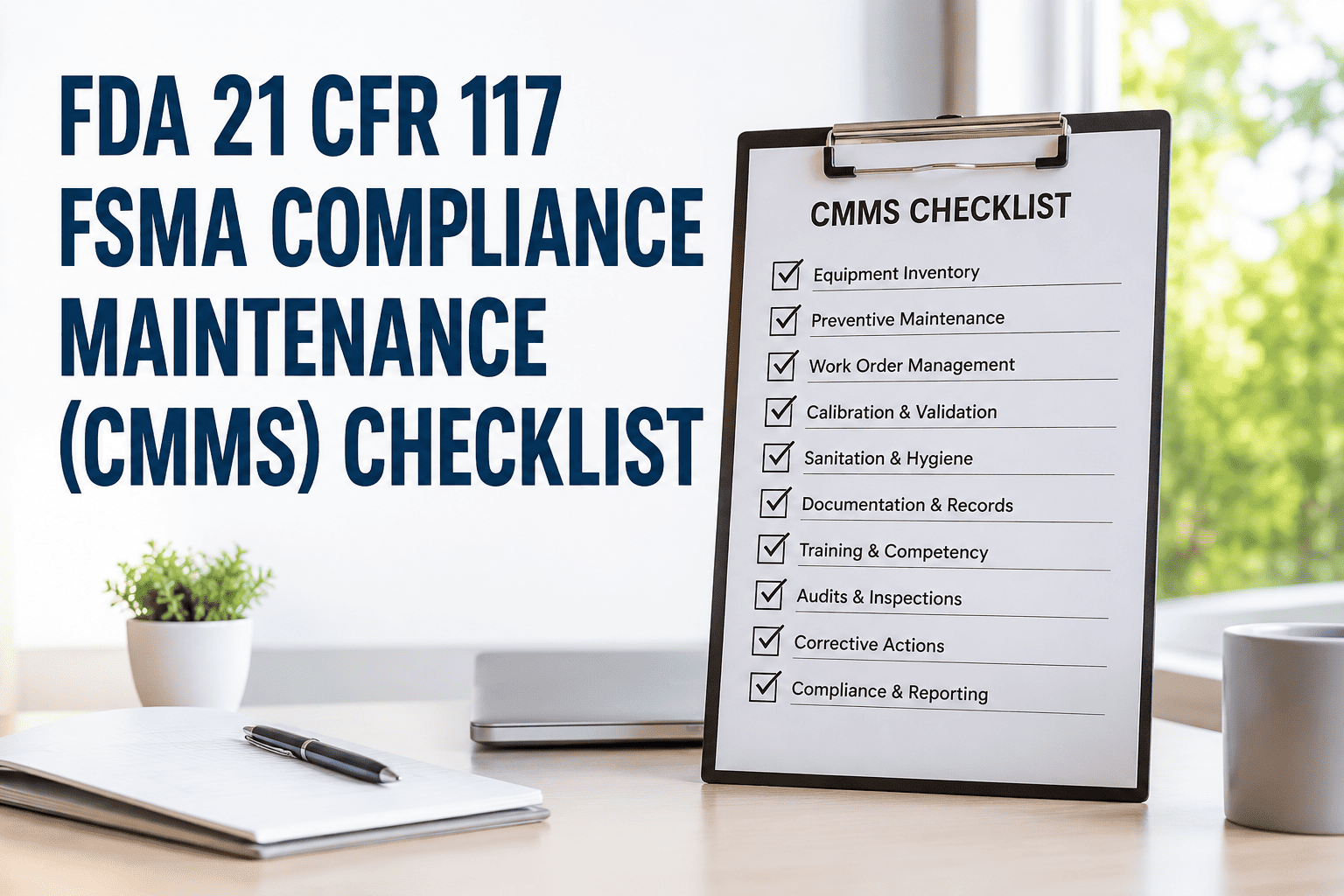
Every PM, every monitoring task, every corrective action attaches to the equipment record under the FSMA hazard analysis. FDA inspection pulls export by date range in minutes instead of weeks.
03
Industrial Hygiene Sample Tracking
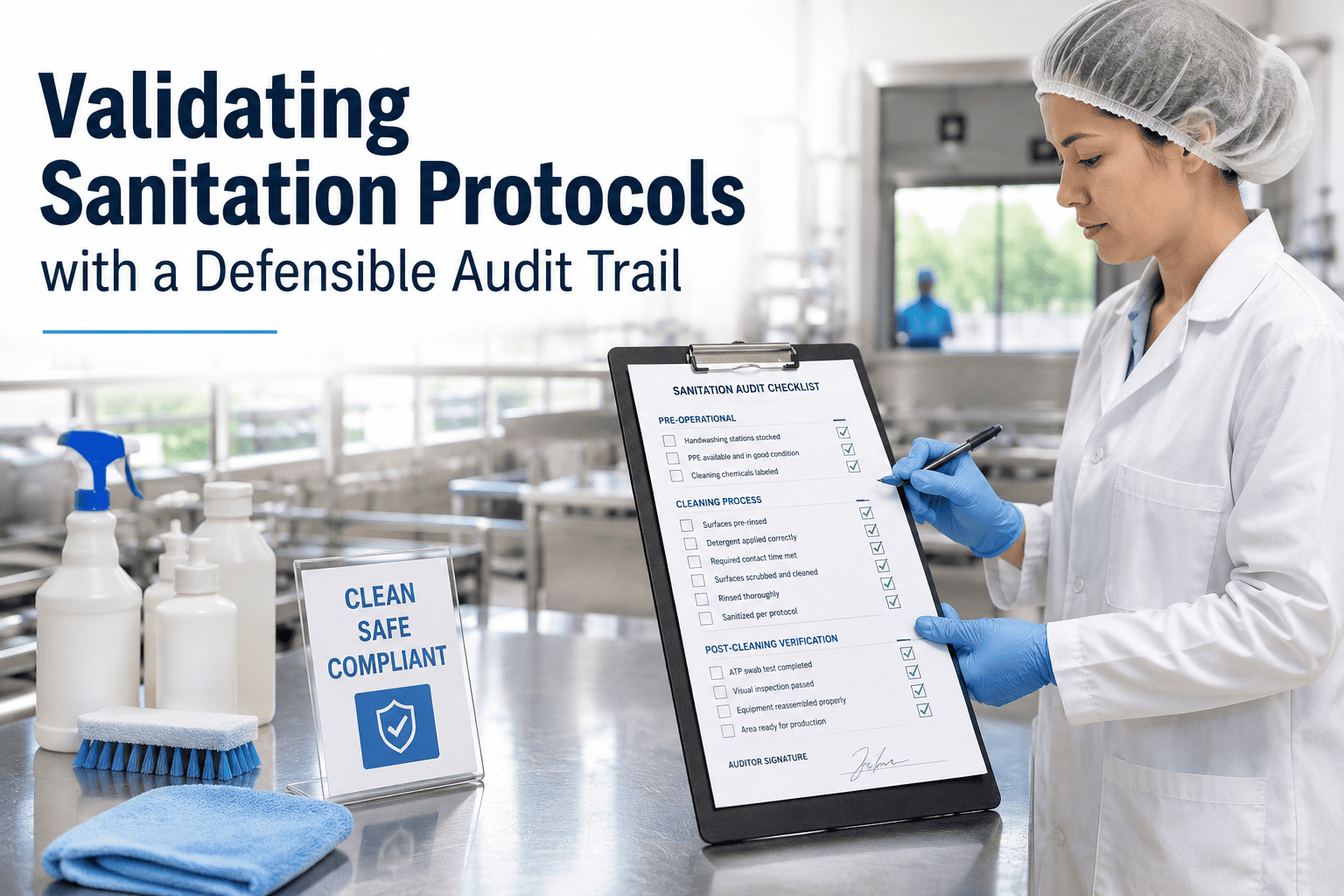
Quarterly air samples for diacetyl, 2,3-pentanedione, and total VOC attach to the grinder and packing area assets. Trend analysis flags drift before NIOSH RELs are exceeded.
04
Thermocouple Calibration Cadence
Roaster thermocouples calibrate against certified reference probes on a quarterly cycle. The calibration certificate attaches to the asset. Roast profile drift becomes a tracked metric, not a guess.
05
Degassing Silo CO Monitor Integration
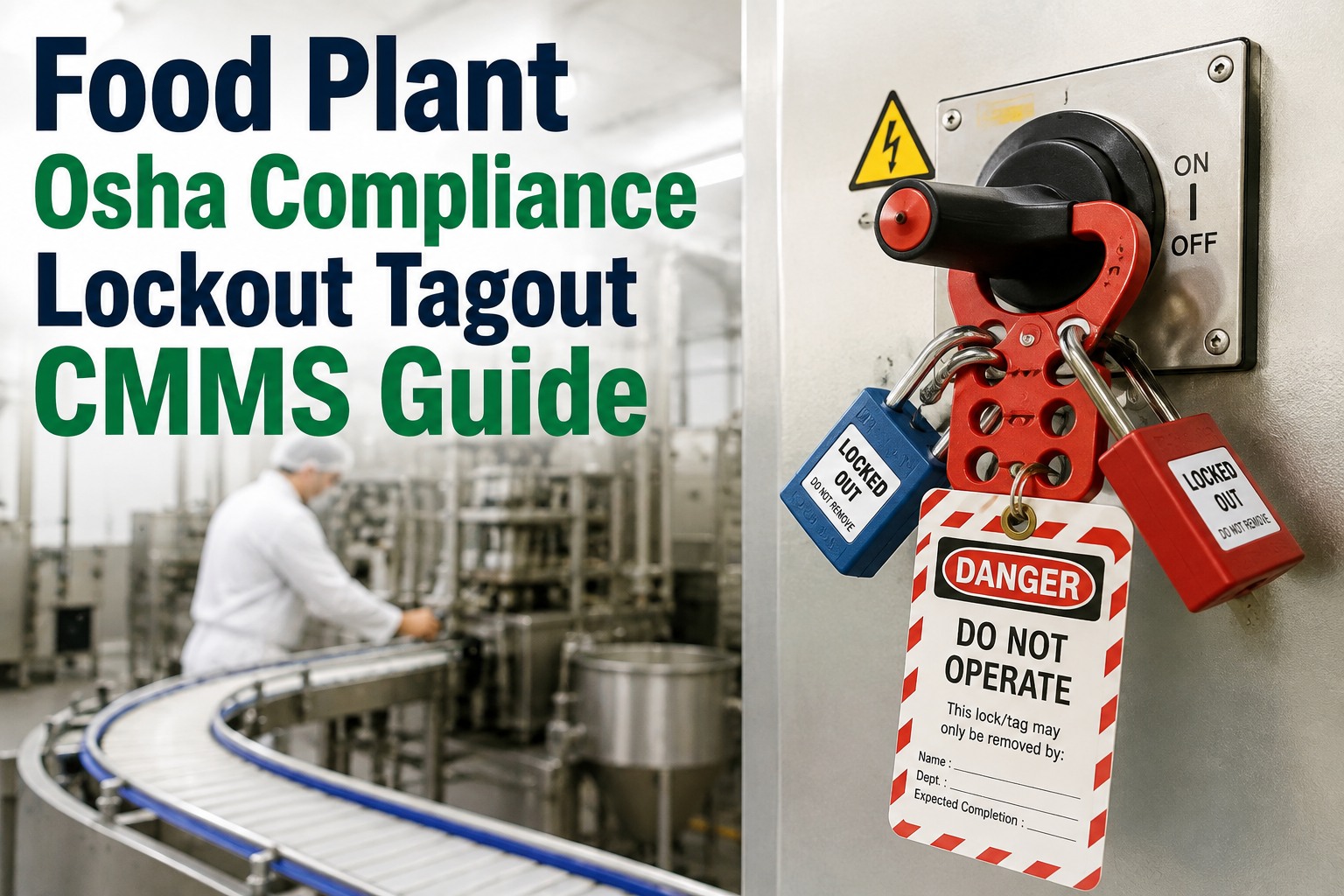
CO sensor readings stream into the silo asset record. Alarm events generate corrective work orders. Personnel access lockouts tie to verified atmospheric monitoring before silo entry.
06
Multi-Site Roastery Portfolio View
Coffee groups with plants in the US, Canada, UK, UAE, and Germany see every roastery's compliance status, PM compliance, and open work orders in one dashboard at the corporate level.
Manual Records vs CMMS-Tracked Roastery Maintenance
The structural difference between paper-and-spreadsheet roastery records and a CMMS-tracked program is recoverability under audit. Air quality permits, FDA FSMA records, and industrial hygiene documentation must reconstruct on demand — which only happens when the records live on the asset.
The table maps the operational shift cleanly: each row is a regulatory or operational requirement, each row resolves the same way — records on the asset, exports in minutes, trend visible before incident — which is the audit posture roastery directors install when they book a demo on their actual plant layout.
ROI and Operational Outcomes From CMMS-Tracked Roastery Programs
Roastery plants 12 months into structured CMMS programs report a consistent ROI shape: compliance risk recedes first, batch consistency improves second, exposure trends become visible third, and audit cycle time collapses fourth. The numbers below are typical mid-range outcomes.
100%
Afterburner log capture
Continuous logging eliminates the gaps that trigger permit corrective action notices.
88%
FDA audit prep cut
From 3 to 4 weeks down to a same-day PDF export across the FSMA documentation chain.
42%
Cupping panel reject drop
Quarterly thermocouple calibration eliminates the roast profile drift driving sensory rejects.
10 mo
Median payback
Recovered from compliance risk reduction and batch-yield improvement alone.
$680K
Annual recovery
Median mid-size roastery; larger plants and tighter local emission regs scale higher.
0
Permit violations
Documented across roastery plants holding clean permit cycles in the 12 months post-deployment.
These outcomes are reproducible because the inputs are reproducible: log the data on the asset, calibrate on cadence, sample on schedule, export on demand. The plants reporting them share the same operating pattern — one record per asset, one source of truth — which is why roastery directors ready to install the same engine start a free trial on a single roaster and validate the audit posture on actual permit data.
Frequently Asked Questions
Does OxMaint integrate with afterburner temperature monitoring systems
Yes. Afterburner thermocouple data streams continuously to the asset record via standard industrial connectors. Permit-required temperature logs export as PDF for any requested date range, eliminating the paper-log gaps that trigger air quality corrective action notices.
How does OxMaint support FSMA preventive controls documentation
Every PM, monitoring task, corrective action, and verification record attaches to the equipment asset under the FSMA hazard analysis. FDA inspection pulls export by date range and asset in minutes. The documentation chain reconstructs itself on demand instead of requiring weeks of manual compilation.
Can quarterly diacetyl air samples be tied to the grinder asset
Yes. Lab reports for diacetyl, 2,3-pentanedione, and total VOC attach to the grinder and packing area asset records. Trend analysis surfaces exposure drift before NIOSH RELs are exceeded, replacing the lagging indicator with a leading one.
How does multi-site coffee group reporting work in OxMaint
Each roastery in the portfolio carries its own jurisdictional configuration — US FDA and EPA, UK BRCGS, EU MID, UAE municipality. Corporate dashboards roll every site up into a single compliance and OEE view. Site-level records stay jurisdiction-specific while portfolio-level visibility stays unified.
Decision Point
Stop Losing Permit Margin and Batch Consistency to Reactive Roastery Maintenance
Turn every roaster, afterburner, silo, grinder, and packing line into an audit-ready, FSMA-aligned, exposure-monitored asset record on one platform.
Used on 10,000+ asset portfolios
Live in days, not months
Multi-site portfolio dashboards
Measurable results in 30 days
Continuous afterburner temperature capture
FSMA-aligned documentation chain
5 to 10 year CapEx forecasting on the same record