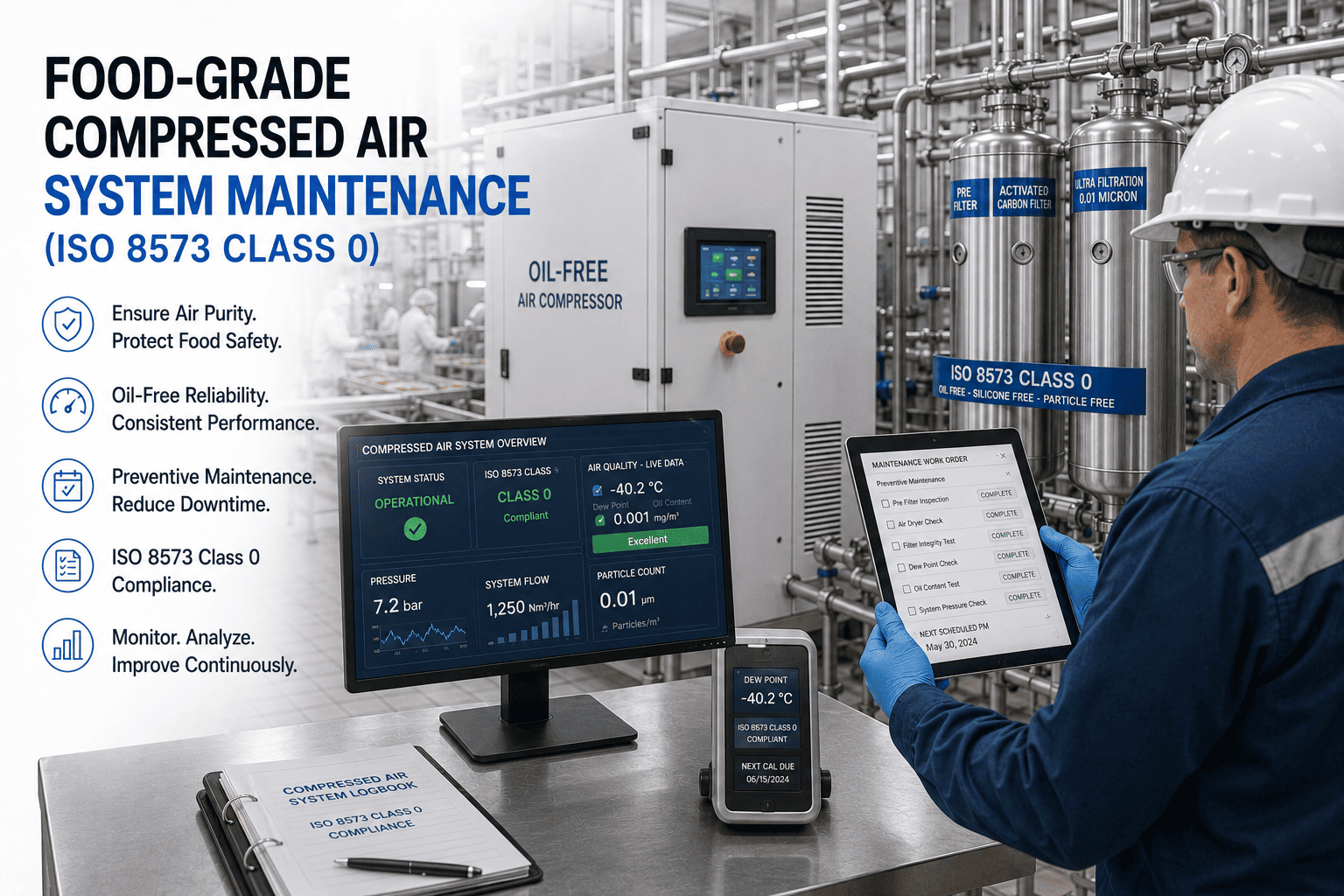
Compressed air is the invisible ingredient in food manufacturing — and the most overlooked contamination vector on the plant floor. It contacts product directly during filling, portioning, conveying, and packaging, yet most facilities apply the same maintenance discipline to their compressed air systems as they do to a utility compressor running a pneumatic door. ISO 8573 Class 0 certification means the air quality exceeds every contamination limit in the standard across particulates, water, and oil — but certification is a snapshot, not a guarantee. Without structured preventive maintenance schedules for oil-free compressors, refrigerant dryers, coalescing filters, and dew point monitors, a Class 0 system degrades silently until a BRCGS or SQF auditor finds the gap, or worse, until a contamination event does. Start a free trial to see how Oxmaint builds compliant compressed air PM programs into your food plant maintenance system, or book a demo and walk through your specific air system asset structure with our team.
ISO 8573 Class 0 · Food-Grade Compressed Air · CMMS Compliance
Food-Grade Compressed Air System Maintenance: ISO 8573 Class 0 Compliance Guide
ISO 8573 Class 0 compressed air systems protect product integrity in food manufacturing — but only when the compressors, dryers, filters, and monitoring equipment behind them are maintained on schedule and documented to audit standard. This guide covers the full PM framework and how CMMS keeps it compliant.
No heavy implementation required · Live in days, not months · Multi-site portfolio ready
ISO 8573 Air Quality Classes
Class 0
Specified
Specified
0.01 mg/m³
Class 1
0.1 µm
-70°C
0.01 mg/m³
Class 2
1 µm
-40°C
0.1 mg/m³
Class 3
5 µm
-20°C
1 mg/m³
Class 0
ISO 8573 highest purity tier — required for direct product contact air in food manufacturing
30%
of food plant energy consumption attributed to compressed air systems on average
4.8x
higher cost of reactive repair vs planned maintenance on oil-free compressor systems
90 days
maximum recommended filter element change interval for food-grade coalescing filters under continuous use
Understanding the Standard
What Is ISO 8573 Class 0 and Why Does It Demand a Rigorous Maintenance Program?
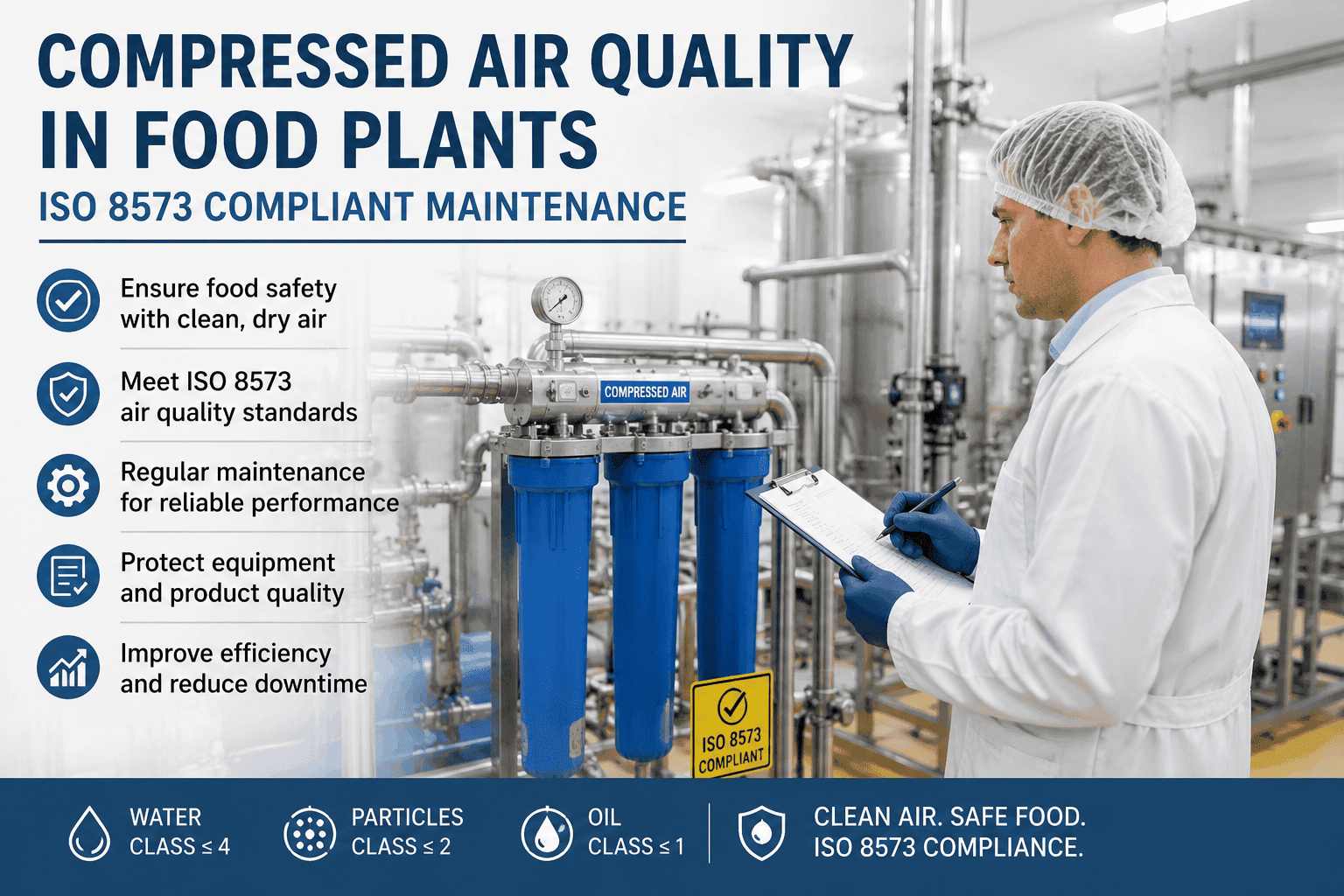
ISO 8573 is the international standard for compressed air purity, defining contamination limits across three categories: solid particulates, water content (expressed as pressure dew point), and total oil content including vapour, aerosol, and liquid phases. The standard defines Classes 1 through 6 for each contaminant type, with Class 1 being the most stringent within the enumerated scale. Class 0 sits above Class 1 — it is a manufacturer-specified purity level that exceeds every limit defined in the standard, typically required for direct product contact applications in food, beverage, pharmaceutical, and medical device manufacturing.
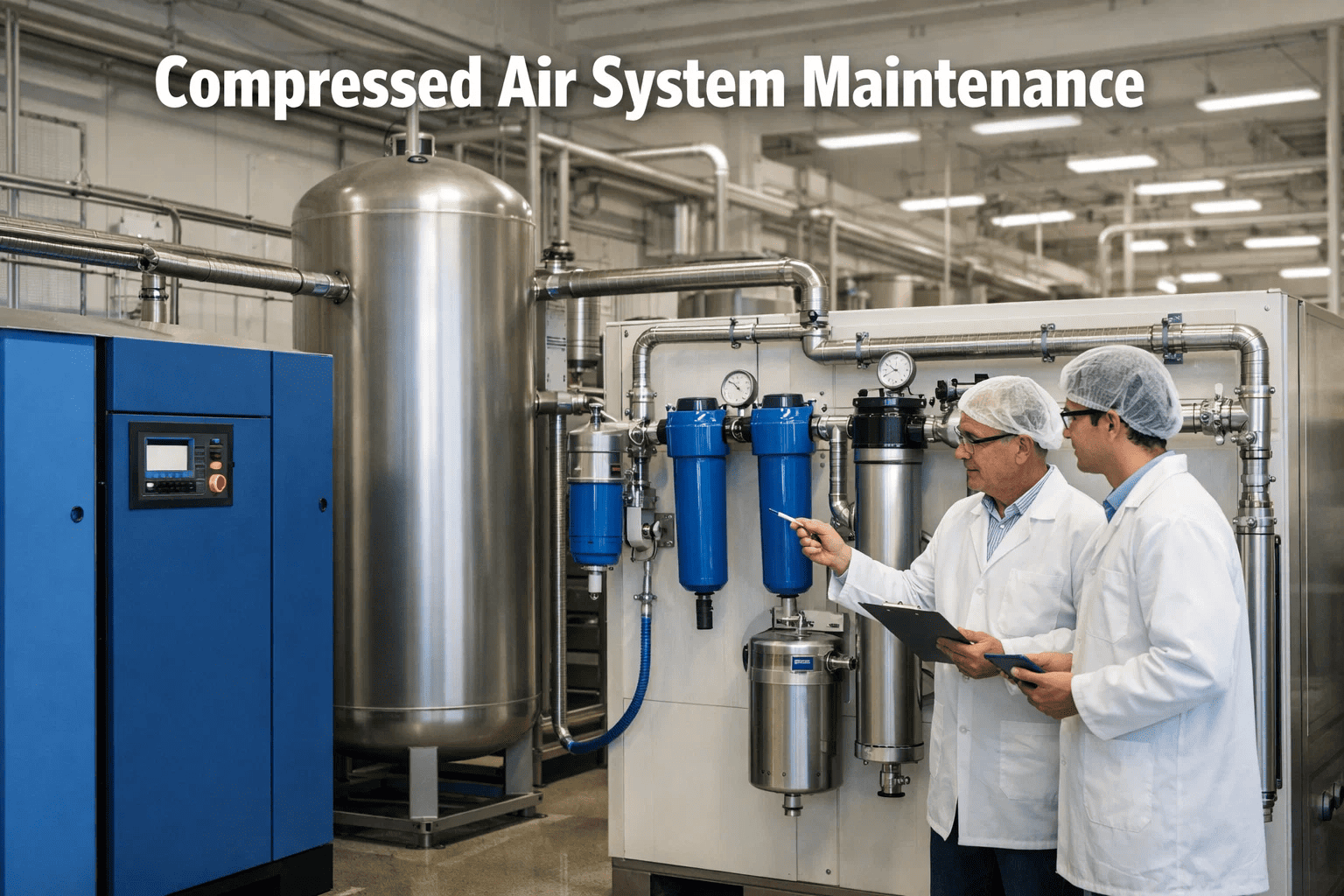
Achieving Class 0 air quality requires oil-free compressor technology, refrigerant or desiccant drying to reach the specified pressure dew point, multi-stage filtration for particulate and residual oil vapour removal, and continuous or periodic sampling to verify air quality. But achieving Class 0 at commissioning and maintaining Class 0 through ongoing production are entirely different challenges. Filter elements saturate and bypass. Dryer performance degrades as desiccant ages. Compressor intake filters clog in dusty plant environments. Without a documented, scheduled PM program covering every component in the compressed air treatment chain, Class 0 certification is a starting point that erodes in silence.
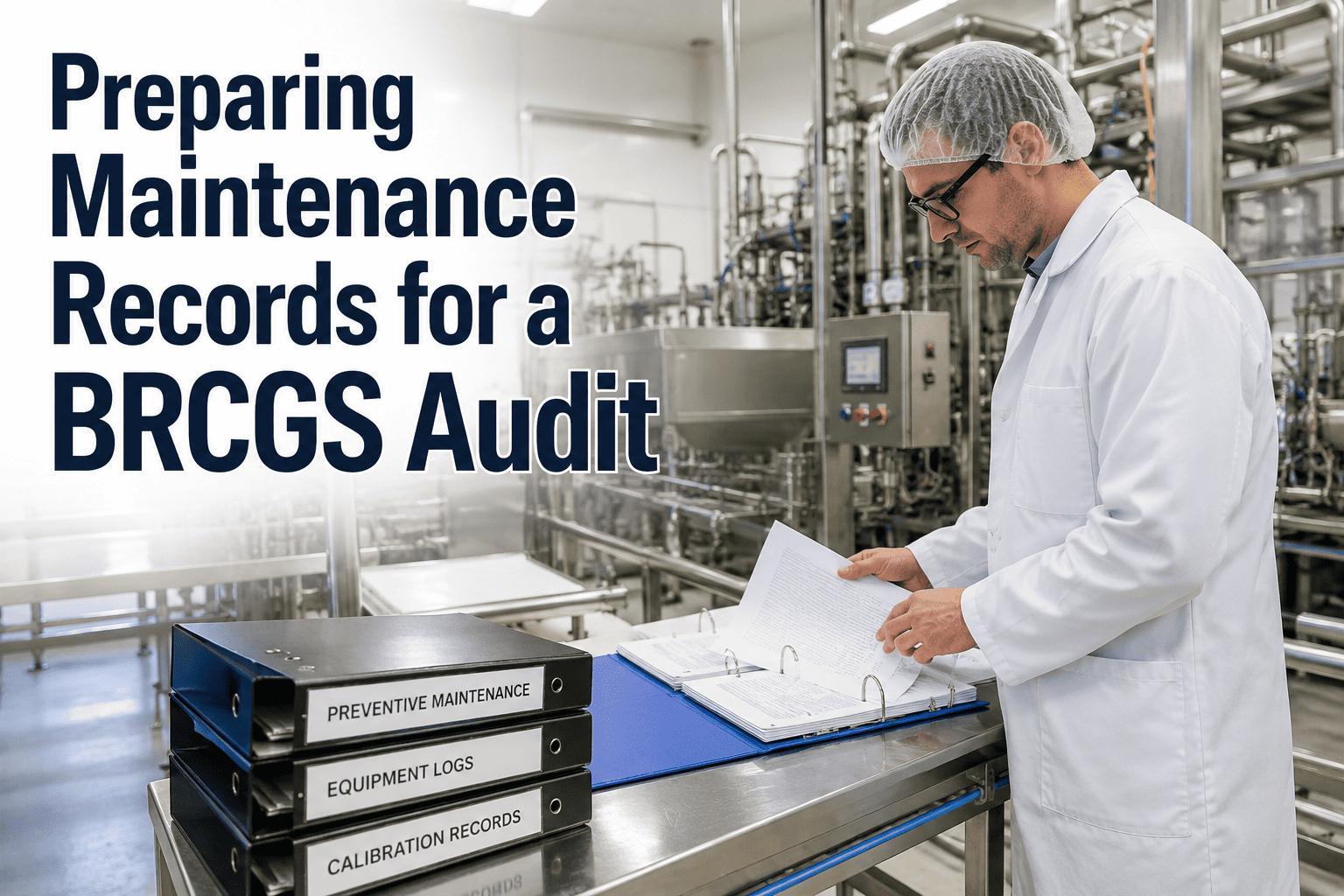
Food safety standards including BRCGS Issue 9 and SQF Edition 9 both require evidence that compressed air used in product contact zones meets the specified quality standard — and that the systems delivering that air are maintained on a documented schedule. A certificate of conformance from commissioning is not sufficient evidence twelve months later without maintenance records proving the system has been kept in the condition that produced that result. Teams that treat compressed air as a utility rather than a food safety system discover this during audits — start a free trial to see how Oxmaint structures your compressed air PM program for continuous compliance, or book a demo to walk through your specific air system asset hierarchy.
A Class 0 certificate from commissioning day proves nothing twelve months later without timestamped maintenance records to back it up.
Key Framework
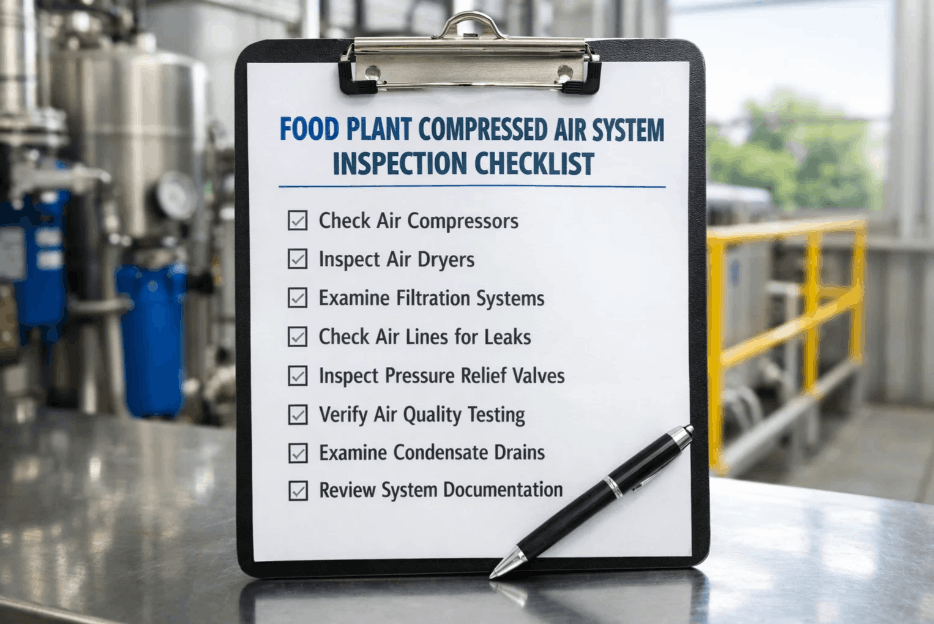
8 Critical Components of a Food-Grade Compressed Air Maintenance Program
ISO 8573 Class 0 compliance is a system outcome, not a single equipment specification. Every component in the compressed air treatment chain has its own maintenance requirements, failure modes, and documentation obligations. Miss any one of them and air quality degrades — often without visible warning until an audit or a contamination event surfaces the gap.
01
Oil-Free Compressor Maintenance
Oil-free rotary screw and centrifugal compressors require scheduled inlet filter replacement, airend inspections, cooling system checks, and teflon or PTFE coating condition verification at manufacturer-specified intervals.
02
Refrigerant Dryer Servicing
Refrigerant dryers require condenser coil cleaning, refrigerant charge verification, separator drain maintenance, and heat exchanger inspection. A fouled condenser raises dew point output above specification with no visible alarm.
03
Desiccant Dryer Regeneration and Replacement
Desiccant dryers used in critical dew point applications require desiccant activity testing, regeneration cycle verification, and full desiccant replacement at intervals based on inlet air quality and operational hours.
04
Coalescing and Particulate Filter Changes
Multi-stage filter housings require element replacement at maximum 90-day intervals or at differential pressure trigger — whichever occurs first. Saturated elements bypass contaminants downstream without breaking or signalling failure.
05
Activated Carbon Filter Management
Activated carbon filters for residual oil vapour removal have finite adsorption capacity. Replacement must be scheduled by hours of use and inlet contamination level — not by visual inspection, which cannot detect saturation.
06
Dew Point Monitor Calibration
Continuous dew point monitoring sensors require annual calibration against certified reference standards. An out-of-calibration sensor may show compliant readings while actual dew point has risen above the Class 0 specification.
07
Condensate Drain Testing and Servicing
Automatic condensate drains on receivers, dryers, and filter housings require regular test-open cycles and annual servicing. A failed drain floods downstream filter elements with liquid water and destroys Class 0 air quality.
08
Compressed Air Sampling and Quality Verification
BRCGS and SQF require periodic compressed air sampling at product contact points, with laboratory analysis for microbial content, oil, and particulates. Sampling frequency, sample points, and results must be documented per food safety system requirements.
Industry Pain Points
How Compressed Air Maintenance Failures Become Food Safety Failures
Compressed air contamination events in food manufacturing rarely announce themselves. Oil vapour breakthrough, microbial growth in stagnant condensate, and particulate contamination from saturated filters are invisible to production staff until product testing, environmental monitoring, or an audit sample catches the deviation. By that point, the maintenance gap that caused it has usually been accumulating for months. If your facility is managing compressed air with generic maintenance schedules or paper-based records, start a free trial to see how Oxmaint structures food-grade compressed air maintenance for continuous compliance, or book a demo to review your current air system maintenance gaps.
01
Filter Elements Changed by Calendar, Not Condition
Annual filter change schedules appropriate for light-duty applications are applied to high-throughput food plant air systems. Filter elements reach saturation and bypass contamination at 3–4 months while the maintenance schedule shows no action due for 8 more months.
02
Dew Point Monitors Running Past Calibration
Continuous dew point monitoring sensors are treated as set-and-forget instrumentation. Calibration certificates expire without automated alerts. Auditors find sensors showing compliant readings that have not been calibrated in 18–24 months.
03
No Compressed Air Sampling Program in Place
Facilities rely on point-of-use quality from commissioning tests without establishing an ongoing sampling program at product contact points. BRCGS and SQF auditors require periodic sampling evidence — a commissioning certificate is not a maintenance record.
04
Condensate Drain Failures Discovered After Contamination
Automatic condensate drains on receivers and filter housings fail closed and go undetected. Liquid water accumulates, floods downstream filter elements, and reaches product contact points before routine inspection finds the blocked drain.
05
Compressor Records Held by External Service Contractors Only
Oil-free compressor servicing is outsourced to the manufacturer's service team. Service records exist only in contractor paperwork or email archives. When an auditor asks for the last three years of compressor maintenance records, no traceable internal record exists.
06
Air System PM Separated from Main Maintenance Schedule
Compressed air systems are managed under a separate schedule maintained by a utilities team with no visibility into the main CMMS. Calibration overruns, filter changes, and sampling activities are invisible to food safety managers and BRCGS auditors alike.
Compressed air accounts for 30% of food plant energy spend — yet most facilities invest less in its maintenance documentation than in their office printer.
How Oxmaint Solves It
How Oxmaint Manages Food-Grade Compressed Air Systems as First-Class Maintenance Assets
Oxmaint treats compressed air systems with the same structured asset hierarchy as any other food safety-critical equipment — with PM schedules, calibration tracking, sampling programs, and contractor documentation built into a single traceable system. Every component in the treatment chain has its own asset record, maintenance schedule, and compliance trail.
Asset Registry
Full Compressed Air System Asset Hierarchy
Register every component — compressor, dryer, filter housing, condensate drain, dew point monitor, and sample point — as individual assets within a System record. Each component gets its own PM schedule, calibration interval, and condition history.
PM Scheduling
Interval and Condition-Based Filter Change Workflows
Set filter element replacement triggers by calendar interval and differential pressure threshold. Work orders auto-generate at 90 days or when pressure drop exceeds specification — whichever occurs first. No more saturation breakthroughs on missed schedules.
Calibration
Dew Point Monitor and Instrument Calibration Tracking
Link calibration certificates directly to dew point monitors, oil vapour analysers, and pressure gauges. Auto-alerts fire before overrun. Any instrument running past calibration date is flagged in the compliance dashboard immediately.
Sampling Records
Compressed Air Sampling Program Management
Schedule periodic air quality sampling events at product contact points within Oxmaint. Attach laboratory results directly to the sample point asset record. Build the ongoing quality verification trail that BRCGS and SQF auditors require beyond commissioning data.
Contractor Control
External Compressor Service Documentation
Create contractor work orders for manufacturer service visits with scope, competency fields, and mandatory sign-off before the compressor returns to service. Service records live in Oxmaint — not in a contractor's filing system or your email inbox.
Dashboards
Compressed Air Compliance Status at a Glance
A single dashboard view shows every compressed air system asset's PM status, calibration currency, last sampling date, and open work orders across all sites. Food safety managers see compliance exposure in real time — not during audit week.
Before vs After
Reactive Compressed Air Management vs Oxmaint-Structured ISO 8573 Compliance
The table below shows the specific documentation and maintenance gaps that appear in food plant compressed air audits — and the structural shift Oxmaint makes to close each one permanently.
| Compliance Area |
Without CMMS (Reactive) |
With Oxmaint (Structured) |
| Filter Change Schedule |
Annual calendar intervals, saturation breakthroughs undetected |
90-day maximum plus differential pressure triggers, auto work orders |
| Dew Point Monitoring |
Calibration overruns undiscovered, sensors showing stale readings |
Auto-alerts before overrun, certificates stored per instrument record |
| Air Quality Sampling |
Commissioning certificate only, no ongoing sampling program |
Scheduled sampling events, lab results attached to asset records |
| Condensate Drain Checks |
Informal, unscheduled, failures found after downstream contamination |
Scheduled test-open cycles with completion evidence per drain asset |
| Compressor Service Records |
Held by contractor only, not retrievable internally |
Contractor work orders in Oxmaint, full history on asset record |
| Dryer Performance Verification |
No periodic dew point output verification against specification |
Scheduled performance checks logged against dryer asset record |
| BRCGS / SQF Audit Evidence |
Commissioning data plus scattered contractor emails — incomplete trail |
Continuous, timestamped record across all treatment chain components |
| Cross-Site Visibility |
Each site manages independently, no portfolio-level exposure view |
Single dashboard shows compliance status across all facilities |
ROI and Results
What Structured Compressed Air Maintenance Delivers in Operational and Compliance Terms
The financial case for structured compressed air maintenance runs well beyond audit compliance. Energy waste from degraded compressor performance, emergency repair costs for reactive failures, and the potential recall exposure from undetected air quality deviation all dwarf the cost of a structured PM program. Teams that close these gaps stop paying the reactive maintenance premium — start a free trial to model your compressed air maintenance ROI with your actual asset base, or book a demo to see the numbers built around your plant.
30%
Energy Saving from Leak Detection and Compressor Optimization
Structured PM programs including leak detection surveys and compressor performance verification recover 20–30% of compressed air energy costs in food manufacturing facilities within 12 months.
4.8x
Lower Cost of Planned vs Reactive Compressor Repair
Oil-free compressor failures requiring emergency call-out cost 4.8 times more than planned service interventions — and create the kind of unplanned production stop that triggers food safety management review requirements.
100%
Audit Evidence Coverage Across Treatment Chain
Oxmaint compressed air programs generate complete, timestamped maintenance evidence across every treatment chain component — eliminating the partial-record audit findings that downgrade BRCGS and SQF certification grades.
90 days
Maximum Filter Change Interval Enforced Automatically
Automated work order generation at the 90-day maximum filter change interval eliminates saturation breakthroughs that contaminate downstream air quality and create both product safety risk and audit non-conformances.
Frequently Asked Questions
Food-Grade Compressed Air Maintenance Common Questions
What maintenance records do BRCGS and SQF auditors require for compressed air systems?
BRCGS Issue 9 and SQF Edition 9 both require evidence that compressed air used in product contact zones meets the specified quality standard and that the systems delivering it are maintained on a documented schedule. Auditors typically request: timestamped PM completion records for compressors, dryers, and filter changes; calibration certificates for dew point monitors and any instrumentation used to verify air quality; periodic air sampling results at product contact points; and contractor service records for any externally serviced equipment. A commissioning test certificate alone is not sufficient — ongoing maintenance evidence is required to demonstrate continued compliance.
Book a demo to review your compressed air audit documentation against these requirements.
How often should food-grade compressed air filter elements be changed?
Most compressed air filter manufacturers specify a maximum 12-month change interval for light-duty applications, but food manufacturing environments running continuous production typically require element replacement every 90 days or when differential pressure across the housing reaches the manufacturer's trigger threshold — whichever occurs first. Relying on annual intervals in a food plant is the most common cause of filter saturation and downstream contamination bypass. Oxmaint work orders can be configured to trigger at both the time interval and the differential pressure threshold, ensuring neither condition is missed.
Start a free trial to configure your compressed air filter change schedules today.
Is an oil-free compressor sufficient to achieve ISO 8573 Class 0 on its own?
No. An oil-free compressor eliminates compressor-introduced oil contamination but does not address atmospheric contamination drawn in through the inlet — particulates, oil vapour from the ambient plant environment, and water vapour are all introduced through normal inlet air. ISO 8573 Class 0 requires oil-free compression combined with multi-stage filtration, drying to the specified dew point, and activated carbon treatment for residual oil vapour. Each element requires its own maintenance program — the compressor being oil-free is a starting condition, not a complete solution.
How does Oxmaint handle compressed air systems spread across multiple production facilities?
Oxmaint's Portfolio greater than Property greater than System hierarchy means compressed air systems across all facilities are visible from a single dashboard. Each site's compressors, dryers, filter housings, and monitoring instruments have individual asset records with their own PM schedules and compliance status. A facilities director or food safety manager sees calibration overruns, overdue filter changes, and sampling gaps across every plant in real time — without emailing each site coordinator for a status update. Cross-site consistency in compressed air documentation is one of the most common BRCGS multi-site audit findings, and portfolio-level CMMS visibility is the structural solution.
ISO 8573 Class 0 · Food-Grade Compressed Air · CMMS Compliance
Stop Letting Compressed Air Become Your Next Audit Finding
Turn every filter change, calibration, dryer service, and air sample into timestamped, auditor-ready evidence — automatically.
Full treatment chain asset visibility
Automated filter and calibration alerts
Sampling program records built in
Used by operations teams managing 10,000+ assets · Measurable results in the first 30 days · Limited onboarding slots available this quarter
See how much compressed air compliance risk you can eliminate from your food plant in 30 minutes.