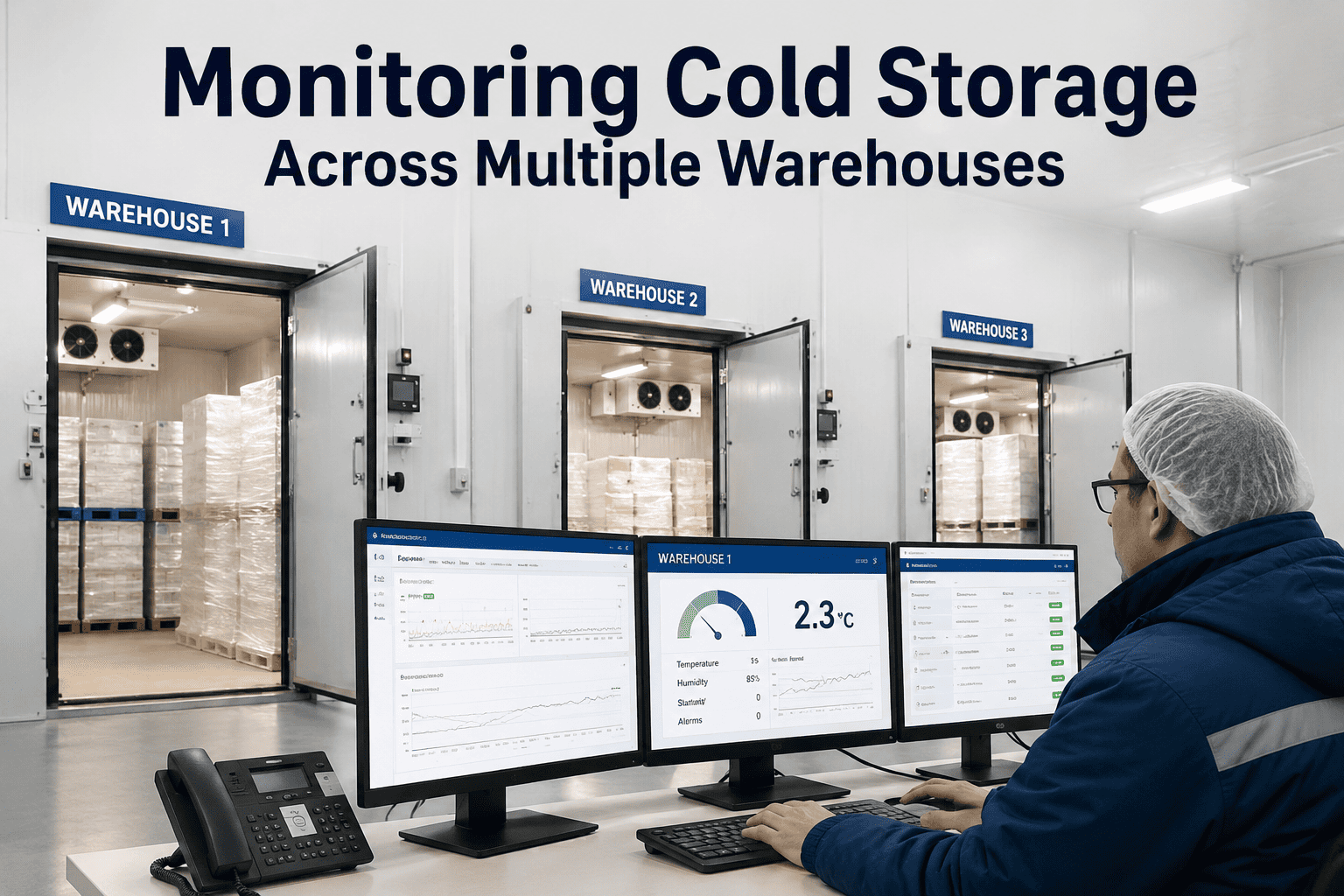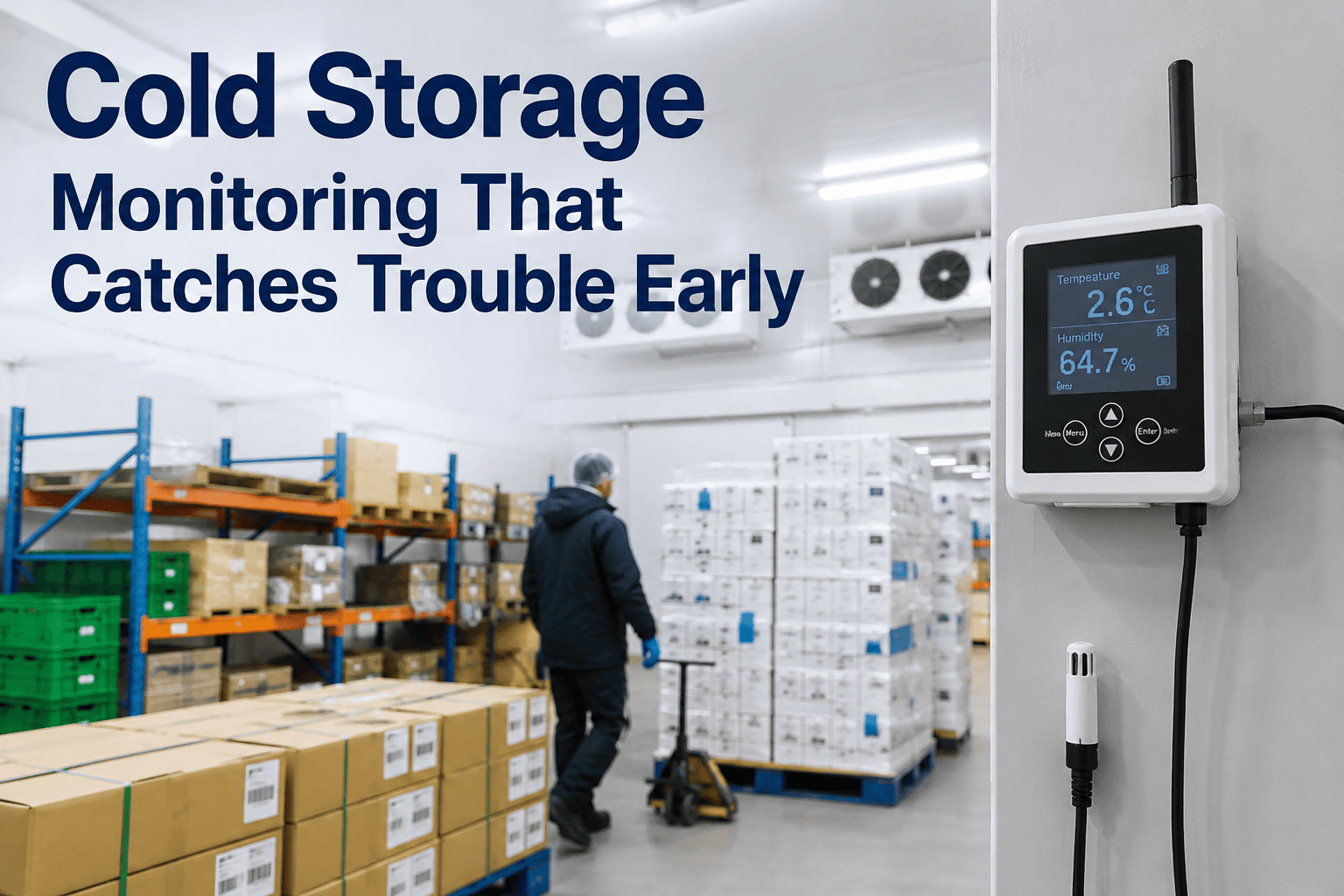
Cold chain operators who catch refrigeration trouble in its first 30 minutes save the load; those who find it an hour later write off the pallet. Cold storage monitoring that catches trouble early is the discipline of instrumenting compressor performance, refrigerant levels, door seal integrity, and continuous temperature logging so a slow drift becomes a work order — not a deviation. A modern CMMS turns those four signals into a single triage queue, giving maintenance teams hours of runway before a 2°C slip becomes an FDA reportable event. The 2026 landscape of Start Free Trial cold storage monitoring demands more than chart recorders; it demands threshold design, escalation, and audit-ready documentation. This guide walks through the sensors, alerts, and workflows that separate compliant cold rooms from costly ones.
How many degrees of warning do you have before a deviation becomes a write-off?
Most cold storage failures are not sudden compressor deaths — they are slow drifts that go unnoticed for 40–90 minutes while product sits in the danger zone. Catching trouble early means designing sensors, thresholds, and escalation so your team gets hours of runway, not minutes of panic.
Four signals that predict cold storage failure before the thermometer moves
A continuous temperature log is the last line of defense, not the first. By the time room temperature climbs 0.5°C, the compressor has already been struggling for 20–40 minutes. These four signals — read together inside a CMMS — form the early-warning layer.
Compressor performance telemetry
Track suction pressure, discharge pressure, oil temperature, and run-time amps against the manufacturer's baseline curve. A 12% rise in discharge pressure with no change in setpoint is the single earliest predictor of refrigerant loss or condenser fouling — typically 2–6 hours before room temperature reacts.
Refrigerant level & pressure trends
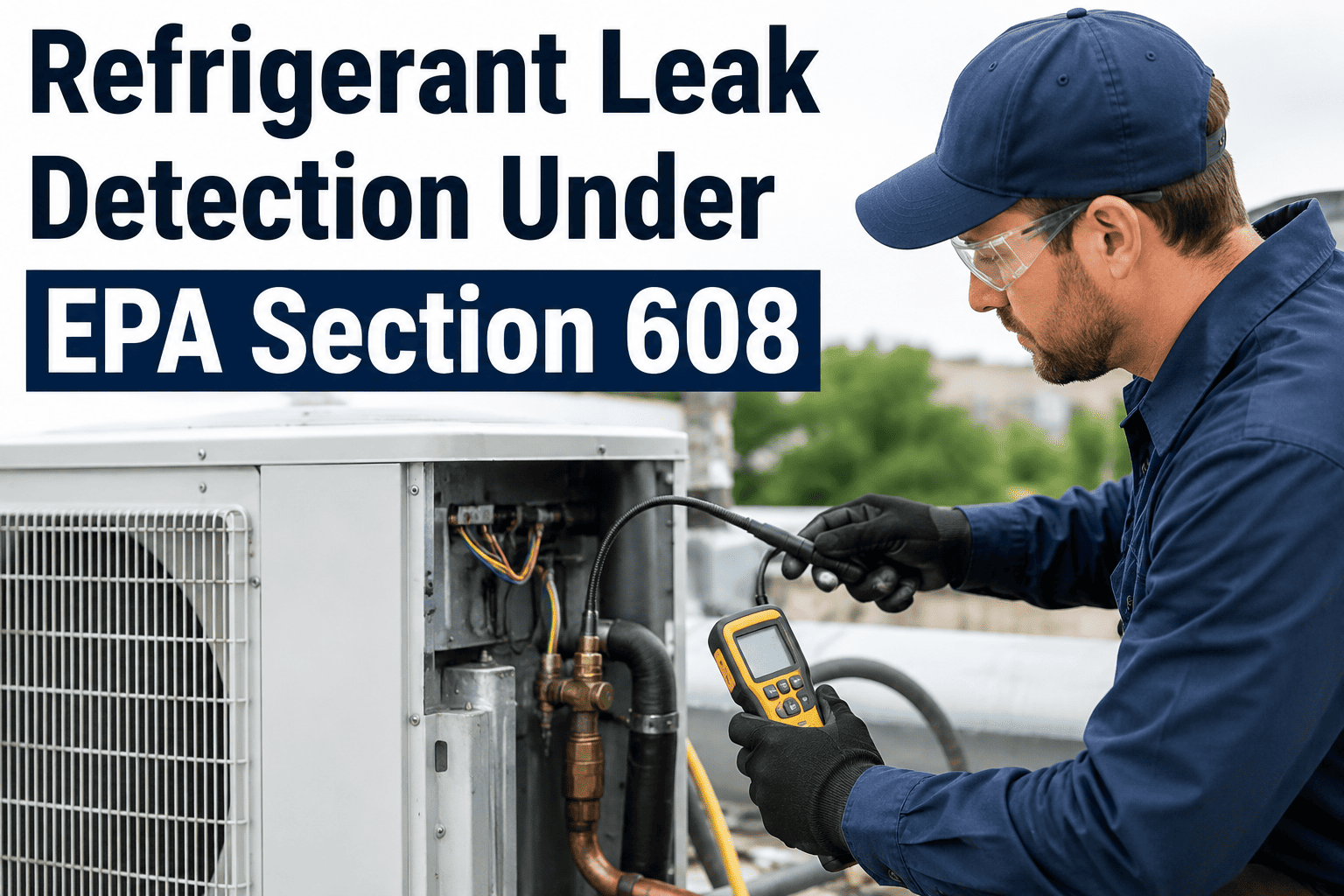
A slow refrigerant leak drops head pressure 4–8 psi per week — invisible on a single reading, obvious on a 30-day trend. CMMS integration auto-plots the slope and triggers a leak-investigation work order when the trend crosses 60% of nominal charge, long before low-pressure cutout trips the compressor.
Door seal integrity & dwell time
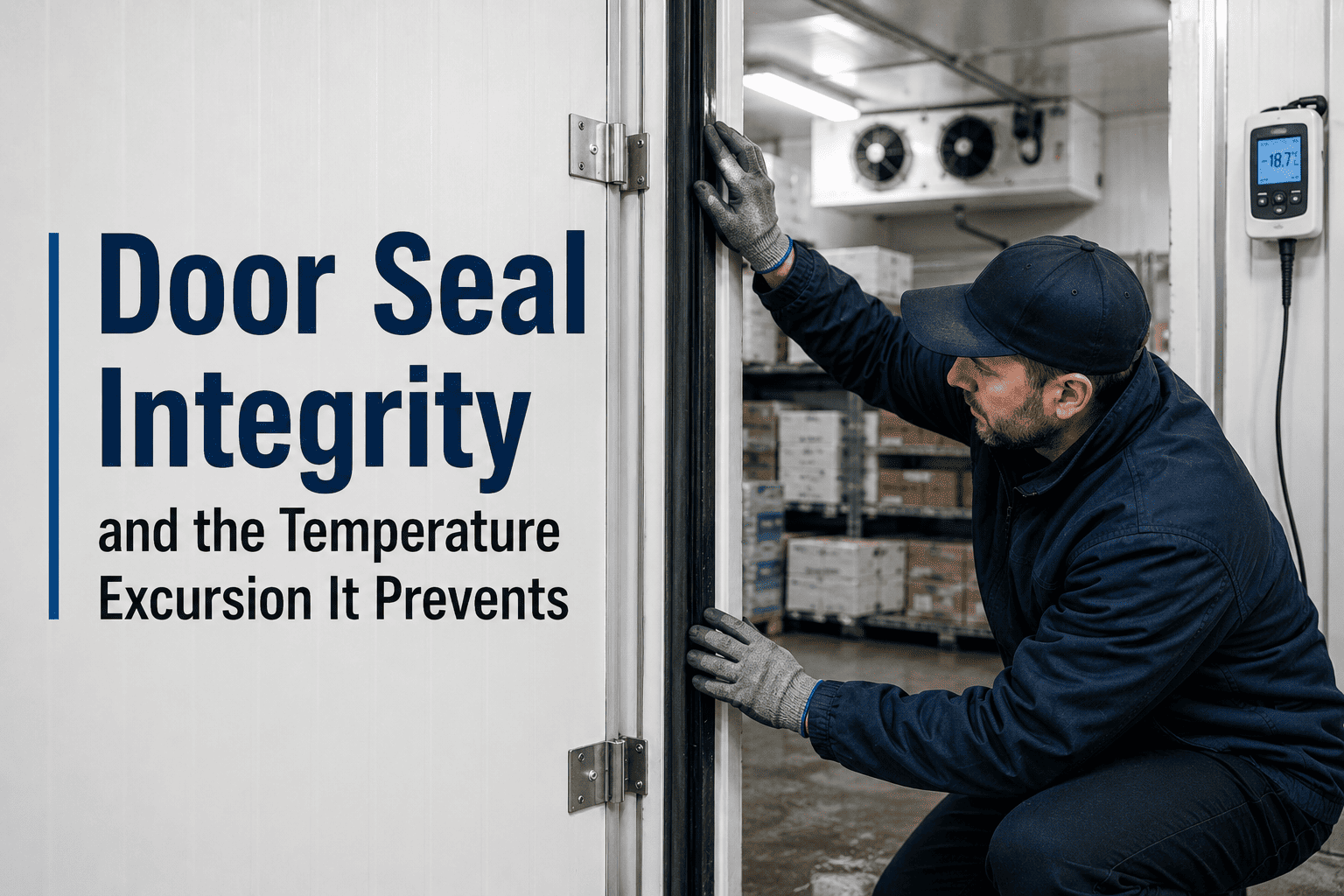
A door held open 90 seconds in a –18°C freezer pulls in enough warm, moist air to spike coil frost load by 14% and force a defrost cycle. Logging door-open duration, seal continuity, and ambient infiltration turns a behavioral problem into a trackable KPI your CMMS can route to operations.
Continuous temperature logging
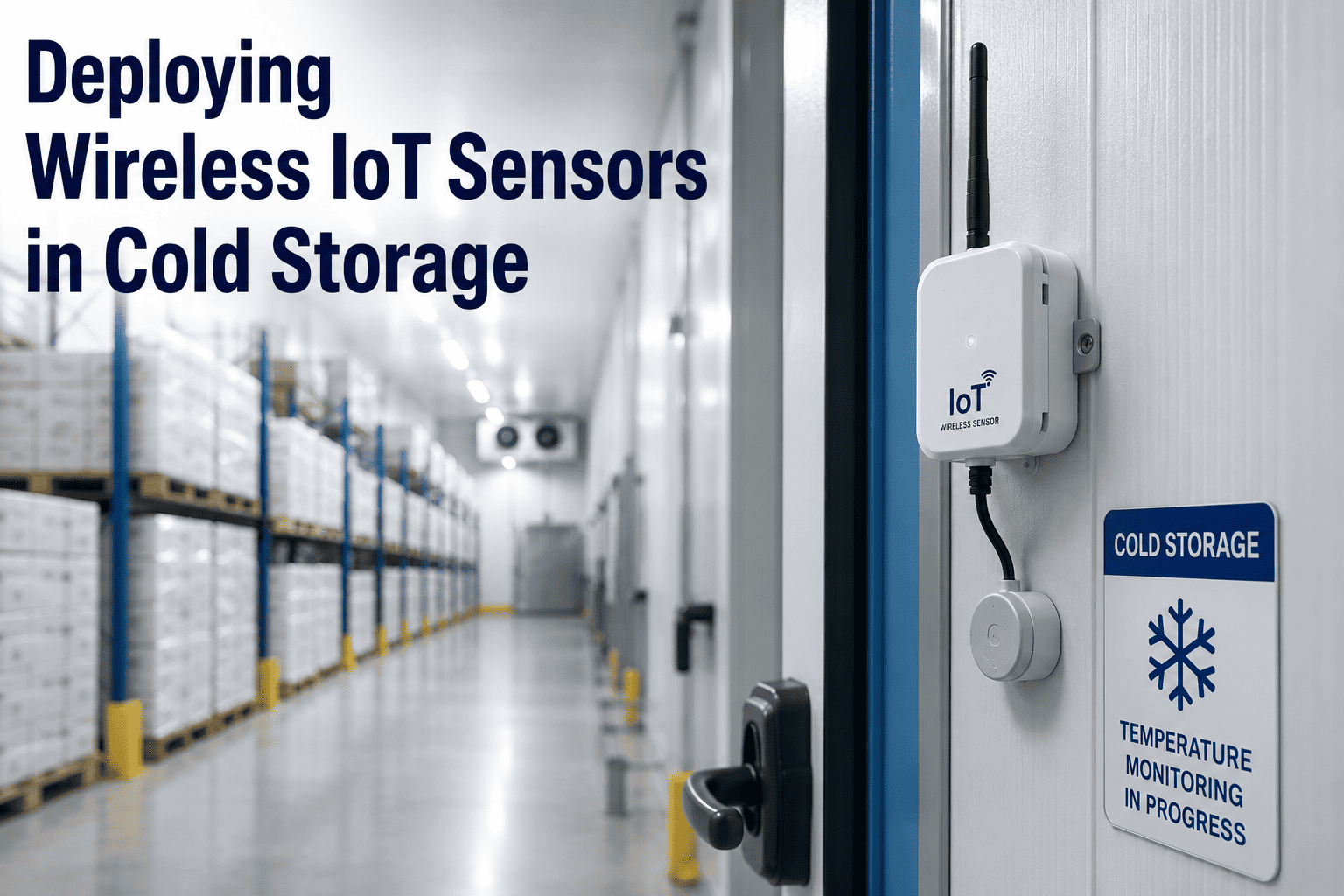
The regulatory backstop. Multi-point sensors at return air, supply air, and the warmest pallet position — sampled every 60 seconds — give you the audit trail FSMA, HACCP, and SQF auditors expect. CMMS storage turns 525,600 readings/year per sensor into searchable, exportable records.
Where you place the probe decides whether the alarm means anything
A single ceiling-mounted probe in a 4,000 sq ft cooler can read –2°C while pallets near the door sit at +6°C. Sensor placement is the difference between a monitoring system that protects product and one that protects the dashboard.
Return-air probe
Mounted at evaporator return, 1.5–2m height. This is your fastest indicator of cooling-system health — it reacts to compressor struggles within 3–5 minutes. Set the warning threshold 1°C above setpoint, alarm 2°C above.
Supply-air probe
Mounted at evaporator discharge. Measures the delta-T between supply and return — a narrowing delta-T under steady load signals coil frost buildup or refrigerant undercharge before room temperature climbs.
Warmest-pallet probe
Place a wireless probe on the pallet nearest the door, at pallet mid-height. This is the point an auditor will challenge — and the point most likely to exceed HACCP critical limits during a door-open event or defrost.
Door-zone infiltration probe
A probe within 1m of the door, shielded from direct airflow. Spikes here that don't propagate to the return-air probe indicate a seal failure or sustained door-open pattern — route as an operations alert, not a refrigeration work order.
Design thresholds in tiers — not as a single panic alarm
A single hard alarm at +4°C guarantees alert fatigue and ignored notifications. Tiered thresholds, each routed to a different responder, are what make cold storage monitoring catch trouble early instead of documenting it late.
Drift detected — 0.5°C above setpoint sustained 10 min
Routed to the shift operator's CMMS inbox as a soft notification. No page, no SMS. Action: visual check of door status, defrost cycle position, and recent loading activity. 78% of Tier 1 alerts self-resolve within 15 minutes.
1.0°C above setpoint sustained 15 min, or compressor amps +15%
Auto-generates a CMMS work order and pages the on-duty maintenance technician. SLA: response within 20 minutes. This is the tier where most excursions are intercepted — a condenser coil clean, a defrost override, or a door-seal repair resolves 9 out of 10 events.
2.0°C above setpoint sustained 10 min, or dual-sensor disagreement
Escalation to maintenance lead, operations manager, and quality. Triggers product-protection protocol: relocate at-risk pallets to a backup cooler, log the excursion window, and begin deviation documentation. Average response when escalation is pre-defined: 8 minutes.
Critical limit exceeded — HACCP CCP breach
Full quality-team notification, automatic deviation report draft in the CMMS, and quarantine hold on affected lot codes. This is the tier you design the whole system to avoid — but the one that must be flawless when it fires. Regulatory reporting clock starts here.
A 180-asset frozen-food plant turned 40-minute surprises into 3-hour runways
Consider a mid-Atlantic frozen-vegetable processor running 12 blast freezers, 8 holding coolers, and 160 door zones. Before CMMS integration, the team discovered excursions an average of 42 minutes after onset — usually when a forklift driver noticed condensation on a pallet. Here is what changed.
Pre-CMMS average per Tier-3 event: 14 pallets × $2,400 + 6 labor-hrs × $48 + 4 paperwork-hrs × $62 + $3,500 credit risk = $39,196 per event. The plant logged 11 such events in 2025.
The compressor amps told us about a failing contactor six hours before the room would have warmed. We replaced a $340 part on a scheduled stop instead of writing off $40K of product on a Sunday night.
The gap between clipboard rounds and continuous CMMS monitoring
Hourly manual rounds catch roughly 1 in 4 developing failures in time. The comparison below is drawn from FSMA-aligned cold storage operations running both systems in parallel during 2025 audits.
| Capability | Manual Rounds (hourly clipboard) | CMMS-Integrated Monitoring |
|---|---|---|
| Detection latency | 35–60 min average | Under 60 seconds |
| Compressor health visibility | Visual + audible only — no trend | Live amps, pressures, oil temp vs. baseline curve |
| Refrigerant leak detection | Discovered at low-pressure cutout | 7–21 days early via pressure-trend slope |
| Door-open event capture | Only if observed during a round | Every event logged with duration + identity |
| Escalation routing | Radio call, relies on memory | Auto work order + tiered page + SLA tracking |
| Audit trail (FSMA / HACCP / SQF) | Paper logs, 24 data points/day | 1,440 readings/day/sensor, exportable |
| Cost per avoided excursion | $0 invested, ~$39K per miss | ~$280/mo per zone, near-zero misses |
Stop discovering excursions after the pallet is already warm
Wire your compressors, refrigerant sensors, doors, and temperature probes into one CMMS queue — and give your team hours of runway instead of minutes of panic.
Cold storage monitoring — what teams actually ask
How many temperature probes does a cold storage room actually need?
For rooms under 2,000 sq ft, three probes suffice: return-air, supply-air, and warmest-pallet. For larger rooms or multi-zone coolers, add one probe per 2,000 sq ft and a dedicated door-zone probe for each frequently opened door. The warmest-pallet probe is the one your HACCP auditor will examine — never skip it. You can map your full sensor layout when you Book a Demo with our cold-chain team.
What is the right temperature alert threshold for a –18°C freezer?
Set Tier 1 advisory at –17°C (0.5°C drift), Tier 2 warning at –16°C, and Tier 3 critical at –15°C — each sustained for 10–15 minutes to filter out defrost-cycle noise. During an active defrost, suppress Tier 1 automatically via the CMMS schedule; a 3–4°C temporary rise during defrost is normal and should not generate alerts.
Can a CMMS integrate with our existing refrigeration controllers?
Yes — most modern refrigeration controllers (Carel, Danfoss, Dixell, CPC) expose data via Modbus RTU, BACnet, or OPC-UA. A CMMS like OxMaint ingests those tags through an edge gateway, so you don't replace the controller. Typical integration takes 2–4 days per site once the gateway is on the network.
How long does temperature data need to be retained for FSMA compliance?
FSMA's Preventive Controls rule expects records retained for 2 years for facilities subject to the rule, with the most recent 6 months accessible on-site. SQF and BRC add their own audit-window requirements. CMMS continuous logging at 60-second intervals produces roughly 525,600 readings per sensor per year — store them in the CMMS database, not on a local SD card, so they survive a controller failure.
What does a CMMS cold storage monitoring deployment cost?
A typical mid-size food plant (10–15 cold rooms, 60–80 sensors) spends $8K–$15K on wireless sensor hardware and gateways, plus $280–$520 per month per zone for CMMS monitoring, alerting, and audit-log storage. Against an average $39K per avoided excursion — and most plants see 4–12 interceptable events per year — payback lands between 3 and 6 months. Start with a Start Free Trial to map your zones first.
Give your cold chain hours of runway — not minutes of panic
Instrument compressors, refrigerant levels, door seals, and continuous temperature in one CMMS. Get early-warning alerts, auto-generated work orders, and audit-ready logs your FSMA, HACCP, and SQF auditors will respect.
Free 14-day trial · No credit card