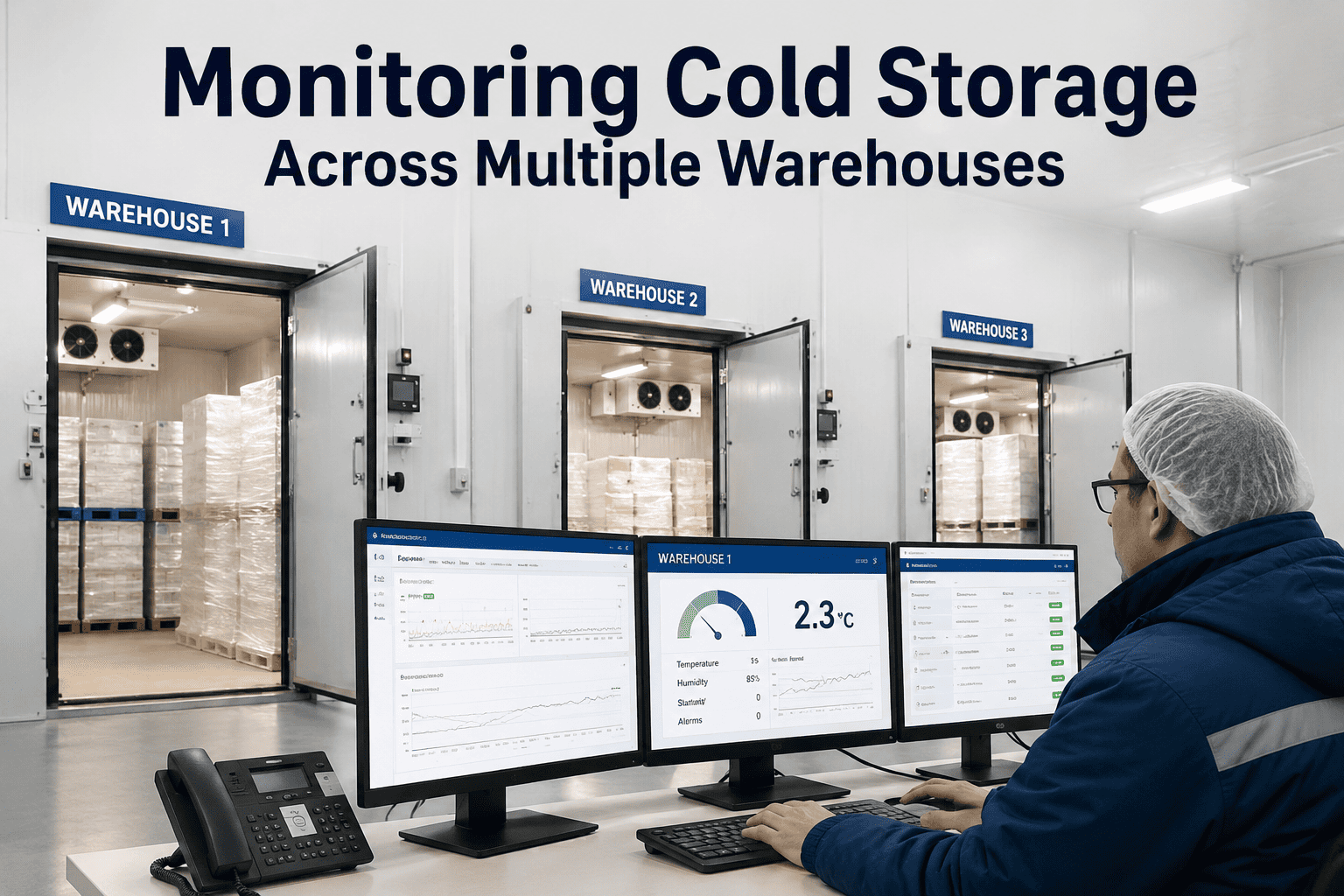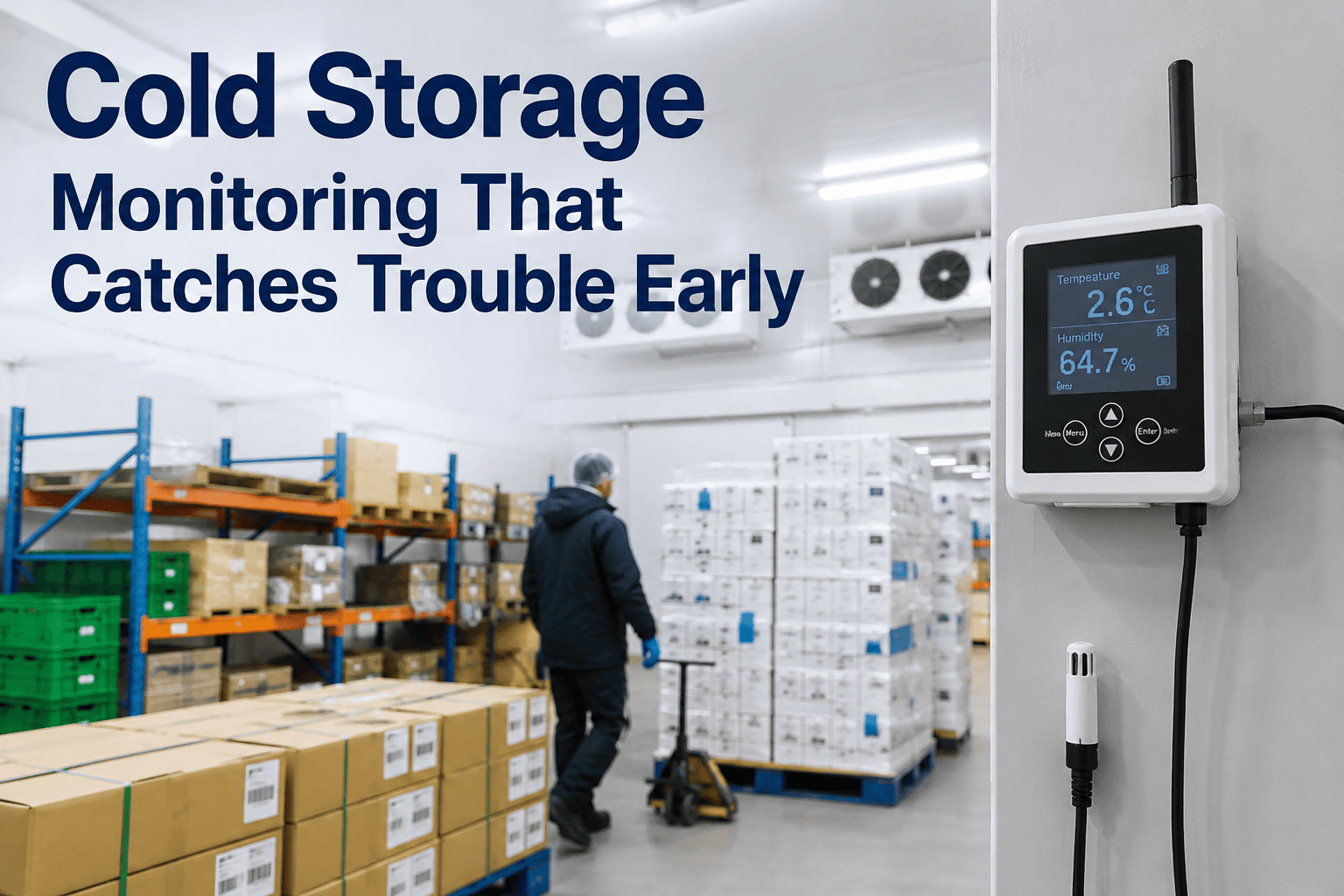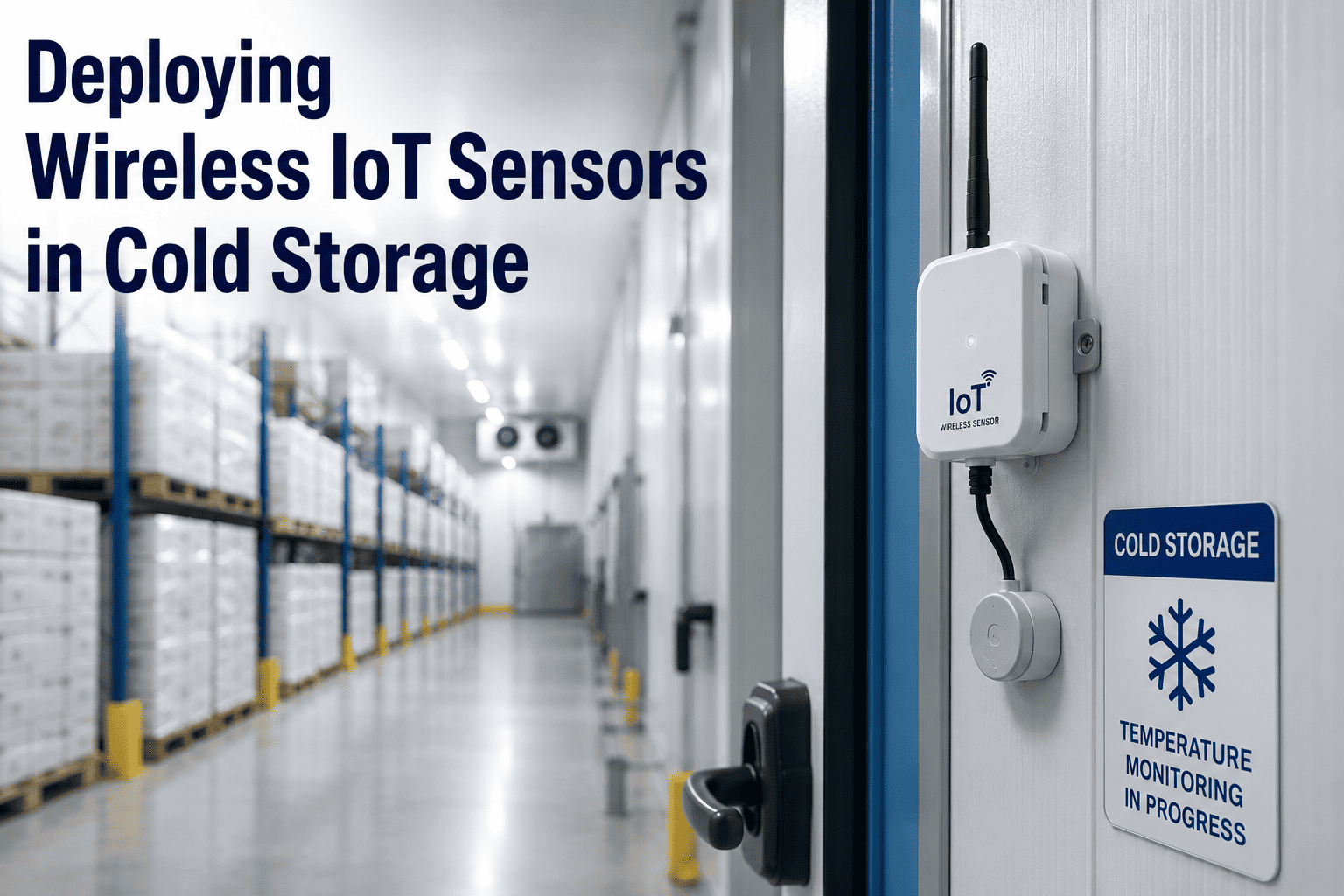
Wireless IoT sensors have made comprehensive cold storage monitoring affordable at almost any facility scale, but the deployment approach determines whether the data actually drives decisions or simply fills a dashboard nobody opens. A 2026-grade rollout combines the right sensor chemistry, a low-power mesh network, multi-year battery planning, and tight integration with your CMMS so every temperature excursion automatically opens a work order. Facilities that get this right typically cut manual logging labor by 80% or more, shrink incident response times from hours to minutes, and eliminate the clipboard-and-spreadsheet audits that fail HACCP and FSMA reviews. The teams that get it wrong buy hardware, leave it in the box for three months, and keep paying technicians to walk freezers with paper logs. This guide walks through the full deployment playbook, and you can Start Free Trial of the Oxmaint CMMS platform to see how the integration layer works before you spec a single sensor.
Is your cold storage data actually changing how your team operates — or just filling a dashboard?
The difference between a successful IoT rollout and a shelfware project isn't the sensor hardware. It's the deployment methodology: how you select, place, network, power, and integrate each device into the maintenance workflow that already runs your facility.
Choosing sensors that survive -25°C and actually report clean data
Not every wireless temperature sensor is built for freezer duty. The wrong choice means drifting readings, dead batteries within six months, and compliance reports your QA team won't sign.
Probe vs. ambient sensors
Use NTC thermistor probes immersed in glycol for product-core readings (±0.1°C accuracy) and ambient sensors for air temperature. FSMA 204 traceability prefers probe data tied to specific product zones, not just room air.
IP67 enclosure minimum
Condensation destroys electronics faster than steady cold. Specify IP67-rated housings with conformal-coated PCBs. Budget $45-90 per sensor for food-grade enclosures — cheap $20 units fail within 12 months in high-humidity coolers.
Dual temp + humidity
Cold storage humidity swings cause frost buildup and compressor overwork. A combined sensor costs only 15-20% more than temp-only but catches defrost cycle failures weeks before product damage appears.
Battery chemistry matters
Lithium thionyl chloride (Li-SOCl2) cells hold 85% capacity at -40°C and last 5-7 years at 15-min intervals. Standard alkaline or Li-ion packs drop below 40% capacity in freezer conditions and die within 18 months.
Three wireless protocols compared for cold storage environments
The protocol you choose determines gateway count, battery life, and whether signal survives a fully loaded freezer aisle packed with steel racking and frozen pallets.
| Protocol | Range in freezer | Battery life | Gateway cost | Best fit |
|---|---|---|---|---|
| LoRaWAN | Up to 300m through steel racking | 5-7 years | $400-700 per gateway | Large multi-room facilities, 50+ sensors |
| BLE Mesh | 30-50m, hops extend coverage | 2-3 years | $150-250 per gateway | Compact facilities, dense sensor placement |
| Wi-Fi (802.11) | 15-25m, signal degrades in metal | 8-14 months | Existing APs | Small operations, under 10 sensors |
| NB-IoT / Cellular | Carrier coverage dependent | 3-5 years | None (direct to cloud) | Remote sites, no IT infrastructure |
A regional seafood distributor operating 22 cold rooms across a 40,000 sq ft facility deployed LoRaWAN with 2 gateways covering all zones. Total sensor cost: $8,400. Gateway cost: $1,100. The previous manual logging system required 14 staff-hours per week at $24/hr — that's $17,470 annually in labor alone, paying back the entire hardware investment in under 8 months before counting a single prevented loss event.
A 4-month rollout that turns hardware into operational capability
Rushing deployment is the number-one reason IoT projects stall. This phased approach has been validated across food processing, pharma cold chain, and warehouse logistics rollouts.
Site survey & sensor mapping
Map every cold room, door, and racking bay. Identify dead zones with a signal-strength walk-test using a prototype sensor. Finalize sensor count, placement heights (1.5m for ambient, probe-in-product for core), and gateway locations before ordering hardware.
Pilot deployment in 2-3 zones
Install sensors in your highest-risk zones first — typically the receiving dock and the most remote freezer. Run parallel with manual logging for 30 days. Validate accuracy against NIST-traceable reference thermometers. Document calibration drift.
Full rollout & CMMS integration
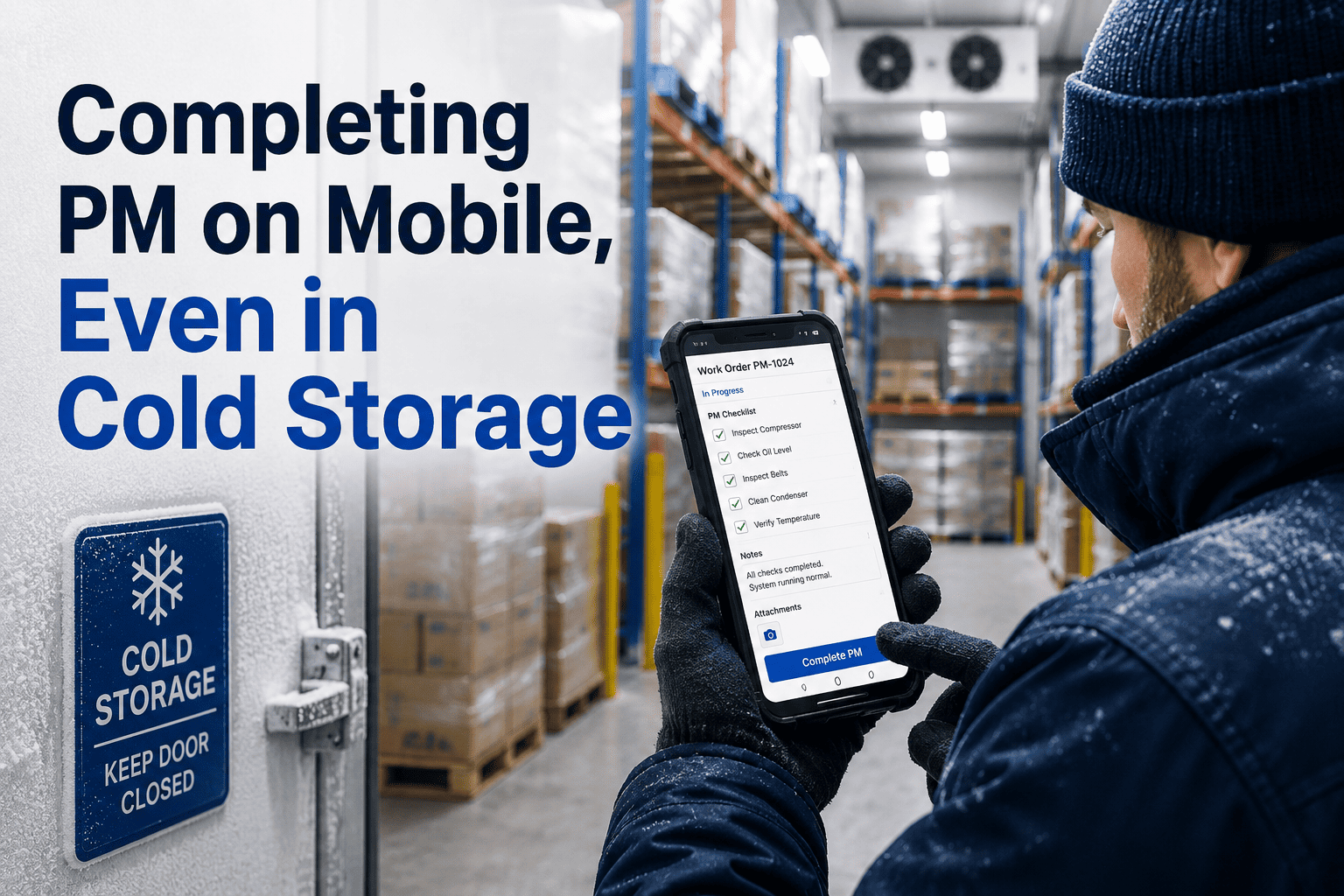
Deploy remaining sensors. Connect the data feed to your CMMS so threshold breaches auto-generate work orders routed to the on-call technician. Configure escalation rules: 15-min alert, 30-min work order, 60-min supervisor notification.
Decommission manual logs & train staff
Once 30 days of clean data confirm sensor reliability, retire paper logs. Train maintenance, QA, and operations teams on the CMMS dashboard, alert acknowledgment, and excursion response procedures. Audit readiness: FSMA, HACCP, GDP for pharma.
Turning sensor data into automatic work orders
A sensor without a workflow is just an expensive thermometer. The integration layer is where cold storage IoT stops being a hardware project and becomes an operational capability.
Double-confirmation prevents false work orders from transient RF noise or single-packet corruption. The 10-minute window filters defrost cycle spikes that are normal operation.
Wireless IoT collapses detection from 2-4 hours (manual log interval) to under 60 seconds. CMMS auto-routing cuts dispatch from 20 minutes to near-zero. Net MTTR improvement: 60-75%.
Ready to replace clipboard logs with auto-routed work orders?
Connect your wireless sensors to a CMMS built for cold storage operations. See the full excursion-to-work-order flow in under 15 minutes.
Cold storage IoT deployment questions, answered
How many sensors do I need per cold room?
For rooms under 2,000 sq ft, one ambient sensor plus one product-core probe is typically sufficient. Larger rooms require one sensor per 1,500-2,000 sq ft, with placement near doors and the furthest corner from the evaporator coil. Always add a humidity sensor in produce and dairy zones where frost control is critical. A site survey during Month 1 confirms exact placement.
Will wireless signals actually penetrate steel freezer walls and racking?
Steel racking and insulated freezer panels attenuate signal by 15-30 dB, which is why protocol choice matters. LoRaWAN handles this best, often penetrating 3-4 cold room walls per gateway. BLE mesh uses relay sensors to hop signals around obstructions. Wi-Fi struggles most in dense metal environments. Always run a signal walk-test before finalizing gateway locations — you can Book a Demo to review your facility floor plan with our team.
What happens if a sensor loses connection or the battery dies?
A properly configured CMMS monitors sensor heartbeat packets and auto-generates a maintenance work order if any sensor stops reporting for more than 60 minutes. Battery levels are reported continuously, with alerts at 20% remaining capacity giving you 4-8 weeks to schedule replacement. This heartbeat monitoring is itself a compliance requirement under FSMA preventive controls.
How does this integrate with my existing CMMS or maintenance workflow?
Most modern CMMS platforms accept sensor data via REST API or MQTT webhook. The integration maps temperature thresholds to work order triggers, routes alerts to the correct technician based on zone assignment, and attaches the full sensor reading history to each work order for audit purposes. If your CMMS lacks an open API, a middleware layer or a purpose-built platform like Oxmaint handles the bridge — start a Start Free Trial to test the integration before committing.
What is the total cost for a typical 20-sensor cold storage deployment?
Hardware runs $3,500-6,000 for 20 industrial-grade sensors and 1-2 gateways. Installation labor adds $1,200-2,000. CMMS platform subscription runs $150-400 per month depending on features and user count. Total first-year investment: $6,500-11,000. Against $17,000+ in eliminated manual logging labor and a single prevented product loss event averaging $8,000-25,000, most facilities achieve full payback within 6-9 months.
Stop walking freezers with a clipboard. Start deploying sensors that work.
Join the cold storage operators who've turned temperature monitoring from a manual chore into an automated, audit-ready operational capability.
Free 14-day trial · No credit card