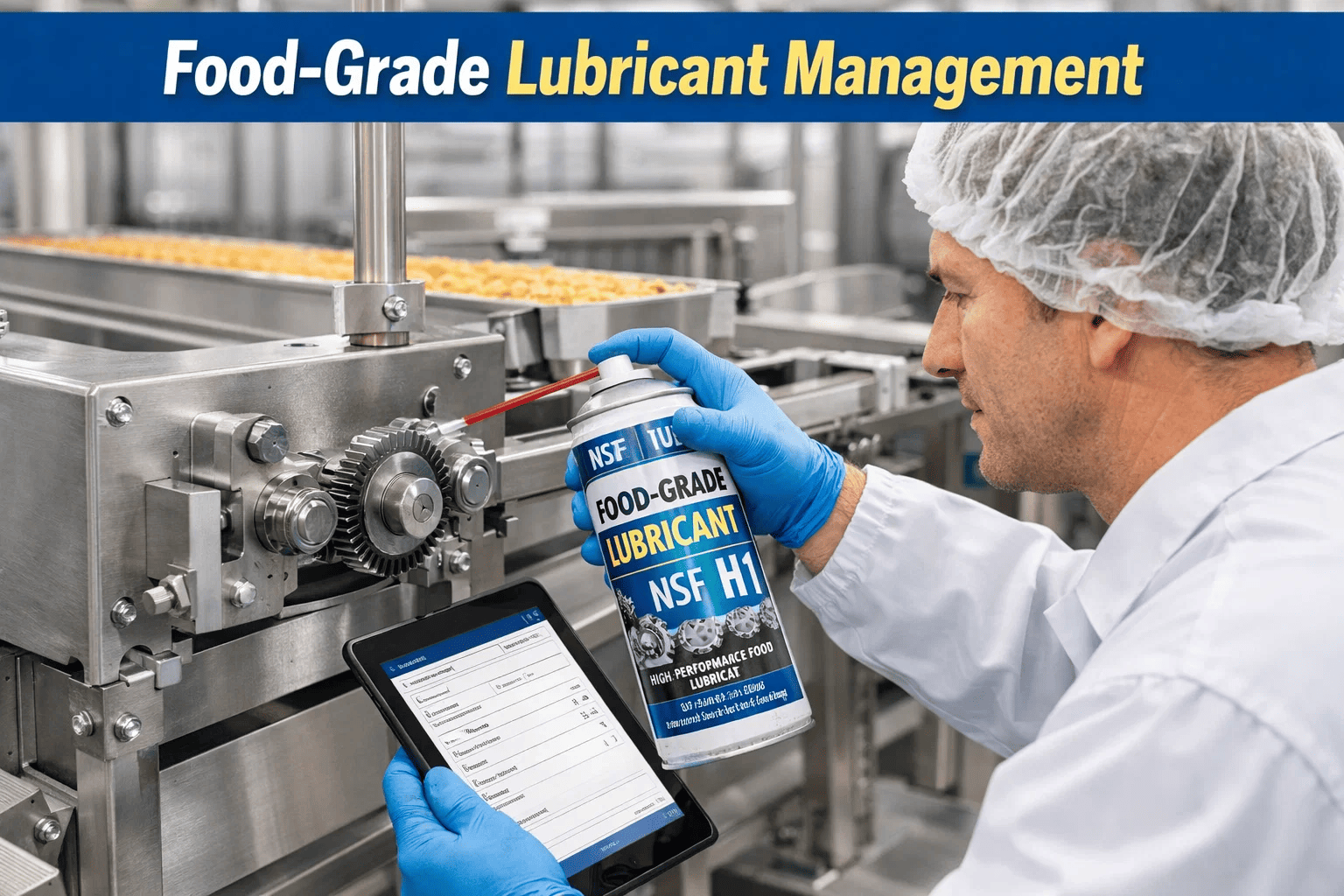
One unlabeled drum is all it takes — a food-grade lubricant stored next to an industrial one, or a sanitizer sitting too close to an allergen cleaner, and a routine audit turns into a recall conversation. Sign up to track your chemical inventory, SDS records, and storage segregation from one system instead of a binder in the sanitation closet.
What This Guide Covers
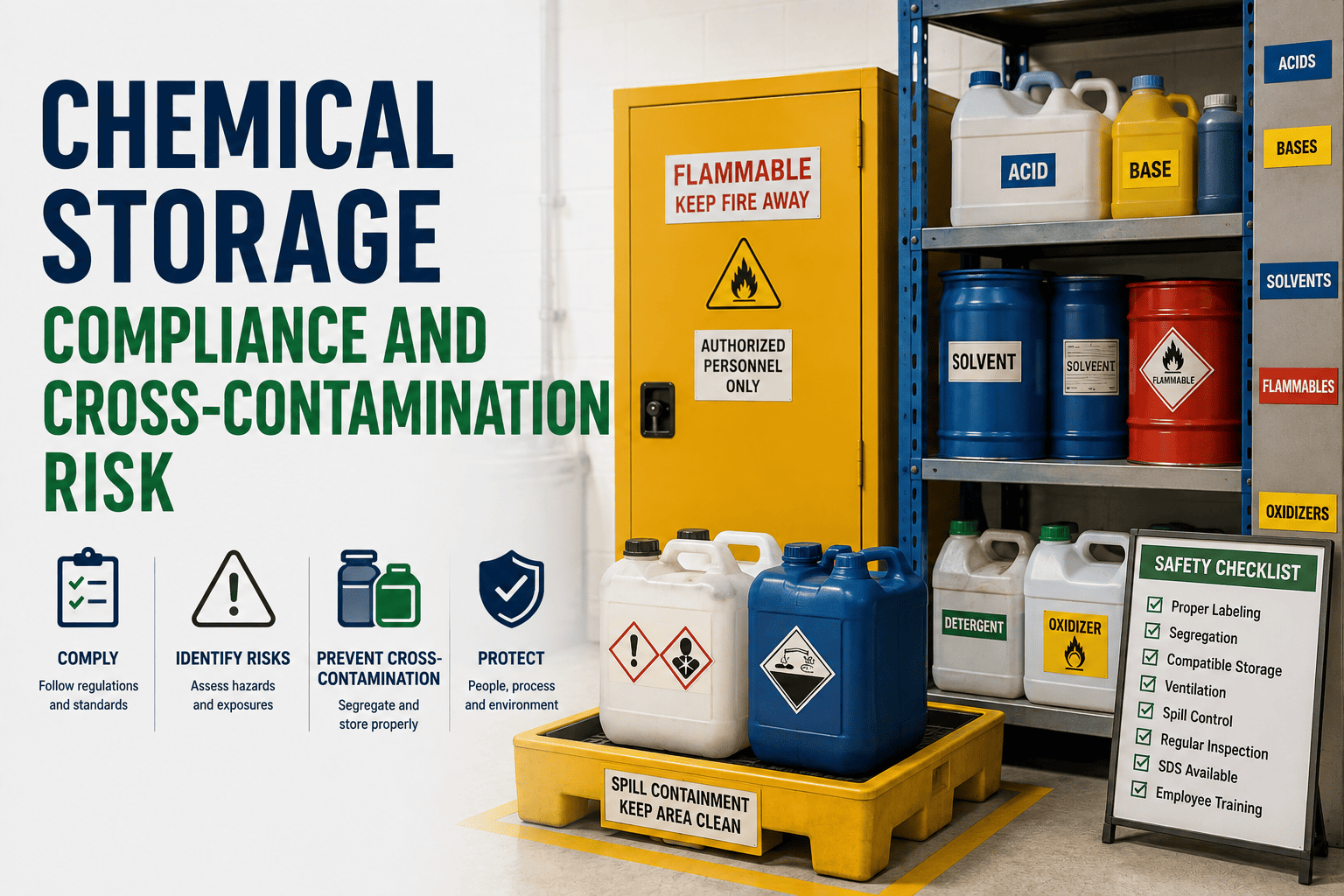
Chemical storage compliance in a food plant means every sanitizer, food-grade lubricant, and hazardous material has a current SDS, a segregated storage spot based on hazard class, and an inventory record that matches what's actually sitting on the shelf.
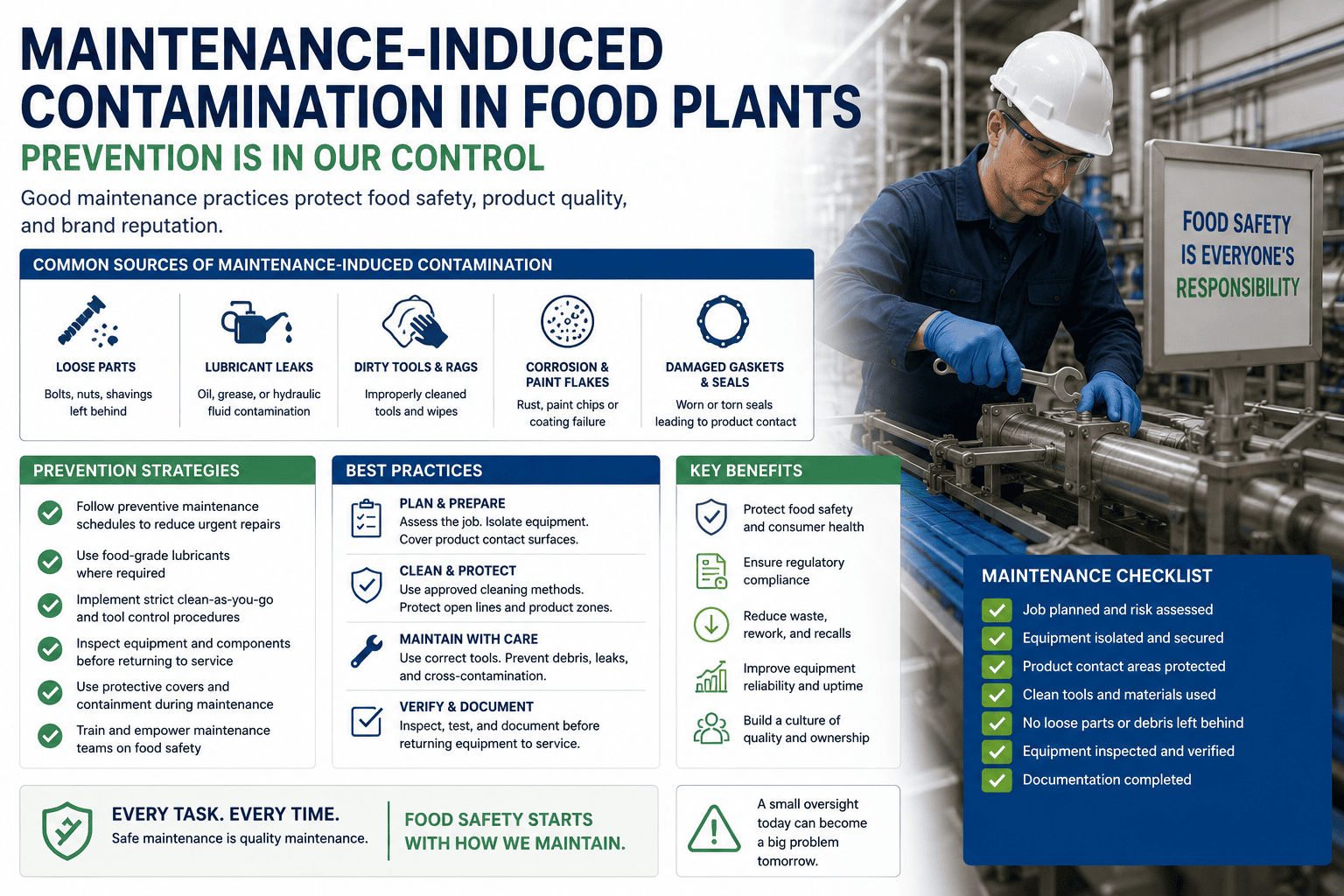
Where Cross-Contamination Risk Actually Starts
| Risk Point |
Why It Matters |
| Food-grade vs. industrial lubricants |
Sharing a shelf or an unlabeled container risks trace contamination reaching food-contact surfaces |
| Acid and alkaline sanitizers |
Stored too close together, an incompatible mix creates a fire, fume, or reaction hazard on its own |
| Allergen cleaning agents |
Mislabeling or misuse can leave allergen residue where a clean surface was assumed |
| Unlabeled or top-up containers |
A decanted chemical without a label is the single fastest way to lose track of what's actually being applied |
Building A Defensible Chemical Program In 4 Steps
1
Build The Approved Chemical List
Every chemical on-site comes from a qualified supplier and is checked against what's actually authorized for use
2
Segregate By Hazard Class And Food Contact Status
Acids, alkalis, oxidizers, and food-grade lubricants each get their own clearly labeled zone, away from what they could react with
3
Keep Every SDS Current And Accessible
A safety data sheet is on file for every chemical stored on-site, and pulling it during an inspection takes minutes, not hours
4
Match Inventory To What's Actually On The Shelf
Receiving logs, inventory counts, and SDS records get reconciled, so nothing on-site is undocumented
Chemical Compliance That Survives An Audit
OxMaint keeps your approved chemical list, SDS records, and storage segregation tied to one inventory that's always current. Sign up for a free trial to start tracking your chemical program today, or book a demo to see how it maps to your storage areas.
What A Tracked Chemical Program Adds
Segregated Storage Zones
Incompatible chemicals and food-grade lubricants each sit in their own clearly labeled, tracked area
SDS On Demand
Every safety data sheet is current and retrievable in seconds when an auditor asks for it
Approved Supplier List
Only chemicals from qualified, verified suppliers ever make it onto the plant floor
Inventory Matched To SDS
Every drum, container, and label on the shelf has a matching record behind it
Why One Unlabeled Container Is Enough
A top-up container without a label doesn't just risk a mix-up at the next shift — it breaks the chain between what's stored, what's documented, and what's actually being used near food-contact surfaces. That gap is exactly what a GFSI or FDA inspector is trained to find first.
Frequently Asked Questions
Q
Does every chemical on-site need its own SDS?
Yes. A current safety data sheet is expected for every chemical stored on-site, and abbreviated SDS lists are typically kept right in each storage area for quick reference.
Q
Can sanitizers and lubricants share a storage room?
Only with clear segregation inside that room. Incompatible hazard classes and food-grade versus non-food-grade products still need their own labeled zones, not just a shared door.
Q
What do auditors check on chemical storage first?
Labeling, segregation, and whether the inventory on the shelf actually matches the SDS and approved chemical list on file — gaps in any of those three are the fastest finding in a walkthrough.
Make Your Chemical Storage Program Defensible
OxMaint ties your approved chemical list, SDS records, and storage segregation to one live inventory, so every drum on the shelf has a record behind it. Sign up for a free trial to get started today, or book a demo to see the full chemical compliance workflow.
.png)