A filler gets a monthly PM because that's what the OEM manual says, on a schedule nobody has questioned in years. Half the tasks catch nothing. The one failure mode that actually shuts the line down isn't on the list at all. That's a PM program built on habit, not analysis. Sign up to turn RCM findings into a CMMS-driven PM program that targets real failure modes instead of the manual's default interval.
What This Guide Covers
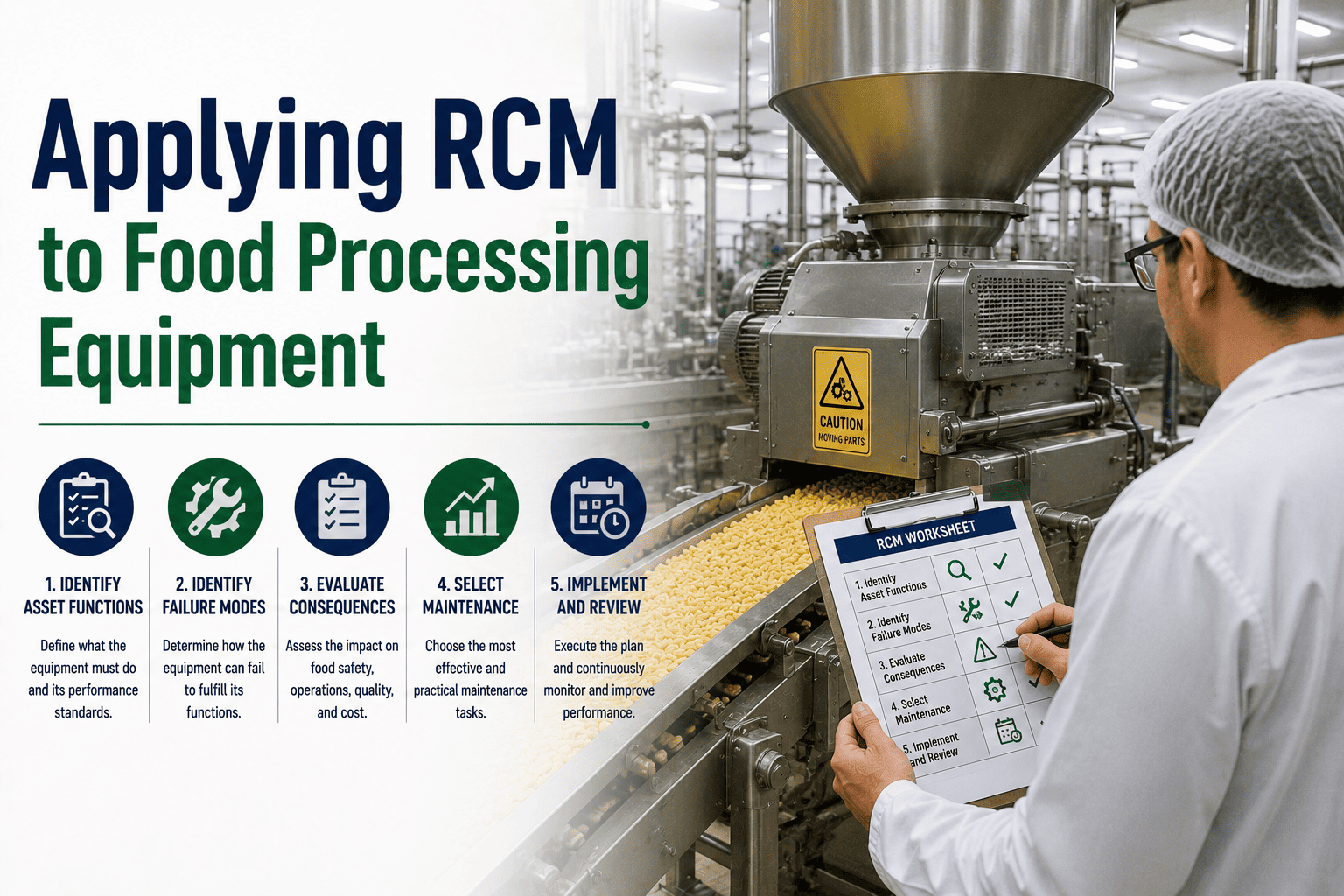
Applying Reliability-Centered Maintenance to food processing equipment means analyzing how each critical asset actually fails, choosing the maintenance task that best addresses that failure mode, and building a PM strategy around evidence rather than a generic OEM interval — then keeping those findings alive in the CMMS long after the initial study wraps up.
The Four Questions RCM Actually Asks
1
What Can This Asset Fail To Do?
Every function the asset is expected to perform, at the standard the process actually needs — not just "run" or "not run"
2
What Causes Each Failure?
The specific failure modes behind each function loss — a worn seal, a drifting sensor, a contaminated lubricant — named individually, not lumped together
3
What Happens When It Fails?
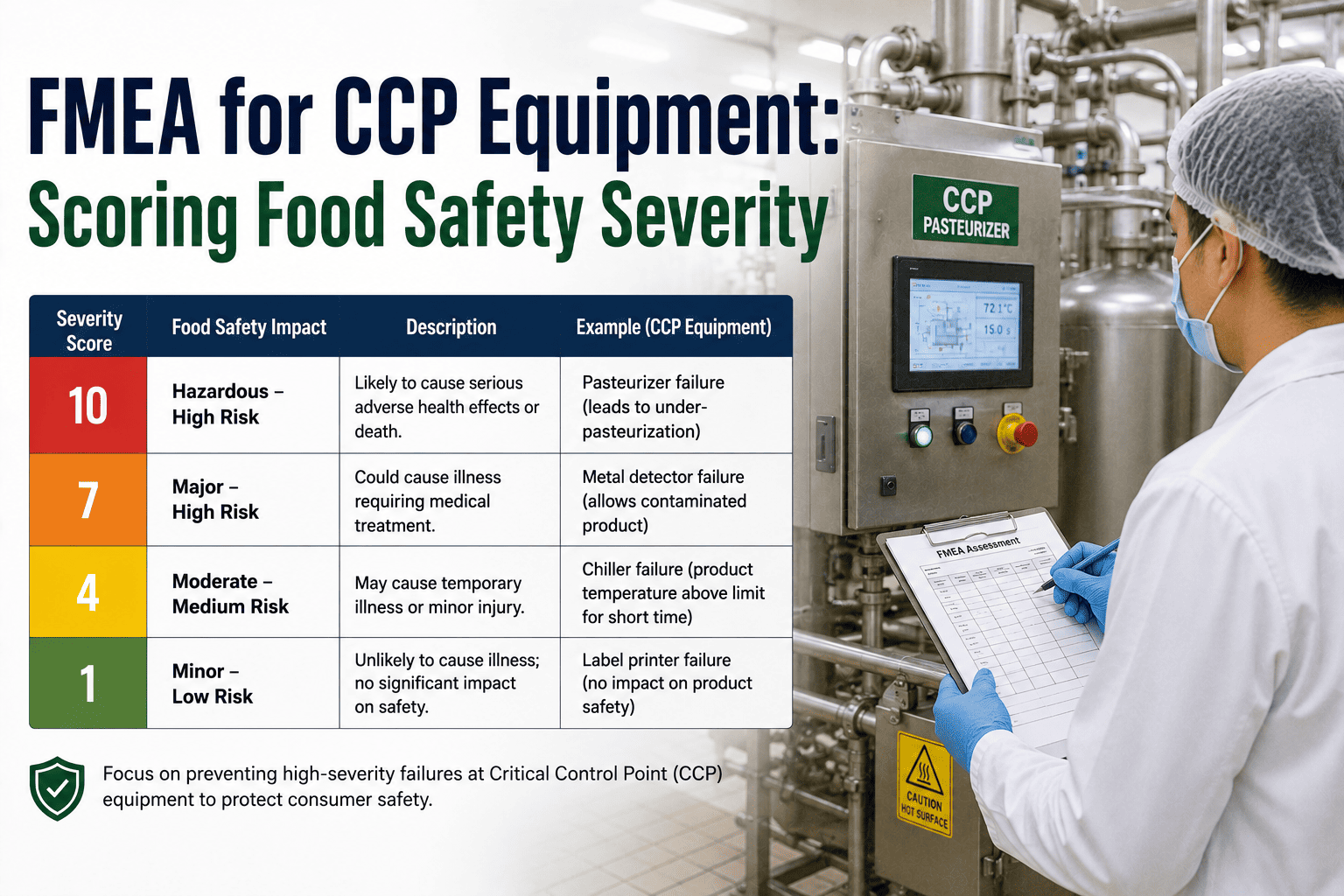
The real consequence — food safety event, quality defect, downtime, or nothing much at all — is what decides how aggressively to respond
4
What's The Right Task, If Any?
Condition monitoring, scheduled restoration, scheduled replacement, or run-to-failure — chosen for that failure mode, not defaulted to a calendar PM
Matching The Task To The Failure Mode
| Task Type |
When It Fits |
| Condition monitoring |
The failure gives a detectable warning sign — vibration, temperature drift, pressure change — before it happens |
| Scheduled restoration |
Wear is age-related and predictable enough to service at a fixed interval before condition drops off |
| Scheduled replacement |
The part has a known useful life and replacing it before that point is cheaper than waiting for failure |
| Run-to-failure |
The consequence is minor and no cost-effective task actually reduces the failure risk |
Findings That Don't Die After The Workshop
OxMaint turns each RCM finding into a live PM task, condition-monitoring trigger, or spare parts rule — tracked in the same system your team already works from. Sign up for a free trial to put your RCM study into action, or book a demo to see the CMMS integration.
Why RCM Studies Usually Fade Without A CMMS
Findings Stay In A Report
A PDF from the RCM workshop doesn't update anyone's PM schedule on its own
Tasks Drift Back To Habit
Without tracking, technicians revert to the old calendar-based routine within a year
Failure Data Isn't Fed Back
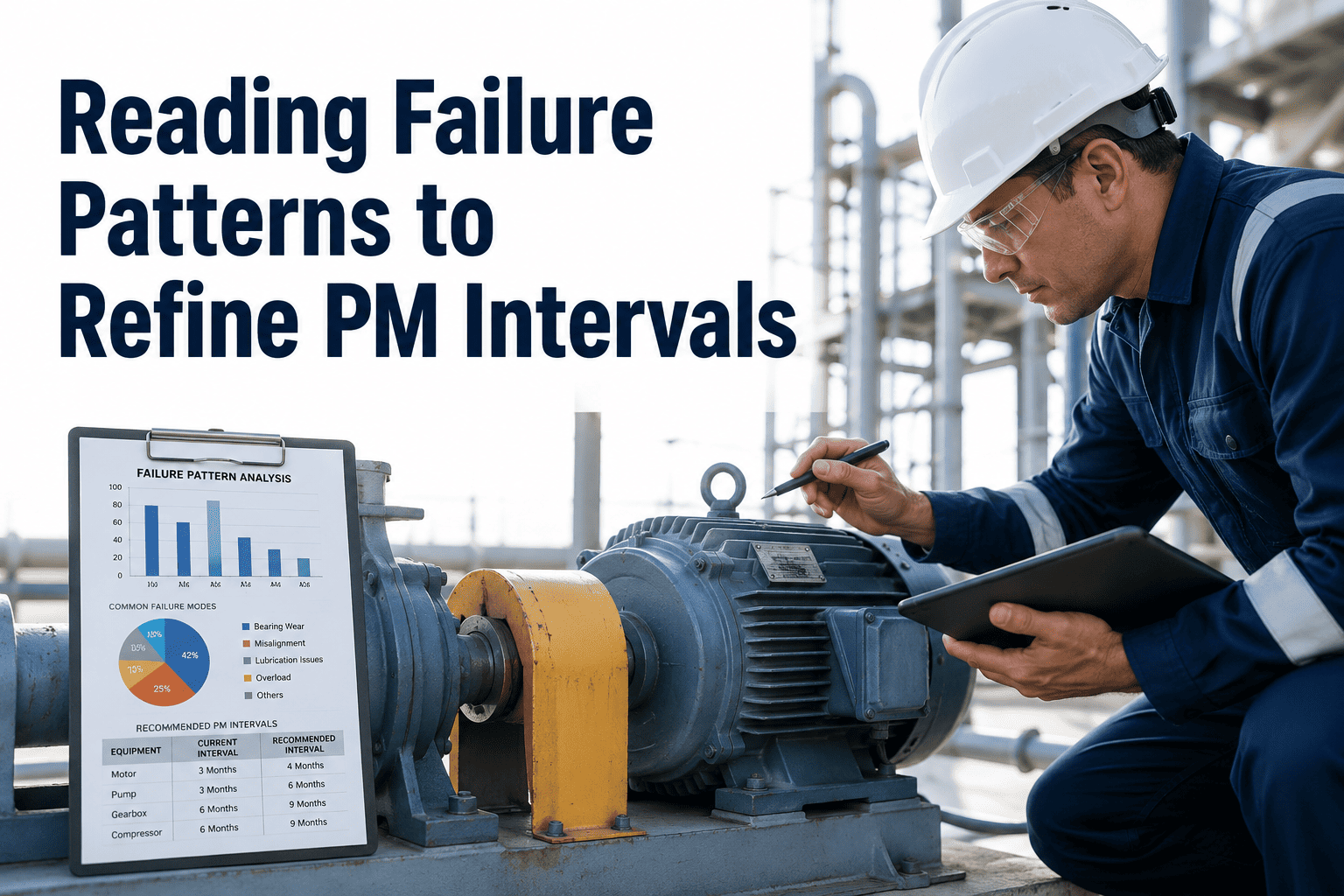
RCM is a living analysis — new failure history should refine the original task selection, not sit unused
No Owner After The Consultants Leave
Without a system tracking task completion and effectiveness, the program has no one actively maintaining it
RCM Doesn't Mean More Maintenance
A common misconception is that RCM adds work. In practice it often removes tasks that catch nothing while adding the few that actually matter — redirecting effort toward the failure modes with real consequence instead of spreading it evenly across everything the OEM manual mentions.
Frequently Asked Questions
Q
Does RCM replace the OEM maintenance manual?
Not entirely. It builds on OEM guidance but tests it against the asset's actual failure history and operating conditions, which often differ from the generic assumptions a manual is written around.
Q
Should every asset get a full RCM analysis?
No. A full RCM study is worth the effort on critical, high-consequence assets — lower-risk equipment can often run on simpler, less intensive maintenance logic without the same depth of analysis.
Q
How do RCM findings stay current over time?
By feeding actual failure and repair data back into the analysis on a regular cycle, so task selection keeps reflecting how the equipment is really performing, not just how it was assessed once.
Build A PM Program On Evidence, Not Habit
OxMaint keeps RCM-derived tasks, condition triggers, and failure history in one CMMS record — so the analysis keeps working long after the study ends. Sign up for a free trial to start applying RCM today, or book a demo to see it built around your equipment.