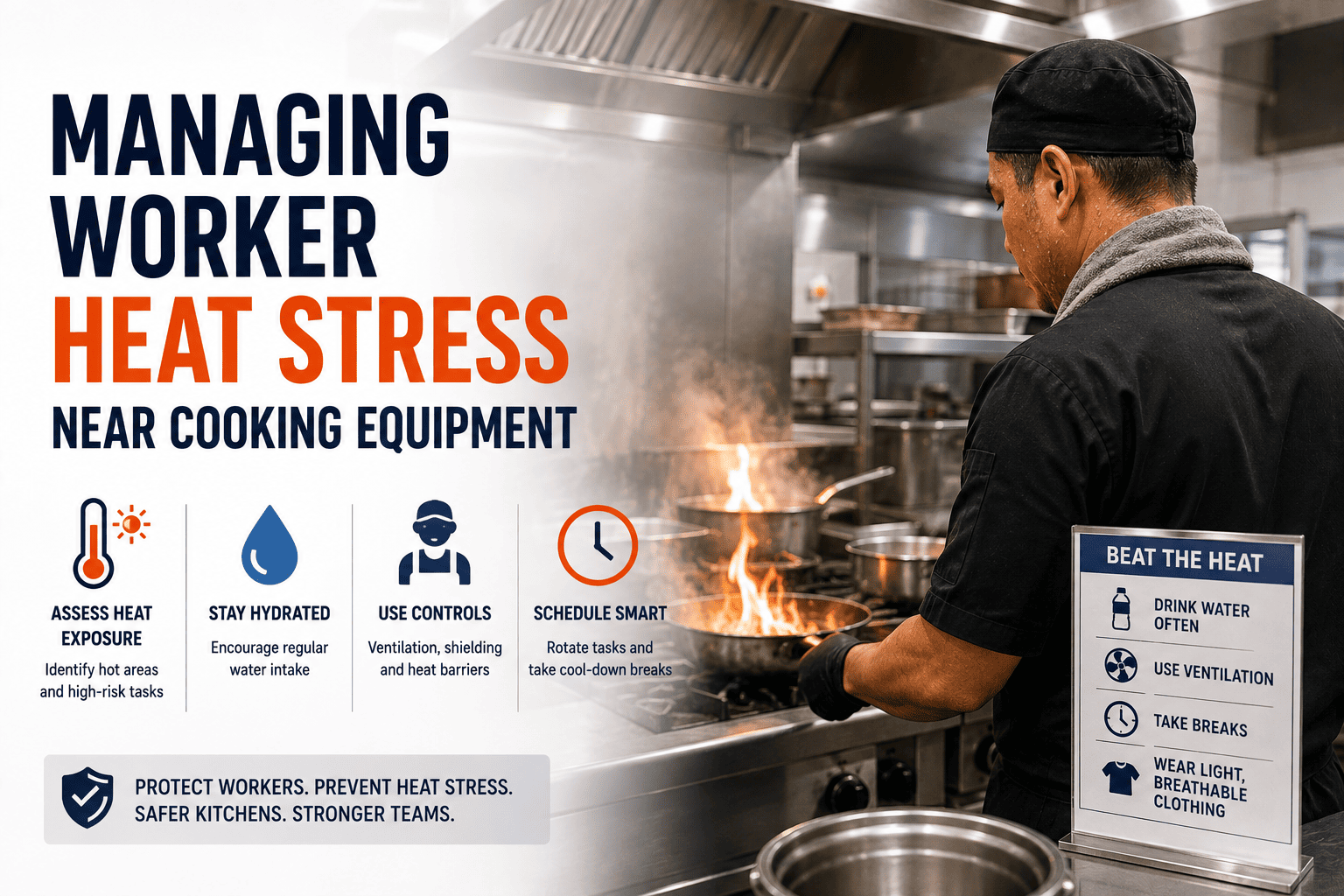
Commercial kitchens and food canneries sit on OSHA's own list of high-risk indoor heat locations, right alongside foundries and glass plants — and enforcement activity around cooking and processing areas is climbing in 2026. Sign up to track hydration schedules, rest breaks, and heat exposure logs from one system instead of a clipboard on the wall.
What This Guide Covers
Managing worker heat stress near fryers, ovens, and kettles means knowing the heat index triggers that require action, giving workers real water and rest access, and keeping a record that proves the program actually ran — not just that it existed on paper.
Heat Index Triggers Near Cooking Equipment
| Trigger Level |
What It Requires |
| Below 80°F heat index |
Standard kitchen practice applies, though radiant heat from equipment can still push local exposure higher |
| Initial trigger (80°F) |
Continuous cool water access, supervisor monitoring, and symptom training for workers on the line |
| High heat trigger (90°F) |
Paid 15-minute rest breaks every 2 hours, a buddy system, and closer supervision near cooking stations |
| New or returning workers |
Gradual acclimatization schedule building up to full workload across the first week |
Building The Program In 4 Steps
1
Map The Hot Zones On The Floor
Fryer lines, ovens, and kettle stations get identified and logged as elevated-risk areas ahead of the warm season
2
Set The Hydration And Rest Schedule
Water points and paid breaks are scheduled against the actual heat index reading, not a fixed calendar
3
Train Supervisors To Spot Symptoms Early
Dizziness, confusion, and excessive sweating are flagged and acted on before they become a recordable incident
4
Log Every Check And Every Break
Water checks, rest breaks, and symptom reports are logged against the shift and station, ready for review
A Heat Safety Program That Actually Runs
OxMaint schedules hydration and rest checks by shift and station, logs symptom reports the moment they're raised, and keeps a full heat-exposure history against every hot zone in the plant. Sign up for a free trial to start tracking your cooking-area program today, or book a demo to see it running on your floor plan.
The Controls That Matter Most On The Line
Continuous Water Access
Cool water stays within reach of every cooking station, not a single fountain across the plant
Scheduled Rest Breaks
Paid recovery time is built into the shift plan once the heat index crosses the high trigger
Acclimatization Tracking
New and returning workers ramp up gradually, with each day's workload logged against the plan
Engineering Controls
Local exhaust ventilation and heat shielding around fryers and ovens reduce exposure before rest breaks are even needed
Why Cooking Areas Get Flagged First
Radiant heat from fryers, ovens, and kettles pushes the effective temperature around a station well above the plant's general reading, which is exactly why OSHA names commercial kitchens and food canneries as high-risk indoor heat locations. A reading taken away from the line understates the actual risk a cook or line worker faces.
Frequently Asked Questions
Q
Does OSHA's heat rule apply to indoor cooking areas?
Yes. Indoor operations are covered wherever the heat index reaches the risk thresholds, and OSHA's own guidance names commercial kitchens as a recognized high-heat indoor setting.
Q
What actually triggers a required rest break?
Once the heat index at the work area reaches the high heat trigger, paid 15-minute rest breaks every 2 hours become the expected practice, alongside closer supervision of workers near the equipment.
Q
When does a heat illness become recordable?
Once a worker needs treatment beyond basic first aid, loses consciousness, or is restricted from a normal shift, the incident typically needs to go on the log, which is why documenting every symptom report matters from the first sign.
Protect Every Worker On The Cooking Line
OxMaint tracks hydration checks, rest breaks, acclimatization schedules, and symptom reports against every hot zone in your plant, so the program is provable, not just posted on a wall. Sign up for a free trial to get started today, or book a demo to see the full heat safety workflow.