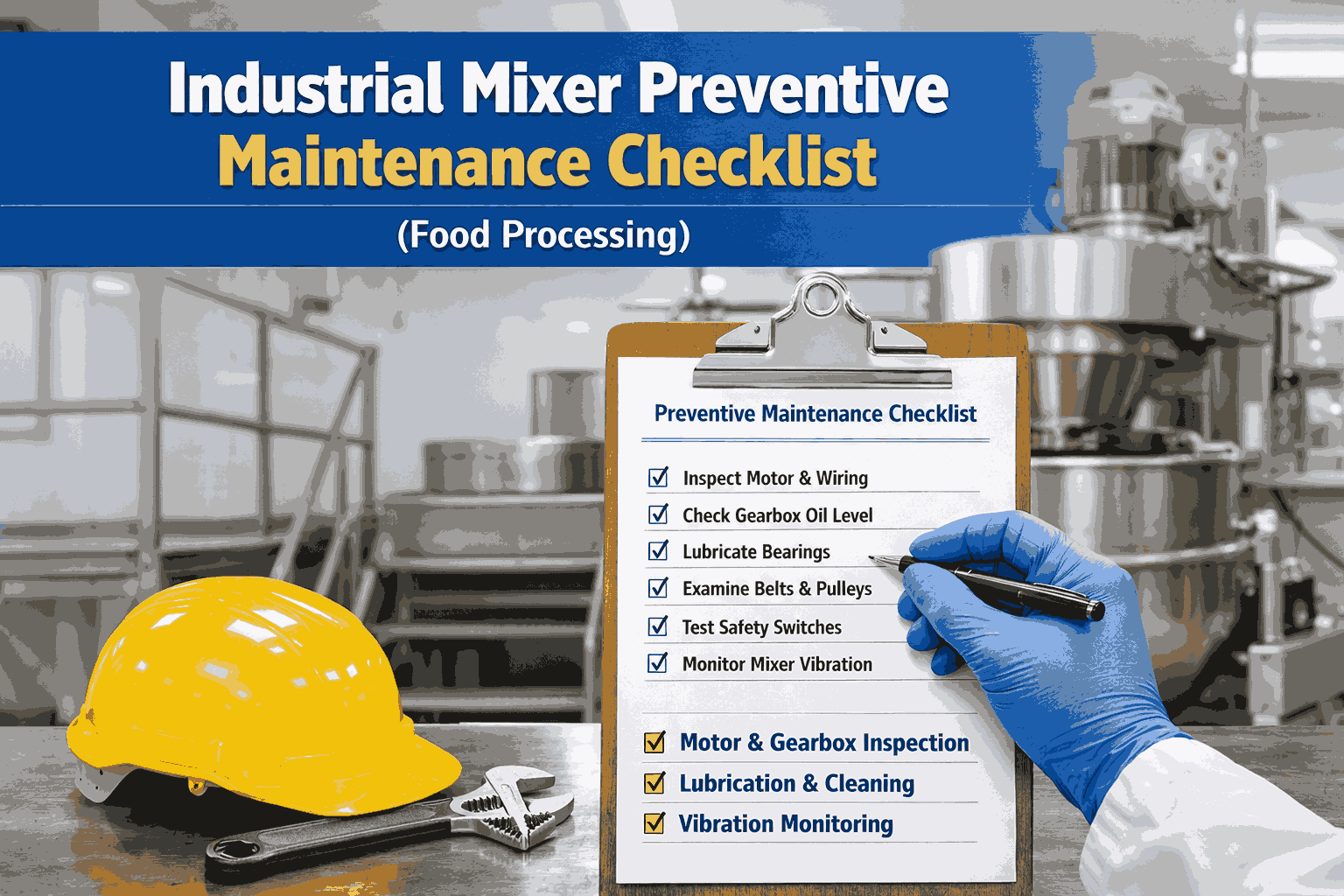
An industrial mixer inspection checklist prevented a $420,000 recall at a California sauce manufacturer last October when a routine seal check caught microscopic metal shavings before they contaminated 12,000 gallons of marinara. Your mixing equipment processes thousands of pounds of product daily through components spinning at speeds exceeding 1,750 RPM—every rotation without proper inspection increases contamination risk, mechanical failure probability, and regulatory exposure. Plants using structured digital checklists catch 73% more defects than those relying on visual spot-checks alone. Sign up for Oxmaint to digitize your mixer inspection program with automatic timestamps and photo documentation.
82%
Of mixer-related contamination events trace back to inspection items that were skipped, rushed, or improperly documented during shift changes
73%
Preventable Failures
Mixer breakdowns catchable through systematic daily inspections
$67K
Average Recall Cost
Per contamination event including testing and remediation
47%
Seal-Related Issues
Foreign material events from degraded mixer seals
21 Days
Early Warning Window
Average lead time between first symptoms and failure
Daily Pre-Shift Mixer Inspection Checklist
Complete these 12 inspection points before each production shift. Estimated time: 8-12 minutes per mixer. Document all findings immediately in your CMMS for compliance and trend tracking.
1
Pass Criteria:
No visible contamination, consistent surface finish, no new scratches or wear patterns, no discoloration
Failure Action:
Stop production, isolate equipment, notify QA, complete foreign material investigation form
2
Pass Criteria:
Mixer refuses to start with guards open, E-stop functions immediately, all LOTO points accessible
Failure Action:
Lock out equipment, create urgent maintenance work order, do not operate until repaired
3
Pass Criteria:
Seals pliable, no visible cracks or deformation, proper compression, no leakage evidence
Failure Action:
Schedule seal replacement within 48 hours, increase monitoring frequency, document with photos
4
Pass Criteria:
No visible damage, fasteners tight, clearance within 3-6mm specification, coating intact
5
Pass Criteria:
Smooth acceleration, consistent hum at operating speed, no intermittent or unusual noises
6
Pass Criteria:
Vibration consistent with baseline, no visible movement at mounting points, smooth operation
7
Pass Criteria:
Motor below 70°C, gearbox below 65°C, bearings below 60°C above ambient
8
Pass Criteria:
Oil at proper level, clear appearance, no leaks, grease fittings clean and accessible
9
Pass Criteria:
All indicators functional, no active alarms, speed within 2% of setpoint
10
Pass Criteria:
Cleaning log signed, visual inspection shows no residue, ATP test below 10 RLU if required
11
Pass Criteria:
Allergen tag current, changeover documented, no cross-contact risk for scheduled production
12
Pass Criteria:
All checkpoints documented, issues have work orders, record submitted before first batch
Trade paper checklists for digital proof. Paper logs get lost—digital records stay forever. Oxmaint provides automatic timestamping, photo documentation, and instant work order generation when issues arise.
Monthly Mixer Inspection Checklist
Complete these 6 in-depth inspection points monthly during extended maintenance windows. Estimated time: 45-60 minutes per mixer. These inspections require partial disassembly and specialized measurement tools.
1
Pass Criteria:
Vibration below alarm threshold, no bearing defect frequencies detected, trend stable
2
Pass Criteria:
Insulation resistance above 1 megohm per kV plus 1, stable or improving trend
3
Pass Criteria:
Angular misalignment below 0.5 degrees, parallel offset below 0.05mm
4
Pass Criteria:
Blade thickness above 80% of original, no chips or cracks, edges smooth
5
Pass Criteria:
No recurring faults, parameters match master list, cooling adequate
6
Pass Criteria:
All seals within service life, replacement schedule updated, spares available
Paper vs. Digital Inspection Documentation
Timestamp Accuracy
Self-reported, easily falsified
Automatic, tamper-proof
Photo Documentation
Rarely attached
Embedded in each checkpoint
Work Order Generation
Manual, often delayed
Instant from failed items
Trend Analysis
Requires manual compilation
Automatic dashboards
Audit Retrieval
Hours searching files
Seconds with search filters
Regulatory Documentation Requirements
FDA FSMA requires food facilities to maintain documentation demonstrating preventive controls for equipment that could affect food safety. Inspection records must include: date and time of inspection, equipment identifier, inspector identification, specific checkpoints verified, any deviations noted, and corrective actions taken. Records must be retained for the longer of two years or the shelf life of products plus one year. Electronic records must meet 21 CFR Part 11 requirements for data integrity. Sign up for Oxmaint to generate audit-ready documentation that meets FDA electronic records requirements.
Frequently Asked Questions
How often should industrial mixers be inspected in food manufacturing?
Daily pre-shift inspections should cover safety interlocks, contamination checks, and seal condition. Weekly inspections add detailed seal measurement, lubrication service, and fastener torque verification. Monthly inspections include vibration analysis and motor testing. This layered approach catches 82% of developing issues before they cause unplanned downtime or contamination events.
What are the most critical mixer inspection points for food safety?
Seal and gasket condition tops the list since 47% of mixer-related contamination traces back to degraded seals allowing metal, lubricant, or microbial ingress. Safety interlock verification prevents operator injury. Cleaning verification confirms previous batch residue was removed. These three categories appear in every FDA food facility inspection checklist.
How do I create an audit-ready mixer inspection program?
Auditors look for consistent execution of documented procedures, evidence that identified issues receive corrective action, and trending data demonstrating continuous improvement. Digital inspection workflows with timestamped photos, automatic work order generation, and built-in trending provide the documentation auditors expect.
Book a demo to see how automated compliance documentation works.
How long should industrial mixer inspections take?
A thorough daily pre-shift inspection takes 8-12 minutes per mixer when operators know what to look for. Weekly inspections run 25-35 minutes including lubrication service. Monthly inspections with vibration analysis need 45-60 minutes. Plants that skip or rush inspections typically spend 10x that duration dealing with unplanned breakdowns.
FSMA Compliant. Audit-Ready. Always Documented.
Join 500+ food manufacturing facilities using Oxmaint to digitize their inspection programs. Automatic timestamping, photo documentation, and corrective action tracking give you the compliance confidence that paper checklists cannot provide.