A regional dairy processing facility in Ohio was losing $18,000 weekly to unplanned equipment failures—frozen evaporators, worn conveyor bearings, and clogged CIP lines that nobody saw coming. Their maintenance team was reactive, scrambling from one emergency to the next while production schedules collapsed. After implementing structured maintenance planning with a Sign Up to digital CMMS platform, they reduced unplanned downtime by 67% within six months and recaptured $840,000 in annual productivity. The difference wasn't more technicians—it was better planning.
Food production environments demand maintenance strategies that balance equipment reliability with strict sanitation windows, regulatory compliance, and continuous production pressures. Unlike general manufacturing, food plants operate under FSMA, HACCP, and third-party audit requirements where maintenance failures don't just cost money—they create food safety risks. This guide delivers actionable maintenance planning best practices specifically designed for food production managers ready to transform reactive chaos into predictable, audit-ready operations. Book a demo to see how Oxmaint's Preventive Maintenance Scheduler eliminates the guesswork from your maintenance calendar.
Maintenance Planning Best Practices for Food Production Managers
Transform reactive maintenance into a strategic advantage with scheduling frameworks, workflow optimization, and digital tools designed for food manufacturing environments.
Why Traditional Maintenance Planning Fails in Food Production
Most food plants inherit maintenance approaches from general manufacturing that ignore the unique constraints of food production. Sanitation windows are fixed and non-negotiable. Production runs can't pause mid-batch for equipment repairs. Regulatory auditors expect documented proof of preventive maintenance—not verbal assurances. When maintenance planning treats food facilities like any other factory, the result is predictable: reactive firefighting, missed PMs, compliance gaps, and equipment that fails during the worst possible moments.
Effective maintenance planning for food production requires integration with production scheduling, sanitation cycles, and quality systems. It demands digital documentation that satisfies auditor requirements. And it needs flexibility to adapt when production priorities shift—without losing track of critical equipment care. Plants that master these requirements don't just reduce downtime; they build maintenance into a competitive advantage that supports food safety, quality consistency, and operational efficiency.
Build Your Maintenance Planning Foundation
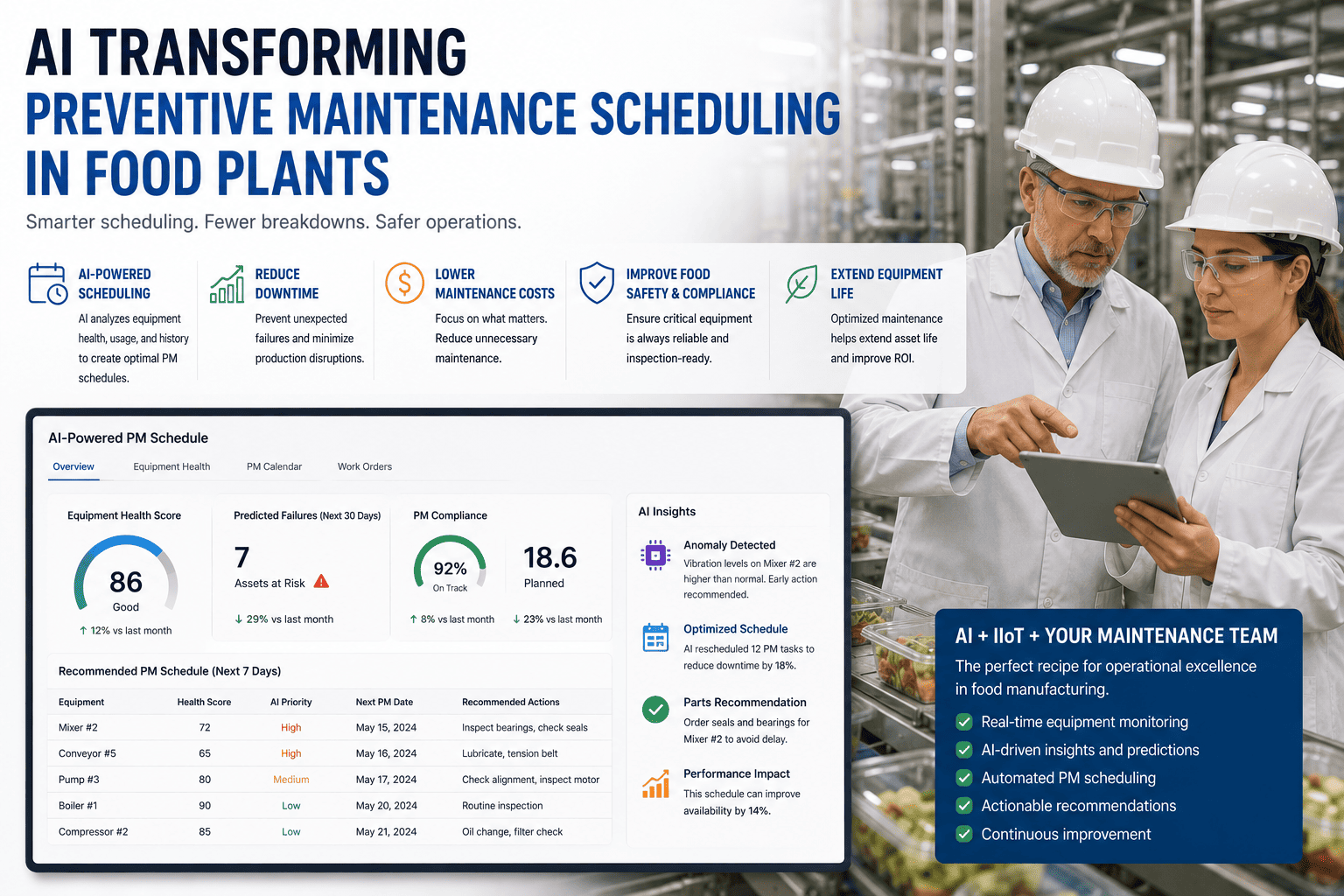
Oxmaint's Preventive Maintenance Scheduler helps food production managers create, assign, and track maintenance tasks with built-in compliance documentation.
The Five Pillars of Effective Maintenance Planning
World-class food production facilities build their maintenance programs on five foundational pillars. Each pillar reinforces the others—skip one and the entire system weakens. Together, they create a maintenance operation that prevents failures, satisfies auditors, and supports production goals without requiring heroic efforts from your team. Sign up for Oxmaint to implement these pillars with guided workflows.
Not all equipment deserves equal maintenance attention. Critical assets—those whose failure stops production, creates food safety risks, or triggers regulatory violations—require more frequent inspection and faster response times than support equipment.
Maintenance schedules that ignore production realities create conflicts that delay PMs indefinitely. Effective planning integrates with production calendars, sanitation windows, and changeover periods to find realistic maintenance opportunities.
Consistent work order processes ensure nothing falls through the cracks. From request submission through completion verification, every step should follow documented procedures that create audit-ready records automatically.
Maintenance work stalls when parts aren't available. Linking inventory management to maintenance planning ensures critical spares are stocked, reorder points trigger automatically, and technicians know part locations before starting work.
What gets measured gets managed. Tracking maintenance KPIs reveals trends, identifies problem equipment, and proves program effectiveness to leadership. Regular review cycles turn data into action.
Reactive vs. Planned Maintenance: The Real Cost Difference
The financial case for maintenance planning is overwhelming when you examine the full cost of reactive maintenance—not just repair bills, but production losses, expedited parts, overtime labor, and regulatory risks. Here's how the numbers break down for a typical food production facility.
See the ROI for Your Facility
Calculate your potential savings with Oxmaint's maintenance planning tools.
Maintenance Planning Calendar Framework
Effective maintenance scheduling follows predictable rhythms aligned with production cycles, regulatory requirements, and equipment manufacturer recommendations. This framework provides the foundation—adjust intervals based on your specific equipment conditions and operational data. Start your free trial by Signing Up to build automated scheduling for each frequency.
Eliminate Planning Mistakes with Smart Scheduling
Oxmaint's Preventive Maintenance Scheduler automates task generation, tracks completion rates, and adapts schedules based on actual equipment performance data.
Implementation Roadmap: 90-Day Transformation
Transitioning from reactive to planned maintenance doesn't happen overnight, but meaningful progress is achievable within 90 days. This phased approach builds momentum while avoiding the overwhelm that derails many improvement initiatives.
Key Performance Indicators for Maintenance Planning
Track these metrics to measure your maintenance planning effectiveness and identify improvement opportunities. Benchmark against industry standards and your own historical performance.
Frequently Asked Questions
Transform Your Maintenance Planning Today
Join hundreds of food production facilities using Oxmaint to schedule preventive maintenance, track work orders, and maintain audit-ready documentation—all from one intuitive platform.