Night Shift Maintenance Challenges in Food Plants

By Josh Turley on June 3, 2026

night-shift-maintenance-24-7-food-plants-cmms-solutions

Night shift maintenance in food manufacturing plants is the industry's most under-managed operational risk. While day teams run with full management oversight, CMMS access, and parts availability, night crews often operate with skeleton staffing, no structured shift handover, verbal work order communication, and zero real-time visibility for the managers who won't clock in until 7 AM. Food manufacturing plants running 24/7 operations cannot afford a two-tier maintenance system — where the day shift runs on data and the night shift runs on memory. A mobile-first CMMS built for around-the-clock operations changes this entirely: digital shift handovers, QR-triggered work orders, live escalation chains, and AI-driven anomaly detection that never clocks out. Start a free trial or book a demo to see how Oxmaint keeps night operations as tight as day shift.

Food Manufacturing · 24/7 Operations · 2026

Night Shift Maintenance Challenges in Food Plants

Why skeleton-crew night teams running on verbal handovers and paper logs create your facility's biggest compliance, safety, and downtime exposure — and how CMMS digital workflows close the gap across every shift.

See what's really happening on your plant floor at 2 AM — before a breakdown tells you first.
✓ Mobile work orders for field technicians ✓ Digital shift handover with full task history ✓ AI anomaly alerts that never sleep
Trusted by 1,000+ facilities across 9 industries  ·  Live in days, not months
02:00 AM Who's watching?
⚠ Undetected Failure
⇧ Verbal Handover
✓ CMMS Active

58min
saved per technician daily with mobile-first CMMS workflows
Frost & Sullivan

44%
of manufacturers experience equipment interruptions at least monthly
ABB / Sapio Research, 2025

$30K+
cost per hour of unplanned downtime in food processing facilities
Industry benchmark, 2025

80%
of companies link CMMS adoption to measurably greater productivity
Advanced Technology Services

What Is Night Shift Maintenance in Food Manufacturing?

Night shift maintenance in food manufacturing is the structured process of managing equipment upkeep, emergency repairs, safety compliance, and shift handovers during off-hours production runs — typically spanning 10 PM to 6 AM — when management oversight is minimal and specialist support is limited. For 24/7 food plants, this window represents roughly a third of all production hours and, without a digital system, a third of operations running on institutional memory alone.

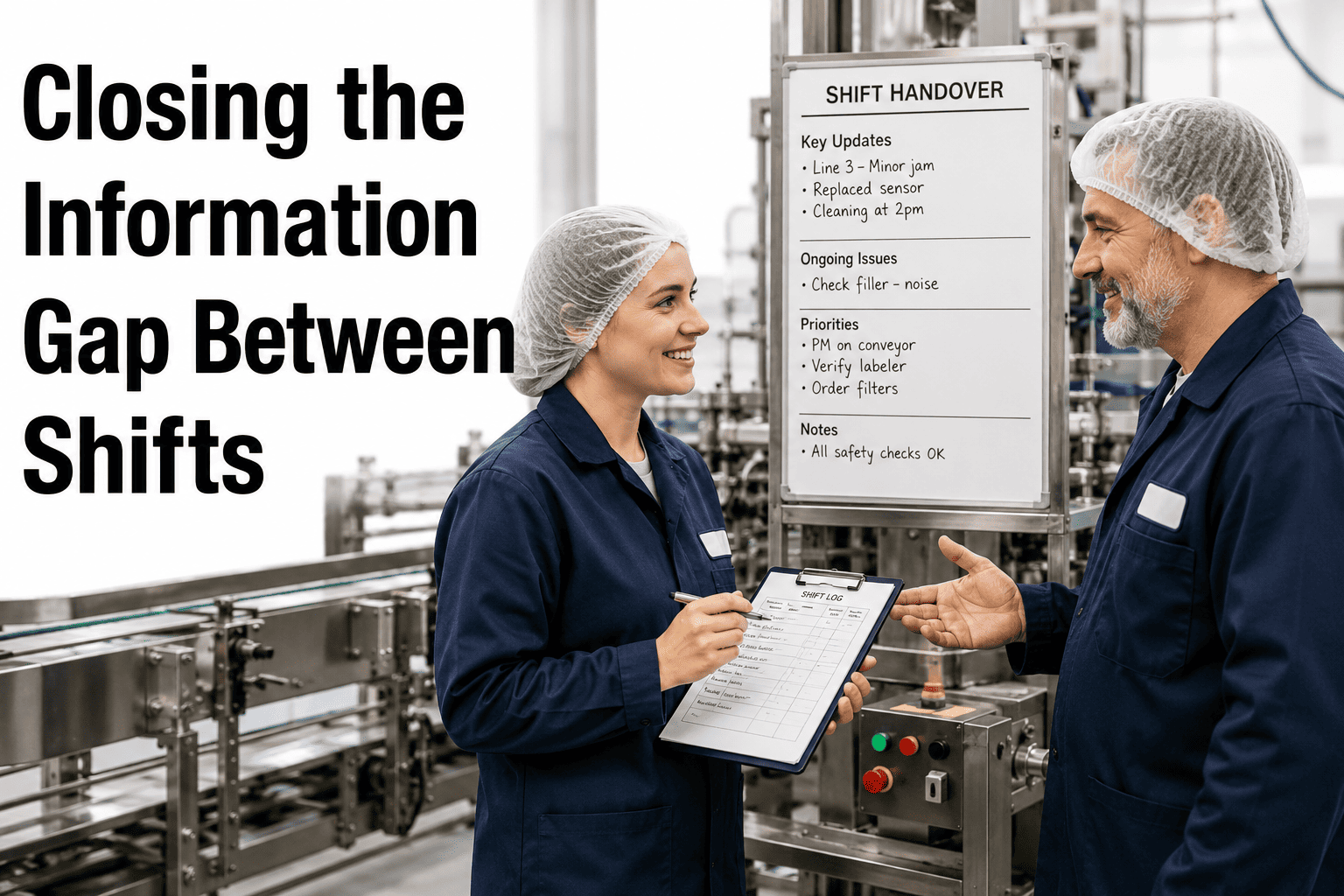
The fundamental problem is not the night shift technicians — it is the information gap. Day managers make decisions based on CMMS dashboards, maintenance history, and real-time asset data. Night techs make decisions based on what the outgoing shift told them, paper logbooks, and experience. When something breaks at 2 AM, the repair quality, parts sourcing, documentation, and escalation path all depend on what one person remembers and how good their instincts are.

A digital work order system accessible via mobile device — with full asset history, repair procedures, parts location, and escalation contacts — gives night crews the same operational intelligence that day managers rely on, eliminating the information gap that makes night maintenance inherently riskier. Start a free trial or book a demo to see how night crews use Oxmaint on the floor.

The Night Shift Information Gap
Day Shift
88%
CMMS access · management oversight · full parts availability
Night Shift
31%
Verbal handovers · paper logs · on-call escalation only
Operational information availability: day vs night
Night failures take 2–3× longer to resolve than identical day-shift failures — not because of technician skill, but because the information, parts location, and escalation path are all harder to access at 2 AM.

The 8 Core Challenges of 24/7 Food Plant Maintenance

01
Skeleton Crew Coverage
Night shifts run with far fewer technicians than day operations. A single tech may cover multiple production lines simultaneously — meaning any unplanned failure immediately stretches capacity to breaking point, delaying response on every other running asset.
02
Verbal Shift Handovers
Without a digital handover system, critical information — what broke, what was patched, what's running on borrowed time — transfers verbally between outgoing and incoming shifts. Critical context is lost, misremembered, or simply skipped during rushed changeovers.
03
No Mobile Work Order Access
Night technicians walking a production floor at 3 AM cannot access desktop-only maintenance systems. Without mobile CMMS access, work orders are written on paper, asset history is unavailable at the machine, and repair documentation happens retrospectively — if at all.
04
Delayed Emergency Response
On-call escalation chains without a structured system rely on personal phone contact. If the first call goes to voicemail, production waits. No automatic escalation path, no documented response time, no accountability — just hope that someone picks up at 2 AM.
05
Compliance Documentation Gaps
FSMA, SQF, and GFSI require documented evidence that maintenance was performed correctly and that food safety protocols were followed. Night shift paper records are frequently incomplete, illegible, or simply missing — creating audit exposure that day management discovers weeks later.
06
Parts Sourcing at Odd Hours
When a critical part fails at midnight, the parts room may be locked, the inventory system inaccessible, and the purchasing team unreachable. Night techs raid nearby machines for compatible parts, borrow from unrelated assets, or hold the line with temporary fixes that become permanent.
07
Knowledge Trapped With Individuals
58% of manufacturing employees have worked in the industry 20+ years (Plant Engineering, 2021). When a senior night tech knows every quirk of Line 3's filler by feel, that knowledge leaves with them at retirement — leaving the night crew without the institutional intelligence that held uptime together.
08
No Manager Visibility Until Morning
Without a live dashboard, maintenance managers arriving at 7 AM have no record of what broke overnight, what was patched, what ran out of spec, or what's waiting for a parts order. Decisions made without this context set the next shift up to repeat the same failures.
The information gap between day and night shifts costs food plants more than any single equipment failure. Start a free trial or book a demo to see live night-shift dashboards in action.

How Oxmaint Powers 24/7 Food Plant Maintenance


Mobile-First Work Orders via QR Scan
Night technicians scan an asset QR code to instantly pull up full maintenance history, open work orders, repair procedures, and parts location — right at the machine, on their phone. No desktop terminal, no paper log. Oxmaint's work order module works entirely from mobile, saving 58 minutes per technician per day (Frost & Sullivan).

Digital Shift Handover Logbook
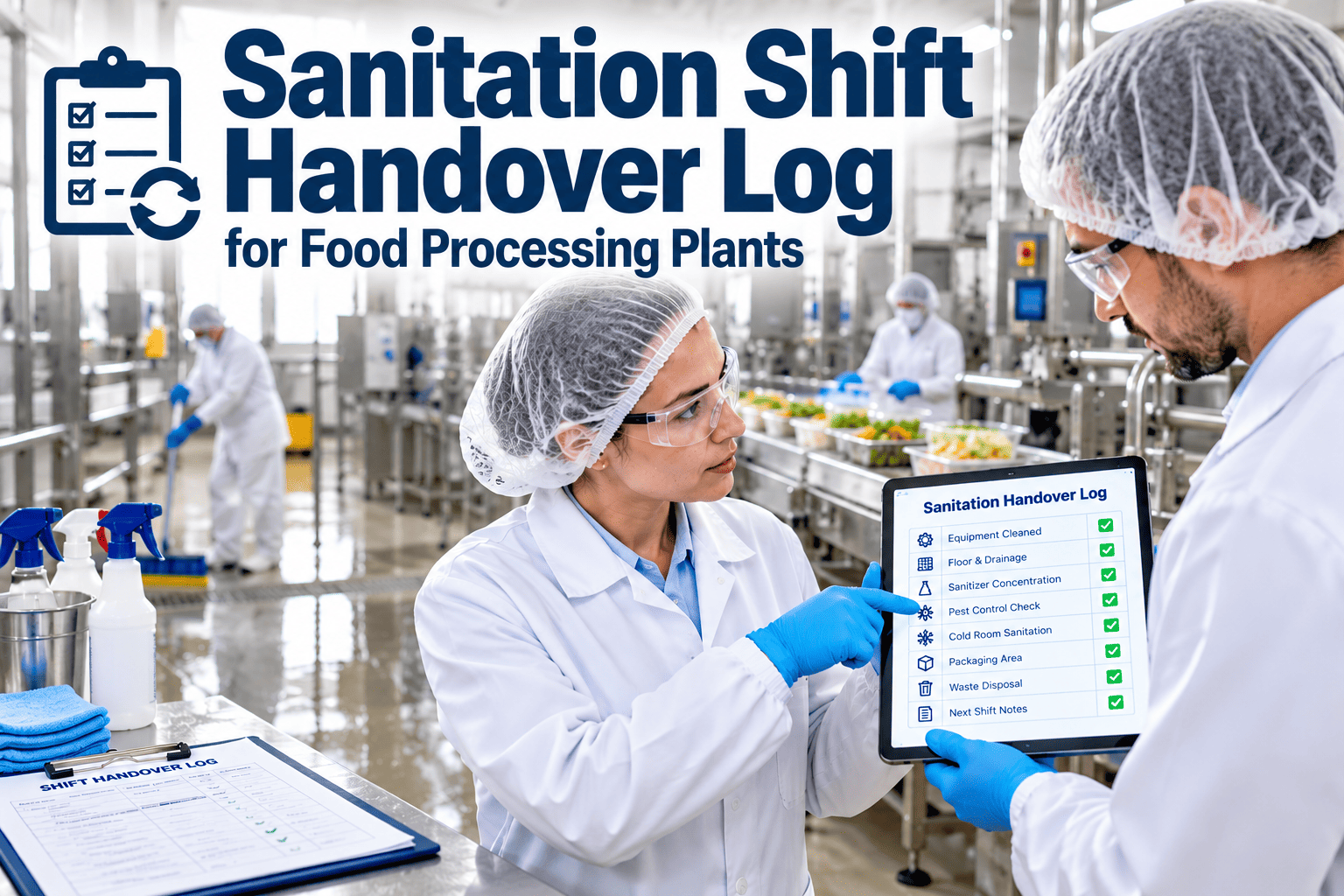
Outgoing shift techs complete a structured digital handover in Oxmaint's Shift Logbook module — logging every open work order status, temporary fix, deferred repair, and asset running at reduced performance. Incoming crews start with complete situational awareness, not a verbal summary.

Automated Escalation Chains
When a critical failure is logged at night, Oxmaint automatically escalates through a pre-configured chain — night supervisor first, maintenance manager second, on-call specialist third — with timestamped notification records. No voicemail dead ends. No undocumented verbal calls.

AI Vision & Predictive Alerts — 24/7
Oxmaint's AI Vision Camera and predictive maintenance engine analyze sensor feeds around the clock — detecting thermal anomalies, vibration spikes, and corrosion at 99.2% accuracy, automatically creating work orders before 3 AM failures take a line down for hours.

Compliance Documentation at the Point of Work
Night techs close work orders with time-stamped photos, checklist completion, and digital sign-off — directly from the machine. Oxmaint's inspection module auto-generates FSMA and GFSI-ready audit trails from every completed job, with zero paperwork to reconstruct the next morning.

Live Manager Dashboard — Any Hour
Maintenance managers see every open work order, asset status, escalation, and parts request from their phone — at midnight, from home, or first thing at 7 AM. The overnight picture is never reconstructed from memory. It's waiting, documented, and timestamped.
Frost & Sullivan found mobile-first maintenance workflows save 58 minutes per technician per day — the equivalent of adding a part-time team member without a single hire.

Night Shift Without CMMS vs With CMMS

Scenario Without CMMS With Oxmaint CMMS
Equipment failure at 2 AM Tech diagnoses from memory, calls manager on personal cell, waits for callback AI alert already raised — work order auto-created, escalation chain triggered automatically
Shift handover at 6 AM 5-minute verbal summary; critical context about near-miss on Line 4 goes unmentioned Structured digital logbook: every open job, deferred repair, and asset status transferred in full
Parts needed at midnight Parts room locked; tech cannibalizes another machine or waits until morning Inventory visible on mobile; auto-reorder triggered; supervisor notified if stock below minimum
Compliance inspection at 4 AM Paper checklist, handwriting illegible, filed in binder that may not be found for audit Digital checklist, photo evidence, timestamped sign-off — audit-ready automatically
Manager arrives at 7 AM Relies on night tech's verbal debrief; actual overnight status unknown until issues surface Full overnight dashboard: every job, escalation, deferred repair, and asset status — timestamped
New technician on night shift Must rely on experienced colleague; asset-specific knowledge locked in one person's head Full repair history, step-by-step procedures, parts list — all at the machine via QR scan

Night Shift Maintenance ROI — Real Numbers


62%
Reduction in unplanned downtime across Oxmaint food plant customers
Oxmaint outcomes data · 1,000+ facilities

58min
Saved per technician daily with mobile-first field workflows
Frost & Sullivan

94%
AI prediction accuracy — failures flagged weeks before they cause a night breakdown
Oxmaint platform data

80%
Less inspection time with AI Vision Camera continuous monitoring
Oxmaint AI Vision outcomes

32%
Reduction in work order backlog within 90 days of CMMS adoption
Deloitte, 2024

99.2%
Defect detection accuracy with Oxmaint AI Vision — active through every night shift
Oxmaint AI platform data
These outcomes apply to your night operations too — calculate your ROI or book a demo for a customized night-shift analysis.

Frequently Asked Questions

What are the biggest night shift maintenance challenges in food manufacturing plants?
The core challenges are: reduced staffing (one technician covering multiple lines), verbal shift handovers that lose critical context, no mobile access to work order history or repair procedures, undocumented compliance activities that create audit gaps, and zero manager visibility until the morning debrief. Each of these is compounded by the fact that parts procurement, specialist support, and management escalation are all significantly slower outside business hours. A mobile CMMS with digital handovers, automated escalation, and AI monitoring addresses all six simultaneously.
How does CMMS software improve shift handovers in 24/7 food plants?
A CMMS replaces verbal shift handovers with a structured digital logbook that outgoing technicians complete at the end of every shift — capturing every open work order status, deferred repair, temporary fix, and asset running below spec. Incoming crews start with complete situational awareness rather than relying on what the departing tech remembered to mention. This eliminates the most common cause of night-shift repeat failures: problems that were known but not formally communicated across the handover.
How can food plants maintain compliance documentation during night shift operations?
The most reliable method is a mobile CMMS that requires technicians to complete digital checklists, upload before-and-after photos, and provide a timestamped sign-off directly from the machine — before the work order can be closed. This makes compliance documentation a natural part of the repair workflow rather than a retrospective paperwork task. Oxmaint's inspection module generates FSMA- and GFSI-ready audit trails automatically from every completed job, capturing proof of compliance at the point of work regardless of what shift it occurs on.
Can Oxmaint send real-time alerts to managers during night shift equipment failures?
Yes. Oxmaint's automated escalation system triggers immediate notifications through a pre-configured chain when a critical failure is logged — night supervisor, maintenance manager, on-call specialist — with full job details, asset history, and priority classification included in the alert. The AI Vision Camera and predictive maintenance engine also generate proactive alerts when anomalies are detected, often 2–4 weeks before a failure would cause a production stoppage. Managers receive these alerts on their mobile devices and can review the full situation, reassign resources, or approve emergency parts orders without waiting until morning.
Night Shift Maintenance · Food Manufacturing Operations
Stop Running Night Shift on Memory. Give Every Crew the Same Data Day Shift Gets.
Oxmaint brings mobile work orders, digital shift handovers, automated escalation, and AI-powered anomaly detection to every shift — so the gap between day and night operations disappears, and nothing slips through between 10 PM and 6 AM.
✓ Mobile QR work orders — complete asset history at the machine
✓ Digital shift logbook — structured handovers, zero context loss
✓ AI monitoring 24/7 — failures flagged before they cause downtime
Trusted by 1,000+ facilities across 9 industries  ·  Live in days, not months

Share This Story, Choose Your Platform!