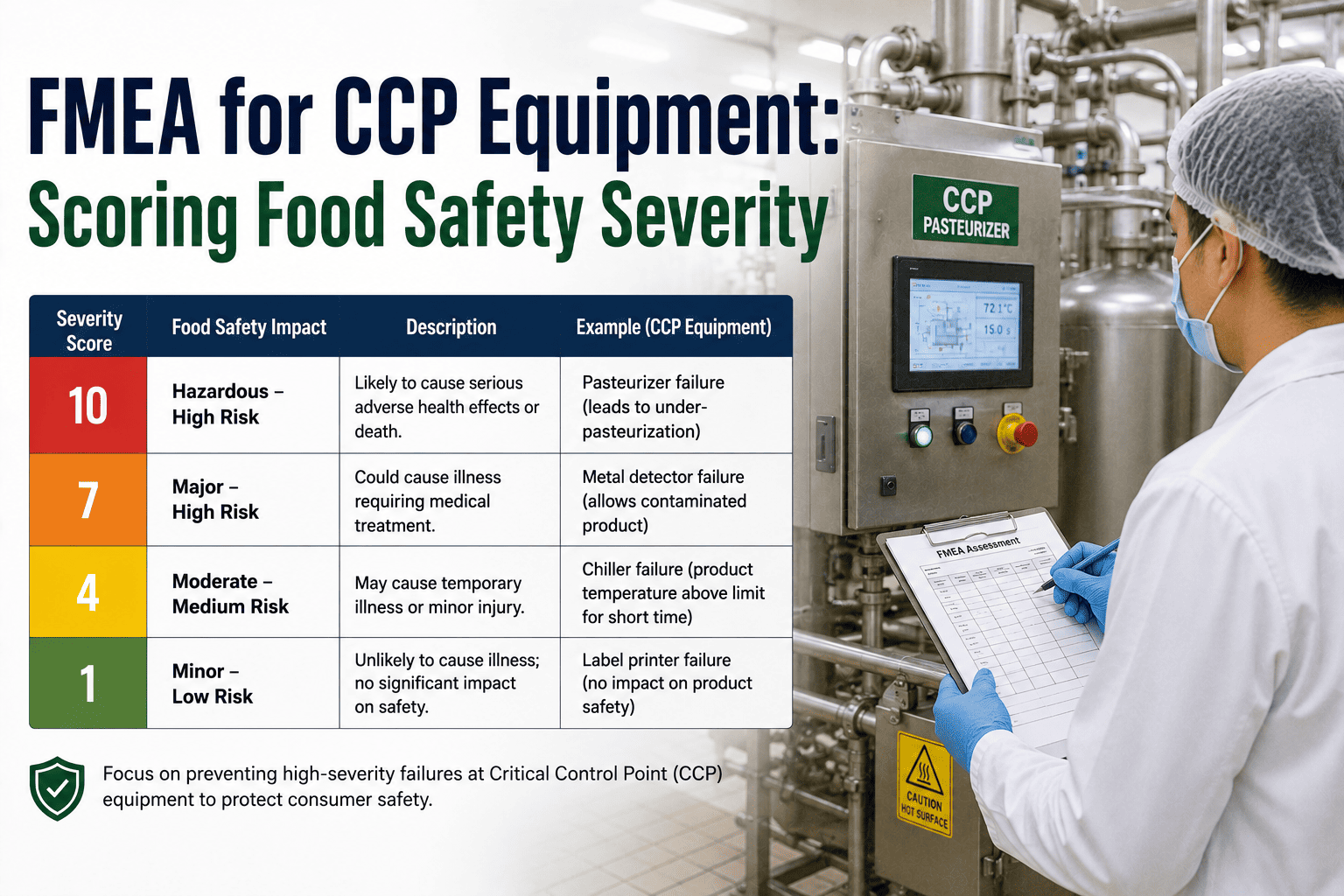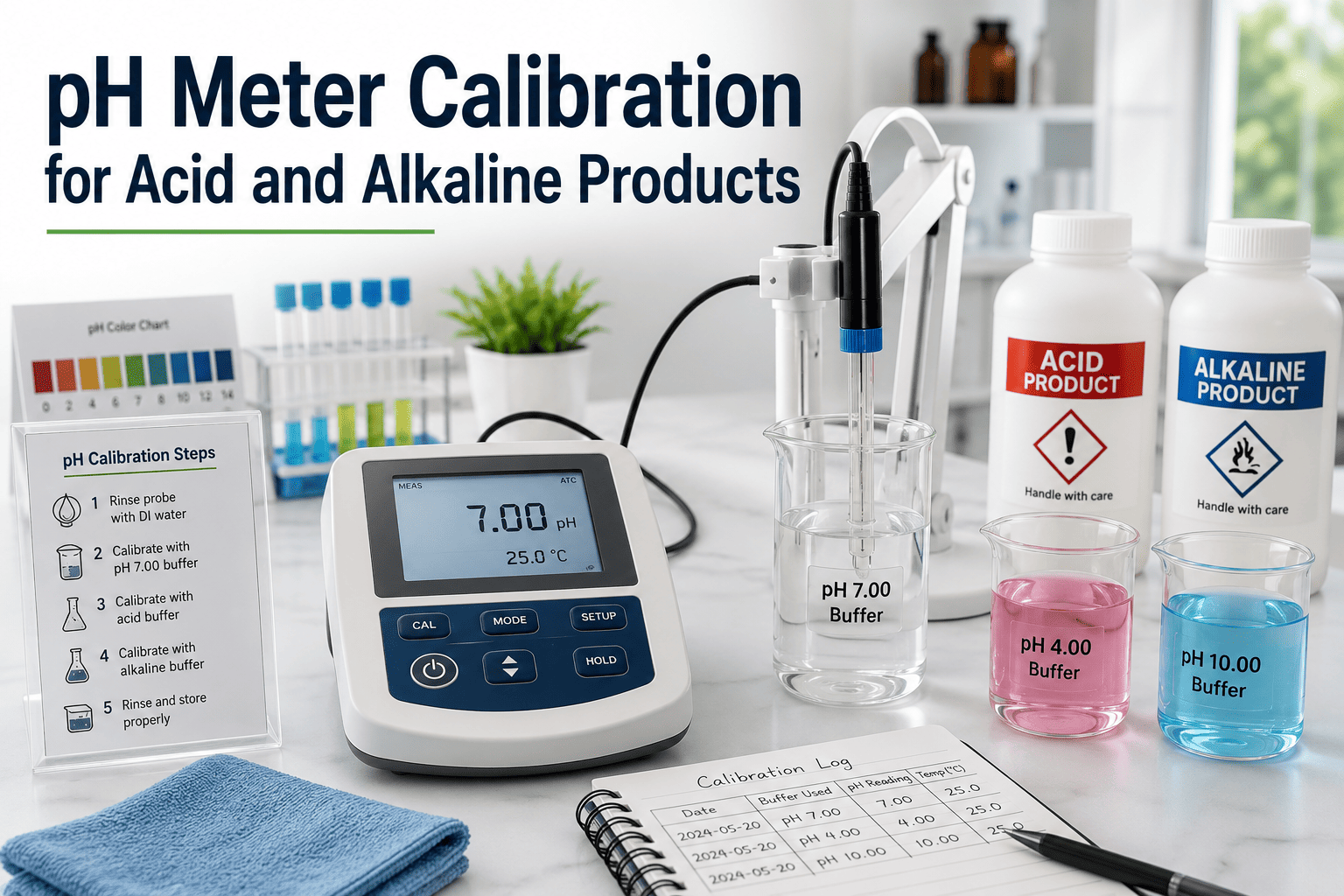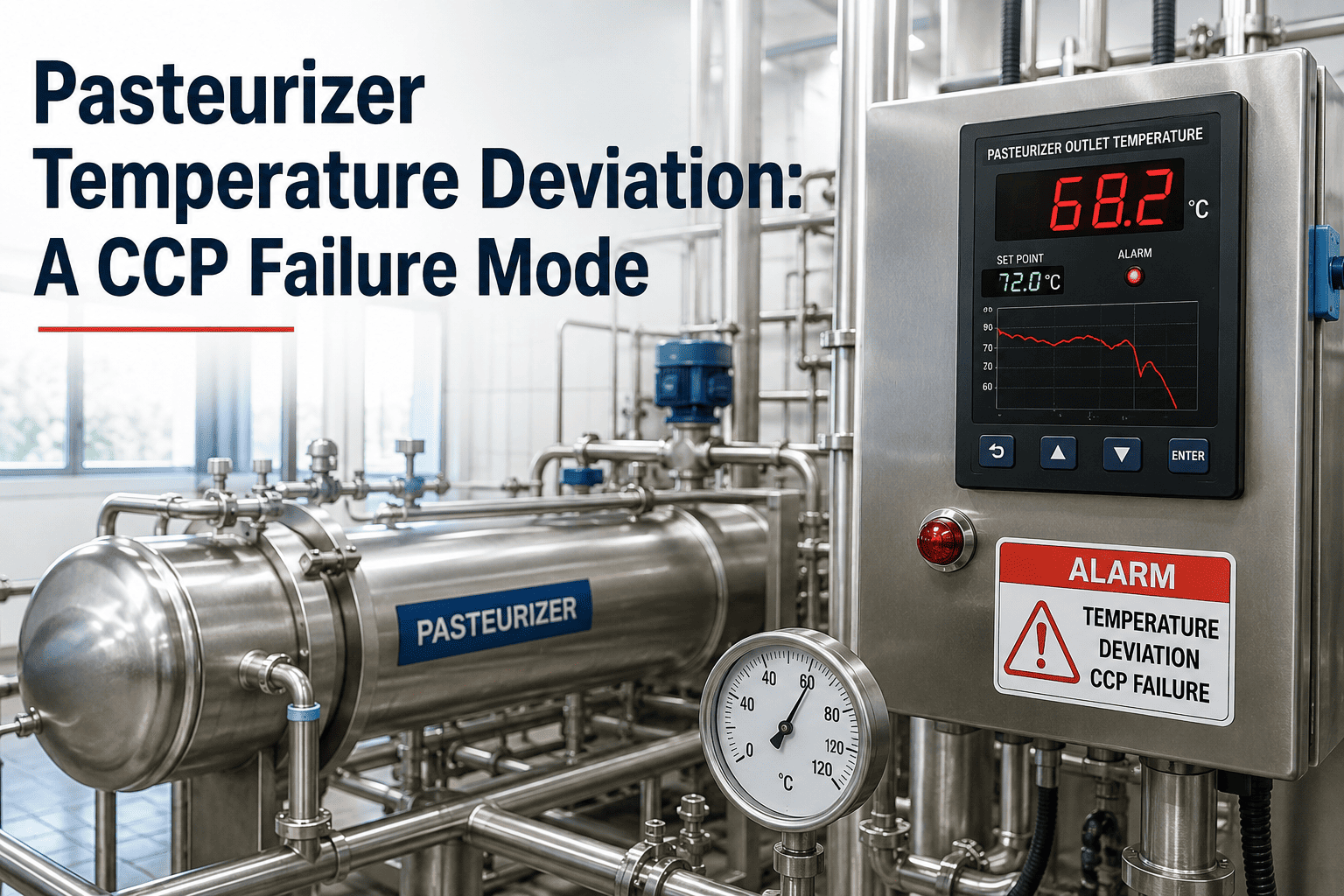
A pasteurizer running at 160.4°F instead of the required 161°F for fifteen seconds looks fine on the control room screen, but under HACCP rules it is not a warning — it is a critical limit deviation, and the batch behind it must be treated as unsafe until proven otherwise. This is the daily reality of Critical Control Point management inside a dairy or food plant: a fraction-of-a-degree sensor drift, a delayed flow diversion valve, or an uncalibrated recording thermometer can quietly separate a compliant lot from a Grade A Pasteurized Milk Ordinance violation. QA leads, plant engineers, and maintenance managers across the USA, UK, Canada, Australia, UAE, and Germany are under growing pressure to prove, with timestamped records, that every pasteurization cycle held its critical limit and every deviation was logged before product moved downstream. Facilities running this on paper charts are usually the ones who find out about a deviation days after the product has shipped — start a free trial to see how a structured monitoring program closes that gap.
Why a Fraction of a Degree Matters More Than Any Other Reading on Your Floor
Every other sensor on a food production line has some tolerance built in. A pasteurizer's temperature reading does not — it is the single measurement standing between a safe product and a documented public health hazard. Pathogens like Listeria and Salmonella survive drift that looks trivial on a trend chart, which is why HACCP treats a below-limit reading, however brief, as a deviation rather than a fluctuation to note and move past.
Stop Finding Out About Deviations After the Product Has Shipped
Oxmaint schedules thermometer calibration, flow diversion valve testing, and CCP verification as connected work orders — so a drifting sensor gets caught in the plant, not in a customer complaint.
How a Pasteurizer Temperature Deviation Actually Unfolds
Normal HTST Operation
Product flows through the holding tube at or above 161°F for the full fifteen-second hold, confirmed continuously by the recording thermometer.
Sensor or Timer Drift Begins
A missed calibration cycle lets the recording thermometer or timing pump edge away from the indicating thermometer, unnoticed on a manual chart.
Critical Limit Is Breached
Actual product temperature drops below 161°F during the hold time — the exact moment a HACCP plan defines as a CCP deviation, not a variance.
Flow Diversion Valve Should Respond
The FDV is designed to automatically reroute under-processed product away from packaging — but a valve overdue for its own functional test can lag or fail silently.
Deviation Logged and Product Held
Affected product is held or reprocessed, root cause is investigated, and the deviation is entered into the centralized log HACCP recordkeeping requires.
Paper Charts vs. a CMMS-Managed Pasteurizer Program
What Oxmaint Manages on Every Pasteurizer Line
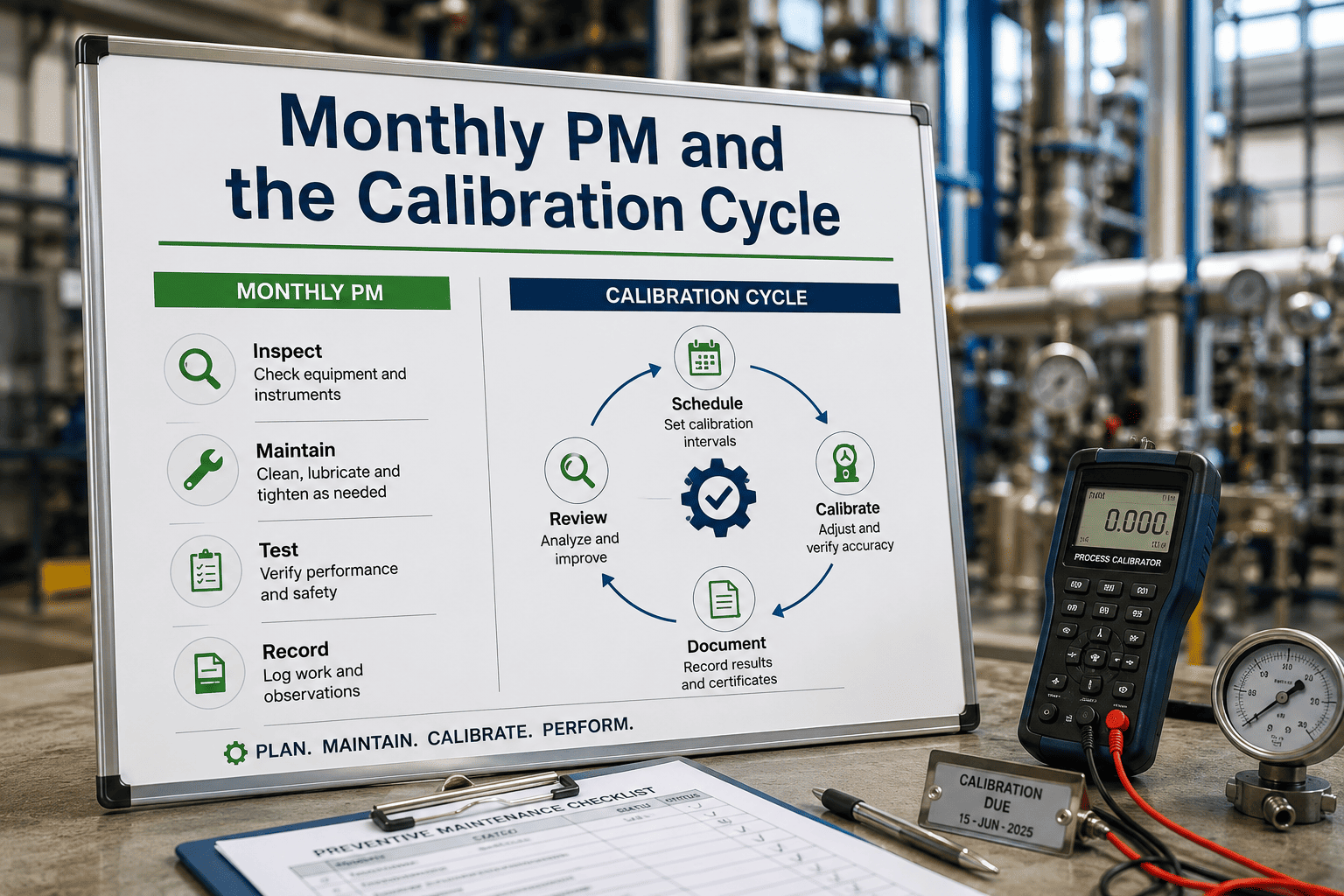
Thermometer Calibration Scheduling
Recording and indicating thermometer calibration work orders on a fixed interval, with prior readings stored against each device.
Flow Diversion Valve PM
Scheduled functional testing of the flow diversion valve, so the fail-safe that protects your product is itself verified on record.
Automated Deviation Logging
Every deviation opens a corrective action task automatically, capturing root cause, disposition, and sign-off in one record.
Sensor Drift Trend Alerts
Historical readings are trended per sensor, flagging gradual drift long before it becomes a critical limit breach.
Audit-Ready HACCP Export
Deviation logs, calibration history, and verification records export in the format your auditor or inspector expects.
Region-Specific Compliance Setup
Configure PMO, EU, CFIA, or FSANZ documentation requirements per plant, all inside a single Oxmaint account.
See Your Pasteurizer CCP Records the Way an Auditor Would
Book a walkthrough and we'll map your current calibration and deviation process against what Oxmaint automates from day one.
Pasteurizer CCP Requirements Across Markets
| Region | Governing Standard | Core CCP Requirement |
|---|---|---|
| USA | FDA Grade A PMO / 21 CFR 113 | 161°F for 15 seconds HTST minimum, centralized deviation log |
| UK | Food Safety Act 1990 / Retained EU Reg 852/2004 | HACCP-based procedures with documented CCP monitoring records |
| Canada | CFIA Safe Food for Canadians Regulations | Written preventive control plan with deviation and corrective action records |
| Australia | FSANZ Standard 4.2.2A (Dairy) | Approved dairy food safety scheme with documented critical control monitoring |
| Germany / EU | EU Regulation 852/2004 / IFS Food | Documented HACCP verification records reviewed at scheduled audit intervals |
| UAE | GSO 2055 / Municipality Food Safety Codes | HACCP compliance with retrievable CCP recordkeeping for inspection |
Frequently Asked Questions
What is the critical limit for milk pasteurization under HACCP?
The FDA Grade A Pasteurized Milk Ordinance sets the HTST critical limit at 161°F held for 15 seconds. Any reading below that during the hold time is a deviation, not a fluctuation, and must be logged with a corrective action. Start a free trial to see this tracked automatically per line.
How is a temperature deviation different from a normal fluctuation?
A fluctuation stays above the critical limit and needs no action. A deviation drops below the limit during the required hold time, which HACCP treats as a loss of control requiring product hold, investigation, and a documented corrective action entry.
What happens when a pasteurizer's flow diversion valve activates?
The flow diversion valve automatically reroutes under-processed product away from packaging and back for reprocessing. If the valve itself is overdue for functional testing, that diversion can lag, which is why FDV testing needs its own maintenance schedule.
How often should pasteurizer thermometers be calibrated?
Most HACCP plans require both the recording and indicating thermometers to be checked against each other regularly, with full calibration on a fixed interval set by the plant's validated schedule. Missed cycles are the most common source of unnoticed drift.
Can Oxmaint manage HACCP records across multiple pasteurizer lines and sites?
Yes. Each pasteurizer, thermometer, and flow diversion valve is registered as its own asset, with region-specific documentation configured per plant. Book a demo to see a multi-site setup.
Every Pasteurization Cycle, Documented Before an Auditor Ever Asks
From calibration to flow diversion valve testing to deviation logging, Oxmaint turns your pasteurizer CCP program into a scheduled, traceable system instead of a paper chart waiting to be reviewed.