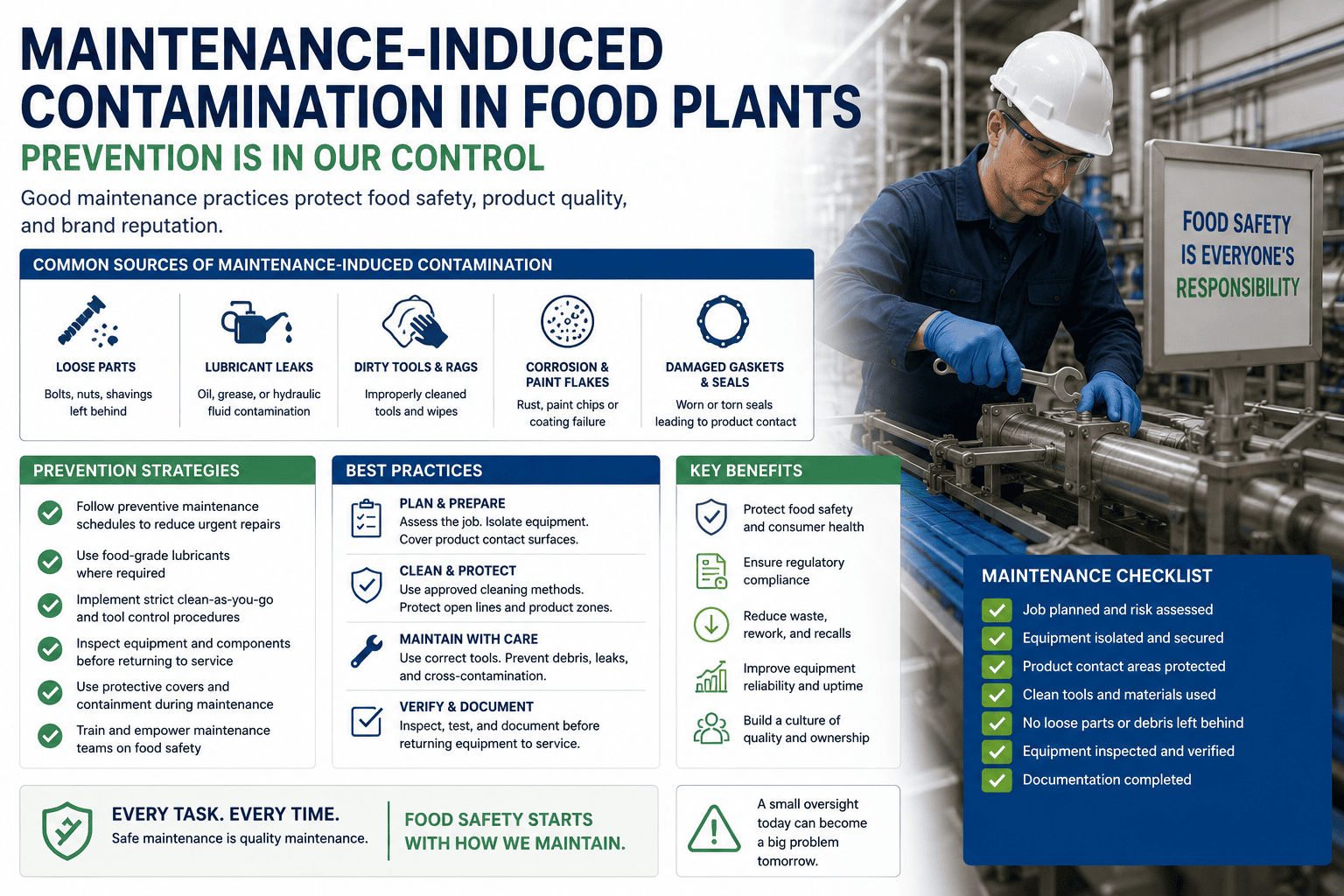
A poultry processing facility in Georgia faced a devastating recall after Listeria contamination was traced to biofilm buildup inside a slicing machine's hollow conveyor rollers. The equipment had passed daily sanitation inspections, but no maintenance protocol addressed the hidden internal surfaces where bacteria thrived. The recall cost exceeded $2.3 million—not including the brand damage that reduced sales for eighteen months afterward. Post-incident analysis revealed the contamination point had been developing for weeks, invisible without specific hygienic equipment maintenance procedures targeting hard-to-clean areas. Sign up for Oxmaint to implement sanitation maintenance workflows that protect your products and your reputation.
Reducing Contamination Risks Through Better Equipment Maintenance
Equipment maintenance practices that minimize contamination risks and strengthen hygiene control in food processing environments. Protect products, comply with regulations, and prevent costly recalls through systematic sanitation maintenance.
Six Equipment-Related Contamination Risk Categories
Contamination rarely originates from obvious sources. The most dangerous risks hide in equipment design features, maintenance gaps, and sanitation blind spots that standard cleaning protocols miss. Understanding these risk categories enables targeted maintenance practices that eliminate contamination vectors. Book a demo to see how Oxmaint addresses each risk category.
Biofilm Harboring Surfaces
Rough, pitted, or damaged surfaces provide attachment points where bacteria form protective biofilm communities resistant to standard sanitizers.
- +Worn conveyor belts with surface cracks
- +Corroded stainless steel with pitting
- +Scratched plastic components
Hidden Dead Zones
Equipment designs with hollow areas, blind holes, or internal cavities where product residue accumulates beyond reach of cleaning procedures.
- +Hollow conveyor rollers and frames
- +Threaded fasteners and crevices
- +Internal piping with poor drainage
Seal and Gasket Failures
Degraded seals create harborage points and allow product infiltration into areas that cannot be effectively cleaned or sanitized.
- +Cracked door gaskets on coolers
- +Worn pump seals with leakage
- +Deteriorated O-rings on valves
Lubricant Cross-Contamination
Food-grade lubricant failures or use of non-approved lubricants introduce chemical and physical contamination into product contact zones.
- +Over-lubricated bearings dripping onto product
- +Non-H1 lubricants used in food zones
- +Leaking gearbox seals
Temperature Control Failures
Equipment that fails to maintain proper temperatures creates conditions where pathogens multiply rapidly through the danger zone.
- +Refrigeration units with cycling issues
- +Hot hold equipment with cold spots
- +Pasteurizers with inconsistent temps
Foreign Material Introduction
Worn equipment components shed metal fragments, plastic particles, or other physical contaminants directly into the product stream.
- +Worn guide rails dropping plastic
- +Metal-on-metal wear points
- +Deteriorating food-contact coatings
Equipment Failure Modes That Create Contamination
Understanding how equipment failures lead to contamination enables maintenance programs to target prevention efforts effectively. Each failure mode has characteristic warning signs that systematic monitoring can detect before contamination occurs.
Conveyor Belt Deterioration
High RiskHeat Exchanger Fouling
Medium RiskPump Seal Degradation
High RiskCIP System Component Wear
CriticalMaintenance Approaches: Risk Comparison
The maintenance strategy you choose directly impacts contamination risk levels. Reactive approaches leave food safety to chance, while structured preventive programs systematically eliminate risk factors before they become contamination events.
Implementation Roadmap
Transitioning to contamination-focused maintenance requires systematic implementation. This phased approach builds capability progressively while delivering immediate food safety improvements. Schedule a consultation to customize this roadmap for your facility.
Risk Assessment & Asset Mapping
Identify all food-contact equipment and classify by contamination risk level. Document current condition of seals, surfaces, and hygienic design features. Create asset hierarchy in CMMS with food safety criticality ratings.
Sanitation PM Development
Build preventive maintenance tasks targeting contamination risk points for each critical asset. Define inspection criteria, replacement intervals, and acceptance standards. Sign up for Oxmaint to access pre-built food safety PM templates.
Workflow Integration
Deploy mobile-enabled checklists to maintenance and sanitation teams. Establish verification protocols linking maintenance completion to sanitation validation. Train personnel on hygienic maintenance practices.
Continuous Monitoring & Improvement
Track contamination-related maintenance metrics. Analyze environmental and product testing results against maintenance data. Refine PM frequencies and inspection criteria based on findings.
Oxmaint Sanitation Maintenance Features
Purpose-built tools for food manufacturing environments where contamination prevention is mission-critical.
Hygiene-Specific Checklists
Pre-built inspection templates targeting food safety risk points with photo documentation and pass/fail criteria.
FSMA Compliance Tracking
Automated documentation of preventive controls maintenance with audit-ready reporting for regulatory inspections.
Condition Monitoring Integration
Connect temperature sensors and environmental monitors to trigger maintenance alerts before contamination risks develop.
Corrective Action Workflows
Structured deviation management linking contamination findings to maintenance corrective actions with verification tracking.
Frequently Asked Questions
Protect Your Products Through Systematic Maintenance
Every contamination event that maintenance could have prevented represents an unacceptable risk. Oxmaint builds food safety practices into daily workflows—ensuring contamination risks are addressed before they threaten your products or your reputation.