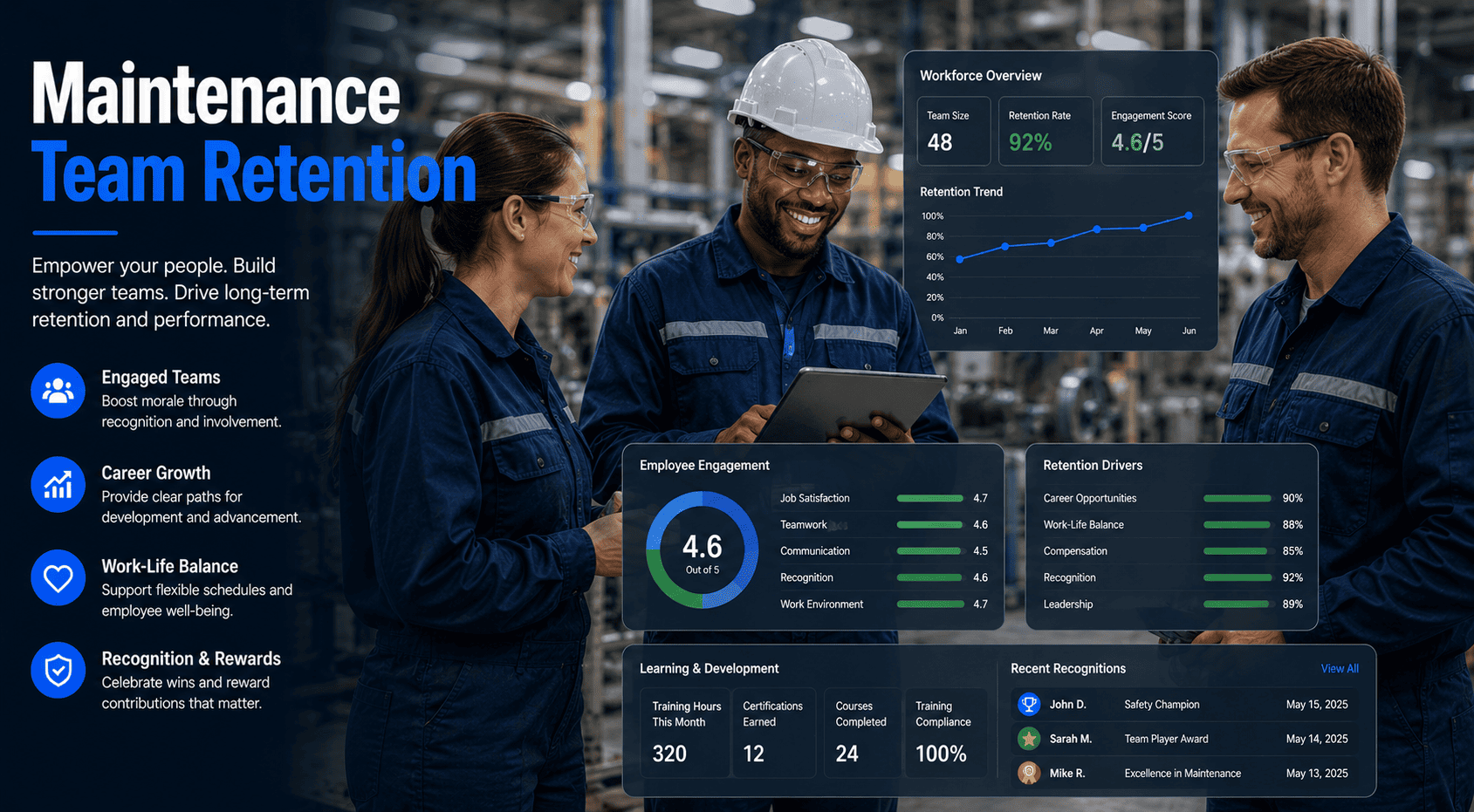
A poultry processing plant in Arkansas operated with 14 maintenance technicians across three shifts, yet the maintenance manager had no visibility into how labor was being used. After implementing structured maintenance team management with digital time tracking, skill-based assignment, and labor analytics, the picture became clear: three technicians were spending 60% of their time on a single aging packaging line. Reallocating labor based on actual data reduced overtime by 35% while improving PM completion from 72% to 94%. Sign up for Oxmaint to transform maintenance team visibility.
Maintenance labor represents 30-50% of total maintenance costs in food manufacturing, yet few plants manage this investment with the same rigor applied to parts inventory. Book a demo to see how workforce management tools optimize labor productivity.
Team Management
Workforce Management and Labor Productivity Tracking for Food Plants
Optimize maintenance labor deployment with visibility into technician assignments, time tracking, skill utilization, and productivity metrics.
Wrench Time Without Management
Plants Lack Labor Tracking
23%
average
Overtime Reduction
The Labor Visibility Challenge
Food manufacturing maintenance operates under unique labor challenges. Multi-shift operations require coverage coordination across day, evening, and night crews. Seasonal production peaks demand flexible capacity. Food safety requirements mandate specific training and accountability.
35%
average wrench time without structured management means technicians spend only about one-third of their time performing maintenance work. Structured management can increase this to 55% or higher.
Sign up for Oxmaint to gain the labor visibility that transforms maintenance team effectiveness.
Core Workforce Management Capabilities
Core Functions
Work order time capture with start/stop
Mobile time entry at point of work
Labor type categorization
Non-work time tracking
Benefit: Accurate labor data enables job planning improvement.
Core Functions
Technician assignment to work orders
Skill-based assignment matching
Workload balancing
Priority-based work queues
Benefit: Right technician on right work improves first-time fix rates.
Core Functions
Skill inventory by technician
Certification tracking
Training record management
Expiration alerts
Benefit: Skill visibility enables targeted training and compliance.
Core Functions
Shift scheduling and coverage
Vacation and absence management
On-call rotation scheduling
Overtime authorization
Benefit: Proactive scheduling prevents coverage gaps.
Core Functions
Work completion metrics
Time efficiency analysis
Quality metrics (rework, callbacks)
Documentation compliance
Benefit: Performance data enables coaching and training.
Core Functions
Shift handoff documentation
Work order notes and updates
Alert and notification management
Photo and document sharing
Benefit: Structured communication across shifts.
See Your Team's True Productivity
Oxmaint workforce management provides visibility to optimize labor deployment, track performance, and make data-driven decisions.
Labor Productivity Metrics
Wrench Time
Formula
Direct work time / Total available time × 100
Targets
Baseline: 35% | Good: 45% | Excellent: 55%+
Interpretation: Low wrench time indicates planning or resource availability problems.
Schedule Compliance
Formula
Scheduled work completed / Total scheduled × 100
Targets
Baseline: 70% | Good: 85% | Excellent: 90%+
Interpretation: Low compliance indicates excessive emergency work.
Emergency Work Ratio
Formula
Emergency WOs / Total WOs × 100
Targets
Baseline: 30%+ | Good: 15-20% | Excellent: <10%
Interpretation: High ratio indicates reactive culture. Emergency work costs 3-5x planned.
First-Time Fix Rate
Formula
Closed on first visit / Total corrective WOs × 100
Targets
Baseline: 70% | Good: 85% | Excellent: 90%+
Interpretation: Low rates indicate diagnostic skill gaps or parts issues.
Overtime Percentage
Formula
Overtime hours / Total labor hours × 100
Targets
Baseline: 15%+ | Good: 8-10% | Excellent: <5%
Interpretation: Chronic overtime signals planning problems.
Labor Cost per Unit
Formula
Total maintenance labor cost / Production units
Targets
Varies by industry; target stable or declining trend
Interpretation: Normalizes cost against production volume.
Skill Management for Food Manufacturing
Technical Skills
Mechanical
Pump and valve maintenance
Conveyor and drive systems
Packaging equipment
Alignment and balancing
Electrical
Motor troubleshooting
VFD programming
PLC troubleshooting
Required Certifications
Regulatory
OSHA 10/30 Hour
Lockout/Tagout Authorized
EPA 608 Refrigerant
Forklift Certification
Food Safety
HACCP Awareness
Allergen Awareness
GMP Training
Equipment Authorization
Critical Equipment
Pasteurizers and thermal processing
Metal detectors and X-ray systems
Ammonia refrigeration
Boilers and pressure vessels
CIP systems
Note: Authorization requires documented training and demonstrated competency.
Skill Matrix Management
Matrix Elements
Technician names across columns
Skills/certifications down rows
Proficiency levels indicated
Expiration dates for time-limited items
Gap identification highlighting
Use: Supports work assignment, training prioritization, and succession planning.
Shift Management and Coverage Planning
Coverage Models
Full Coverage Model
Maintenance technicians on all production shifts. Highest cost but immediate response capability.
Primary + On-Call Model
Full coverage on primary shifts with on-call for off-shifts. Balances response and cost.
Centralized Day Shift
Maintenance concentrated on day shift with operators handling basic tasks off-shifts.
Shift Handoff Requirements
Information to Transfer
Work in progress status and next steps
Equipment issues to monitor
Parts on order or awaiting delivery
Production schedule changes
Safety issues or hazards
Absence Management
Planning Considerations
Minimum coverage requirements by shift
Skill coverage (not just headcount)
Production schedule intensity
Blackout periods during critical production
On-Call Management
Program Elements
Rotation schedule ensuring fair distribution
Clear escalation criteria
Response time expectations
Compensation structure
Rest period requirements
Book a demo to see how Oxmaint shift management coordinates coverage across your team.
Workforce Tools Built for Maintenance
Oxmaint provides workforce management designed specifically for maintenance operations, with mobile time tracking, skill management, and productivity analytics.
Compliance Considerations
Personnel Accountability
Food safety regulations require accountability for maintenance actions. Work orders should document who performed the work, when, and what was done.
Training Documentation
Personnel working on food safety equipment must have documented training. CMMS-based skill management provides readily accessible records.
Authorization Controls
Critical equipment maintenance should be restricted to authorized personnel. System-enforced authorization prevents unqualified assignments.
Labor Law Compliance
Time tracking supports compliance with wage and hour requirements. Accurate records document regular versus overtime hours and break compliance.
Frequently Asked Questions
How do we get technicians to accurately track time?
Make time tracking easy with mobile apps and simple start/stop buttons. Show technicians how data benefits them through better job planning. Avoid punitive uses that discourage honest reporting.
What is a realistic target for wrench time improvement?
Most facilities without structured management achieve 30-35% wrench time. Initial improvements to 45% are achievable within 6-12 months. Reaching 55%+ requires sustained improvement in planning and emergency reduction.
How do we balance skill development with efficient assignment?
Build development into assignment practices intentionally. Pair developing technicians with experienced mentors. Reserve some non-critical jobs for development assignments.
Sign up for Oxmaint to implement skill-based assignment.
How should we handle performance differences?
Use data to understand rather than punish performance differences. Low performers may face barriers beyond their control. Address genuine issues through coaching and development.
What staffing ratio should we target?
Food manufacturing typically ranges from one technician per $3-8 million in replacement asset value. Rather than targeting averages, right-size based on workload analysis using workforce management data.
Transform Team Visibility into Performance
Oxmaint workforce management provides the visibility, tools, and analytics to optimize maintenance labor deployment. See where time goes, match skills to work, and drive continuous improvement.